
News
Tinubu’s Youth Initiatives Praised as Northern Stakeholders Rally Behind Sukubo’s Re-election

Joel Ajayi
The North Central chapter of the National Youth Council of Nigeria has commended President Bola Tinubu’s administration for its strides in youth empowerment and engagement, while also urging him to do even more.
At the same time, NYCN North Central stakeholders also expressed their support for NYCN President, Amb. Sukubo Sara-Igbe Sukubo, to seek re-election in the upcoming polls.
At a meeting held in Abuja on Tuesday, North Central stakeholders, through a motion moved by NYCN Voluntary Youth Organisations member Yakubu Ibrahim and seconded by Hussain Mukhtar, pledged their support for Sukubo should he decide to contest the election.
In his remarks NYCN President, called on Nigerian youths to support leaders at all levels, irrespective of political affiliation.
Sukubo, whose intention to seek re-election as NYCN President in the forthcoming elective congress was backed by leaders of North Central, announced that the race is open to all candidates and assured that the process will be free, fair, and credible.
He further explained that his decision to run again is driven by the need to complete the task of repositioning the Council and freeing it from the control of selfish interests, a process he already initiated during his current tenure.
Sukubo stated, “As for me, as the President of the National Youth Council of Nigeria, on the Federal Government’s policies, programmes, youth engagement, and youth empowerment, I would rate it fine in the aspect of the students. They have given them the best.
“But for the youth, we are also expecting more than even the student community. So, if the youth intervention programme is not above the student community, it means it is not enough for us because in number we have more youths than students.
“The students are part of the youth, but not all youths are students. So, we expected that the President by now would allow the National Youth Council of Nigeria to be advocating and championing the blueprint for youth empowerment and youth development under his government.
“That is what I, as the NYCN President, wish the President can give the National Youth Council of Nigeria this assignment, this task as a vehicle for us youths to reach out to the 774 local governments, 36 states, and the entire country.”
Sukubo stressed that his bid for re-election is not driven by personal interest, but by a commitment to end the challenges and difficulties facing the NYCN.
The NYCN President stated, “After a series of calls from stakeholders, I have accepted the calling to contest and seek re-election as NYCN President. What it really means is, it’s not for my personal good, it’s not for self-centeredness, it’s not for self-reliance. It is in the interest of all and the Council at large.
“It’s because of the kind of trauma the Council has passed through for decades and we have been able to do our best to take it to fifty-five percent solved. So, when I am re-elected, I have to try my best to ensure that we get to ninety to one hundred percent problems solved, so that we can allow our younger ones, who will take over from us, to have peace to run the Council the way it should run.
“Because we expect our Nigerian youth to grow beyond the level we are at, we are still pushing to see how the dividends of democracy can also come to the younger generations.
“I believe that this NYCN election will be free, fair, and credible. It will not be a closed-door election. Doors are open to all contestants to contest for any offices of their choice. No one will be undone or intimidated.”
In his remarks, NYCN Vice President North Central, Mukhtar Akoshile also rate President Tinubu high in youths empowerment.
Akoshile said, “I will score President Bola Ahmed Tinubu very high. In terms of appointments, more youths have been appointed. Also, his policies and programmes have been pro-youth.
“Though the President has done well, we will still encourage him to do more to ensure that most Nigerian youths are empowered.”
Another North Central leader, former NYCN national officer and head of the Voluntary Youth Organisations, Prince Abubakar Abutu, described the meeting as both consultative and an eye-opener for everyone.
He said ,”This is a consultative meeting, and in the course of the meeting, North Central leaders are now well-informed about the achievements of President Sukubo. So, the meeting is also an eye-opener.
“We have listened to him. He is the only person that has travelled down to the zones, and we have listened to him.”
Those present at the meeting included NYCN leaders such as Ambassador Leader Agboola (former NYCN President), Ambassador Kasali Omotayo, Comrade Almustapha Abdullahi Asuku (former NYCN President), Barrister Abubakar Suleiman (NYCN Secretary-General), Comrade Zaka Nehemiah (Program Officer), Olawale Abdulrahman (Organizing Secretary), state chairmen, and others.



Health
New Malaria Plan Puts States, Local Data At Centre Of Nigeria’s 2030 Response
Cyril Ogar
Nigeria’s latest malaria data point to a country making progress overall but facing sharply different disease burdens from one state to another, prompting health authorities to shift emphasis towards locally tailored interventions under a new five-year strategy.
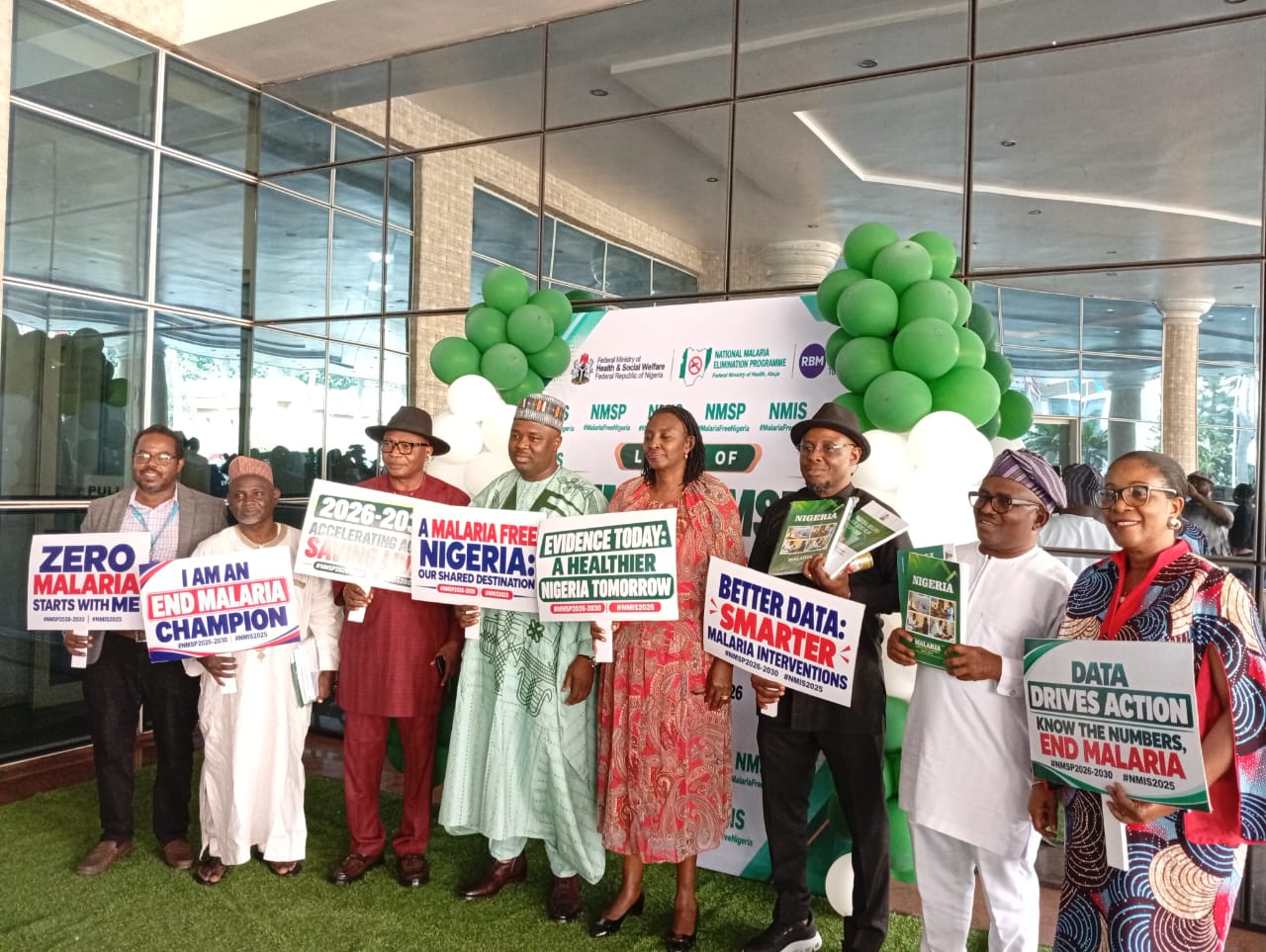
The National Malaria Strategic Plan (NMSP) 2026–2030, launched alongside the 2025 Nigeria Malaria Indicator Survey (NMIS) report, seeks to cut malaria parasite prevalence and deaths by 50 per cent from 2025 levels by 2030.
Rather than applying a uniform national response, the plan prioritises interventions based on local epidemiological evidence, while also calling for stronger domestic financing, improved diagnosis and treatment, better surveillance and clearer accountability.
The Coordinating Minister of Health and Social Welfare, Prof. Muhammad Ali Pate, represented by the ministry’s Permanent Secretary, Mrs Daju Kachallom, presented the government’s position at the joint launch in Abuja.
Pate described the survey and strategic plan as essential tools for identifying weaknesses in malaria control and directing resources towards areas with the greatest need.
He said the survey’s findings on prevalence, prevention, diagnosis and treatment would support policy development, programme implementation, resource allocation and performance assessment.
The minister said the strategic plan was designed to accelerate progress towards a malaria-free Nigeria while remaining consistent with national health priorities and the World Health Organisation’s global malaria strategy.
He commended the National Malaria Elimination Programme (NMEP), the National Population Commission (NPC), development partners and other stakeholders involved in producing the survey and plan.
Pate also called for a shared national effort involving federal and state governments, the private sector, communities and households, stressing that malaria elimination could not be achieved by government alone.
The 2025 NMIS shows that malaria parasite prevalence among children aged six to 59 months, measured through microscopy, fell from 42 per cent in 2010 to 23 per cent in 2018, 22 per cent in 2021 and 15 per cent in 2025.
However, the national improvement masks substantial differences between states. Prevalence among children in the same age group ranged from two per cent in Lagos State to 31 per cent in Ebonyi State.
The figures indicate that progress has not been evenly distributed and that malaria control efforts must be adapted to the conditions in individual states and communities.
Earlier, the National Coordinator of NMEP, Dr Nnenna Ogbulafor, said the NMSP was developed from the 2025 NMIS findings and other programme data.
She said the evidence would help policymakers locate high-burden areas, improve the design of interventions and direct limited resources to communities most in need.
Ogbulafor said the plan was aligned with Nigeria’s health sector priorities and the WHO Global Technical Strategy for Malaria 2016–2030.
She identified policy alignment, state-level leadership, domestic financing, partnerships and accountability as central to implementation.
The national coordinator urged state governments, civil society organisations and development partners to take ownership of the plan and support coordinated, adequately funded malaria programmes.
She said the differences in prevalence across states made subnational planning indispensable to meeting the national targets.
Ogbulafor called on states to develop comprehensive malaria control programmes reflecting local disease burdens, epidemiological evidence and available resources.
She also stressed the need for sustained domestic financing and partnerships to close funding gaps and maintain implementation through 2030.
NMEP, she said, would work with the National Malaria Working Group and international partners to track implementation, assess performance and review results regularly.
The plan aims to raise access to and use of preventive interventions to at least 80 per cent, achieve at least 90 per cent effective coverage of malaria diagnosis and appropriate treatment among at-risk populations, and improve surveillance performance from a baseline of 47 per cent to 70 per cent by 2030.
It also targets stronger governance and organisational capacity, with at least 60 per cent of malaria programme resources expected to come from domestic sources by 2030.
The survey data show that prevention remains uneven. Only 54 per cent of households had at least one insecticide-treated net, while 45 per cent of children under five and 54 per cent of pregnant women aged 15–49 slept under a net on the night before the survey.
Protection during pregnancy was also incomplete. Among women aged 15–49 who had a live birth in the preceding two years, 62 per cent received at least one dose of sulphadoxine-pyrimethamine during their last pregnancy, but only 33 per cent received three or more doses.
The findings point to the need to expand access to insecticide-treated nets and intermittent preventive treatment for pregnant women.
Diagnosis is another major gap. Of children under five who had a fever in the two weeks before the survey, 59 per cent had advice or treatment sought, but only 18 per cent had blood taken for malaria testing.
The strategic plan therefore places emphasis on prompt testing, appropriate treatment, preventive services and public awareness.
In his remarks, the Director-General of NPC, Dr Abubakar Muhammed, pledged the commission’s continued support for credible demographic and health data to guide policymaking and malaria elimination efforts.
Muhammed said the survey reflected the partnership between the Federal Ministry of Health and Social Welfare, through NMEP, and the NPC.
He said the collaboration brought together expertise in malaria control, demographic surveys and data management to produce information for national planning and development.
The NPC director-general said the commission would continue to modernise its survey operations through technologies such as the Global Positioning System (GPS) and spatial techniques.
He urged policymakers, programme managers, researchers and development partners to use the findings to refine strategies, improve implementation and target communities where interventions were most needed.
Muhammed commended the ministry, NMEP, technical consultants, state enumerators and field teams for their roles in conducting the survey.
He said the report would provide a strong evidence base for a coordinated national malaria response.
The launch of the NMIS report and NMSP 2026–2030 places the next phase of Nigeria’s malaria response on a clearer understanding of where the disease remains most entrenched, while challenging states and partners to convert that evidence into measurable local action.
-
 Featured7 years ago
Lampard Names New Chelsea Manager
-
 Featured7 years ago
FG To Extends Lockdown In FCT, Lagos Ogun states For 7days
-
 Featured7 years ago
Children Custody: Court Adjourns Mike Ezuruonye, Wife’s Case To April 7
-
 Featured7 years ago
NYSC Dismisses Report Of DG’s Plan To Islamize Benue Orientation Camp
-

 Featured5 years ago
Transfer Saga: How Mikel Obi Refused to compensate me After I Linked Him Worth $4m Deal In Kuwait SC – Okafor
-
Featured7 years ago
Board urges FG to establish one-stop rehabilitation centres in 6 geopolitical zones
-
Sports4 years ago
TINUBU LAMBAST DELE MOMODU
-

 News2 years ago
Zulu to Super Eagles B team, President Tinubu is happy with you













