
News
Umahi Says No Secrets in Works Ministry, Defends Concrete Road Shift

Joel Ajayi
The Minister of Works, David Umahi, has reaffirmed the commitment of the Federal Ministry of Works to transparency and accountability, declaring that all its projects are open to public and institutional scrutiny amid growing criticisms and protests.
Speaking on Wednesday in Abuja at the ministry’s headquarters in Mabushi, Abuja, the minister disclosed that key anti-corruption agencies have been formally invited to independently assess the ministry’s operations.
Umahi revealed that the Independent Corrupt Practices and Other Related Offences Commission (ICPC) has already concluded part of its investigation, while the Economic and Financial Crimes Commission (EFCC) is expected to begin its review after an ongoing summit.
“We are not hiding anything because we feel for the people. Any file they want, any information, is available. That is how it should be,” Umahi stated.
He maintained that all ministry projects strictly follow due process, involving the appropriate officials and contractors, with full accountability for every expenditure.
According to him, the ministry is prepared to defend all its actions.
“There is nothing we do in the Ministry of Works that we cannot defend,” he added.
Addressing concerns over the ministry’s transition from asphalt to concrete road construction, Umahi said the policy—though initially met with resistance—was introduced to enhance durability and long-term value.
“We fought a battle to move from asphalt to concrete, but most of the roads we are building now will last up to 100 years with little or no maintenance,” he explained.
The minister also underscored the critical role of infrastructure in national development, noting that poor road conditions severely restrict mobility and economic activity.
“When a road is cut into two, it amounts to people being in prison because they cannot move from one point to another,” he said.
Umahi further urged journalists to uphold professionalism by prioritising accuracy and verification in their reportage, cautioning against the spread of unverified information.
“Do not escalate what you are not sure of. What you show is what you will defend,” he warned.
Despite ongoing criticisms, the minister assured Nigerians that the ministry remains focused on delivering impactful infrastructure projects aimed at improving livelihoods and boosting economic growth across the country.



News
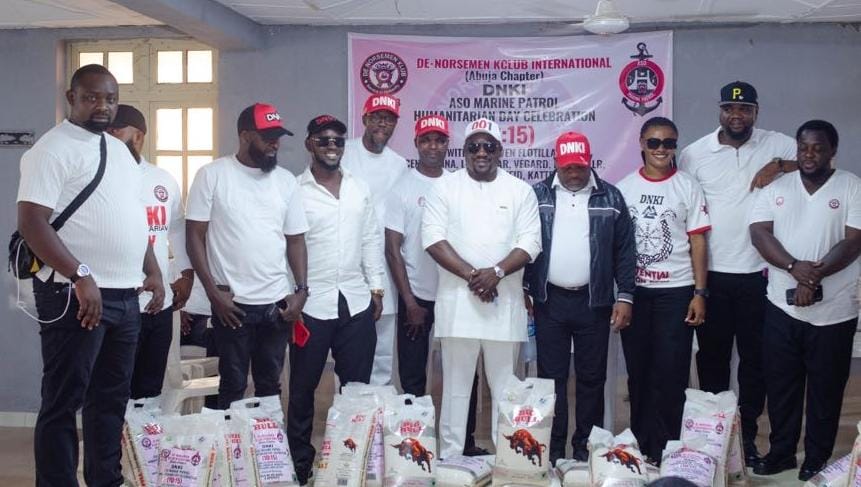
DNKI President Champions Humanitarian Service, Sustainable Community Development
Cyril Samania
The President of De Norsemen Kclub International (DNKI), Chief Oliver Patrick Ityohegh, has reaffirmed the organisation’s commitment to humanitarian service, stressing the importance of supporting vulnerable people and improving community welfare beyond the annual celebration of Humanitarian Day.
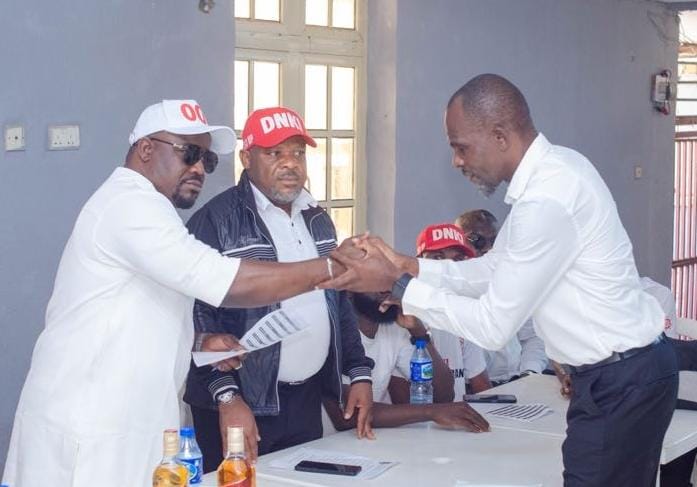
Ityohegh stated this during the organisation’s Cauldron Night and Award Presentation held to commemorate its 2026 Humanitarian Day celebration, theme: “Humanity First: Advancing Hope, Dignity and Community Well-being.” organised by the DNKI Abuja Chapter.
He emphasised that humanitarian service should be a continuous responsibility driven by compassion, solidarity and a commitment to making a meaningful difference in society.
According to him, DNKI’s humanitarian activities reflect its dedication to giving back to society and supporting people in need, while encouraging members to sustain initiatives that promote human dignity and community well-being.
He added that the organisation would continue to strengthen its humanitarian engagements through practical interventions aimed at improving the lives of vulnerable people and promoting community development.
Speaking at the event, the representative of the Abuja Chapter Chairman and Chairman of its Advisory Council, Prince Efiong Okpe, said the organisation’s humanitarian activities extended beyond the annual celebration of Humanitarian Day on October 15.
Okpe explained that DNKI undertook several initiatives throughout the year, including blood donation exercises, visits to hospitals and correctional centres, as well as support for orphanages and other vulnerable groups.
According to him, the organisation also collaborated with humanitarian bodies in the Federal Capital Territory (FCT) to identify areas of need and provide assistance within its available resources.
He described Humanitarian Day as an opportunity for members to renew their commitment to service and demonstrate solidarity with people facing difficult circumstances.
Earlier, the Chairman of the Planning Committee and Coordinator of the DNKI Gwagwalada Zone, Mr Etudaiye Hamzat, disclosed that the chapter had provided financial assistance to some members to help pay their children’s school fees, alongside distributing bags of rice and other relief items to members experiencing hardship.
Hamzat explained that the interventions followed concerns over the difficulties some members faced in meeting their family responsibilities, particularly the rising cost of their children’s education.
He maintained that supporting members in need was consistent with the organisation’s humanitarian principles, adding that DNKI remained committed to extending assistance to non-members and vulnerable communities as part of its commitment to leading by example.
Looking ahead, Hamzat said the Abuja Chapter planned to expand its humanitarian outreach to remote communities within the FCT, with particular attention to orphanages, schools and widows facing difficulties in meeting their family responsibilities.
He also recalled previous interventions for internally displaced persons (IDPs), which included the distribution of food, clothing and educational materials, noting that the chapter intended to scale up such initiatives in the coming year.
The highlight of the event was the presentation of awards to outstanding members and distinguished non-members in recognition of their contributions to humanitarian service.
-
 Featured7 years ago
Lampard Names New Chelsea Manager
-
 Featured7 years ago
FG To Extends Lockdown In FCT, Lagos Ogun states For 7days
-
 Featured7 years ago
Children Custody: Court Adjourns Mike Ezuruonye, Wife’s Case To April 7
-
 Featured7 years ago
NYSC Dismisses Report Of DG’s Plan To Islamize Benue Orientation Camp
-

 Featured5 years ago
Transfer Saga: How Mikel Obi Refused to compensate me After I Linked Him Worth $4m Deal In Kuwait SC – Okafor
-
Featured7 years ago
Board urges FG to establish one-stop rehabilitation centres in 6 geopolitical zones
-
Sports4 years ago
TINUBU LAMBAST DELE MOMODU
-

 News2 years ago
Zulu to Super Eagles B team, President Tinubu is happy with you