
Sports
Volleyball: 2nd phase of National Division 1 & 2 kicks off on October 19th
All is set for the second phase of the 2022 National Division 1 and 2 Volleyball Leagues in Kaduna state.
According to Martin Melandi, Technical Representative of Nigeria Volleyball Federation; the Division 1 and 2 Leagues will be held from 19th to 30th October, 2022 at indoor and outdoor volleyball courts of Ahmadu Bello Stadium.
Arrival date for the participating team is 19th October (Wednesday), technical meeting will take place on 20th October while games serve off on 21st October.
Draws of the National Division 1 and 2 Leagues were held online by the members of the League Management Committee (LMC) led by Martin Melandi and attended by the various coaches.
The men’s first match of the day in the National Division 1 League is between Caliphate Spikers of Sokoto and ABM of Katsina; JVC of Bauchi takes on Nigeria Immigration Service (NIS) while league leaders, Spartans Spikers of Yola battles UCEM of Enugu.
In the women’s day 1 fixtures, league leaders, Chief of Naval Staff (CNS) battles second place, LifeCamp VC in a much anticipated match, Bayonet Spikers of Jaji takes on Olalomi Super Angels of Offa while Yelwa VC of Bauchi plays against Anambra Angels.
Day 1 fixtures of the 2022 National Division 1 Volleyball League in Kaduna (2nd phase):
Men-
Caliphate Spikers of Sokoto v ABM of Katsina
JVC of Bauchi V Nigeria Immigration Service (NIS)
UCEM of Enugu V Spartan Spikers of Yola
Women-
Bayonet Spikers of Jaji v Olalomi Super Angels of Offa
Yelwa VC of Bauchi V Anambra Angels
Chief of Naval Staff (CNS) V LifeCamp VC of Abuja
Division 2 men’s fixtures:
Sword ⚔️ VC v Bayonet Spikers of Jaji
G-Ranks of Kachia v Adamawa state
CNS Spikers V Taraba State
Plateau Rocks (Bye)



Sports
SWAN President Calls for Gender-Fair Reporting in Sports Journalism
By Joel Ajayi
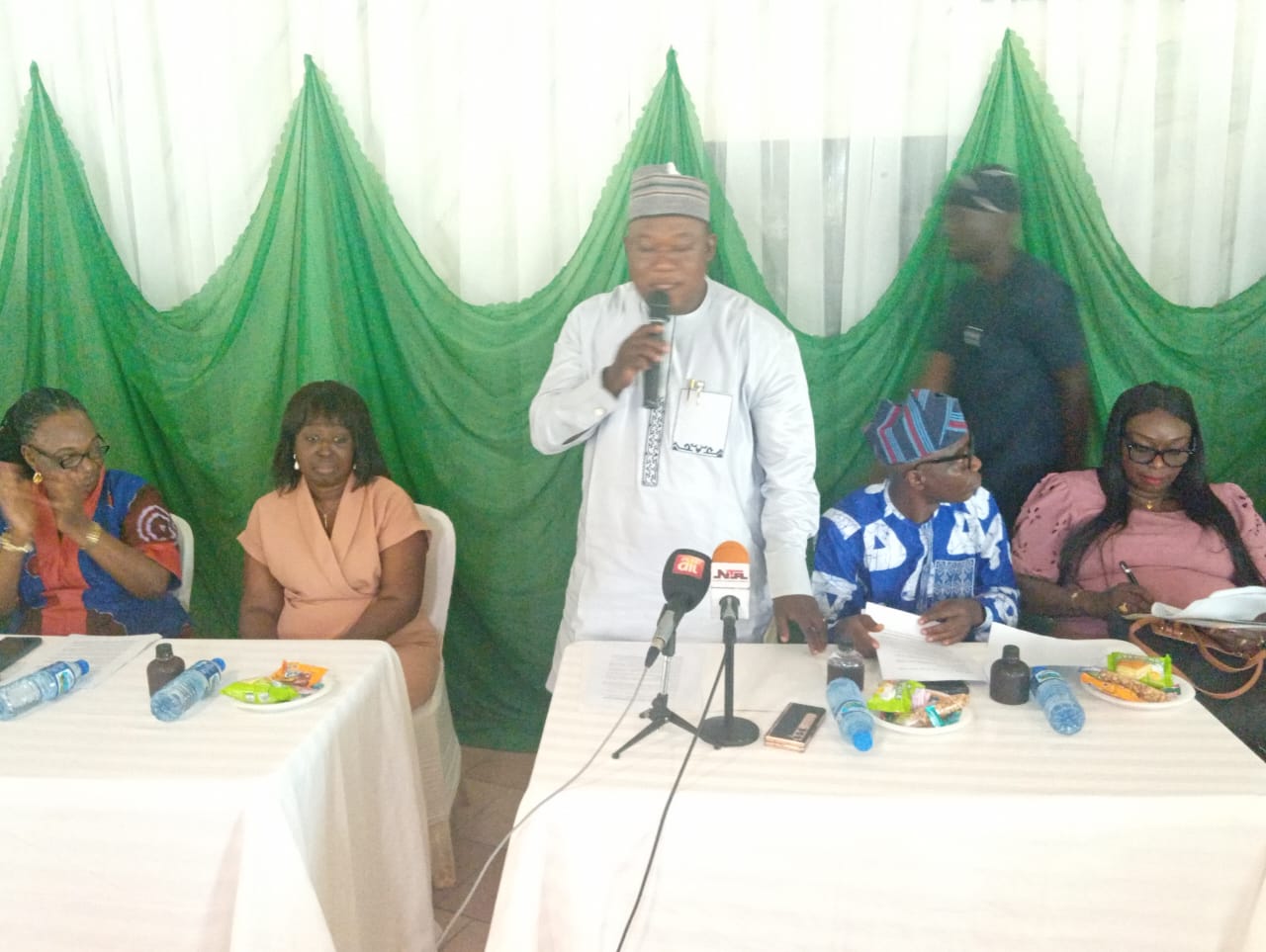
The President of the Sports Writers Association of Nigeria (SWAN), Isaiah Kemje Benjamin, has urged sports journalists to eliminate gender stereotypes and bias in their reports to promote fairness, inclusion and greater visibility for women in sports.
Benjamin made the call on Monday in Abuja while delivering a presentation titled “Gender-Sensitive Journalism: Removing Gender Stereotypes and Bias in Sports Reporting” at the Annual Women in Sports Leadership Training/Seminar for Journalists, organised by the Women Commission of the Nigeria Olympic Committee (NOC).
He said sports journalists play a critical role in shaping public opinion, influencing athletes’ visibility and determining which achievements receive recognition, sponsorship and investment.
According to him, the way the media reports women in sports can either reinforce existing barriers or help dismantle them.
Benjamin explained that gender-sensitive journalism requires fairness, accuracy, equality and inclusion, stressing that it does not mean giving female athletes favourable coverage or shielding them from legitimate criticism.
He identified common forms of bias in sports reporting, including giving men’s competitions greater prominence, focusing on female athletes’ appearance rather than performance, defining women by their marital or family status, and questioning their competence in leadership positions.
The SWAN president urged journalists to adopt respectful language, apply consistent professional standards and extend coverage beyond national teams to domestic leagues, grassroots competitions, female coaches, referees and sports administrators.
Using Nigeria’s sporting landscape as an example, he said the achievements of the Super Falcons deserved sustained analysis beyond match results, including discussions on investment, player development, professional leagues and grassroots structures.
He also noted that digital platforms offered opportunities to expand coverage of women’s sports but warned journalists against sensationalism, online harassment and sexist commentary.
Benjamin proposed seven measures, including gender-sensitive editorial guidelines, regular coverage audits, diversified sources, professional development, stronger grassroots reporting and measurable progress.
He called on SWAN to collaborate with the NOC, sports federations, leagues and clubs to improve access to information and strengthen women’s visibility in sports.
He urged journalists to ensure that athletes are judged by their performances and achievements rather than gender stereotypes.
“Gender-sensitive journalism must be fair, not favourable,” he said, emphasising that responsibility for change rests with reporters, editors, broadcasters, photographers and digital publishers.
-
 Featured7 years ago
Lampard Names New Chelsea Manager
-
 Featured7 years ago
FG To Extends Lockdown In FCT, Lagos Ogun states For 7days
-
 Featured7 years ago
Children Custody: Court Adjourns Mike Ezuruonye, Wife’s Case To April 7
-
 Featured7 years ago
NYSC Dismisses Report Of DG’s Plan To Islamize Benue Orientation Camp
-

 Featured5 years ago
Transfer Saga: How Mikel Obi Refused to compensate me After I Linked Him Worth $4m Deal In Kuwait SC – Okafor
-
Featured7 years ago
Board urges FG to establish one-stop rehabilitation centres in 6 geopolitical zones
-
Sports4 years ago
TINUBU LAMBAST DELE MOMODU
-

 News2 years ago
Zulu to Super Eagles B team, President Tinubu is happy with you













