
Featured
Wang Yi, Antony Blinken to meet on G20 sidelines, first for the two since last October
Chinese State Councilor and Foreign Minister Wang Yi is set to meet with U.S. Secretary of State Antony Blinken on the margins of the G20 Foreign Ministers’ Meeting as agreed by the two sides, the Chinese Foreign Ministry announced on Tuesday night.
According to spokesperson Zhao Lijian, the two diplomats will exchange views on current China-U.S. relations and major international and regional issues.
Foreign ministers from the 20 biggest economies are expected to meet in Bali, Indonesia on Friday before a G20 leaders’ summit in November, which will also be held in the Southeast Asian country.
The Wang-Blinken meeting, the first for the two diplomats since last October, came after the Biden administration said they’re considering lifting tariffs on Chinese imports, which were imposed during former President Donald Trump’s tenure.
“There are a lot of different elements to this, especially since the previous administration imposed these tariffs in such a haphazard way, in a non-strategic way,” said White House Press Secretary Karine Jean-Pierre at a Tuesday briefing.
“So, we are – we are – want to make sure that we have the right approach.”
Eyes on Ukraine
The Ukraine crisis is also expected to top the meeting’s agenda, as Moscow’s “special military operation” has stretched beyond four months.
“This will be another opportunity, I think, to have a candid exchange on that, and to convey our expectations about what we would expect China to do, and not to do, in the context of Ukraine,” Assistant Secretary of State for East Asian and Pacific Affairs Daniel Kritenbrink told reporters in Washington on Tuesday.
Beijing has repeated its call for peace in the region, urging dialogue and peace talks between Russia and Ukraine and respond to the legitimate concerns of all parties. It, however, slammed the unilateral sanctions coming from the West as a tool to “preserve its hegemonic position.”
“Escalating sanctions are not helping to alleviate the situation but are creating new problems for a world in the midst of an epidemic,” spokesperson Zhao said in a regular press briefing in mid-April.
The relationship between Beijing and Washington has soured sharply since the Trump administration, after a series of tit-for-tat moves, including visa restrictions, the expulsion of diplomats and closure of consulates.
Kritenbrink said Blinken’s priority would be to “manage responsibly the intense competition” between the two countries and “prevent any miscalculation that could lead inadvertently to conflict and confrontation.”
China has rejected the use of “competition” to define its relationship with the U.S., calling for “mutual respect, peaceful coexistence and win-win cooperation” for the two countries as ways to reconnect. In last month’s five-hour meeting between senior Chinese diplomat Yang Jiechi and U.S. National Security Advisor Jake Sullivan, Yang said he hopes the U.S. side could “correct its strategic perceptions of China,” and make the right choices



Featured
Alake Inaugurates Nigeria-US Solid Minerals Committee, Dismisses $700bn Claim, Says No Assets Sold
Joel Ajayi
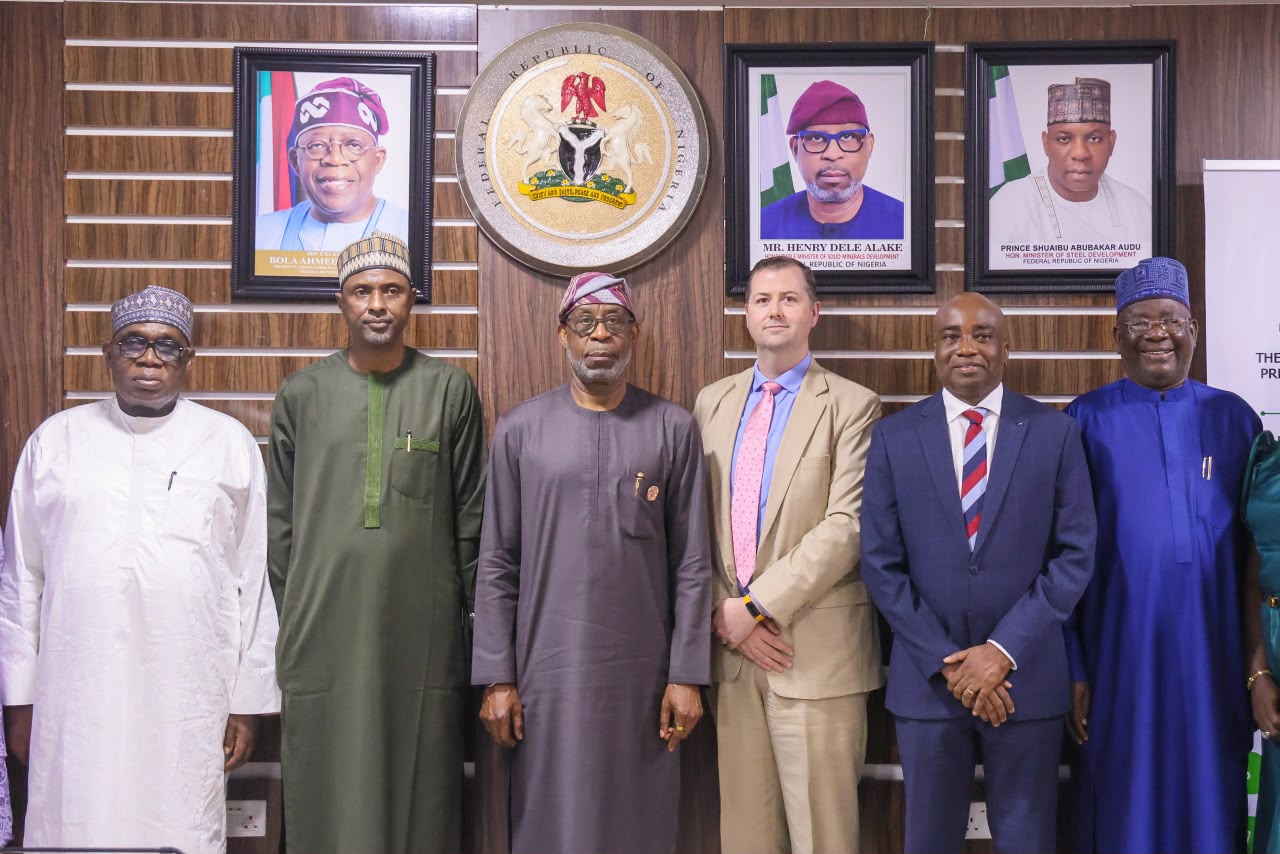
The Minister of Solid Minerals Development, Dr. Dele Alake, on Tuesday inaugurated the Nigeria-United States Committee on Strategic Cooperation in the Solid Minerals Sector in Abuja, dismissing reports that Nigeria sold $700 billion worth of solid minerals to the US.
The inauguration followed the strategic cooperation framework established between Nigeria and the United States during the 81st United Nations General Assembly in New York.
In a statement issued on Wednesday by the Head PRESS and Public Relations Department Mrs. Kania Maliki Andeyaba stated that, Alake in the Memorandum of Understanding, MoU, signed with the US is a government-to-government platform to facilitate business-to-business engagements between American investors and Nigerian local operators, not a sale of assets.
Harping on the importance of the solid minerals sector to President Bola Ahmed Tinubu’s economic diversification agenda, he noted that the administration was committed to reducing dependence on a mono-product economy through the sustainable development of Nigeria’s vast mineral resources.
According to him, the Nigeria–US partnership as a strategic initiative to attract investment, promote technology transfer, strengthen local mineral processing and create employment opportunities.
“There is no sale of any Nigerian asset. There’s nothing exchanging hands,” Alake declared.
“We created a platform to facilitate mingling of US investment ventures with Nigeria’s local operators. It is in the public domain. We signed it in public and published it in four or five national newspapers.”
The Minister said reports claiming the US was coming to take over Nigeria’s minerals and security architecture were untrue at best and products of riotous imagination at worst.
Explaining the policy thrust, Alake said Africa has historically held the short end of the stick in global economic transactions, and Nigeria is determined to change that model.
“We have the resources, the critical elements the world needs to transit to clean energy. So we are creating a new paradigm — you bring your capital, expertise and technology, to match with our natural resources and create a win-win situation . The investor gains, Nigeria gains.’’he said.
Nigeria, he stressed, had operated a mono-cultural economy dependent on oil, while solid minerals were exploited informally — with ores taken “from pit to port” without value addition.
Alake said government has now made local processing mandatory, refusing to grant mineral titles to investors without a clear pathway to processing in Nigeria.
He said the policy led to the springing up of processing factories, including the largest lithium processing plant in West Africa commissioned recently in Nasarawa by the Vice President, and informed the formation of the African Minerals Strategy Group.
Alake noted that investor confidence has returned due to macro-economic reforms by President Bola Tinubu that guarantee security of tenure and repatriation of profits.
He charged the committee to discharge its assignment responsibly, saying its work is strategic to achieving the President’s $1 trillion economy target.
To this end, he told the Committee to ensure effective coordination, identify investment opportunities and translate the framework into measurable outcomes capable of positioning Nigeria as a competitive player in the global solid minerals industry.
In his welcome address, Permanent Secretary of the Ministry, Engr. Faruk Yusuf Yabo, said the inauguration translates growing bilateral engagements into a structured framework for practical cooperation and investment mobilization
Economic Officer at the US Embassy, Jonathan Baas, said President Donald Trump has prioritized three areas for US embassies — energy, artificial intelligence/super intelligence, and critical minerals.
Baas said Washington’s direction is to work with partners to secure critical supply chains while ensuring partners capture value.
“We just signed a contract today on looking into building AI data centres in Nigeria at the Nigerian Economic Summit. That’s the direction Washington wants us to go,” he said.
In his vote of thanks, CEO/Managing Director of Nigeria Solid Minerals Company, NSMC said that the committee
is expected to coordinate implementation, facilitate investment and monitor progress towards achieving the objectives of the Nigeria–US cooperation framework.
The inauguration reinforces the Federal Government’s commitment to repositioning the solid minerals sector as a key driver of economic diversification, industrial development and national prosperity under President Tinubu’s Renewed Hope Agenda.
-
 Featured7 years ago
Lampard Names New Chelsea Manager
-
 Featured7 years ago
FG To Extends Lockdown In FCT, Lagos Ogun states For 7days
-
 Featured7 years ago
Children Custody: Court Adjourns Mike Ezuruonye, Wife’s Case To April 7
-
 Featured7 years ago
NYSC Dismisses Report Of DG’s Plan To Islamize Benue Orientation Camp
-

 Featured5 years ago
Transfer Saga: How Mikel Obi Refused to compensate me After I Linked Him Worth $4m Deal In Kuwait SC – Okafor
-
Featured7 years ago
Board urges FG to establish one-stop rehabilitation centres in 6 geopolitical zones
-
Sports4 years ago
TINUBU LAMBAST DELE MOMODU
-

 News2 years ago
Zulu to Super Eagles B team, President Tinubu is happy with you













