
News
Why Nigeria’s Budgets Fail To Meet Aspiration Of Citizenry-CIPSMN
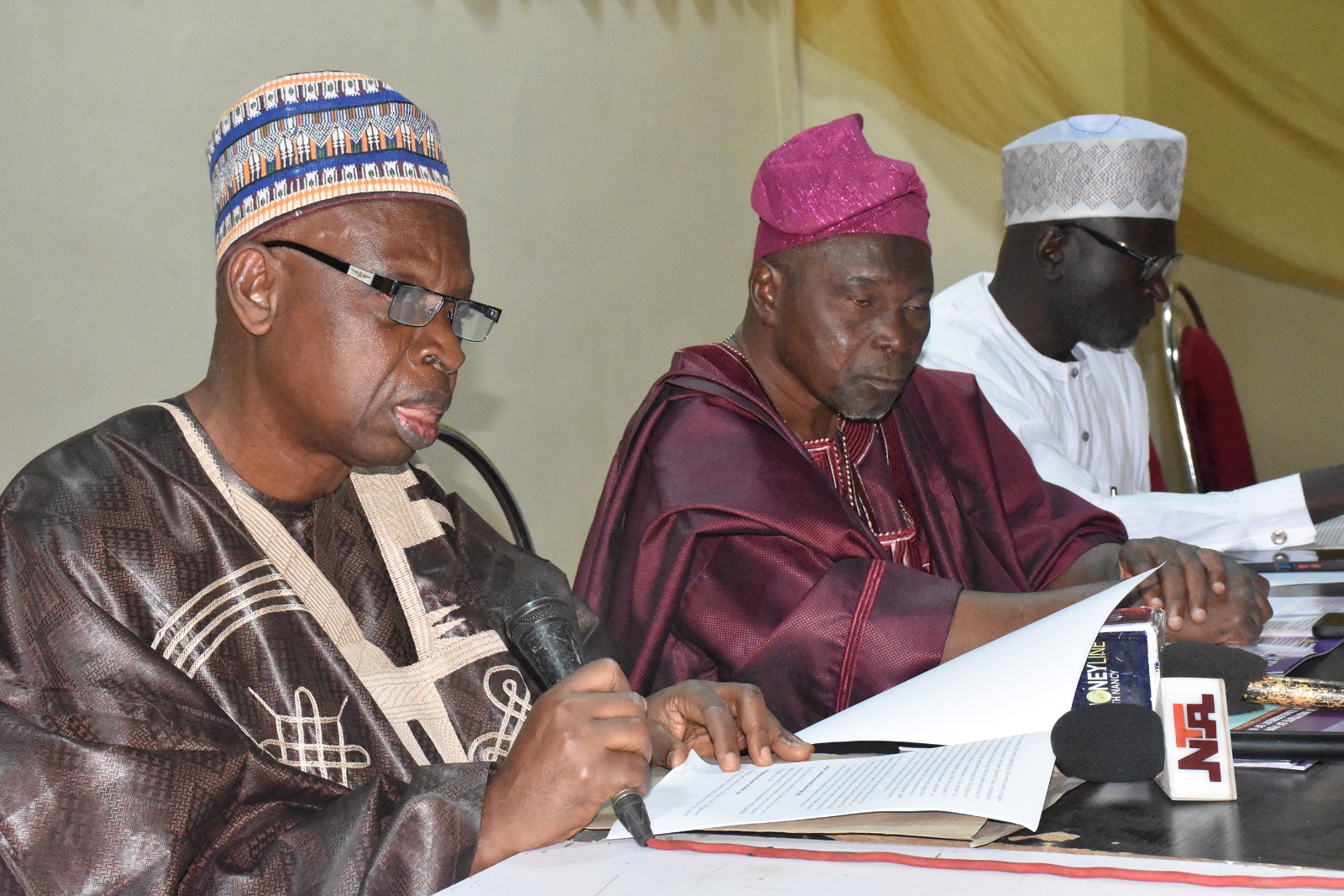
…Task Tinubu on the inauguration of the National Council on Public Procurement
Joel Ajayi
The Chartered Institute of Purchasing and Supply Management of Nigeria CIPSMN has identified poor procurement expert engagements that would ensure transparency in the procurement of equipment remain the reasons why Nigeria’s budgets have been unable to meet the yearning of people over the years.
This is even, as the expert’s institute expressed grave concerns over the inefficiencies in the implementation of the nation’s Appropriation Acts by successive administrations thereby urging President Bola Ahmed Tinubu to inaugurate the National Council on Public Procurement (NCPP) without further delay.
President of CIPSMN Alhaji Sikiru Balogun stated this in Abuja at the investiture of its members and Annual General Meeting saying the dividends of democracy can be largely attained, through effective and efficient procurement planning policy, implementing strategies, and right service delivery anchored on accountability, competition, transparency.
He expressed concern over the inefficiencies in the implementation of the nation’s Appropriation Acts by successive administrations and called on President Bola Tinubu to look inward to clean the system.
According to him, the major problem in the system is giving personnel who are not inclined professionally in the field of procurement a task to do.
“This is also that with our law anybody who is not qualified by examination who is not satisfied by us to be competent should not be given any post to head any procurement department.
“We have observed that some people are mistaken and say purchasing is different from procurement, it is a big mistake.
He added that putting a square peg in a round hole had been a major problem that affected the conceptualization of the country’s budget.
On his part, the institute Registrar, Alhaji Mohammed Aliyu underscored the need to rid the country of corruption by ensuring that professionals manned relevant public offices.
“The dream of every organization is to progress to the next level and as far as the institute is concerned not mindful of the number of people that are present we are making progress.”
Meanwhile, the Zonal Coordinator for North Central, Abdul Mamman, expressed concern with the way the BPP trained officers for one week and issued them certificates without them knowing the nitty-gritty of procurement.
Mamman explained that a good number of people today in the country saddled with procurement functions do not have the certification.
“On the issues of the amendment being proposed to the Public Procurement Act, we tend to identify that its just a mistake on the part of the government.
“Because the CIPSMN is the institute established to train, certified by examination, conduct research and also establish bodies of people with the knowledge that are required for you to propel the procurement practice in Nigeria.
“As of today, executive order 5 which was passed by the last administration on Feb. 2, 2018, equally speaks to that effect whereas every professional in Nigeria should be recognized as it is done in another part.
“Specifically government intends to do amendment and we understand but one critical issue that the government needs to know is that the people that are proposing this, have participated in the implementation of the budget from the start to the end.



News
AWESSA 2026: Customs Assures Border Cooperation for Women Entrepreneurs
By James Samuel, Abuja
The Nigeria Customs Service has said the nation’s borders must become gateways of opportunity for African women entrepreneurs, not obstacles that kill their businesses.
This was disclosed at the African Women’s Economic Sovereignty Summit and Awards (AWESSA) 2026 held at the Customs House, corporate headquarters of the Nigeria Customs Service in Abuja.
Representing the Comptroller-General of Customs, Bashir Adewale Adeniyi, MFR, his representative, an Assistant Controller, said hosting the summit inside Customs premises was deliberate.
“That this summit holds within the Customs premises is no accident. It is a statement of intent,” he said.
“The border is where the promise of every African trader either comes alive or dies quietly. And the men and women of this Service have resolved that for every woman entrepreneur of this continent, that promise will never die.”
He said women account for an estimated 70% of informal cross-border trade in Africa and over half of agricultural labour, yet they face documentation, standards, finance and harassment challenges.
“Too often she meets the border as an obstacle rather than a gateway. Because she trades in small volumes, in cash, in informality without formal papers, capable business women are now trapped in informality, invisible to trade statistics,” he noted.
He added: “AfCFTA will not be delivered by treaties alone. It will be delivered at border posts, in conference halls, and in market stores.”
Also speaking, the Executive Director of the Nigerian Export Promotion Council, Mrs. Nonye Ayeni, represented by a Director, said women are central to Nigeria’s non-oil export sector.
According to her, NEPC’s focus is now on building export- ready competitive enterprises through programmes like the Women in Export Initiative, Export Clinic, and Zero to Export.
“Our focus is no longer on encouraging exports alone, it is on building competitive export-ready enterprises. We are supporting women to move beyond production into value addition, quality assurance, standard compliance, branding and market positioning,” she said.
She said AfCFTA offers a market of over one billion people, but women need knowledge, certifications and institutional support.
“Empowering women economically is one of the most effective tools for achieving poverty reduction, food security, job creation and inclusive growth,” she stated.
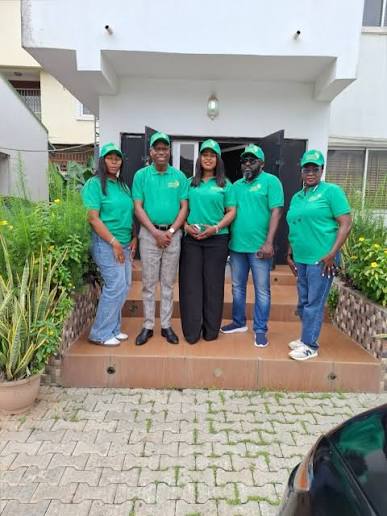
The Convener, Helen Okon, who is the Publisher of Business Review Africa & Africa Today Magazine, as well as representatives of NAFDAC DG and NEXIM Bank MD, reaffirmed commitment to supporting women-owned businesses access standards, certification and finance.
The summit, with the theme of positioning women as drivers of trade and sustainable development, is part of activities marking the International Year of the Women Farmer.
-
 Featured7 years ago
Lampard Names New Chelsea Manager
-
 Featured7 years ago
FG To Extends Lockdown In FCT, Lagos Ogun states For 7days
-
 Featured7 years ago
Children Custody: Court Adjourns Mike Ezuruonye, Wife’s Case To April 7
-
 Featured7 years ago
NYSC Dismisses Report Of DG’s Plan To Islamize Benue Orientation Camp
-

 Featured5 years ago
Transfer Saga: How Mikel Obi Refused to compensate me After I Linked Him Worth $4m Deal In Kuwait SC – Okafor
-
Featured7 years ago
Board urges FG to establish one-stop rehabilitation centres in 6 geopolitical zones
-
Sports4 years ago
TINUBU LAMBAST DELE MOMODU
-

 News2 years ago
Zulu to Super Eagles B team, President Tinubu is happy with you