
News
Zacch Adedeji on a mission with people-centric reforms

By Arabinrin Aderonke Atoyebi
The Federal Inland Revenue Service (FIRS) is becoming more than a government agency. It is not today that we have been saying this, and it will not stop today or anytime soon. It is now being recognised as a partner in national development, driven by reforms that place people at the center and deliver measurable results.
Over the past months, the leadership of Dr. Zacch Adedeji, Executive Chairman, FIRS, has introduced a series of people-focused changes that have shown a tangible impact on our revenue system and the economy at large.
His work has been based on practical reforms in tax law, improved welfare for staff and citizens, the adoption of technology to streamline processes, stronger teamwork across departments, and a leadership style grounded in clarity, accountability, and measurable outcomes.
Just this August, the agency launched an electronic invoicing system for companies with an annual turnover of five billion naira or more. It went live on the first day of the month, and by the second week, about a thousand companies had already joined. Organizations like MTN, Huawei, and IHS are on board. Others have until November 1 to comply. The process is firm, but the rollout has been managed carefully, giving companies enough time to adjust without disruption.
The effects are already showing. Afri Invoice, a local Nigerian company that provides e-invoicing solutions, has created 150 new jobs in seven states to meet the demand. It may seem small, but it serves as proof that one effective policy can open the door to more jobs and economic growth.
Not long after, on August 7, FIRS held its first Research Day. It was not an event for long talks but a day of action and openness. Three (3) main resources were made public. The first was the Tax Revenue Statistical Bulletin, containing more than fifty years of tax data from 1970 to 2022. The second was the official Research Policy, which sets out a framework for conducting transparent and high-quality studies.
The third was the latest volume of the FIRS Journal of Tax Studies, now available online. These materials are open to researchers, journalists, students, policymakers, and anyone who wants to understand our tax history and the direction we are headed.
Step by step, these reforms show that when leadership is focused on people and guided by data, institutions can transform. The work being done at FIRS today is building not only better systems but also trust between the government and the people it serves.
Let’s not forget that under the Tax Boss, tax education and public engagement have also taken a new shape. FIRS has stepped up its outreach to small and medium enterprises, offering guidance on compliance and breaking down processes that once felt complicated and far removed from the everyday business owner.
The agency has also strengthened partnerships with state revenue services, ensuring that both federal and state systems work together rather than compete.
Capacity building for staff has been prioritised, with training programs designed to give them the skills and tools to meet modern tax administration demands. In addition, reforms in dispute resolution have made it faster and easier for taxpayers to settle issues without lengthy court battles, promoting a more cooperative relationship between the agency and the general public. Digital platforms have been improved, meaning that many taxpayers can now register, file, and pay from the comfort of their offices or homes.
Sometimes, you stop and wonder how one person can have so much vision while truly keeping the needs of people in mind. Dr. Zacch understands difficult challenges but never loses sight of those who live them every day. His efforts are effective, making changes that touch many lives.
The progress seen today comes from thoughtful decisions and a commitment to serve others. In a country where many lead for themselves, he leads for the people. When you think about leadership that combines critical thinking with care, the answer is not far-fetched. It can only be him.
Arabinrin Aderonke Atoyebi is the technical assistant on broadcast media to the executive chairman of the Federal Inland Revenue Service Contact@arabinrinaderonke.com



Foreign news
Algeria’s Glorious Revolution: Embassy Marks 72nd Anniversary in Abuja
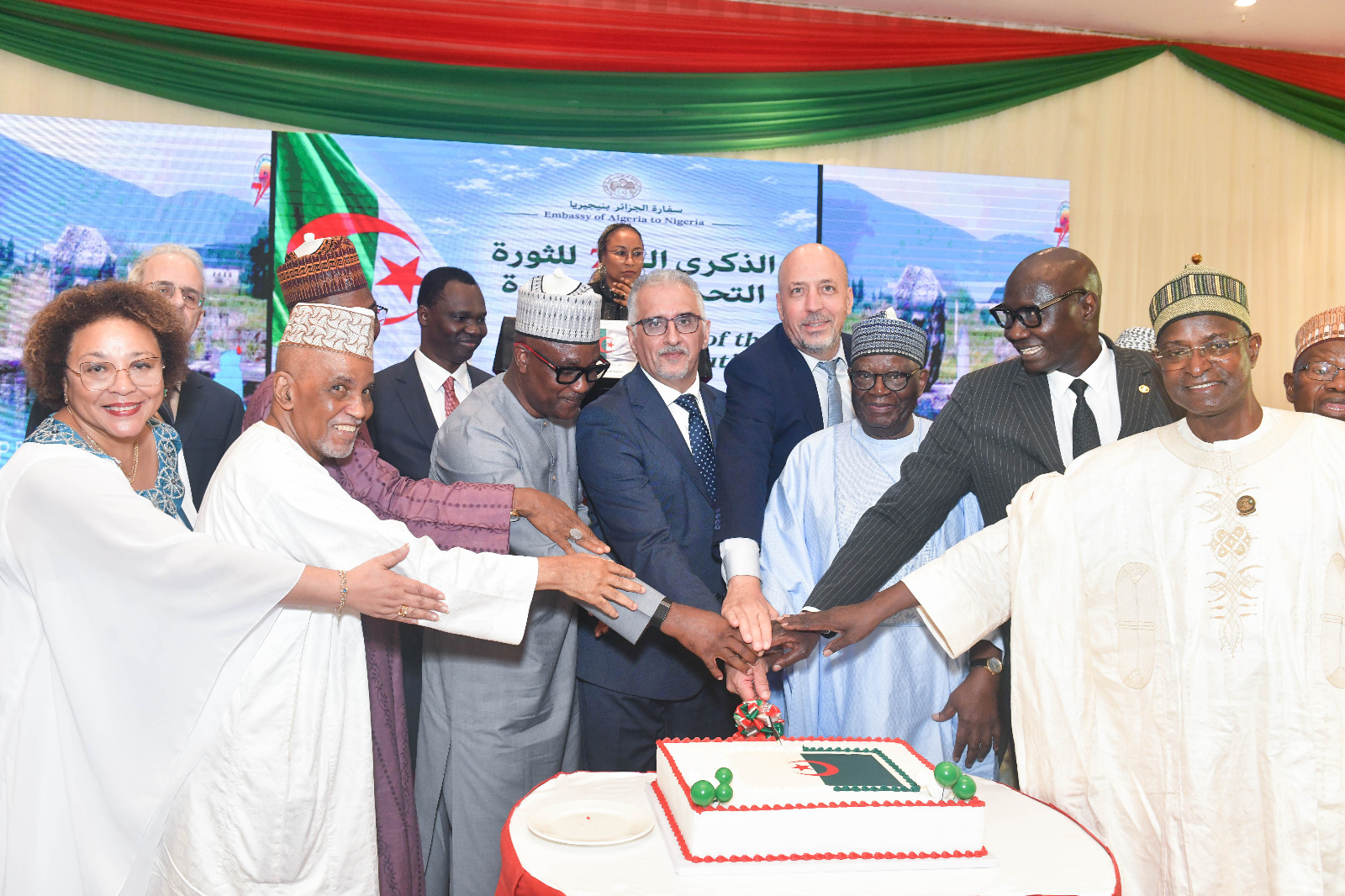
Joel Ajayi
The Embassy of Algeria in Nigeria has commemorated the 72nd anniversary of the country’s Glorious Revolution of November 1, 1954, with a reception in Abuja, highlighting Algeria’s liberation struggle and strengthening diplomatic relations with Nigeria.
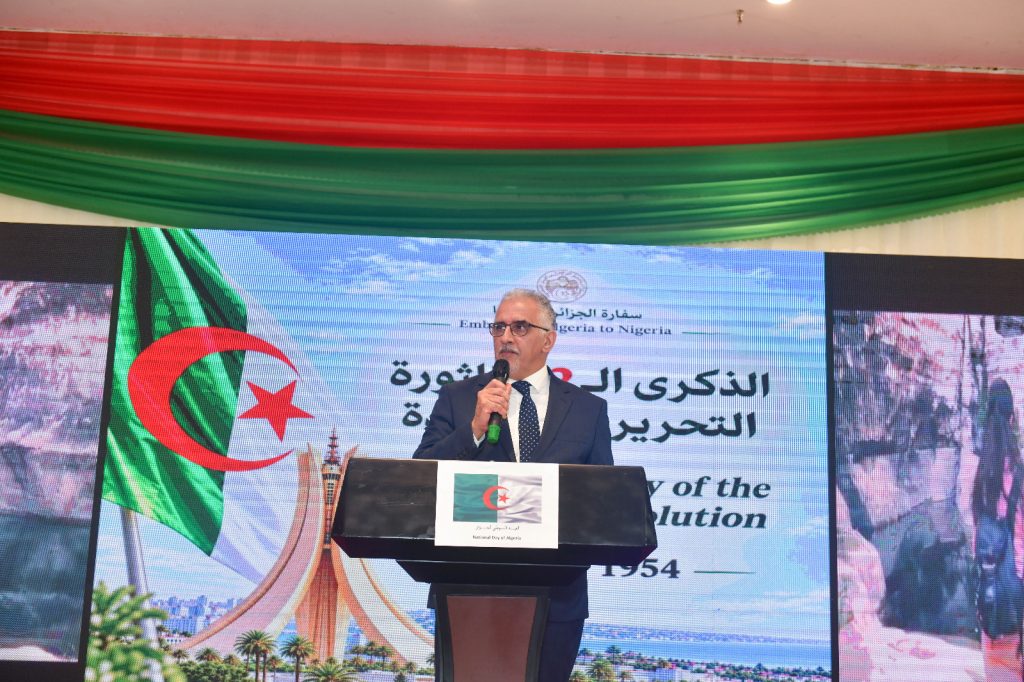
The event, held on November 9, 2026, at Continental Suites Hotel, attracted prominent personalities, including the Speaker of the House of Representatives, Dr Tajudeen Abbas, members of the Federal Government, senior government officials, heads of diplomatic missions and other friends of Algeria.
Speaking at the reception, Algeria’s Ambassador to Nigeria, Hocine Mezoued, welcomed guests and paid tribute to the country’s freedom fighters who sacrificed their lives during the struggle for independence.
He described the November 1, 1954 revolution as the foundation of modern Algeria, noting that the sacrifices of the nation’s martyrs made it possible for the country to reclaim its sovereignty.
On Algeria’s development agenda, Mezoued said President Abdelmadjid Tebboune’s administration had continued to pursue economic reforms, diversification and national development under its New Algeria vision.
He noted that the country was recording progress in non-hydrocarbon exports, while improvements in the business environment had boosted investor confidence and attracted significant foreign investments.
On foreign policy, the ambassador reaffirmed Algeria’s commitment to non-interference, respect for national sovereignty, peaceful conflict resolution and the right of peoples to self-determination.
Addressing security challenges in the Sahel, he stressed that lasting peace could not be achieved through military measures alone, insisting that economic development, inclusive dialogue and peaceful resolution of disputes remained essential.
Turning to Nigeria-Algeria relations, Mezoued described the partnership as one founded on shared values and the commitment of both countries’ leaders to advancing African development.
He identified the Trans-Saharan Highway, Trans-Saharan Gas Pipeline and Trans-Saharan Fibre Optic Backbone as major strategic projects receiving attention from both countries.
The ambassador also disclosed that Algeria had continued to provide scholarships to Nigerian students to strengthen human capital development and capacity building.
He further announced that Air Algérie expanded its Nigerian operations on October 26, 2026, with the introduction of two weekly flights to Lagos, expressing confidence that the service would boost trade and tourism.
Looking ahead, Mezoued said 2027 would offer fresh opportunities to deepen bilateral cooperation, particularly through the fifth Joint High Bi-National Commission scheduled to hold in Abuja.
He expressed optimism that the meeting would provide an opportunity to assess existing partnerships, identify new areas of cooperation and move Nigeria-Algeria relations towards a more practical and results-driven phase.
-
 Featured7 years ago
Lampard Names New Chelsea Manager
-
 Featured7 years ago
FG To Extends Lockdown In FCT, Lagos Ogun states For 7days
-
 Featured7 years ago
Children Custody: Court Adjourns Mike Ezuruonye, Wife’s Case To April 7
-
 Featured7 years ago
NYSC Dismisses Report Of DG’s Plan To Islamize Benue Orientation Camp
-

 Featured5 years ago
Transfer Saga: How Mikel Obi Refused to compensate me After I Linked Him Worth $4m Deal In Kuwait SC – Okafor
-
Featured7 years ago
Board urges FG to establish one-stop rehabilitation centres in 6 geopolitical zones
-
Sports4 years ago
TINUBU LAMBAST DELE MOMODU
-

 News2 years ago
Zulu to Super Eagles B team, President Tinubu is happy with you













