
Featured
ZONING BEING A FUNCTION OF NIGERIAN SYSTEM, IS CONSTITUTIONAL

By Jeff Ejiofor
According to Alhaji Tanko Yakassi, a northern leader and former Liaison Officer to Late President Aliyu Usman Shehu Shagari, for Nigeria to enjoy political stability, unity across the country and a sense of equity, the presidency and other key national offices should be rotated and shared among the country’s geo-political zones. From this statement of fact credited to a renowned elder statesman of northern extraction, it is implicitly clear that the word zoning did not evolve in the lexicon of Nigerian political dictionary today. It is basically as old as Nigeria, especially its presidential democracy which started in 1979 during the second republic.
In fact, political zoning was first introduced in Nigeria by the then National Party of Nigeria, NPN, which we all know, was the first political party that was accepted nationwide in Nigeria as everybody’s party. No individual or a group of Nigerians ever allocated to themselves the ownership of NPN. Everybody was a joint owner of the party. It was because of that, that NPN thought of developing the concept of zoning in order to assure every member and every segment of Nigeria that the exotic office of the president would one day rotate to their area or zone.
Apparently, that was the reason the idea of zoning kept coming up in all political conferences that took place after NPN, and has been adopted by some conferences as a provision in the Nigerian Constitution. Under Late Gen. Sani Abacha’s constitutional conference of 1994/1995, it was recommended, and the military accepted that it should be incorporated into the constitution of Nigeria, but in a way that it will form the basis of registration criteria for every political party. Unfortunately, Abacha died in 1998 and the reforms died with him, making the realisation of the concept as a constitutional matter abortive.
However, since then, the majority of Nigerians have accepted zoning as a very good strategy that will give everybody in Nigeria a sense of belonging.Those who are able to get the position to their side will be satisfied and acknowledged and those who have yet to get it, were assured that they will get it when the time comes. So, now you cannot separate zoning from rotation, because zoning without rotation is meaningless. Whoever adopts zoning automatically adopts rotation, and whoever rejects zoning, automatically rejects rotation.
For those who hold draconian views about merit being the exclusive right of certain persons or group of persons, they should know that there is no part of Nigeria today that competent people are not found. It is undisputable that every local government in Nigeria today has competent and qualified Nigerians to seek any public office, be it elective or appointive. So, the issue of using merit or competence to de-market zoning is baseless and mischievous.
Those who on the other hand, query the constitutionality of zoning are either insincere or ignorant of the realities of Nigerian system. Such people should tell us what quota system is all about. Let them tell us what the federal character principle is doing in our system.They should also interpret the Schedule 3 of Nigerian constitution which states that political offices should be shared among the component units of the country in such a way that every part is evenly represented at all times. It is indeed lack of in-depth understanding that anybody will regard zoning as unconstitutional. In short, metaphorically speaking, zoning is constitutional and has abinitio been practised in Nigeria.
As a result of the above reality, in1999 when the whistle for the third republic political activities was blown, Nigerians were quick to resurrect the issue of zoning and it became the most popular slogan in the country’s political parlance. Across the length and breath of Nigeria, the issue of zoning became a matter of political exigency synonymous with justice, equity and fairness. Proposal for its adoption was practically seen as the only suiting balm to settle the protracted political impasse precipitated by the annulment of June 12 presidential election presumably won by Late Chief MKO Abiola.
Recall that Chief Abiola died in the custody of Nigerian government while struggling to reclaim his mandate. As a matter of fact, zoning which was seen by most Nigerians as the only vehicle for political justice where the right of every Nigerian will be protected, became generally acceptable. It came to the rescue and eventually pulled Nigeria out of the precipice and doldrums of political quagmire, part of which was the zoning of presidency to the South West by the two major political parties with a view to pacifying them for the injustice of June 12,1993.
Expectedly, Enugu State, being one of the prominent states in Nigeria, saw the need to align with the generality of Nigerians whose states have embraced zoning anchored on political justice and sense of belonging. Enugu keyed into the zoning policy which is regarded as the most politically expedient practice in Nigeria capable of ensuring peace and stability where everybody is happy.
In pursuance of this noble objective, the elders of the state at that time, bearing in mind the bitter political rivalry always occasioned by free for all fight politics as was the case between Dr.Joe Nwodo and Senator Hyde Onuaguluchi in the 3rd republic, decided to reach a gentleman understanding on a power sharing formula among the existing three senatorial political structure of the state.Though it was more prominent in the ruling People’s Democratic Party, all other political groups that tried to thwart the arrangement were met with stiff resistance by Ndi Enugu who roundly rejected them at the polls for trying to usurp justice and equity charter of the people.
It honestly beats my imagination to see people seeking to destroy a lofty policy carefully contrived to ensure justice in the system. It beats my imagination that people can exhibit such significant sign of short memory to the point of attempting to reverse the hand of the clock for primitive personal aggrandizement. I am dumbfounded that after seeing the endless political turmoils in states that refused to practise zoning, some people, out of sheer greed can still wish their home states such an ugly experience. I never imagined that any right thinking citizen of any Nigerian state can advocate free for all fight politics in any part of Nigeria. Above all, I did not believe before now that any Enugu man can work against zoning which has brought peaceful and seamless transition of power in Enugu State.
In conclusion, my candid advice is that people should desist from insulting the sensibilities of others in their subtle bid to destroy a well established political principle, norm and tradition of Enugu people. Zoning has always been a part and parcel of Nigerian system and did not start today. Let nobody, because of ill acquired public wealth, arrogate to himself a leviathan political status in a state collectively owned by over 4 million people. Enugu State belongs to all of us and the political tranquility achieved by our amiable and peace loving Governor, Rt Hon Dr Ifeanyi Lawrence Ugwuanyi should not be taken for granted.
A stitch in time saves nine.
Enugu is in the hands of God



Business
Turning Africa’s Raw Materials Into Wealth: The ARMS 2026 Industrial Agenda
By Joel Ajayi
For decades, Africa’s vast natural resources have powered industries and economies far beyond the continent, while many African countries have remained largely exporters of unprocessed commodities and importers of finished products.
That familiar pattern is now coming under renewed scrutiny as policymakers, researchers, investors and industrialists seek to change the direction of Africa’s resource economy.
At the centre of that conversation is the second edition of the Africa Raw Materials Summit (ARMS 2026), scheduled for October 19 and 20 at the Abuja Continental Hotel, Abuja, under the theme: “From African Feedstock to African Factories.”
Organised by the Raw Materials Research and Development Council (RMRDC), the summit is being positioned as more than another gathering of policymakers and industry stakeholders. It is intended to provide a platform for confronting the structural challenges that have kept African raw materials largely disconnected from local manufacturing.
Africa has for years operated largely within a “pit-to-port” economic model, exporting raw materials while importing expensive finished products.
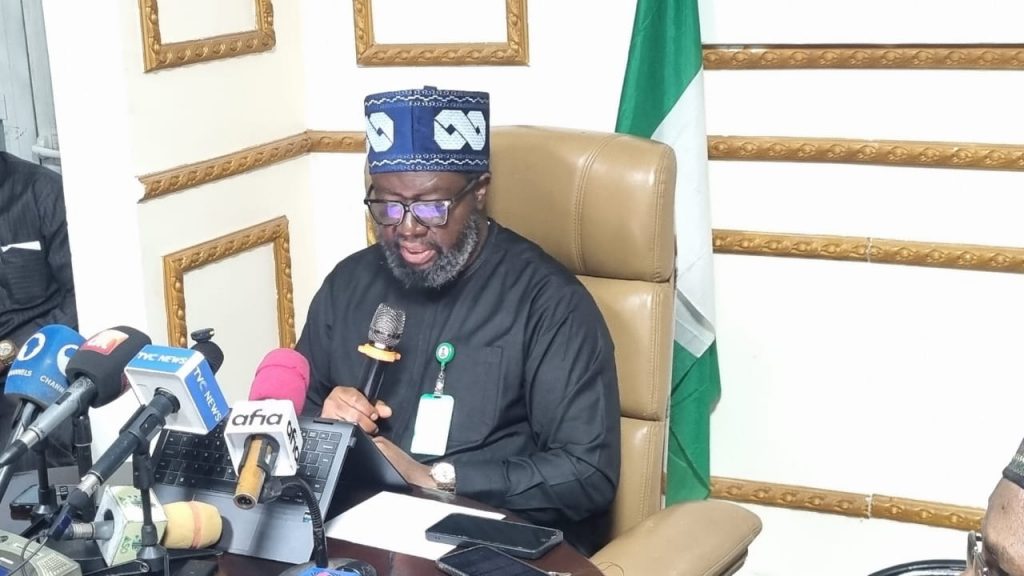
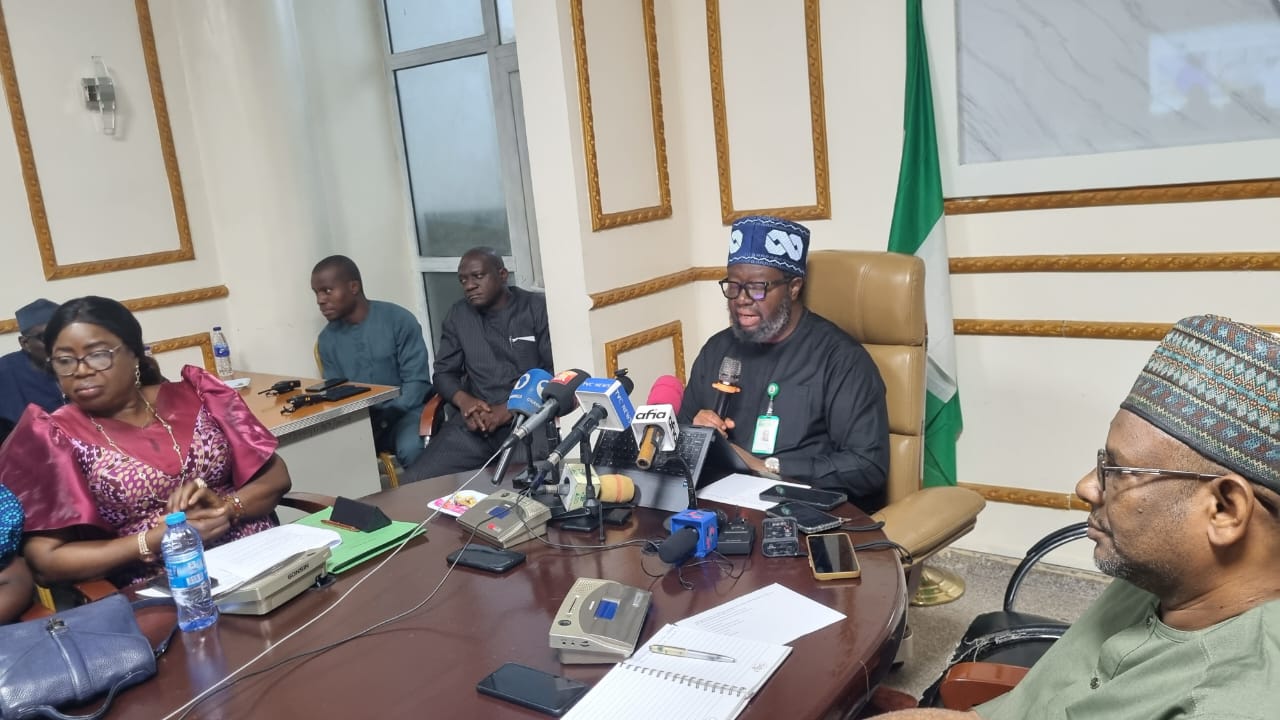
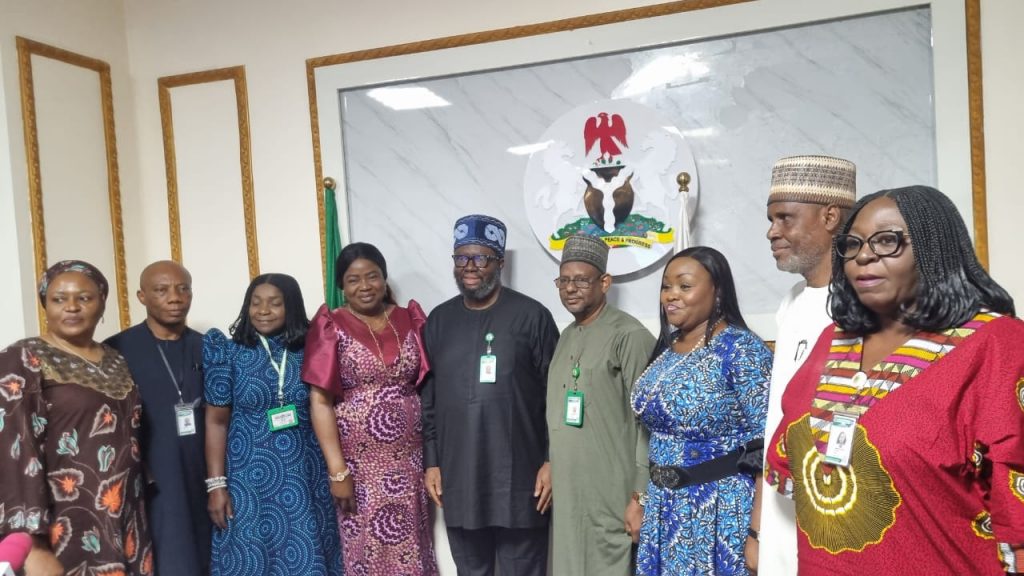
Speaking at a press conference ahead of the summit on Tuesday in Abuja, the Director-General and Chief Executive Officer of RMRDC, Prof. Nnanyelugo Martin Ike-Muonso, said the event would bring together policymakers, investors, researchers, technology providers and industrialists to develop practical strategies for transforming Africa’s abundant natural resources into industrial wealth.
The challenge, therefore, is not simply the abundance of resources, but the continent’s ability to transform those resources into industrial value, employment, technology and wealth within Africa.
Nigeria alone, according to the RMRDC, has more than $582.4 billion in documented non-renewable natural resources, while the wider continent possesses substantial deposits of critical minerals, agricultural raw materials and industrial feedstock.
Yet, the benefits of this resource endowment have often been constrained by inadequate processing capacity, weak infrastructure, limited technology, financing gaps and fragmented regional value chains.
From Dialogue to Industrial Action
ARMS 2026 builds on the maiden edition held in May 2025, which attracted more than 1,000 delegates from across the world.
The inaugural summit also witnessed the unveiling of the Ten-Year Raw Materials Transformation Roadmap (2025–2034) by the Minister of State for Industry, Senator John Owen Enoh.
The roadmap was designed around areas including technological capability, climate-resilient processing and backward integration, establishing a policy framework for greater domestic utilisation of Africa’s raw materials.
The second edition is expected to move the conversation further by bringing policy, capital, technology and industrial stakeholders around practical mechanisms for turning raw materials into locally manufactured products.
One of the major proposals highlighted by the RMRDC is the 30 per cent Mandatory Value Addition Bill, which seeks to establish a statutory minimum level of value addition to Nigerian raw materials before export.
The Council says the proposed framework could support job creation, import substitution, foreign-exchange conservation and increased manufacturing contribution to the economy.
Building the Infrastructure for Value Addition
The industrial transformation envisaged by ARMS 2026 goes beyond legislation.
A major concern is the “missing middle” between where raw materials are produced and where factories are located.
Poor transportation networks, inadequate cold-chain facilities, weak rural roads, limited testing and certification infrastructure and border-related delays can make locally sourced materials more expensive and less competitive.
Consequently, logistics and infrastructure constitute one of the five principal pillars of the summit.
The objective is to develop more reliable corridors connecting farms and mines with processing centres and manufacturing facilities, thereby reducing losses and improving the movement of industrial inputs.
The Digital Dimension
Technology is also becoming an important part of the Council’s strategy.
The RMRDC says it has developed the Nigeria Integrated Information Statistical System for Raw Materials and Products (NISSRAMP), described as a digital repository containing information on feedstock deposits, specifications, production outputs and industrial absorption rates.
The Council has also highlighted its transition towards paperless operations and its certification as a Data Controller/Processor of Major Importance by the Nigeria Data Protection Commission.
Such digital infrastructure could provide investors and manufacturers with better information about the availability and characteristics of raw materials while supporting more informed industrial planning.
Turning Waste Into Industrial Inputs
Another major component of ARMS 2026 is the proposed expansion of the circular economy.
The summit will examine how agricultural by-products, mine tailings, scrap metals and biomass can be recovered and reused as inputs for new production processes rather than being treated simply as waste.
The RMRDC argues that such an approach could lower raw-material costs while supporting more sustainable and climate-resilient manufacturing systems.
For Africa, where industrial expansion must increasingly balance economic development with environmental considerations, waste industrialisation could become an important part of the continent’s manufacturing conversation.
From National Production to African Value Chains
The African Continental Free Trade Area is another important element of the summit’s agenda.
The RMRDC sees AfCFTA as an opportunity to create regional value chains in which raw materials sourced in one African country can be processed and supplied to manufacturers in another.
Under such a model, Africa would move beyond simply exporting commodities to external markets and develop stronger internal networks for supplying chemicals, refined minerals, agricultural inputs and other industrial materials across national borders.
This approach places regional integration at the heart of Africa’s industrialisation strategy.
Bridging Research and Capital
A recurring weakness in many developing economies is the gap between research and commercialisation.
Innovations may emerge from universities, research institutions and laboratories without receiving the financing, equipment or market connections required to become commercially viable.
ARMS 2026 intends to address that gap through technology commercialisation and capital linkages, connecting research outputs with investors, development finance institutions and industrial off-takers.
The RMRDC has also cited partnerships with the Bank of Industry for commercial-scale post-harvest processing and a South-South technology-transfer partnership with the National Innovation Centre par Excellence in Shanghai, China.
A Larger Industrial Conversation
The scale of ARMS 2026 is expected to be significantly larger than the maiden edition.
The organisers project more than 1,800 delegates from all 54 African countries and global industrial partners.
The programme will feature high-level policy dialogues, technical panels, an advanced raw materials and technology exhibition, industrial site visits and the African Raw Materials Industry Awards.
The exhibition, in particular, is expected to showcase locally fabricated processing machinery, advanced domestic materials, green chemicals and engineered commercial inputs.
Beyond the speeches and exhibitions, however, the real significance of ARMS 2026 will ultimately depend on what happens after the summit.
Africa’s challenge has never been a shortage of raw materials. The more difficult question has been how to transform those resources into factories, products, skilled employment, technology and sustainable economic opportunities.
For Nigeria and the rest of the continent, the proposed shift from “pit-to-port” to “feedstock-to-factory” therefore represents a broader debate about the future structure of African economies.
ARMS 2026 seeks to place that debate firmly on the industrial agenda — with value addition, technology, finance, infrastructure, circular production and regional trade at the centre.
If the commitments and partnerships generated by the summit translate into measurable industrial activity, the event could provide another platform for Africa to examine how its enormous resource base can support stronger domestic manufacturing.
The message from the organisers is clear: the continent’s raw materials should not only leave African soil as commodities; they should increasingly become the foundation for African industrial production
-
 Featured7 years ago
Lampard Names New Chelsea Manager
-
 Featured7 years ago
FG To Extends Lockdown In FCT, Lagos Ogun states For 7days
-
 Featured7 years ago
Children Custody: Court Adjourns Mike Ezuruonye, Wife’s Case To April 7
-
 Featured7 years ago
NYSC Dismisses Report Of DG’s Plan To Islamize Benue Orientation Camp
-

 Featured5 years ago
Transfer Saga: How Mikel Obi Refused to compensate me After I Linked Him Worth $4m Deal In Kuwait SC – Okafor
-
Featured7 years ago
Board urges FG to establish one-stop rehabilitation centres in 6 geopolitical zones
-
Sports4 years ago
TINUBU LAMBAST DELE MOMODU
-

 News2 years ago
Zulu to Super Eagles B team, President Tinubu is happy with you