
Sports
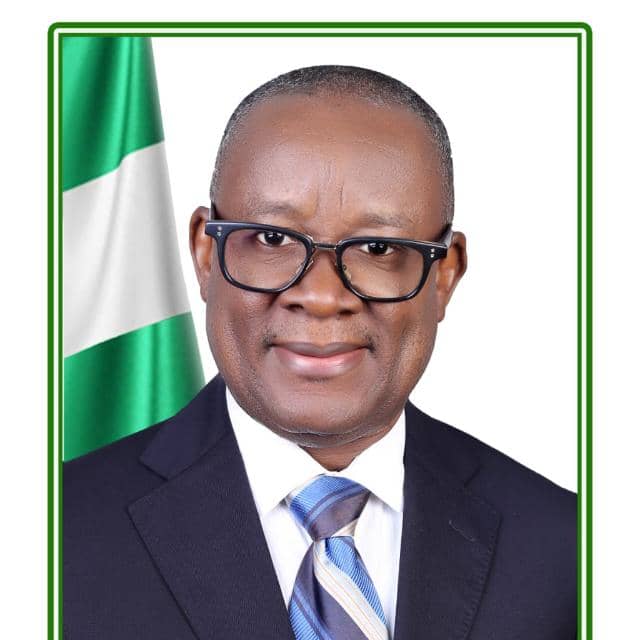
#100DaysinOffice: Rethinking Sports Infrastructure Development Through the Vision of Senator John Enoh
In the realm of sports, where dreams are nurtured and champions are forged, a persistent obstacle stifles potential and dims the aspirations of countless enthusiasts—the unavailability of adequate sports infrastructure. This problem stands as one of the major banes of sports development in Nigeria.
Across communities and states in the federation, the absence or inadequacy of proper sports facilities stands as a formidable barrier, limiting access, stunting talent growth, and impeding the pursuit of athletic excellence. The scarcity of proper infrastructure denies aspiring athletes the opportunity to train, compete, and excel, hampering their ability to reach their full potential. At its core, this issue is a disheartening reality for millions of Nigerians, especially in areas where dilapidated fields, outdated facilities, and a lack of resources converge to create a stark contrast to the vibrant and dynamic sporting environments seen elsewhere.
One endemic issue in Nigerian sports is the quagmire of well-maintained arenas (the lack of it), tracks, courts, and training centers. This problem does not only curtail the development of skilled athletes but also deprives communities of the myriad benefits associated with a thriving sports culture.
These days, it looks like the narratives might be changing. In the 100 days that John Owan Enoh has been on the saddle as the supremo of the Ministry of Sports Development, he has unrelentlessly dug into viable avenues to improve the sports infrastructure of Nigeria.
As a matter of fact, Senator Enoh’s first action as minister was an inspection tour of the Moshood Abiola National Stadium, Abuja. 24 hours after resuming office, he embarked on the inspection to assess the state of facilities. During a briefing with sports journalists that bright afternoon, he postulated that the Ministry will be as systematic as possible, with the process of driving infrastructural growth. On that inspection tour, the Minister went round the gigantic dual-packaged edifice, assessing the Mainbowl, Facility Building, Power Technical House, etc.
One of the impressive part of the new minister’s approach is the vision to make major sports facilities self-sustaining, ensuring facilities generate revenue that is more than enough for their maintenance. He had shared his vision to remodel the abandoned hostel at the Abuja National Stadium into a standard hotel accommodation that will house national teams during their assignments and also standard enough to be rented out to external individuals before national teams’ window comes full cycle.
Senator Enoh’s first trip as a minister was to Lagos, for another inspection tour. He was in Lagos on an inspection tour to the National Stadium, Surulere. In one day, he visited the mainbowl of the National stadium, National Institute of Sports (NIS), Sports Medical Center, Indoor Sports Hall, and other facilities. He also visited the Games Village hostels, and courts of others sports. From his words and poise, one could tell that the Cross Riverian came to the office to work. His passion is contagious, his enthusiasm is infectious and his hard work is admirable.
During his time in Lagos, he spoke about the process towards the concessioning of the National Stadium, Surulere. He mentioned that he will 100% back any method it takes to bring back the glory of what was once the football palace of Africa. Enoh has been seen wooing private investors, while fostering greater relationship with investors such as Alhaji Aliko Dangote and Chief Adebutu Kessington. These two individuals have strongly supported infrastructure development in Nigeria.
By prioritizing the development and maintenance of sports infrastructure, Senator Enoh is sowing the seeds for a more vibrant, equitable, and thriving future. It’s time to convert this lamentable bane into a catalyst for change—an opportunity to build a nation where every aspiring athlete, regardless of background, can pursue their dreams and contribute to a brighter sporting landscape for generations to come. While the journey is still far, Senator John Enoh is definitely on the right track.



Sports
PremiumTrust Bank Abuja City International Half Marathon Splashes Big Prize Money Ahead Of 14 November 2026 Race
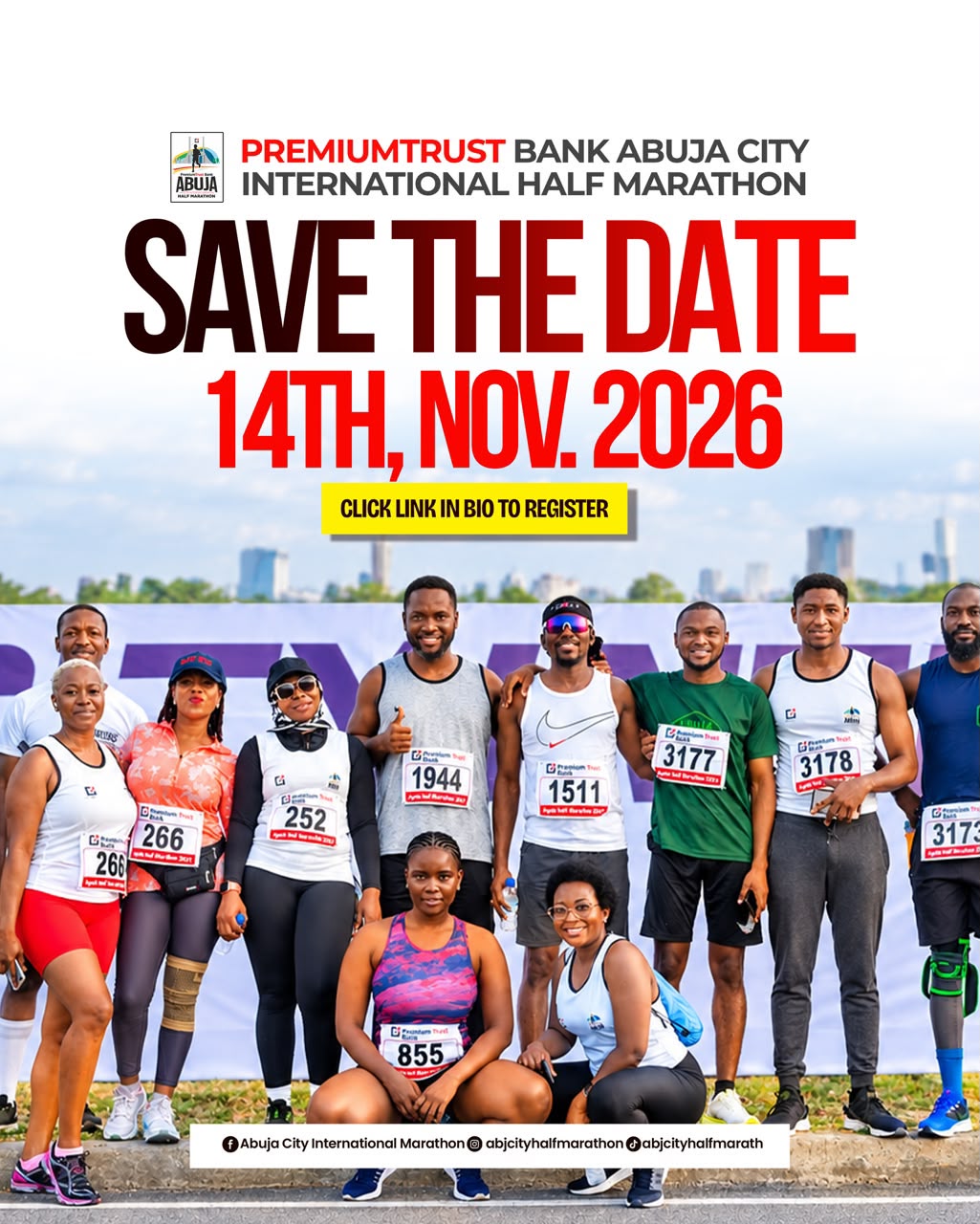
Top Three Elite Finishers To Earn $8,000, $6,000 And $5,000 Respectively
The organisers of the highly anticipated PremiumTrust Bank Abuja City International Half Marathon have announced an attractive prize package for athletes across every category ahead of the race on 14 November 2026 in Abuja.
The prize announcement has been welcomed by athletes and coaches, as the event continues to establish itself as one of the leading road races in Nigeria. The race offers local athletes the chance to compete against international runners in front of a home crowd, while also earning meaningful rewards.
In the elite category, first place earns $8,000, second place takes $6,000, third place gets $5,000, fourth place receives $4,000, fifth place goes home with $3,000, sixth place earns $2,000, seventh place takes $1,000, and eighth place gets $500.
In the Nigerian category, first place earns ₦2,000,000, second place takes ₦1,500,000, third place gets ₦1,000,000, fourth place receives ₦500,000, fifth place goes home with ₦300,000, sixth place earns ₦200,000, seventh place takes ₦100,000, and eighth place gets ₦50,000.
According to the organisers, the prize structure reflects the commitment of PremiumTrust Bank to the growth of athletics in Nigeria and to the encouragement of home based athletes. The separate Nigerian category ensures that local runners are properly recognised and rewarded for their performance.
The half marathon, which covers 21 kilometres, remains an important event for long distance runners. It serves as a test of endurance and preparation, and it provides a competitive platform for athletes building towards major national and international competitions.
The race is expected to draw elite athletes, club runners, corporate teams, fitness enthusiasts and supporters from across Nigeria and beyond. The turnout is expected to be high, given the interest already shown since registration opened.
Organisers have advised interested runners to register early through the official registration portal of the race to secure their participation, as arrangements are being put in place for timing, security, medical support and traffic management on race day.
The prize money is now confirmed, attention will shift to the athletes as they complete their final weeks of training and preparations ahead of the race day.
-
 Featured7 years ago
Lampard Names New Chelsea Manager
-
 Featured7 years ago
FG To Extends Lockdown In FCT, Lagos Ogun states For 7days
-
 Featured7 years ago
Children Custody: Court Adjourns Mike Ezuruonye, Wife’s Case To April 7
-
 Featured7 years ago
NYSC Dismisses Report Of DG’s Plan To Islamize Benue Orientation Camp
-

 Featured5 years ago
Transfer Saga: How Mikel Obi Refused to compensate me After I Linked Him Worth $4m Deal In Kuwait SC – Okafor
-
Featured7 years ago
Board urges FG to establish one-stop rehabilitation centres in 6 geopolitical zones
-
Sports4 years ago
TINUBU LAMBAST DELE MOMODU
-

 News2 years ago
Zulu to Super Eagles B team, President Tinubu is happy with you