
Featured
NYSC at 47: The Unique Trajectory of Africa’s Leading Light in Youth Mobilisation
By Emma Obeni
Globally, over 75 countries have some form of voluntary, compulsory, military or paramilitary national youth service including African countries such as Eritrea, Gambia, Burundi, Morocco and Nigeria.
Nigeria’s national youth service which is mandatory for graduates of tertiary institutions not above 30 years was established on 22nd May 1973. With current annual mobilisation of about 300, 000 participants, Nigeria’s National Youth Service Corps (NYSC) is the largest youth mobilisation agency in Africa. It is remarkable and an irony that NYSC which attracted protests against its establishment by the youths earmarked to drive the Scheme has grown to attract protests from same youths over exclusion or delay in mobilisation to partake in the programme. Some at present even go to the length of procuring fake documents to get mobilised into the Service Corps. Such has become the attraction of the NYSC. The allurement of the NYSC may not be unconnected with the accomplishments of the Scheme over the years.
These achievements can be better distilled from the testimonies of stakeholders, ample services and infrastructures across the country credited to the Scheme. The underlying reason for the birthing of NYSC is to engender national cohesion which the country was (and still) in dire need of after the thirty month civil war resulting from deep ethnic and tribal divisions in the country. The Scheme was therefore established as a deliberate public policy to ensure the realisation of the Government’s post-civil war therapy of Reconciliation, Reconstruction and Rehabilitation. It aims to raise a new crop of disciplined and detribalized Nigerians by allowing the youths to undergo a one year national service in States other than theirs for the purpose of promoting national unity and development. And these among others the Scheme has relentlessly pursued in the past 47 years with Corps members deployed in all the 774 Local Government Areas of the Country.
Inter-ethnic marriages which no doubt have reduced prejudice amongst Nigerians are evidence of what the Scheme has accomplished in promoting national integration. Many cross cultural marriages owe their foundation to NYSC. The wife of the Ondo State Governor Mrs. Betty Anyanwu- Akerodolu attests to this. “NYSC is a tool for fostering national unity. I am one of the beneficiaries of the Scheme because it was through it I met my husband,” she said. Governor Akerodolu met her wife while undergoing the national service in Enugu. The paramount ruler of Yenaka Community in Yenagoa Local Government Area of Bayelsa State, His Royal Highness Ovie Omeleh, Omo Ubie Aka II also benefitted in this regard. He confessed meeting his wife when she came to serve in the State. The Ooni of Ife Oba Adeyeye Enitan Ogunwusi, who served in Benue State testified to the unifying role of NYSC. “NYSC is one of the few programmes that have helped in keeping Nigeria as one indivisible entity”, he said.
The Sultan of Sokoto, Saad Abubakar also subscribes to this position insisting that, “we shall continue to advocate the sustenance of the NYSC…we still believe in its relevance, especially in bringing Nigerians of various ethnic and religious backgrounds together under one roof as a country”. Many participants have also settled in their State of deployment having secured permanent employment or are engaged in thriving private enterprises, there by deepening national integration. Examples include, Afolabi Oluranti, who served in 2004 in Bauchi and owns Compusoft, a thriving ICT firm in the State, Olatunbosun Tolulope served in 2003 in Enugu and is managing a flourishing enterprise called RFISHERIES and Samuel Orjiakor who served in Kebbi State in 1997, has since remained there practicing journalism. Apart from its impressive record in propagating national integration, the Scheme has become a force to reckon with in other areas of development in Nigeria such as health care delivery. Many rural health centres owe their continued existence and functionality to the NYSC medical corps who manage some of them.
The Health Initiative for Rural Dwellers (HIRD) is a new programme designed by the Scheme to fill the gap imposed by limited public healthcare facilities. Under this programme, a quarterly nationwide medical outreach is carried out where beneficiaries enjoy free medical services including consultation, administration of drugs and other medical consumables. The Scheme has also donated hundreds of wheel chairs to physically challenged individuals through the programme. Collaborative activities with local and international agencies, have enabled the NYSC to further advance the nation’s healthcare delivery. The Scheme’s active collaboration with UNICEF, National Agency for the Control of AIDS (NACA), the Federal Ministry of Health and other agencies played significant role in halting and reversing the menace of the HIV/AIDS pandemic.
The over 1.8 million Corps Members sensitised and provided with life skill training have in turn trained over 10 million students of secondary schools nationwide as Peer Educators. The Scheme was also fully involved in combating the outbreak of Ebola Virus Disease and continues to play prominent role in immunization and vaccination campaigns. In the current battle to contain the Corona virus pandemic, the Scheme promptly suspended the 2020 Batch ‘A’ Orientation Course exercise nationwide to protect the Corps Members and prevent spread of the disease. It went ahead to mobilise and deploy its Corps Medical Team to assist their senior colleagues in the field and also engaged others in producing and supplying face masks and hand sanitizers to Federal and State Governments for the medical personnel in the frontlines. Corps members also demonstrated their capacity to drive the country’s technological development, given adequate support, as they pooled their knowledge to come up with various innovations and fabrications to enhance the fight against the spread of the virus. A group of Corps Members in Akwa-Ibom State constructed a disinfection chamber while their colleagues serving in Kano, Kwara, Oyo and Plateau States among others fabricated machines dispensing water, liquid soap and sanitizers for hand washing to assist in containing the pandemic. In addition, the Scheme prepared and made available its Orientation Camps across the country for use as isolation centres for COVID-19.
Education is another area the Scheme’s footprints are indelible. With over 70% of Corps Members deployed to teach in schools, especially in the rural areas, NYSC has made significant contributions to the development of education in Nigeria. Indeed, the school system in some parts of the country depend considerably on Corps Members to complement their manpower needs. There are equally a number of States where special arrangements are in place for all Corps Members deployed to such states, apart from Doctors, Engineers, Lawyers and Para medicals to be posted to schools. Through its community development service programme, NYSC has complemented government’s effort at addressing the nation’s infrastructural deficit. In the course of their assignment, many Corps Members have embarked on development projects and programmes to uplift their host communities.
It is therefore not surprising that all the local governments in the country (if not every community) have one form of landmark legacy project or another executed by Corps Members, including public conveniences, water boreholes, culverts, bridges, school buildings among others. The Scheme has equally contributed significantly in boosting the national food security policy of government through its farms located across the country. The Service Corps ventured into farming in 1984 and by 1992 the Scheme was cultivating large hectres of land in many States of the federation. The farms produce variety of crops including maize, rice, guinea corn, millet, sorghum, cowpea, plantain, cassava, pineapple and palm fruits. There were also livestock farms in addition to the arable farms. The success recorded in the farms spurred the NYSC into establishing some agro-based ventures to process farm produce. They include animal Feed-Mill located at Ipaja Lagos, Garri processing factory at Afon Kwara State and Rice mill in Ezeillo, Ebony State.
NYSC through it ventures initiative also established Garment factories in Minna, Niger State and Mgbakwu, Anambra State as well as Bottled water factory and Bakery in Abuja, FCT. The farms and agro-based enterprises have thrived over the years helping particularly to feed Corps members during Orientation Camps and contributing towards achieving food sufficiency in the country. The Scheme has gone ahead to reinvigorate and reposition its ventures and farm operations with the establishment of integrated farm settlements in the six geo-political zones of the country. They are sited in Ezillo, Ebonyi State in the South-East, Iseyin, Oyo State in the South-West, Obubra, Cross River State in the South-South, Dangulbi, Bauchi State in the North-East, Kebbi in the North-West and Leleyi, Kwali in the Federal Capital Territory, Abuja. Each project line in the various farm centres is designed to develop a value chain to create globally acceptable products and generate jobs and create wealth. Apart from contributing to the national economy and generating revenue for the Scheme, the farms and ventures also serve as centres for skills acquisition and entrepreneurship training for both Corps Members and youths of the community where they are located.
In recent times, the Scheme has become an indispensable part of the conduct of general elections in Nigeria. The collaboration between NYSC and the electoral umpire INEC, for the use of Corps Members in election duties was mainly aimed at improving the credibility of the process. The collaboration started with the use of Corps Members as Polling Clerks in the conduct of Kogi State re-run Governorship election in 2008. The success of the experiment culminated in the signing of a memorandum of understanding between the INEC and NYSC for the use of Corps Members as ad-hoc staff in conducting elections in the country. The professional conduct and patriotism exhibited by Corps Members involved in managing elections since then took a notch higher the integrity of elections in Nigeria. In separate reports, domestic and international observers acknowledged that the 2011, 2015 and 2019 elections were successful mainly due to the immense contribution of Corps Members. Indeed, the European Union Observation Mission for 2019 General Elections specially recognised and rewarded seventy-five (75) Corps members across the country for their outstanding performance during the elections.
Similarly, the NYSC is engaged in numerous collaborations to execute governmental and non-governmental programmes/projects which is a testimony that the Scheme has not only been in the forefront of national response to issues/programmes that are of immense importance to the well-being of Nigerians, but is key to the success and implementation of same. In league with many agencies and organisations NYSC has played significant roles in advocacy campaigns in agricultural development, employment generation, fight against polio, malaria, guinea worm etc. Others include active participation of Corps Members in afforestation, promotion of environmental sanitation, road safety and anti-corruption campaigns. The Scheme continues to attract requests for collaboration as a result of the realisation that its pool of skilled manpower and active presence in all the Local Governments Areas of the country puts it in a better stead to domesticate any programme or project at the grass roots level. NYSC has equally continued to renew and make itself indispensable through evolving policies and programmes in response to prevailing needs of the country. One of such is the introduction of skill acquisition and entrepreneurship training into the service year programme to complement government’s effort in tackling youth unemployment. It is designed to develop the spirit of self reliance in Corps Members by equipping them with essential skills and capacities for self employment and wealth creation. Successful partnership with funding institutions such as the Bank of Industry and the Central Bank of Nigeria on the provision of start-up capital for Corps entrepreneurs has resulted in the disbursement of N1.84 billion to 14,428 beneficiaries.
Sensitisation of over one million four hundred thousand on skills acquisition and entrepreneurship with over six hundred thousand receiving various levels of training in skill areas such as agro-allied, food preservation and processing, culture and tourism, cosmetology, Information and Communication Technology (ICT), environment, beautification, construction, education, power and energy, film and photography and automobile technology. The construction, equipping and handover by Access Bank of a mega Skill Acquisition Centre for the North East Zone in Gombe and that of the South West Skill Acquisition Centre which is nearing completion in Ekiti State are part of the efforts by the Scheme’s Management to enhance the implementation of the programme. The plan is to replicate these centres in each of the six geopolitical zones of the country. Apart from the above impressive accomplishments, perhaps, one of the Scheme’s critical functions at present is saving the Nigeria society from a possible social upheaval arising from thrusting psychologically unprepared thousands of youths into the burgeoning labour market right from the ivory towers with little prospects of employment for many. Exposing to the sudden reality, youths who have just left higher institutions of learning with lofty dreams, expectations and ideals of what the society is or should be, could be devastating and ominous. The one year NYSC programme serves as a buffer and prepares the youths to embrace the society in its reality as it enables them, during the period of the assignment, to gradually learn how the Nigerian system, institutions and society operate and come to terms with the reality vis-à-vis their expectations. Indeed, in its 47 years of existence the NYSC despite teething challenges has justified its establishment. In addition to delivering on its core mandate of promoting national cohesion, it has extended its frontier of relevance, making inestimable contributions in all areas of development of the country.
Governor of Ebonyi State, David Umahi sums up the relevance of the Scheme thus, “There is no gainsaying that the Scheme has fulfilled the objectives of engendering national unity and integration of the country which is the core vision of the founding fathers. It has also harnessed the potentials of our graduate youths as models for defining credible and quality leadership, economic regeneration and true patriotism”. Given the necessary support by stakeholders, the Scheme is on the path right to not only surpassing the visions of the founding fathers, but also becoming an indispensable catalyst for Nigeria’s socio-economic development aspirations.



Business
Turning Africa’s Raw Materials Into Wealth: The ARMS 2026 Industrial Agenda
By Joel Ajayi
For decades, Africa’s vast natural resources have powered industries and economies far beyond the continent, while many African countries have remained largely exporters of unprocessed commodities and importers of finished products.
That familiar pattern is now coming under renewed scrutiny as policymakers, researchers, investors and industrialists seek to change the direction of Africa’s resource economy.
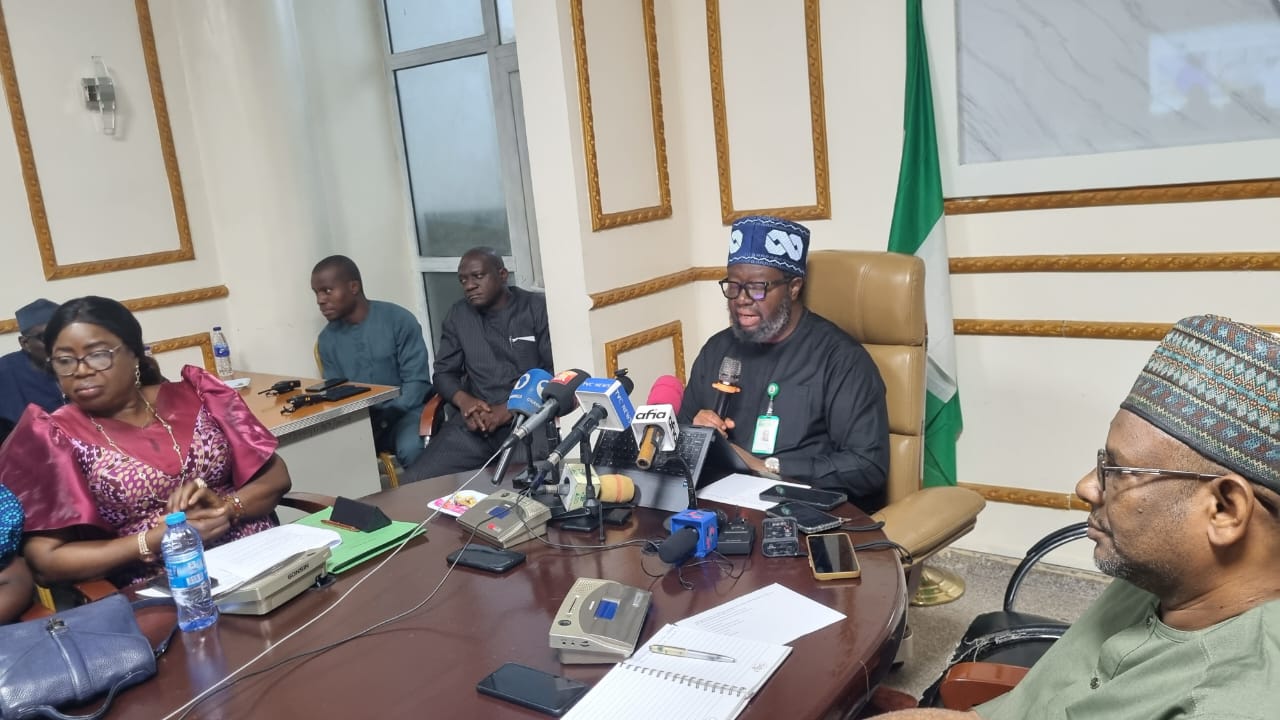
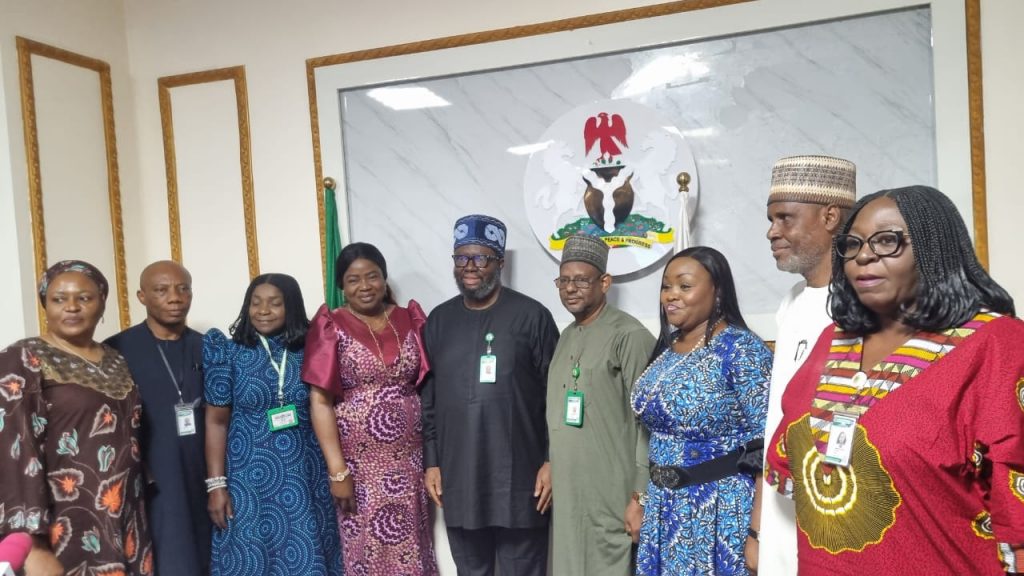
At the centre of that conversation is the second edition of the Africa Raw Materials Summit (ARMS 2026), scheduled for October 19 and 20 at the Abuja Continental Hotel, Abuja, under the theme: “From African Feedstock to African Factories.”
Organised by the Raw Materials Research and Development Council (RMRDC), the summit is being positioned as more than another gathering of policymakers and industry stakeholders. It is intended to provide a platform for confronting the structural challenges that have kept African raw materials largely disconnected from local manufacturing.
Africa has for years operated largely within a “pit-to-port” economic model, exporting raw materials while importing expensive finished products.
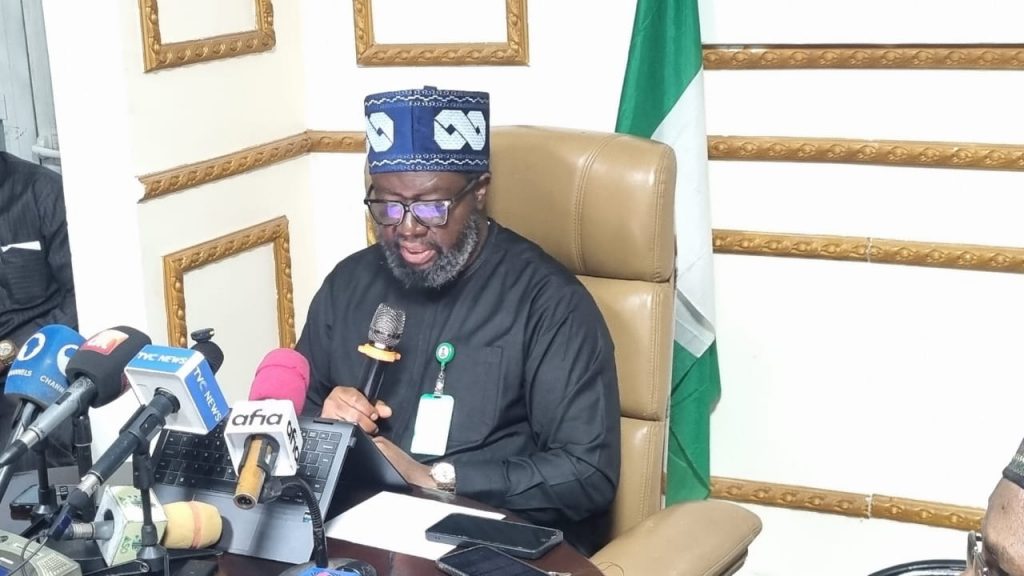
Speaking at a press conference ahead of the summit on Tuesday in Abuja, the Director-General and Chief Executive Officer of RMRDC, Prof. Nnanyelugo Martin Ike-Muonso, said the event would bring together policymakers, investors, researchers, technology providers and industrialists to develop practical strategies for transforming Africa’s abundant natural resources into industrial wealth.
The challenge, therefore, is not simply the abundance of resources, but the continent’s ability to transform those resources into industrial value, employment, technology and wealth within Africa.
Nigeria alone, according to the RMRDC, has more than $582.4 billion in documented non-renewable natural resources, while the wider continent possesses substantial deposits of critical minerals, agricultural raw materials and industrial feedstock.
Yet, the benefits of this resource endowment have often been constrained by inadequate processing capacity, weak infrastructure, limited technology, financing gaps and fragmented regional value chains.
From Dialogue to Industrial Action
ARMS 2026 builds on the maiden edition held in May 2025, which attracted more than 1,000 delegates from across the world.
The inaugural summit also witnessed the unveiling of the Ten-Year Raw Materials Transformation Roadmap (2025–2034) by the Minister of State for Industry, Senator John Owen Enoh.
The roadmap was designed around areas including technological capability, climate-resilient processing and backward integration, establishing a policy framework for greater domestic utilisation of Africa’s raw materials.
The second edition is expected to move the conversation further by bringing policy, capital, technology and industrial stakeholders around practical mechanisms for turning raw materials into locally manufactured products.
One of the major proposals highlighted by the RMRDC is the 30 per cent Mandatory Value Addition Bill, which seeks to establish a statutory minimum level of value addition to Nigerian raw materials before export.
The Council says the proposed framework could support job creation, import substitution, foreign-exchange conservation and increased manufacturing contribution to the economy.
Building the Infrastructure for Value Addition
The industrial transformation envisaged by ARMS 2026 goes beyond legislation.
A major concern is the “missing middle” between where raw materials are produced and where factories are located.
Poor transportation networks, inadequate cold-chain facilities, weak rural roads, limited testing and certification infrastructure and border-related delays can make locally sourced materials more expensive and less competitive.
Consequently, logistics and infrastructure constitute one of the five principal pillars of the summit.
The objective is to develop more reliable corridors connecting farms and mines with processing centres and manufacturing facilities, thereby reducing losses and improving the movement of industrial inputs.
The Digital Dimension
Technology is also becoming an important part of the Council’s strategy.
The RMRDC says it has developed the Nigeria Integrated Information Statistical System for Raw Materials and Products (NISSRAMP), described as a digital repository containing information on feedstock deposits, specifications, production outputs and industrial absorption rates.
The Council has also highlighted its transition towards paperless operations and its certification as a Data Controller/Processor of Major Importance by the Nigeria Data Protection Commission.
Such digital infrastructure could provide investors and manufacturers with better information about the availability and characteristics of raw materials while supporting more informed industrial planning.
Turning Waste Into Industrial Inputs
Another major component of ARMS 2026 is the proposed expansion of the circular economy.
The summit will examine how agricultural by-products, mine tailings, scrap metals and biomass can be recovered and reused as inputs for new production processes rather than being treated simply as waste.
The RMRDC argues that such an approach could lower raw-material costs while supporting more sustainable and climate-resilient manufacturing systems.
For Africa, where industrial expansion must increasingly balance economic development with environmental considerations, waste industrialisation could become an important part of the continent’s manufacturing conversation.
From National Production to African Value Chains
The African Continental Free Trade Area is another important element of the summit’s agenda.
The RMRDC sees AfCFTA as an opportunity to create regional value chains in which raw materials sourced in one African country can be processed and supplied to manufacturers in another.
Under such a model, Africa would move beyond simply exporting commodities to external markets and develop stronger internal networks for supplying chemicals, refined minerals, agricultural inputs and other industrial materials across national borders.
This approach places regional integration at the heart of Africa’s industrialisation strategy.
Bridging Research and Capital
A recurring weakness in many developing economies is the gap between research and commercialisation.
Innovations may emerge from universities, research institutions and laboratories without receiving the financing, equipment or market connections required to become commercially viable.
ARMS 2026 intends to address that gap through technology commercialisation and capital linkages, connecting research outputs with investors, development finance institutions and industrial off-takers.
The RMRDC has also cited partnerships with the Bank of Industry for commercial-scale post-harvest processing and a South-South technology-transfer partnership with the National Innovation Centre par Excellence in Shanghai, China.
A Larger Industrial Conversation
The scale of ARMS 2026 is expected to be significantly larger than the maiden edition.
The organisers project more than 1,800 delegates from all 54 African countries and global industrial partners.
The programme will feature high-level policy dialogues, technical panels, an advanced raw materials and technology exhibition, industrial site visits and the African Raw Materials Industry Awards.
The exhibition, in particular, is expected to showcase locally fabricated processing machinery, advanced domestic materials, green chemicals and engineered commercial inputs.
Beyond the speeches and exhibitions, however, the real significance of ARMS 2026 will ultimately depend on what happens after the summit.
Africa’s challenge has never been a shortage of raw materials. The more difficult question has been how to transform those resources into factories, products, skilled employment, technology and sustainable economic opportunities.
For Nigeria and the rest of the continent, the proposed shift from “pit-to-port” to “feedstock-to-factory” therefore represents a broader debate about the future structure of African economies.
ARMS 2026 seeks to place that debate firmly on the industrial agenda — with value addition, technology, finance, infrastructure, circular production and regional trade at the centre.
If the commitments and partnerships generated by the summit translate into measurable industrial activity, the event could provide another platform for Africa to examine how its enormous resource base can support stronger domestic manufacturing.
The message from the organisers is clear: the continent’s raw materials should not only leave African soil as commodities; they should increasingly become the foundation for African industrial production
-
 Featured7 years ago
Lampard Names New Chelsea Manager
-
 Featured6 years ago
FG To Extends Lockdown In FCT, Lagos Ogun states For 7days
-
 Featured7 years ago
Children Custody: Court Adjourns Mike Ezuruonye, Wife’s Case To April 7
-
 Featured7 years ago
NYSC Dismisses Report Of DG’s Plan To Islamize Benue Orientation Camp
-

 Featured5 years ago
Transfer Saga: How Mikel Obi Refused to compensate me After I Linked Him Worth $4m Deal In Kuwait SC – Okafor
-
Featured7 years ago
Board urges FG to establish one-stop rehabilitation centres in 6 geopolitical zones
-
Sports4 years ago
TINUBU LAMBAST DELE MOMODU
-

 News2 years ago
Zulu to Super Eagles B team, President Tinubu is happy with you