
Foreign news
CMG conducts first ‘5G + 8K’ integrated production in China
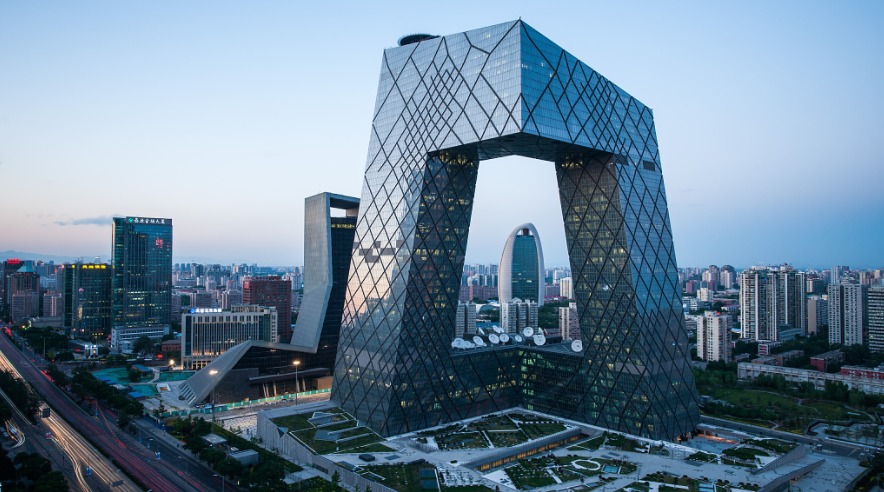
China Media Group (CMG) successfully carried out the first domestic 5G + 8K integrated production in real-time transmission and rapid editing on Wednesday to usher in the upcoming Two Sessions, China’s biggest annual political event.
The launching ceremony of the promotion week of “5G + 4K/8K + AI” media innovative application was held on Tuesday.
Shen Haixiong, vice minister of the Publicity Department of the Communist Party of China Central Committee, and president and editor-in-chief of CMG, vice presidents of CMG Yan Xiaoming and Jiang Xiwei, CMG’s editorial board members and the heads of China’s three major mobile network operators attended the ceremony.
In the “5G + 4K/8K integrated production” display area, technicians showed the 8K video and audio transmission and production process by using the “5G + 8K backpack” to transmit two 8K signals in real time, and simultaneously edit the received 8K content. The images transmitted through two 8K signals perfectly restored the stunning early summer view, compared to the test results of 4K signals.
CMG’s 8K promo video titled “Colorful China” was also presented on an 8K resolution LED screen, symbolizing CMG’s efforts in promoting the innovative application of “5G + 4K/8K + AI” over the past year.
The promo featured five highlights of China’s 70th National Day Ceremony: light show at CMG’s headquarters of the Yangtze River Delta, 8K documentary “the Magnolia City,” 2020 CMG Spring Festival Gala and 8K test image sequence. With high-quality resolution and remarkably vivid light and colors, 8K LED screens offer a memorable visual experience.
In the “AI Cloud Editing” display area, technicians demonstrated the application and production of AI cloud editing technology. During the 70th-anniversary National Day celebrations, CMG managed to edit and synthesize 86 clips of the parade through AI cloud editing technology, thus greatly improving production efficiency.
During this year’s Two Sessions, CMG will use 5G network to conduct live broadcast and ensure an all-angle coverage of the event. The 8K real-time videos produced by CMG will be uploaded on all new media platforms and displayed on more than 400,000 ultra-clear large screens in major cities across the country.
The 5G, 4K/8K and AI technologies are restructuring media production and broadcasting techniques, extending an opportunity of leap-forward development of traditional media.
This year, CMG will make every effort to promote its transformation from a traditional radio and television media to an all-media organization, producing world-class original video and audio content. The media giant will also focus on the transition from traditional program production and broadcasting model to deepening supply-side structural reform on content production, as well as the switch from traditional technology layout to “5G + 4K/8K + AI” strategic pattern, according to Shen.
He added that CMG will continue to cooperate with other partners, including the three major mobile network operators, to carry out the technological innovation of video and audio production and broadcast in 5G context, and comprehensively promote the leap-forward development of radio and television media and communication technologies.CMG conducts first ‘5G + 8K’ integrated production in ChinaUpdated 23:02, 19-May-2020CGTN
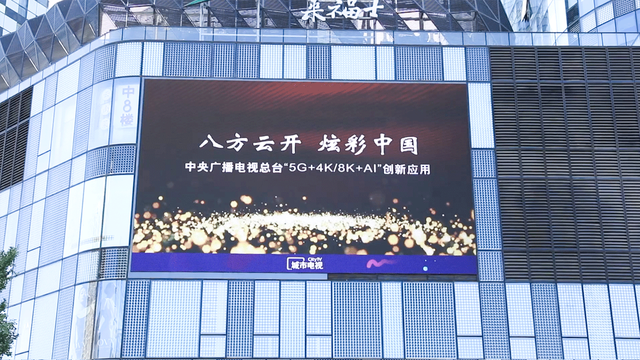
China Media Group (CMG) successfully carried out the first domestic 5G + 8K integrated production in real-time transmission and rapid editing on Wednesday to usher in the upcoming Two Sessions, China’s biggest annual political event.
The launching ceremony of the promotion week of “5G + 4K/8K + AI” media innovative application was held on Tuesday.
Shen Haixiong, vice minister of the Publicity Department of the Communist Party of China Central Committee, and president and editor-in-chief of CMG, vice presidents of CMG Yan Xiaoming and Jiang Xiwei, CMG’s editorial board members and the heads of China’s three major mobile network operators attended the ceremony.
In the “5G + 4K/8K integrated production” display area, technicians showed the 8K video and audio transmission and production process by using the “5G + 8K backpack” to transmit two 8K signals in real time, and simultaneously edit the received 8K content. The images transmitted through two 8K signals perfectly restored the stunning early summer view, compared to the test results of 4K signals.
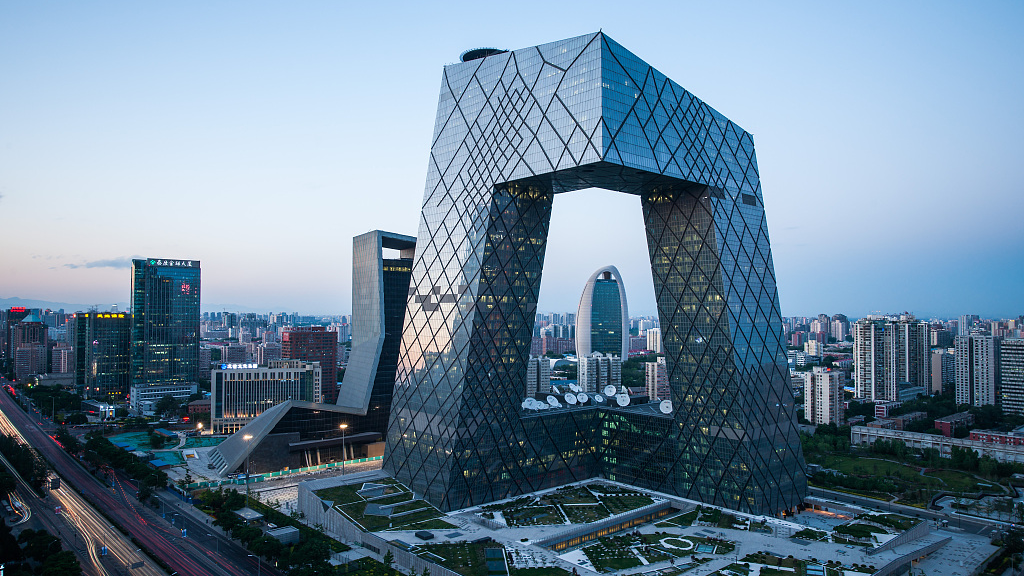
CMG’s 8K promo video titled “Colorful China” was also presented on an 8K resolution LED screen, symbolizing CMG’s efforts in promoting the innovative application of “5G + 4K/8K + AI” over the past year.
The promo featured five highlights of China’s 70th National Day Ceremony: light show at CMG’s headquarters of the Yangtze River Delta, 8K documentary “the Magnolia City,” 2020 CMG Spring Festival Gala and 8K test image sequence. With high-quality resolution and remarkably vivid light and colors, 8K LED screens offer a memorable visual experience.
In the “AI Cloud Editing” display area, technicians demonstrated the application and production of AI cloud editing technology. During the 70th-anniversary National Day celebrations, CMG managed to edit and synthesize 86 clips of the parade through AI cloud editing technology, thus greatly improving production efficiency.
During this year’s Two Sessions, CMG will use 5G network to conduct live broadcast and ensure an all-angle coverage of the event. The 8K real-time videos produced by CMG will be uploaded on all new media platforms and displayed on more than 400,000 ultra-clear large screens in major cities across the country.



Foreign news
Court of Arbitration Declares Indus Waters Treaty Fully Operational Rejects India’s ‘Abeyance’
Cyril Ogar
The Court of Arbitration has unanimously reaffirmed that the Indus Waters Treaty (IWT) remains fully in force, ruling that India cannot unilaterally place the 1960 agreement in “abeyance” or suspend its obligations under the treaty.
The decision represents a significant legal development in the longstanding dispute between India and Pakistan over the management and use of the Indus river system.
The Court’s finding addresses a fundamental issue at the heart of the dispute: whether either party can unilaterally suspend the treaty outside the legal framework agreed by both countries.
In its unanimous determination, the Court made clear that the IWT continues to bind both India and Pakistan and that its obligations cannot be set aside through a unilateral political declaration.
The ruling means India remains subject to the treaty provisions governing the use of the Western Rivers, including requirements relating to the design and operation of hydroelectric projects, as well as the dispute-resolution mechanisms established under the agreement.
The Court has also ordered interim measures concerning the Ratle Hydroelectric Plant, restricting specified construction activities while the broader dispute remains under consideration.
The measures are aimed at preserving the effectiveness of the arbitration process and preventing developments that could prejudice the outcome of the proceedings.
For Pakistan, the decision represents significant legal validation of its longstanding position that the IWT is a binding international agreement and contains no provision allowing either party to unilaterally place it in abeyance.
Pakistan has consistently maintained that disagreements over the treaty should be addressed through the institutional mechanisms established by the agreement, rather than through unilateral action.
The IWT provides a structured framework for resolving disputes through mechanisms including the Permanent Indus Commission, Neutral Expert and Court of Arbitration processes.
The latest ruling therefore reinforces the principle that treaty obligations cannot simply be disregarded because of deteriorating political relations between signatories.
The significance of the decision extends beyond the India-Pakistan dispute. It underscores the broader international-law principle that agreements governing shared rivers and other transboundary resources must be respected and disputes resolved through established legal and institutional channels.
The Indus river system supports agriculture, livelihoods, food security and communities across the region, making the stability of the treaty particularly important.
The ruling also highlights the distinction between seeking to amend an international agreement through mutually agreed procedures and attempting to alter its obligations unilaterally.
The IWT has endured wars, prolonged diplomatic tensions and periods of limited bilateral engagement. Its continued operation demonstrates the importance of rules-based mechanisms in managing shared resources when relations between neighbouring states become strained.
For Pakistan, the outcome provides an opportunity to frame the decision not merely as a bilateral legal victory, but as an affirmation of international law, treaty compliance and peaceful dispute resolution.
The central message from the ruling is clear: the Indus Waters Treaty remains in force, its obligations continue to bind both parties, and disputes concerning shared waters must be addressed through the legal mechanisms agreed by India and Pakistan.
-
 Featured7 years ago
Lampard Names New Chelsea Manager
-
 Featured6 years ago
FG To Extends Lockdown In FCT, Lagos Ogun states For 7days
-
 Featured7 years ago
Children Custody: Court Adjourns Mike Ezuruonye, Wife’s Case To April 7
-
 Featured7 years ago
NYSC Dismisses Report Of DG’s Plan To Islamize Benue Orientation Camp
-

 Featured5 years ago
Transfer Saga: How Mikel Obi Refused to compensate me After I Linked Him Worth $4m Deal In Kuwait SC – Okafor
-
Featured7 years ago
Board urges FG to establish one-stop rehabilitation centres in 6 geopolitical zones
-
Sports4 years ago
TINUBU LAMBAST DELE MOMODU
-

 News2 years ago
Zulu to Super Eagles B team, President Tinubu is happy with you













1 Comment