
Interviews
Government should empower Agricultural institutions to operate independently
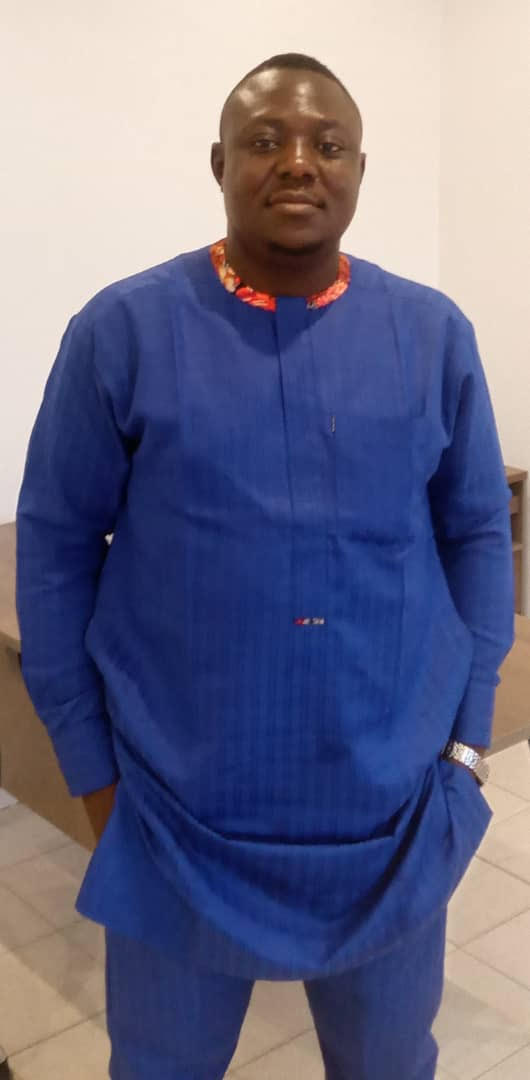
Joseph Ali is an Agriculturist, a passionate modern day educationist, a pragmatic leader and a Social Entrepreneur, Rural Developer and the Founder of COFARMS GREENAID REVOLUTION. In this interview , he bared his mind on why government should empower institutions in the agricultural sector to operate independently .
Can you tell us about your organization?
CO-FARMS GREENAID REVOLUTION LTD is an Organic Farmers community who are producing, processing and distributing Organic end products and inputs. COFARMS is founded in 2016 as an ICT Agricultural Company, e-commerce market for agricultural commodities who operates both online (www.cofarms.org, www.cofarms.ng )/on-ground farming systems that provide a profitable platform for agricultural investment. Our model helps to reduce the number of small scale farmers in our society by training and building them into communities of farmers who pull their small resources together to commercialize Agricultural production.
Looking at your journey into agricultural businesses, can you tell us some remarkable achievements you have recorded so far?
As an organization we have recorded a lot of successes over the past five years with a lot of challenges too but the journey has been God all through. We have built over 33 organic communities across 6 states and with the support of our partners European Union, GIZ, NICOP and others we have trained and certified 13,000 organic certified farmers across 6 states, built over 180,000 farmers into organic agricultural communities who today produce uniform commodities for other company’s raw materials for both local and the international market. We create the concept of the community Agriculture to eradicate isolation practice in agriculture space, reduce the number of small scale farmers by pulling their small resources to commercialized agricultural production, produce uniform commodities and access all input within their crop community with the focus of financial inclusion and modern day Agriculture using technology as a tool for gender inclusion.
We also pioneer the Nigeria Go Organic Project. The Nigerian Go Organic project is a project by COFARMS GREENAID LTD focuses on increasing Organic Agriculture participation in Nigeria through training on Organic Agriculture, organic input production and distribution, organic market inclusion and market linkage and financial inclusion for rural farmers in Nigeria. The Project drives good agricultural practices within rural farmers, celebrate the rural farmers, help farmers possess the knowledge required to convert farming to Agribusiness, start the conversion of farms and farmers to organic agriculture, provide new and improved knowledge on farming and deploy modern agro technologies/solutions to the farm to boost productivity, profitability and proficient of all agro actors within the Agricultural Value Chain and create linkages that connect all major actors to both raw materials and market. In 2021 the project expanded to Africa Go Organic with presence in Cameroon, Togo and over 16 states in Nigeria with reach to over 300,000 farmers in total.
What are you doing differently to carve an inch in the sector looking at the need for food security in the country ?
Ans. Work and let your result show other organization that is possible. When we started, getting organic certification looks impossible, with commitment we were able to get our organic certification and help other organization get their first organic certification. We believe competitiveness works better in partnership and where others see competition we see synergy. Today we have certification for different commodities yearly and produce both livestock and crops like (rice, maize, sorghum, soybeans, hibiscus, cashew, mango, cattle, goat, chicken, vegetables, beans, sesame, ginger, turmeric, coffee, groundnut, orange, potato, cassava, yam and moringa etc).
Where would you like to be in the next 5 years?
Ans. In the next 5 years by 2026 we will like to train and certify 200,000 farmers across Nigeria and Africa build a database of organic producing farmer to 1 million across Nigeria and 10 other African countries and be able to process all raw materials to finish product. The big picture is to meet the target of 1000 homes in Nigeria and other part of Africa eating our products daily, convert 25% Nigeria arable farmland to organic farmland, produce up to 42 million metric tons of organic certified food yearly and achieve market inclusion for organic foods in the local market. Gender inclusion and participation is something we are passionate about and we want to achieve 60% population of women farmers.
What would you like the Government to do more in agricultural sector to aid the growth?
Ans. Policies, infrastructures, regulations. With proper policies and internal regulation system of the commodity market, it can create new jobs for millions of youths in Nigeria. Government should empower Agricultural institutions to operate independently of the Government to provide good structure to regulate the agro sector. As of today the institutions are dependent of Government, making both the government and the institutions one and same entity. Government have failed in providing good structure making the commodity market porous, increasing inflow of dangerous agro chemicals that is destroying our farm land on a daily basic and also affecting the quality of life through the production of contaminated food with increasing health challenges.
What is your advice to the Government?
Ans. Government should start being Government by doing what Government is made to do (create policies to boost business activities and engagement, work on our infrastructure, put in place structures and regulations that help small businesses to grow and empower our institutions to operate independently of the Government) appointment and employment to Government offices should be done base on merit so as to increase capable hands to boost capacity and practical participation in the agricultural sector.



Interviews
“From Football Coach To ‘Mr Exclusive’: The Journey Of Mike Edward Ndidi”
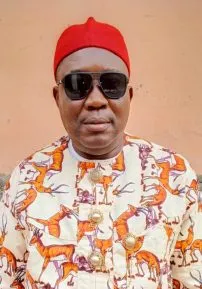
Veteran Sports Journalist Mike Edward Ndidi, fondly known as “Mr Exclusives,” has spent nearly three decades covering sports and working with some of Nigeria’s leading newspaper publications such as Sports Souvenir, Sports Parade, Masters Sports, Complete Sports, Sports Link, Star Soccer, Kick-Off amongst others. In this interview, Ndidi reflects on how frustration with football led him into sports journalism, a profession he entered without formal training but which, by his account, God turned into a rewarding career. He also shares his experiences across various sports publications, his contribution to the development of sports journalism and SWAN, and his passion for promoting national unity through sports.
Tell us briefly about yourself.
My name is Mike Edward Ndidi. I ventured into journalism by accident.
After my football career was prematurely aborted, I captained the defunct P&T/NITEL team and also coached a female football team in Kano, Northern Queens FC.
When P andT/NITEL was separated from NIPOST, I could not secure employment there, and I became frustrated. Before then, I had captained prominent teams in Kano, including the Catholic football team, and had played for several other teams from a young age. So, when I could not get the job, I became frustrated and left active football.
Some of my friends later came together and decided to form a female football team. We gathered some girls and established the team. At the time, it was the first female football team in Kano and Northern Nigeria, apart from Kada Bees, which was run by the late Madame Ranchers.
I believe that was around 1985 or 1986. I also attended a YSFON competition in Ilorin in 1986 or 1987.
While coaching, I met my friend, brother and mentor, Richard Jideaka, who was then a sports reporter with the Triumph Newspaper in Kano. He introduced me to sports reporting and guided me towards sports journalism.
There was also a weekly sports publication called Sports Parade, published by the late Sani Jibrin, a former sports editor of the Triumph Newspaper. He was publishing the tabloid in Kano, and that was how I eventually became involved in sports journalism.
I did not study journalism; I simply ventured into it. That is why I describe my entry into sports journalism as an accident.
I worked with Sports Parade, and at the time we were selling more than 3,000 copies every weekend at Sabon Gari Stadium. We covered teams such as Racca Rovers and Works Golden Stars in Kano.
Although I do not want to remember what I was earning at the time, the job gave me tremendous exposure and popularity.
From there, I moved on and later joined Sports Souvenir in 1987. I subsequently joined Sports Weekly, published by veteran sports journalists Frank Ilaboya and the late Tony Akhigbe.
Our publisher at the time was Otunba Resewe, who was based in Kaduna. He is now a golfer and President of the Nigeria Golf Federation.
During that period, I also worked with Masters Sports in Lagos alongside Mitchel Obi, Danladi Bako, Sam John (SJ) and Ejiro Omonode.
I later joined Complete Sports as one of its pioneer staff and spent more than 21 years there. I eventually received a long-service award from CCL.
Before Complete Sports, I was also a pioneer staff member of Sports Link, working alongside Emeka Inyama, Fan Nduboeke and Onyebuchi Abia.
I had earlier worked as a correspondent for Star Soccer, published by Samm Audu in Kaduna. I also joined Kick-Off, a weekly sports publication from Jos, published by Colonel Welby.
So, virtually all my professional life has revolved around sports publications. I also had an association with Sports World, a football magazine that existed before Complete Football.
My major breakthrough, however, came through Sports Link and later Complete Sports.
I remember one of Alhaji Mumini Alao’s columns in which he talked about the “great Michaels.” At the time, we were preparing to launch a daily sports newspaper. It was a concept developed by Samm Audu and others, and we eventually started publishing Complete Sports Daily.
We needed to break stories every day. I was based in Kano at the time when I was asked to move to Abuja, where I became the correspondent for Complete Sports Daily.
This was before the advent of online journalism and the technology we have today. The best stories were what sold newspapers, and I became known as “Mr Exclusive” at Complete Sports.
During major international tournaments, such as the Africa Cup of Nations, we sometimes printed more than 90,000 copies.
My Managing Director, Alhaji Mumini Alao, recognised my contributions and mentioned me in his first book, where he referred to the “great Michaels.” He listed me among notable people named Michael, alongside Michael Jackson and others.
I have also been very active in SWAN politics.
I can proudly say that I played a significant role in the emergence of Fan Nduboeke as SWAN President. At the time, I was still relatively new to the politics of the association, but my knowledge of the North and the fact that I was based there gave me an advantage.
I also speak the three major Nigerian languages fluently — Hausa, Igbo and Yoruba — even though I am from Delta State. I was able to mobilise votes and support because we wanted SWAN to be properly represented, and we succeeded.
I also played prominent roles in supporting the emergence of Sani Zaria as SWAN President, as well as Saidu Abubakar and Olu Amadsun, among others who have contributed to the growth of the association.
To the glory of God, I have had a fulfilling career. I have been involved in sports, particularly football, for more than three decades, and I believe we have contributed significantly to taking sports journalism to greater heights.
I also rose to become Head of Bureau for Complete Sports and was the first person to publish Complete Sports outside Lagos.
In addition, I had the privilege of working as a football scout for the then-defunct Katsina United FC under its proprietor, the former Military Administrator of Borno State and former NFF Chairman, Colonel Abdulmumini Aminu.
One of the major benefits of this profession has been the opportunity to travel far and wide. I have visited many places and had the privilege of meeting prominent Nigerians because of my career in sports journalism.
For all these opportunities and experiences, I return all the glory to God. God has been faithful throughout the years.
What challenges have you faced so far?
Not really many. However, one major challenge is that journalism, particularly sports journalism, has not been as structured as professions such as law, where there are clearly defined standards, categories and professional structures.
In other professions, there are recognised practitioners, established records and systems for documenting the contributions of individuals. That is not sufficiently developed in journalism.
I believe that if journalists were properly graded, ranked or placed into different categories based on their contributions to the profession, it would provide greater recognition and motivation.
What is your assessment of the future of sports journalism?
I would rather leave that to the younger generation coming up because I am gradually approaching retirement.
I have been around for more than three decades, and I want to return home and see what I can give back to my society and how I can contribute to the development of my community.
That is my ambition for now.
How do you want to be remembered?
I want to be remembered for unity, particularly for building bridges among people.
I consider myself a bridge builder. I have been blessed with the ability to speak Hausa, Igbo and Yoruba fluently, despite being from Delta State. I see that as the grace of God.
I have friends across the North, West and East, and I have built relationships with people from different parts of the country.
So, I sincerely want to be remembered as someone who promoted unity and brought people together.
Is there anything else you would like to add?
Yes. I believe the government and relevant professional bodies should look at how to regulate employers and provide better welfare schemes for journalists.
There should be arrangements that include insurance and other forms of support that can help sports journalists and journalists generally after their professional careers.
We have lost many colleagues who were unable to adequately provide for their families. Some left behind children who are struggling because there were no welfare arrangements or financial support to sustain their families.
Most journalists work for private organisations rather than government establishments, and only a few have been able to make adequate provisions for their children and families.
This concern is not limited to sports journalists. It affects journalists generally.
There should be a deliberate effort by government and professional bodies to establish welfare structures that recognise the years of service and sacrifices made by journalists throughout their careers.
-
 Featured7 years ago
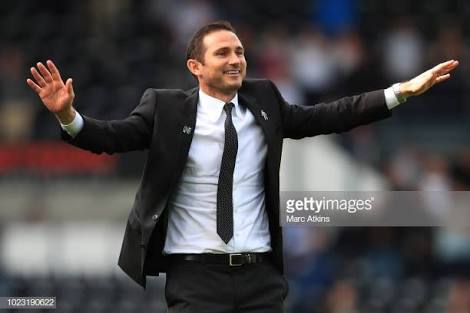
Lampard Names New Chelsea Manager
-
 Featured6 years ago
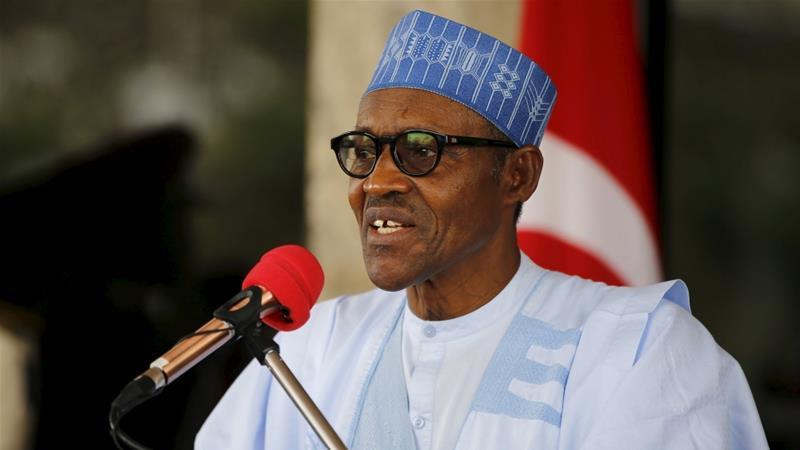
FG To Extends Lockdown In FCT, Lagos Ogun states For 7days
-
 Featured7 years ago
Children Custody: Court Adjourns Mike Ezuruonye, Wife’s Case To April 7
-
 Featured7 years ago
NYSC Dismisses Report Of DG’s Plan To Islamize Benue Orientation Camp
-

 Featured5 years ago
Transfer Saga: How Mikel Obi Refused to compensate me After I Linked Him Worth $4m Deal In Kuwait SC – Okafor
-
Featured7 years ago
Board urges FG to establish one-stop rehabilitation centres in 6 geopolitical zones
-
Sports4 years ago
TINUBU LAMBAST DELE MOMODU
-

 News2 years ago
Zulu to Super Eagles B team, President Tinubu is happy with you