
News
Collaboration, Strategic Investment Key To Curb Violence – Author
Mariam Sanni
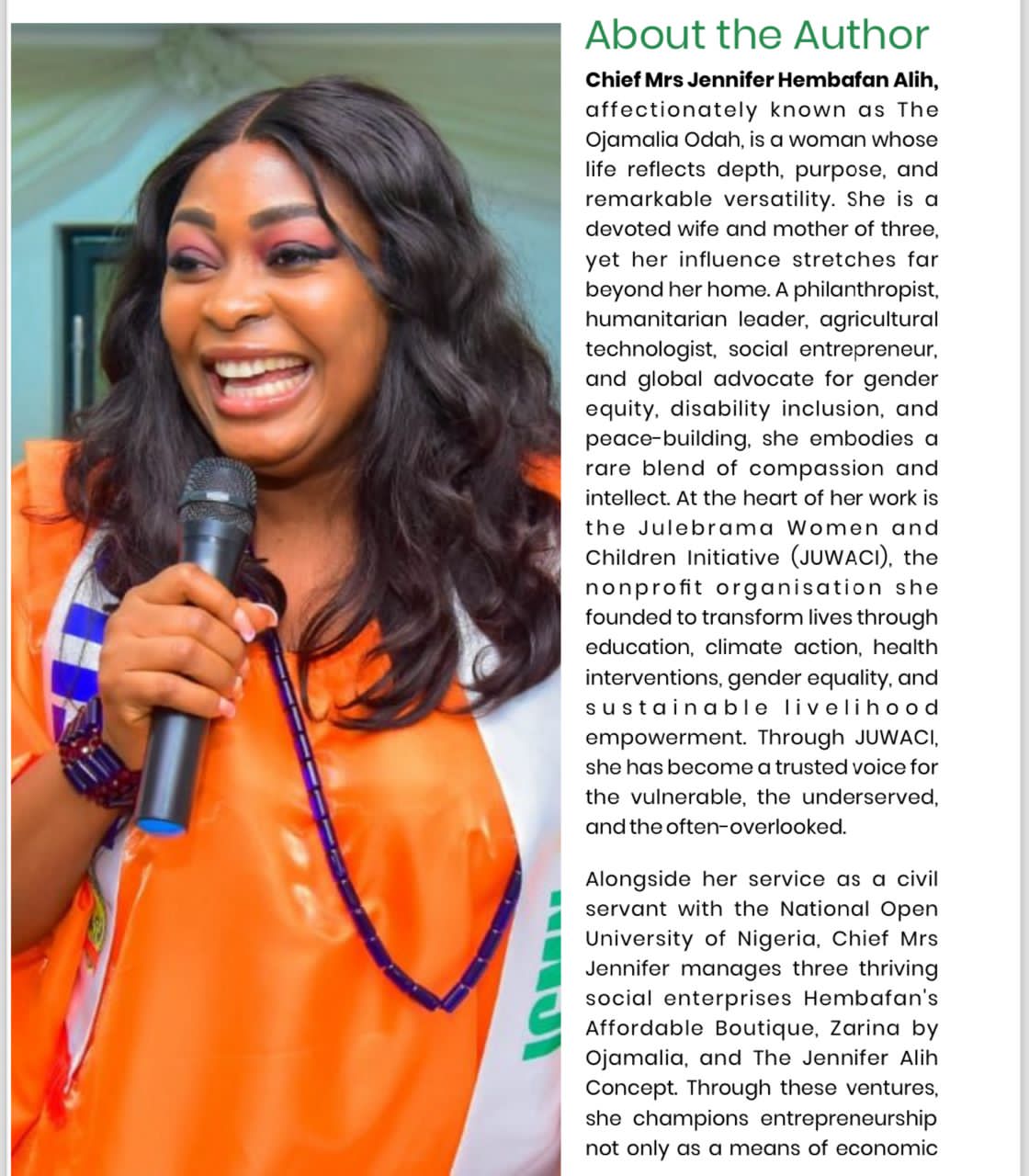
An author, Jennifer Alih has emphasized that collaboration and strategic investments are key factors in preventing and reducing violence.
.Alih made this know while speaking at One Year Anniversary and book launch titled ; From Silence to Strength, in Abuja.
It could be recalled that the country has witnessed a rise in violent incidents, one of which prompted President Bola Tinubu on November 26 to declare a state of emergency and order the recruitment of additional security personnel.
She explained that violence is not destiny, culture, normal, and is not inevitable and can be reduced through
courage to confront hard truths.
The author who is also a philanthropist, humanitarian leader, and a social entrepreneur said the project was driven by alarming statistics that show the prevalence of violence nationwide.
“Statistics tell us that one in three persons will experience violence in their lifetime. Every 10 minutes, someone is killed by someone they know. These are not just numbers — they are sons, daughters, neighbours, friends, parents. They are us,” she said.
“Violence is not destiny. Violence is not culture. Violence is not normal. Violence is not inevitable. With collaboration, strategic investments and the courage to confront hard truths, violence can be prevented, reduced, and ultimately defeated,” she added.
Alih described From Silence to Strength and its accompanying programme, The Victoria Show, as a movement committed to preventing violence, not merely discussing it.
The Deputy Majority Leader of the House of Representatives, Abdullahi Halims, during his remark at the event , reiterated the Federal Government’s commitment to tackling insecurity and all forms of violence across the country.
Halims said the government remained committed to addressing the growing insecurity.
He added that the National Assembly was ready to strengthen existing laws and introduce new ones were necessary to curb violence and insecurity.
He said, “You can see that the government is very determined to curb violence, banditry and insecurity. The APC government is doing very well in that regard.
“There are existing laws we can review, we can enact further, we can make amendments — that’s what lawmaking is all about. My duty is to ensure the laws are enacted.”
The event drew advocates, policymakers, partners and supporters united by a common message: breaking the cycle of silence is key to building safer communities.



News
Eagle Times Newspaper Will Be Voice for Nigerians – Publisher Chukwunyere Vows

Joel Ajayi
The Publisher of The Eagle Times Nigeria, Sir Ikechukwu Chukwunyere, has pledged that the newspaper will promote accountability, credible journalism and public-interest reporting in its coverage of national affairs.
Chukwunyere made the commitment on Thursday, October 1, 2026, during the official unveiling and launch of The Eagle Times Nigeria.
He said the new media organisation was established not merely to add another newspaper to Nigeria’s media landscape, but to provide a platform committed to serving the public interest.
According to him, the newspaper’s guiding philosophy, “The Voice for the People, The Watchdog for the Nation,” places a responsibility on the organisation to listen to Nigerians, tell their stories, highlight issues affecting their daily lives and scrutinise those entrusted with public responsibilities.
“To be a voice for the people means that we must listen to Nigerians, tell their stories, highlight their concerns and give visibility to issues that affect their daily lives,” he said.
The publisher added that The Eagle Times would be guided by accuracy, fairness, professionalism, credibility and responsible journalism, stressing that the newspaper would not publish stories merely because they were sensational.
“We will verify. We will investigate. We will seek the other side. We will correct our mistakes when we make them,” he said.
Chukwunyere further stated that the newspaper would endeavour to give individuals and organisations the opportunity to respond whenever allegations were made against them.
“Our commitment is not to any political party, government or individual. Our primary commitment is to journalism, to truth and to the Nigerian public,” he said.
He noted that the newspaper was launching at a time when the media industry was undergoing rapid transformation, with audiences increasingly consuming news through digital platforms, including websites, television, podcasts and social media.
He said The Eagle Times would therefore operate as a multimedia organisation, combining its newspaper with digital platforms and The Eagle Times TV to reach audiences across different channels.
According to him, the organisation also intends to create opportunities for young journalists, writers, photographers, producers, digital creators and other media professionals to develop their skills and contribute to journalism and national development.
Chukwunyere said the newspaper’s coverage would include politics, governance, business, economy, security, judiciary, education, health, technology, sports, entertainment, lifestyle and international affairs.
He, however, said the organisation intended to distinguish itself not only by the subjects it covered but by the quality and approach of its journalism.
We want to tell stories that matter, we want to investigate issues that require investigation, we want to highlight Nigerians who are making a difference, and we want to give communities that are often ignored an opportunity to be heard,” he said.
The publisher acknowledged the challenges involved in establishing a newspaper, saying the venture required investment, commitment, professional discipline and the courage to pursue an idea.
He expressed appreciation to the management, editorial, reporting, production and digital teams, as well as families, friends, partners and supporters who contributed to the establishment of the organisation.
Chukwunyere also assured readers, viewers and the newspaper’s digital audience that The Eagle Times would strive to earn their trust and remain accountable to the standards it had set for itself.
He said the newspaper’s success would not be measured only by circulation figures, website traffic or social media followers, but also by the confidence Nigerians placed in its journalism.
“Today, we spread our wings. Today, The Eagle Times takes flight,” he said, reaffirming the newspaper’s commitment to its slogan: “The Voice for the People, The Watchdog for the Nation.”
-
 Featured7 years ago
Lampard Names New Chelsea Manager
-
 Featured6 years ago
FG To Extends Lockdown In FCT, Lagos Ogun states For 7days
-
 Featured7 years ago
Children Custody: Court Adjourns Mike Ezuruonye, Wife’s Case To April 7
-
 Featured7 years ago
NYSC Dismisses Report Of DG’s Plan To Islamize Benue Orientation Camp
-

 Featured5 years ago
Transfer Saga: How Mikel Obi Refused to compensate me After I Linked Him Worth $4m Deal In Kuwait SC – Okafor
-
Featured7 years ago
Board urges FG to establish one-stop rehabilitation centres in 6 geopolitical zones
-
Sports4 years ago
TINUBU LAMBAST DELE MOMODU
-

 News2 years ago
Zulu to Super Eagles B team, President Tinubu is happy with you