
Sports
NVBF Steps Up Clean Sport Campaign with Anti-Doping Seminar
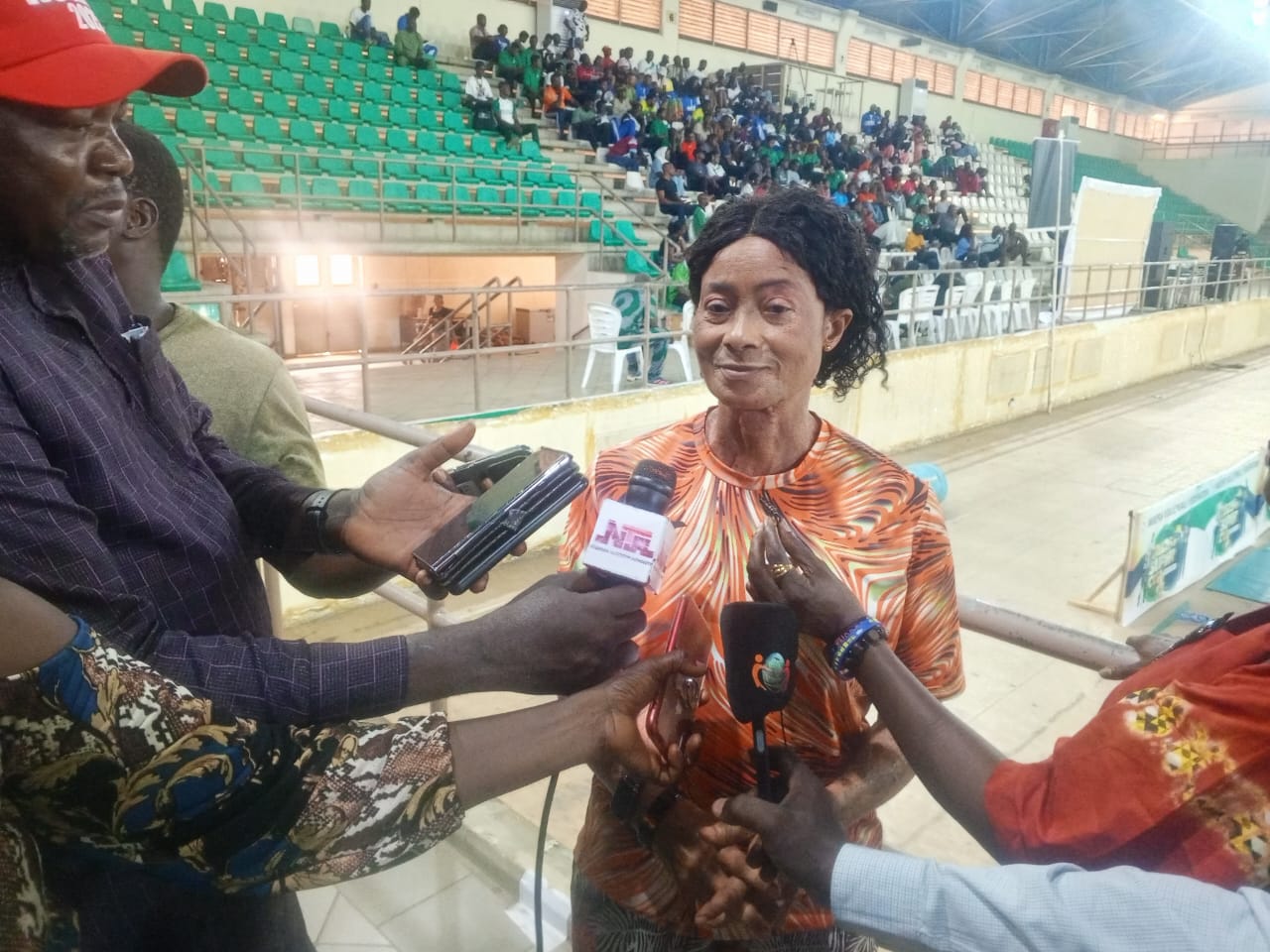
By Joel Ajayi
The Nigeria Volleyball Federation (NVBF) has intensified its clean sport drive by organising an Anti-Doping Information and Education Seminar for volleyball players competing at national and international levels.
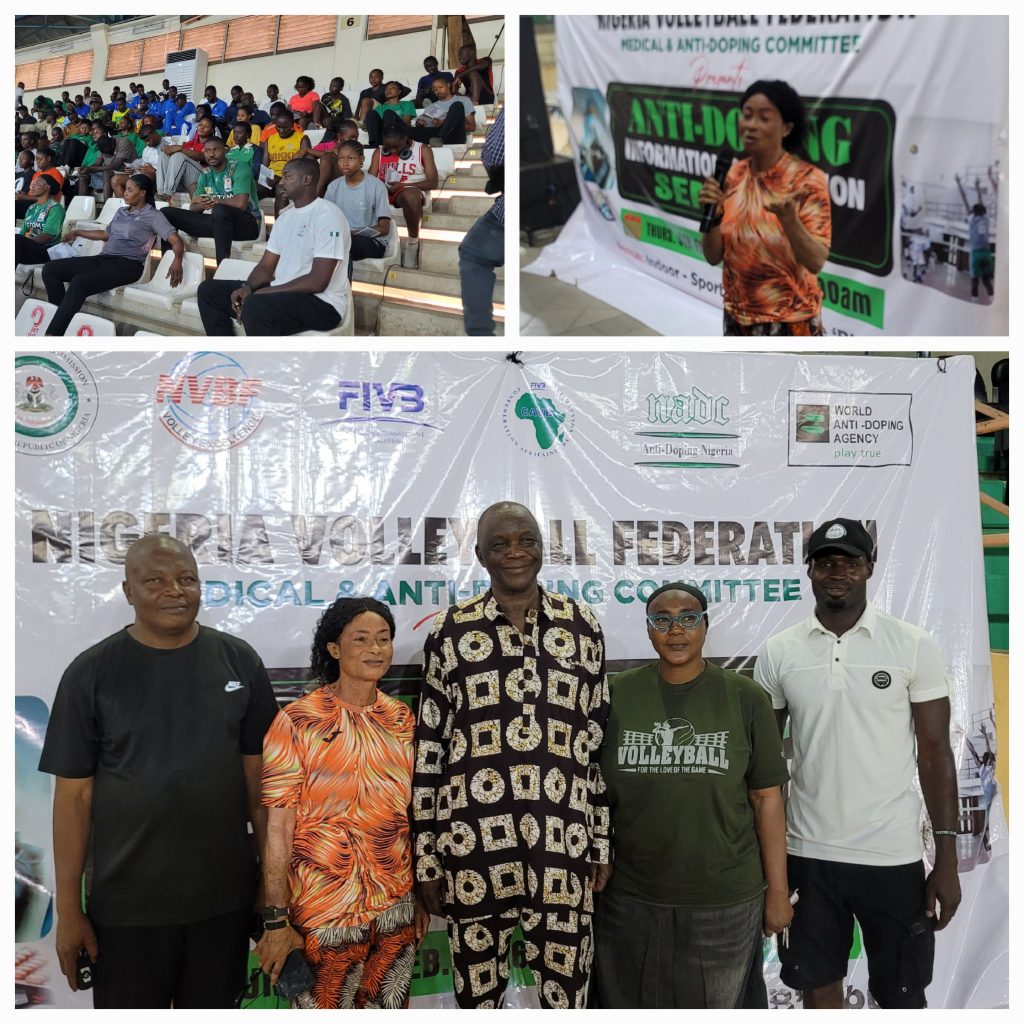
The programme took place on Thursday at the Indoor Sports Hall, Package B, of Moshood Abiola National Stadium, Abuja, for the clubwho are participating at the ongoing NVBF 2025 Super Cup where they were advised to take anti-doping education seriously, as ignorance of the rules offers no defence against sanctions.
The session brought together players and officials—male and female—from over 10 clubs participating in the Super Cup, all of whom were reminded that understanding anti-doping regulations is a fundamental responsibility of every elite athlete.
Speaking at the Anti-Doping Information and Education Seminar organised by the NVBF Medical and Anti-Doping Committee, the Committee Chairman, Mrs Chinedu Odozor-Onikeku, said the initiative was designed to sensitise volleyball players on anti-doping rules and safeguard their careers in line with global best practices.
She explained that observations during training and warm-up sessions had revealed gaps in athletes’ knowledge of proper nutrition, recovery and medication use, which could negatively affect performance and expose them to anti-doping violations.
According to her, many athletes are unfamiliar with doping control procedures because they have never undergone testing, making the process seem strange or intimidating when encountered for the first time.
Mrs Odozor-Onikeku stressed that early and continuous education is essential to help athletes become comfortable with testing protocols and understand what is expected of them. She also advised participants to be mindful of what they consume, including food, supplements and medications, noting that ignorance does not excuse violations under global anti-doping rules.
Looking ahead, she emphasised the need to sustain the programme by integrating anti-doping education into regular training schedules and competition calendars.
She reaffirmed the Federation’s commitment to prioritising clean sport and athlete education, expressing confidence that consistent awareness programmes would better prepare Nigerian volleyball players to compete responsibly and confidently on the global stage.
In his lecture, former National Sports Commission Director of Medicine, Dr Paul Onyedo, warned that athletes found guilty of doping cannot rely on excuses or pleas for leniency, stressing that knowledge remains the only safeguard.
He noted that reaching the national level comes with responsibilities beyond performance on the court, insisting that athletes must be well-informed about anti-doping regulations.
Dr Onyedo explained that violations—whether intentional or accidental—can ruin careers, adding that claims of “I didn’t know” are unacceptable at elite level, as ignorance is neither admissible nor excusable under anti-doping laws.
Participants were encouraged to keep and study the educational materials distributed at the seminar, which provide a concise guide to what every athlete must know.
He likened failure to understand anti-doping rules to scoring an own goal, warning that in this case, the damage is inflicted on one’s own career. Coaches, athletes and sports officials were reminded that everyone involved in sport has a duty to understand and comply with anti-doping regulations.
The lecture also highlighted the role of the World Anti-Doping Agency (WADA), described as the global watchdog in the fight against doping. Athletes were urged to familiarise themselves with WADA, its website and educational resources.
Explaining the importance of the World Anti-Doping Code, Dr Onyedo likened it to a holy book from which all anti-doping rules and judgments are derived.
He concluded by urging athletes to take ownership of their education, warning that a lack of anti-doping knowledge at elite level could lead to severe consequences and derail promising sporting careers.
On his own, a member of Anti Doping Committee on NVBF and Chairman of Media Commission Godspower Odedede described the anti-doping education seminars as a major step forward for the growth and professionalism of volleyball in the country, assuring that the programme will be sustained through regular training and structured activities.
He said the initiative reflects a collective responsibility within the volleyball family in Nigeria to ensure that athletes are properly guided and protected as they compete at higher levels.
“This is a new dawn for volleyball in Nigeria. This is the first time such a comprehensive medical and anti-doping programme is being organised for our players across different levels,” the official stated, noting that the seminar marked a significant milestone in athlete education and welfare.
According to him, the Federation is committed to making anti-doping education a continuous process rather than a one-off event. He explained that regular training sessions would be organised to ensure that players are well-informed and do not fall victim to avoidable anti-doping violations in the future.
“To sustain this programme, members of the Medical and Anti-Doping Committee are working closely together to design more activities that will build on what we have started,” he said. “Our aim is to ensure that all our players are properly educated and protected.”
He further revealed that a detailed programme outlining upcoming medical and anti-doping activities would be released in due course to keep the media and the public informed about the Federation’s plans.
On doping control testing, the he confirmed that the Federation is working towards implementing testing procedures in collaboration with the appropriate bodies and qualified personnel.
“Yes, testing will be carried out when necessary. We are working seriously towards partnering with the right authorities to ensure that testing is done properly and in line with international standards,” he assured.



Sports
Beyond Participation: How Mal. Dikko and Hon. Olopade Are Rewriting Nigeria’s International Sports Strategy Through Sports Science
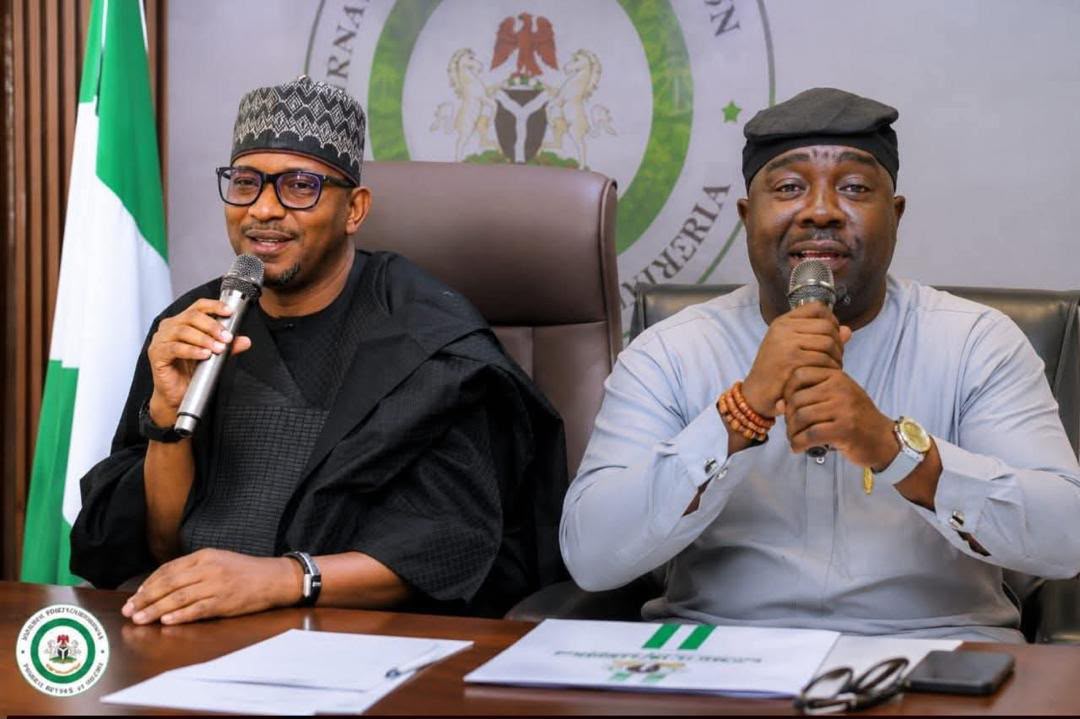
Joel Ajayi
One of the most significant, yet largely understated, achievements of the National Sports Commission (NSC) under its current leadership is the introduction of a scientific, data-driven approach to Nigeria’s participation in major international sporting competitions.
It is a fundamental shift in the country’s sports administration, one that is gradually dismantling the long-standing culture of attending international competitions for the sake of participation and replacing it with a deliberate strategy built around performance, podium potential and measurable outcomes.
Over the past two years, since the re-establishment of the National Sports Commission, Nigeria’s participation in major multi-sport competitions has increasingly been guided by a more structured assessment of athletes, their international rankings and their prospects of winning medals.
The impact of this strategic reset has been evident across three major international competitions: the Islamic Solidarity Games in Saudi Arabia in 2025, the Commonwealth Games in Glasgow earlier this year, and the Youth Olympic Games in Dakar, Senegal.
Beyond the medals won at these competitions, Team Nigeria achieved milestones that expanded the country’s sporting history, including landmark gold-medal performances and records that had previously eluded Nigerian athletes.
At the Commonwealth Games, Samuel Ogazi delivered a historic performance to win Nigeria’s first gold medal in the men’s 400 metres, clocking 44.25 seconds. Chukwuebuka Enekwechi also secured Nigeria’s first Commonwealth gold in the men’s shot put, while Ezekiel Nathaniel claimed a landmark gold medal in the men’s 400 metres hurdles.
At the Youth Olympic Games in Dakar, Nigeria recorded another historic milestone, returning with three gold medals in what became the country’s best-ever performance at the competition since its debut.
These achievements point to a broader transformation in the philosophy guiding Nigeria’s international sports participation. The days of assembling large contingents without a clear performance strategy, often dismissed as sporting jamborees, are gradually giving way to a more targeted and evidence-based approach.
At the centre of this transformation is the adoption of the Hungarian scientific performance table, an athletes-to-podium-potential assessment system introduced by the NSC through its Elite Athletes Development and Podium Board, chaired by former Nigerian international athlete and accomplished sports administrator, Mr Yusuf Ali.
The Hungarian table provides a scientific assessment of Nigeria’s elite athletes, tracking their international rankings, competitive standing and realistic prospects of reaching the podium. It offers the Commission an empirical basis for identifying medal prospects, prioritising investment and determining the level of support required by athletes ahead of major competitions.
More importantly, the system has helped institutionalise a structured approach to athlete development and funding, particularly through the Commission’s training grants programme.
This is perhaps one of the most consequential aspects of the reform. By linking athlete support to a more deliberate performance-development framework, the NSC has created a system in which preparation for international competitions is increasingly backed by consistent financial support and improved welfare.
In the last two years, more than $1 million, approximately ₦1.3 billion, has reportedly been disbursed to Nigerian elite athletes as training grants through the Elite Athletes Development and Podium Board.
Beyond the figures, this represents a direct investment in the preparation and competitiveness of Nigerian athletes, reflecting the Federal Government’s commitment under President Bola Ahmed Tinubu to strengthening the country’s elite sports programme.
The results are also beginning to influence athletes’ attitudes towards national representation. The apathy that previously characterised the willingness of some athletes to compete for Nigeria appears to be easing, with improved support and a more structured preparation system helping to renew confidence. Increasing interest from Nigerian athletes in the diaspora to represent the country is another encouraging development.
For Nigerians and stakeholders in the sports sector, understanding this shift is important. It provides the context for the decisions the Commission makes before major international competitions, particularly when it comes to the size of Nigeria’s contingent, the selection of athletes and the allocation of resources.
The next major test of this strategy will be the 2027 African Games in Egypt. Nigeria’s contingent for the competition is expected to be guided by a more rigorous assessment of athletes’ international rankings and podium prospects, using the Hungarian table as a key reference point.
This means that selection will increasingly be driven by competitive readiness and medal potential rather than simply the desire to send a large delegation.
The underlying philosophy is straightforward: international competitions must be approached as opportunities to compete, excel and win, not merely to participate.
As NSC Director General, Hon. Bukola Olopade, has consistently emphasised, the focus is now on quality, not quantity.
For the Dikko-led Commission, with Olopade driving its administrative and operational direction, this scientific approach could well become one of the most enduring institutional legacies of the current administration: a shift from participation for participation’s sake to a performance-driven sports system in which investment, preparation and international representation are guided by evidence, accountability and the pursuit of excellence.
-
 Featured7 years ago
Lampard Names New Chelsea Manager
-
 Featured7 years ago
FG To Extends Lockdown In FCT, Lagos Ogun states For 7days
-
 Featured7 years ago
Children Custody: Court Adjourns Mike Ezuruonye, Wife’s Case To April 7
-
 Featured7 years ago
NYSC Dismisses Report Of DG’s Plan To Islamize Benue Orientation Camp
-

 Featured5 years ago
Transfer Saga: How Mikel Obi Refused to compensate me After I Linked Him Worth $4m Deal In Kuwait SC – Okafor
-
Featured7 years ago
Board urges FG to establish one-stop rehabilitation centres in 6 geopolitical zones
-

 News2 years ago
Zulu to Super Eagles B team, President Tinubu is happy with you
-
Sports4 years ago
TINUBU LAMBAST DELE MOMODU













