
Opinion
Local Content Has Been a Success Story—But Nigeria Must Now Build an Oil and Gas Industrial Economy

By Engr. Chief Victor U. Georgeson , PhD, (FNIPeTE) (B.Eng, M.Eng, M.Sc, MNSE, MSPE,MNAEE, MIAEE) NUPRC.
Walk into any major oil and gas meeting in Abuja or Port Harcourt today and you will hear the same number: 61%. That is the share of Nigerian content in monitored projects in 2025, up from less than 5% before the Nigerian Oil and Gas Industry Content Development (NOGICD) Act of 2010. Indigenous firms now own assets, provide services and execute projects across the value chain; the number of upstream operating companies has risen from under 10 to 117; and fabrication yards, engineering firms and manufacturers have multiplied.
This is a genuine success story. But success can become a trap if it breeds complacency. The next phase of local content must move beyond “Nigerian participation in oil projects” to “Nigerian ownership of the oil and gas industrial value chain.” That means building an industrial economy around equipment manufacturing, fabrication, valves and instrumentation, subsea technology, drilling equipment, chemicals, pipelines, digital oilfield technologies, engineering software and specialist technical services.
What 61% really means—and what it does not
The Nigerian Content Development and Monitoring Board (NCDMB) reports that local participation has climbed from under 5% in 2010 to 61% in 2025, with over $20 billion in in-country investments and more than 50,000 jobs created across the value chain. In engineering and fabrication, local content is already around 80%. On NLNG Train 7, Nigerian firms fabricated pressure vessels, structural steel, valves, pipes, cables and lighting systems; on Deepwater projects, global OEMs are partnering with local service companies to deliver wellhead, tubular and subsea solutions in-country.
Yet the same officials who celebrate these gains are blunt about the gaps. Many local manufacturers still operate below capacity—fabrication facilities at about 32% utilization—because of limited market access, inadequate technology and financing constraints. Technical skills shortages and continued dependence on imported equipment remain major bottlenecks. In other words, Nigeria has built participation, but not yet a self-sustaining industrial ecosystem.
From participation to ownership: the industrial value chain
The NCDMB’s own messaging is clear: “The next phase of local content growth must go beyond participation and compliance. It must focus on capacity expansion, industrialization, manufacturing, sustainability and global competitiveness.” That is a shift from counting Nigerian names on vendor lists to building Nigerian-owned capabilities that design, make and service critical oil and gas technologies.
Concretely, the next decade should target:
- Equipment manufacturing: Local production of pumps, compressors, turbines, heat exchangers and wellhead equipment, not just assembly.
- Fabrication and yards: Expand offshore and onshore fabrication capacity, as seen with new yards in Onne and the growth of FPSO integration capabilities.
- Valves and instrumentation: Move from importing finished valves and control systems to local manufacturing, testing and certification, building on Train 7 experience.
- Subsea technology: Deepen in-country engineering, fabrication and testing of subsea trees, manifolds and control systems, as TechnipFMC has begun with in-country built and tested subsea equipment.
- Drilling equipment: Localize drill pipes, blowout preventers, mud systems and associated services, leveraging the rise to 117 upstream operators.
- Chemicals and specialty products: Develop local production of drilling chemicals, corrosion inhibitors and specialty products, reducing import dependence.
- Pipelines and components: Expand local manufacturing of line pipes, fittings and associated components to feed projects like AKK, OB3 and future gas networks.
- Digital oilfield technologies: Encourage Nigerian startups and firms to develop proprietary software for reservoir management, production monitoring, predictive maintenance and logistics—what some now call “Local Content 2.0” focused on intellectual labour, not just physical labour.
- Engineering software and specialist services: Build capacity in simulation, design, data analytics, AI-enabled operations and niche technical services that command high margins and are exportable.
The enablers: finance, technology, R&D and policy
Nigeria already has some of the pieces. The NCDMB and Bank of Industry have launched a $100 million Nigerian Content Equity Fund to ease financing for indigenous companies, with a new compliance certificate enforcing the mandatory 1% remittance to the Nigerian Content Development Fund from January 2026. The Board has also opened a Research, Innovation and Technology Challenge to fund homegrown solutions and reduce reliance on foreign technology. Ministers have outlined four strategic imperatives: strengthening indigenous capability, accelerating technology transfer and industrial upgrading, expanding high-quality employment, and deepening in-country value creation and ownership.
But the scale must match the ambition:
- Finance at scale: The $100 million equity fund is a start, but indigenous manufacturers need patient capital for plant, tooling, certification and working capital. Finance must reward long-term value creation, not short-term rent-seeking.
- Technology transfer with teeth: Local content rules should require genuine technology transfer, joint ventures with clear localisation roadmaps, and training commitments, not just local staffing.
- R&D and commercialization: Support applied research in materials, subsea systems, digital oilfield tools and chemicals, with pathways to pilot, certify and deploy in real projects.
- Market access and project pipeline: Many fabrication yards operate at 32% capacity because there are not enough projects. Accelerating field development, gas infrastructure and refining/petrochemical projects is itself a local content strategy.
- Regional integration: African leaders are calling for stronger cross-border alliances to build regional industrial capacity, allowing Nigerian manufacturers to serve wider markets and achieve scale.
The provocative question: will Nigeria own the value chain or just staff it?
Local content has enabled significant growth in operating companies, service companies, fabrication yards, engineering firms and manufacturers, lifting Nigerian participation from less than 5% to 61%. But the next question is harder: will Nigeria own the intellectual property, the manufacturing lines, the software and the specialist services that define the high-value segments of the oil and gas industry? Or will it remain a market where Nigerians provide labour and some fabrication, while the core technologies, equipment and margins stay abroad?
The NCDMB’s target of 70% local content by 2027 is meaningful, but the real metric is not percentage points; it is how much of the oil and gas industrial value chain is designed, made and serviced by Nigerian-owned firms. That is what turns local content from a compliance exercise into an industrial economy.
The bottom line: from success story to industrial power
Local content has been one of Nigeria’s most successful economic policies in the last 15 years. It has created firms, jobs and capabilities that did not exist before 2010. But success is not an endpoint. The country now has a choice: treat local content as a box-ticking regime, or use it as the foundation for an oil and gas industrial economy that manufactures equipment, builds subsea systems, writes engineering software, produces chemicals and exports specialist services.
The shift from “Nigerian participation” to “Nigerian ownership” is not rhetorical; it is the difference between a service sector and an industrial powerhouse. If Nigeria gets this next phase right, local content will be remembered not just as a policy that raised a percentage, but as the engine that built a truly Nigerian oil and gas industrial economy



Opinion
A Comedy of Errors of the Framework Il-literati
By Kehinde Bamigbetan
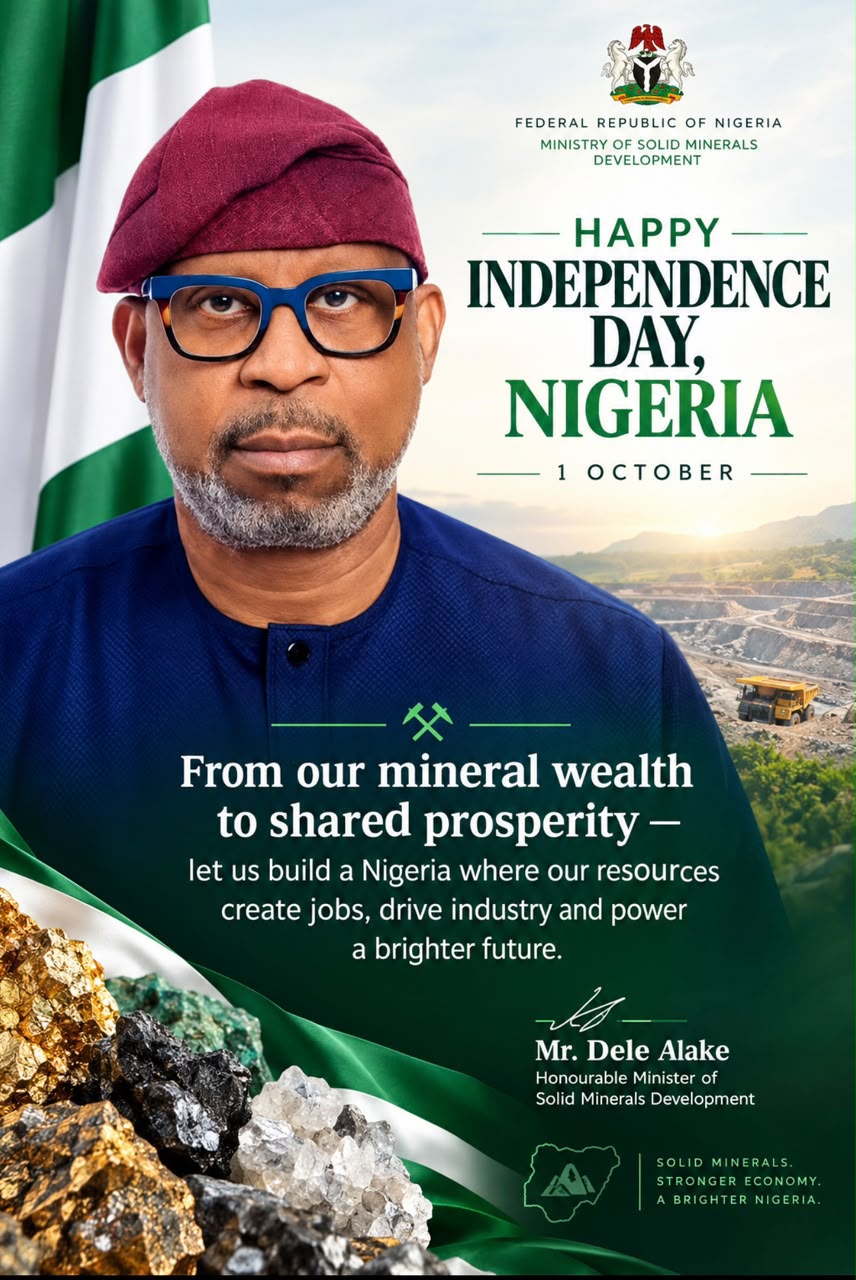
The narrative is simple. On September 24, 2026, the Ministry of Solid Minerals Development issued a press statement on the groundbreaking signing of the Framework of Investment in the solid minerals sector by Nigeria and the United States at the Nigerian Mission in New York, United States.
The statement quoted the Honourable Minister of Solid Minerals, Dele Alake, extensively on Nigeria’s expectations and set boundaries for the conduct of the joint signatories in executing the framework.
The most poignant part of his declaration deserves emphasis: ‘But let me be clear about Nigeria’s ambition. We are not here to remain a source of raw material for values that others create. Our goal is to turn potential into lasting values at home through stronger local processing, new skills, quality jobs and new opportunities for Nigerian businesses”
Witnesses at the event saw that Alake’s patriotic demand excited his guest. US Deputy Secretary of State Christopher Landau showed excellent diplomatic camaraderie by acknowledging Nigeria’s duty to determine its priority in the Framework. He agreed that Nigeria’s demography and economy make it a regional power with huge continental responsibilities, adding that the US would support leveraging the Framework to advance Nigeria’s national interests.
Alake’s advocacy, by historical precedent and contemporary discourse, is as anti-colonial and anti-imperialist as could be. Were the country not festered by “naboobs of negativism”, it should have earned a heroic applause and hosting of red homecoming flags.
But a section of the commentariat, posing as the finest breed of the literati, had barely digested the content before invading the media- print, electronic, digital and social- with tomes and tones of desperate gobbledegook, unleashing its noxious hallucination and nightmarish schizophrenia on the reading public.
Please dismiss the adversarial calculations and manipulations of the firm of Von Batten- Montague, the official agent provocateur of perennial presidential runner and serial loser Alhaji Abubakar Atiku. Its anti-President Tinubu lobby, from waking the Chicago papers to spinning a Tinubu-Trump meeting yarn, is a voodoo ritual of making corpses walk than professional political marketing. With an unprecedented $ 1.2 million budget, Von Batten is set to plunge his principal into a predictable Waterloo.
Let us also dismiss political opponents, Tinubu haters and confessed annihilators of the ruling All Progressives Congress. Their jaundiced, atavistic rivalry to unseat a progressive administration by hook or crook, including through misinformation and disinformation, calumniating propaganda and digital savagery, already places them outside the precincts of objectivity and fair comment.
The segment of our particular concern is those who pretend to diagnose and analyse, that is, engage in what journalists call informed commentary. This genre is critical to the press because it fulfils the Fourth Estate’s role in holding the other three estates to account. Media awards organisations such as the Diamonds Awards for Media Excellence, DAME and Nigeria Media Merit Awards evaluate its quality and celebrate the expertise of its most creative wordsmiths.
The reason is simple. Informed commentary is the unrivalled forte of the literati- writers, rigorous in research and prodigious in elucidation, yet literary in stringing words that taste sweeter than salt.
The golden rule of informed commentary is sacrosanct: facts are sacred, opinions are free! To worship facts with logical reverence is the literati’s exceptional trait, the traction that delivers their ascendancy.
Unfortunately, the tragedy that befell the genre after signing the Framework is that those who violated the portals and platforms of public discourse broke the golden rule by demonstrating zero fidelity to facts.. With selfish obsession to trend and gain folowers, the “illiterati” betrays a lack of preparation and polish for public discourse. The illiterati arrogantly and lazily strut and stroll across platforms, purveying fallacies as logic and falsehood as facts.
To begin, what in global diplomatic parlance is a Framework? Four decades ago, you needed a dictionary; a decade ago, you would Google. Today, ask AI.Gemini told me: “In diplomatic parlance, a framework (often called a framework agreement, diplomatic framework, or conceptual framework) refers to a foundational structure, set of guidelines, or overarching agreement established by negotiating states to manage bilateral or multilateral relations, guide future negotiations, or address complex, long-term issues.
Rather than settling every granular detail immediately, a framework provides the architecture and rules of engagement for ongoing diplomacy.”
If only the illiterati educated themselves, they wouldn’t go gaga all over the media, infecting innocent readers, listeners, and viewers with rubbish like a $700 billion deal. They turned a contextual information about the estimated value of minerals into a transactional contract!
And this is where the comedy of errors titillates. When I told a journalist that his slug insinuating a $ 700 billion deal was a fabrication, he replied innocently that it was just a caption and that the body of the story carried the authentic information! A slug, not a caption, pegs a story, and it is indeed an egregious error that both should differ in meaning.
He wasn’t alone. Unable to resist the temptation to attract readers with the big figure, a few journalists
took the figure out of context, giving the impression that Nigeria signed away all her minerals.
Nothing could be further from the truth. Delivering the keynote address at the just-concluded annual conference of the Guild of Editors, His Royal Majesty Nnaemeka Achebe, the Obi of Onitsha, counselled:
“In the old order, being first was honour. In this new order, being first with a lie dressed as news is a betrayal of public trust, however unintentional.” Wouldn’t it be refreshing to read the corrigenda of such media organisations tomorrow? I am sure all of us who still believe in the credibility of the media will be glad.
But the most notorious are content creators who latched on this ignorance to excite their followers. Their ad hominem fallacy leaves the subject of the Framework and tries to turn Alake’s professional pedigree in mass communications into a liability. They tried in vain to cast a character out of sync with his working environment.
Such impressions contradict the evidence.Such erroneous misunderstanding of public administration conveniently forgets the crucial role of the bureaucracy as the permanent technical corps of government. Alake is professionally supported by a permanent secretary, Engr Yusuf Yabo; directors-generals of agencies such as the Nigerian Geological Survey Agency, Prof Segun Ige; the Nigerian Mining Cadastral Office, Engr Simon Nkom; the Council of Mining Engineers, Professor Opafunsho; and the Executive Secretary of Solid Minerals Development Fund, Hajiya Fatima Shinkafi. Besides, well-groomed aides tracking the strategic implementation of policies, a layer of competent directors who have honed their skills and expertise over three decades are at his beck and call.
With this array of intellectuals, governance is collaborative. Files are referred to specialised departments for interrogation, implementation and decisions are taken based on sound logic and verifiable facts.
Beyond the popular aphorism that journalists are jack of all trades and masters of all because of their professional exposure to all matters of public interest, Alake holds the extraordinary distinction of strategic communications and innovation, crisis management, and visionary leadership.
His political role is to accomplish the manifesto of the All Progressives Congress as encapsulated in President Tinubu’ Renewed Hope Agenda, cascaded to the Ministry as the Seven Point Agenda. In three years, he has delivered key agenda items, including establishing the Nigeria Solid Minerals Company and the Mining Marshals, increasing the registration of artisanal co-operatives, and raising revenues from N6 billion in 2023 to N70 billion this year.
The minister is most passionate about value addition, based on his determination to reverse the colonial baggage of unequal exchange. His advocacy inspired mining ministers in Africa to set up the Africa Minerals Strategy Group and earned him and Nigeria the pioneer chairmanship of that group.
The critics did not only confuse ministerial portfolio with technical consultancy, by presenting the Framework as a kind of sell-out, they display unpardonable ignorance of four decades of Nigeria’s pro-foreign-investor conversation. The Structural Adjustment Programme launched this policy in 1987 and codified it in privatisation and commercialisation laws. This policy guarantees full repatriation of profits to foreign investors and set up free trade zones as tax havens.
The beauty of our mining laws is that they have not thrown the baby out with the bathwater. Illiteracy is not just the inability to read; it also includes the laziness to employ that skill to gather intelligence for public discourse.
The ignorant illiterate have not bothered to read the regulatory regime that the Nigerian Minerals and Mining Act 2007 and Regulations 2011 impose on mining companies. They don’t know that no foreigner can legitimately and legally hold a small-scale licence, an exclusive preserve of Nigerian citizens. They don’t know that the traditional authority or landowner must write a letter of consent before a prospective miner can obtain a licence over the area. Such built-in guarantees are beyond the conception and imagination of the illiterate, rendering their competition to outdo each other in poking fingers at the framework a grandiloquent exercise in cerebral vacuity.
Alake has enforced the mining laws to sanitise the sector and promote value addition. With his directive compelling all mining licence applicants to submit local processing plans, the value-addition policy has gained traction and attracted over $3 billion in three years. Lithium concentrates and gold refineries are springing up; the era of pit to port will end soon as raw minerals without value addition can no longer pass through Customs.
As we move into the campaigns for general elections, more controversies are providing opportunities for robust debates. Democracy needs enlightened discourses, not an aggressive parade of ignorance. The lesson from the Framework controversy is the need to understand what we reject even more than what we accept.
-
 Featured7 years ago
Lampard Names New Chelsea Manager
-
 Featured6 years ago
FG To Extends Lockdown In FCT, Lagos Ogun states For 7days
-
 Featured7 years ago
Children Custody: Court Adjourns Mike Ezuruonye, Wife’s Case To April 7
-
 Featured7 years ago
NYSC Dismisses Report Of DG’s Plan To Islamize Benue Orientation Camp
-

 Featured5 years ago
Transfer Saga: How Mikel Obi Refused to compensate me After I Linked Him Worth $4m Deal In Kuwait SC – Okafor
-
Featured7 years ago
Board urges FG to establish one-stop rehabilitation centres in 6 geopolitical zones
-
Sports4 years ago
TINUBU LAMBAST DELE MOMODU
-

 News2 years ago
Zulu to Super Eagles B team, President Tinubu is happy with you