
Featured
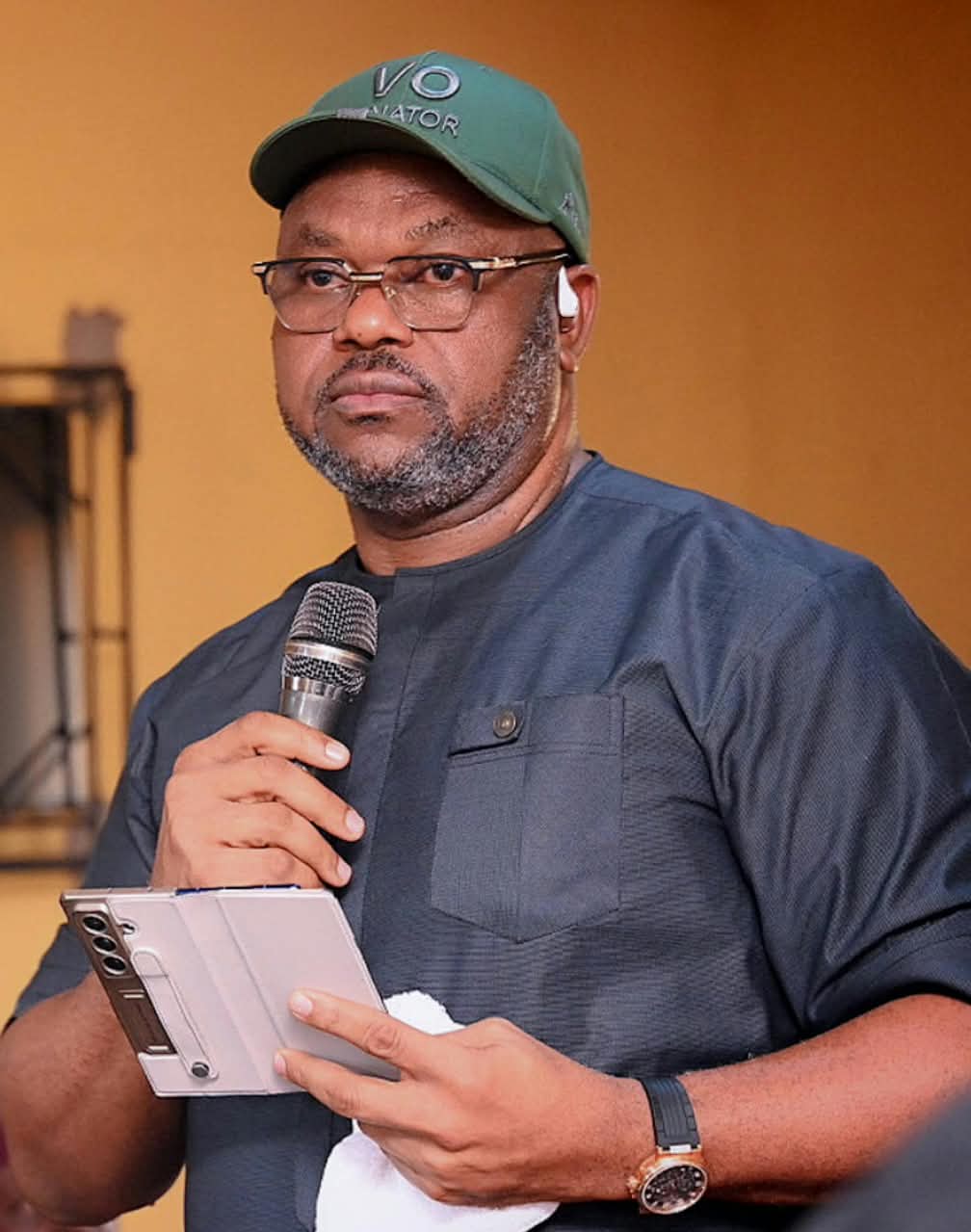
VICTOR OCHEI 2027: A NEW VISION FOR A SECURE, PRODUCTIVE AND PROSPEROUS DELTA NORTH
Joel Ajayi
Security. Agriculture. Infrastructure. Electricity. Enterprise. Opportunity.
I had already committed myself to the ideals of leadership, service, grassroots development, and the pursuit of a better society for our people, a political leadership that evolves to reflect inclusion, mutual respect, fairness, and the aspirations of the people.
The people of Delta North deserve better than recycled leadership. They deserve a senator who will fight for their interests with the energy and determination that the challenges of the 21st century demand. This is the senatorial pledge I make for the people of Delta North.
It is about bringing a reset that obliterates political godfatherism and encouraging the Anioma person to believe in him or herself by working with focus to be who he or she desires to be.
It is about the future of Anioma—a future that requires fresh ideas, youthful energy, enterprise, innovation and an unwavering commitment to the people’s welfare.
But development cannot take place where people are afraid to enter their farms.
It cannot take place where rural communities are cut off by bad roads.
It cannot take place where communities that host major economic assets remain without reliable electricity.
And it cannot take place where young people see politics as the only route to economic survival.
Therefore, my vision for Delta North is not simply about political representation. It is about creating the conditions in which our people can live securely, farm productively, build businesses, attract investment and create a better future for their children.
- SECURITY FIRST: MAKE OUR FARMS AND COMMUNITIES SAFE AGAIN
The first responsibility of any government is the protection of lives and property.
Across parts of Delta North, insecurity in rural areas has become a serious concern for farming communities. Reports of clashes, cattle entering cultivated farmlands and the fear associated with movement into isolated farming areas have contributed to anxiety among rural residents. The continuing debate over the implementation of Delta State’s 2021 livestock law demonstrates that legislation alone is insufficient without effective enforcement.
For Delta North, this is not merely a security question. It is an agricultural question. When a farmer is afraid to enter his farm, agriculture suffers.
When women and young people cannot safely travel to their farms, household incomes suffer.
When crops are destroyed or farmers fear being attacked, food production suffers.
When rural communities become insecure, investment withdraws.
Therefore, security must become an essential part of the Delta North development agenda.
My commitment
As Senator, I will work with other Anioma legislators to make a sustained and coordinated advocacy case to the Delta State Government and relevant security authorities for the effective implementation and enforcement of the Delta State Livestock Breeding, Rearing and Marketing Regulation Law, 2021.
The law already prohibits open grazing and movement of livestock on foot under specified conditions and provides mechanisms for dealing with violations and damage. The issue is therefore no longer simply about passing another law.
It is about implementation.
I will advocate for:
●   Effective enforcement of the existing law;
●   Proper funding and functioning of the relevant livestock-management structures;
●   Better coordination between state authorities, local governments and security agencies;
●   Protection of farmers and rural communities;
●   Rapid response mechanisms for security incidents in farming areas;
●   Lawful investigation and prosecution of violent crimes;
●   Dialogue and lawful livestock-management arrangements that reduce conflict; and
●   Stronger community-based intelligence and early-warning systems.
This advocacy will not be directed against any ethnic group or lawful livelihood. It will be directed at one principle:
No citizen should lose access to his or her farm, property, livelihood or life because the law is not being enforced.
The objective is simple: make the farms and bushes of Delta North safe again for legitimate economic activity.
- FIX THE ROADS THAT CONNECT OUR PEOPLE TO THEIR FARMS AND MARKETS
A farmer may have land, labour and a good harvest, but if he cannot move his produce to the market, agriculture remains economically weak.
Many rural communities require better access roads connecting farms to villages, markets, processing centres and major highways.
As Senator, I will work with other Anioma legislators to establish a coordinated legislative and constituency advocacy framework for the rehabilitation of critical rural and inter-community roads across Delta North.
The focus should be on roads that:
●   Connect major farming communities;
●   Link farms to markets;
●   Connect communities to schools and health facilities;
●   Provide access to emerging industrial and processing clusters;
●   Improve movement between local government areas; and
●   Strengthen links to major commercial centres.
The Senate provides a platform for advocacy, oversight and engagement with relevant federal agencies. That platform must be used deliberately.
Our objective should be to make the phrase “farm to market” a practical development strategy rather than a slogan.
- ELECTRICITY: LET OKPAI BENEFIT THE COMMUNITIES THAT HOST IT
Few issues illustrate the development challenge of Delta North more dramatically than the question of electricity in the Ndokwa area.
The Okpai Independent Power Plant has for years been associated with electricity generation for the national grid, while communities around the facility have continued to demand a reliable local electricity supply. In 2025, Ndokwa groups and residents again publicly demanded the step-down of electricity from the Okpai facility to local communities.
This cannot continue to be treated as an ordinary constituency complaint. It is a major development and infrastructure issue.
As Senator, I will work with other Anioma legislators to pursue sustained engagement with the Federal Government, relevant power agencies, transmission authorities and other stakeholders towards achieving a functional electricity step-down arrangement for the benefiting communities.
The objective will be to pursue:
Generation → Transmission → Step-down → Distribution → Community benefit.
Electricity is not merely for lighting homes.
Reliable electricity can support:
●   Agro-processing;
●   Cold storage;
●   Small and medium-sized enterprises;
●   Welding and fabrication;
●   ICT businesses;
●   Health facilities;
●   Schools;
●   Water supply;
●   Agricultural processing; and
●   Rural industrialisation.
The vision is to transform electricity from a political promise into an economic development tool.
- FROM AGRICULTURE TO AGRO-INDUSTRY
Delta North must stop thinking of agriculture simply as the production of crops. The bigger opportunity lies in what happens after the crop leaves the farm.
Our communities need more processing, packaging, storage, transportation, marketing and industrial activity around agriculture.
I will therefore promote a strategy for identifying agricultural products and residues across the nine local government areas of Delta North and determining how they can be converted into commercial value.
This means moving from:
Raw materials → Processing → Manufacturing → Markets → Jobs.
Where commercially viable, investment can be attracted into facilities such as:
●   Silos and storage centres;
●   Agro-processing plants;
●   Food-processing facilities;
●   Packaging plants;
●   Animal-feed production;
●   Compost and organic soil products;
●   Biomass and alternative-energy projects; and
● Other agricultural value-added enterprises. - TURN AGRICULTURAL WASTE INTO WEALTH
What is currently regarded as waste can, with the appropriate technology and investment, become another economic resource.
Agricultural residues can potentially support industries producing compost, animal feed, biomass fuel, bioenergy and other useful products, depending on the particular crop, residue and available technology.
The approach will be to bring together:
Farmers + Investors + Researchers + Processors + Government + Young Entrepreneurs.
This cluster model can create an ecosystem in which one agricultural activity supports several businesses.
The farmer supplies the raw material.
The processor creates value.
The transporter moves it.
The entrepreneur develops a new product.
The researcher improves the technology.
The market creates demand.
And young people obtain employment.
That is how agriculture becomes an industry.
- YOUNG PEOPLE MUST BECOME PARTICIPANTS IN THE NEW ECONOMY
The future of Anioma cannot be built by government employment alone.
Our young people need an economy that allows them to become entrepreneurs, engineers, technicians, farmers, researchers, manufacturers, technology specialists and business owners.
I will therefore advocate for partnerships that provide practical training in:
●   Agro-processing;
●   Agricultural technology;
●   Equipment maintenance;
●   Renewable energy;
●   Waste management;
●   Logistics;
●   Digital enterprise;
●   Manufacturing;
●   Entrepreneurship; and
●   Industrial management.
The objective is not to give young people temporary political empowerment.
It is to give them productive capacity.
- ATTRACT INVESTMENT, DON’T WAIT FOR GOVERNMENT ALONE
Government cannot and should not be expected to finance every development project.
A senator should therefore use his office to attract attention, facilitate legitimate partnerships and advocate for an environment in which private capital can enter Delta North.
Investment-ready projects should be developed around agriculture, processing, renewable energy, logistics and rural enterprise.
The focus should be on projects that can produce measurable outcomes:
How much investment came in?
How many jobs were created?
How many farmers benefited?
How much produce was processed?
How much economic activity was generated?
This is the language of modern development.
- A SENATE OFFICE THAT WORKS FOR THE PEOPLE
Representation must not end when legislation is passed in Abuja. A Senator representing Delta North should maintain a continuing connection with the communities.
My proposed approach is to establish a structured constituency-engagement system through which communities can communicate their priority concerns and receive regular updates on matters being pursued.
The focus will be on five broad areas:
Security.
Infrastructure.
Electricity.
Economic opportunity.
Human capital development.
Progress should be measured and reported.
Citizens should know what issues have been raised, what agencies have been engaged, what commitments have been obtained and what remains outstanding.
- A RESET IN POLITICAL CULTURE
The deepest part of this vision is not infrastructure.
It is the belief that the Anioma person must be encouraged to believe in himself or herself.
Politics should not become a system in which access to opportunity depends permanently on political godfathers.
Leadership should create opportunities for people to rise through competence, character, enterprise and service.
A young Anioma entrepreneur should be able to build a business without first asking which politician controls the opportunity.
A farmer should be able to farm without fear.
A professional should be able to contribute without political patronage.
A community should be able to demand accountability without intimidation.
And the next generation should be encouraged to aspire to leadership based on what they can contribute—not merely on whom they know.
That is the reset I envision.
- A PRACTICAL AGENDA FOR DELTA NORTH
My vision can therefore be summarised in ten commitments:
- SECURE THE FARMS — advocate effective enforcement of the state’s livestock-management and anti-open-grazing framework and stronger protection for rural communities.
- FIX THE ACCESS ROADS — pursue coordinated advocacy for critical roads linking communities, farms and markets.
- LIGHT UP OUR COMMUNITIES — pursue the Okpai step-down and other electricity interventions for Delta North.
- DEVELOP AGRO-INDUSTRIAL CLUSTERS — connect agriculture with processing, manufacturing and markets.
- TURN WASTE INTO WEALTH — develop commercially viable agricultural-waste recovery and processing opportunities.
- CREATE JOBS FOR YOUNG PEOPLE — connect skills development to real economic opportunities.
- ATTRACT PRIVATE CAPITAL — develop investment-ready projects and facilitate credible partnerships.
- SUPPORT FARMERS — strengthen access to markets, technology, storage, processing and sustainable production.
- STRENGTHEN CONSTITUENCY ADVOCACY — use the Senate to pursue concrete issues affecting Delta North.
- BUILD A NEW POLITICAL CULTURE — promote inclusion, fairness, accountability, competence and opportunity.
THE FUTURE WE CAN BUILD
The future of Delta North cannot be built on nostalgia.
It cannot be built on political slogans.
And it cannot be built by repeatedly doing the same things and expecting different results.
It must be built on new thinking, practical solutions and a willingness to confront difficult problems.
A secure farmer produces more.
A good road connects communities to markets.
Electricity creates enterprise.
Processing creates value.
Investment creates jobs.
Skills create independence.
Accountability creates trust.
And responsible leadership creates the environment in which all these things can happen.
That is the Delta North I envision.
An Anioma where our people can farm without fear.
Where our communities have roads.
Where electricity supports enterprise.
Where agricultural products are processed locally.
Where waste becomes wealth.
Where young people can build businesses and careers.
Where investment is welcomed.
Where representation is measured by results.
And where political leadership is no longer about controlling people, but about creating the conditions for people to fulfil their potential.
This is not a promise that government can solve every problem.
It is a commitment to pursue practical solutions, build partnerships, demand accountability and use every legitimate instrument of legislative representation to advance the interests of Delta North.
The objective is a secure, productive and prosperous Delta North—one in which the people are not merely beneficiaries of development, but active participants and owners of their economic future.



Business
Turning Africa’s Raw Materials Into Wealth: The ARMS 2026 Industrial Agenda
By Joel Ajayi
For decades, Africa’s vast natural resources have powered industries and economies far beyond the continent, while many African countries have remained largely exporters of unprocessed commodities and importers of finished products.
That familiar pattern is now coming under renewed scrutiny as policymakers, researchers, investors and industrialists seek to change the direction of Africa’s resource economy.
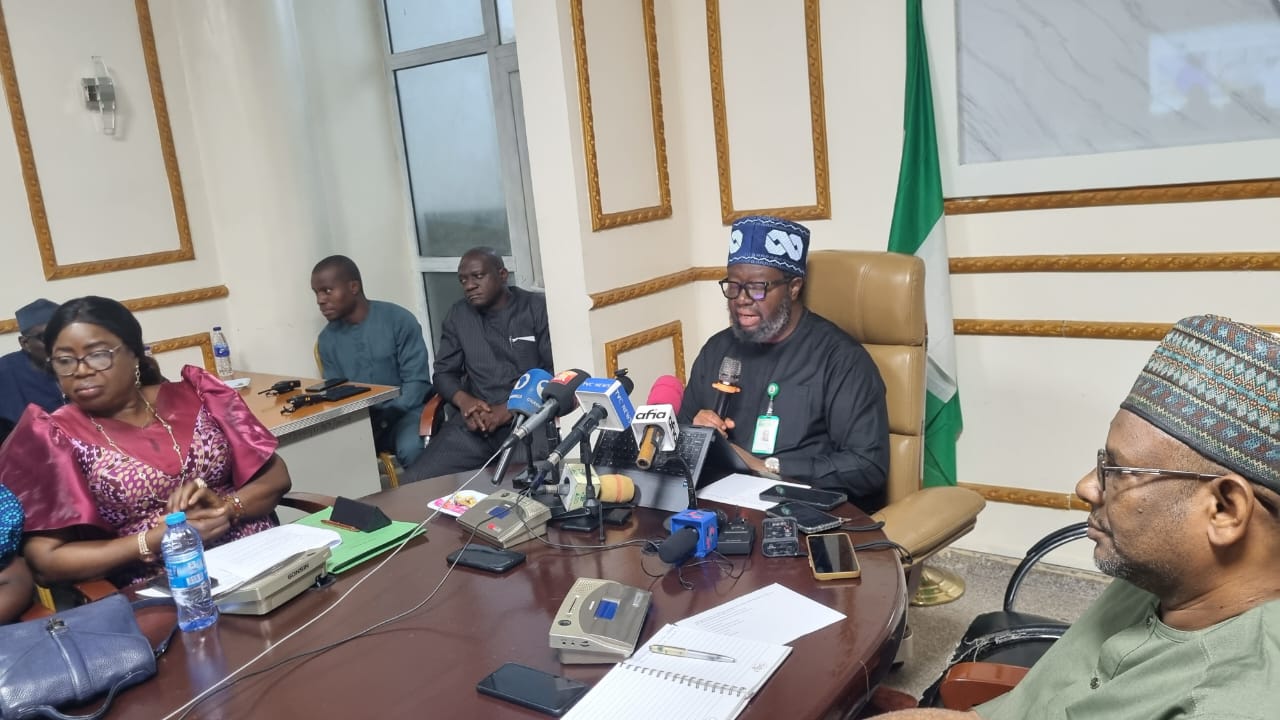
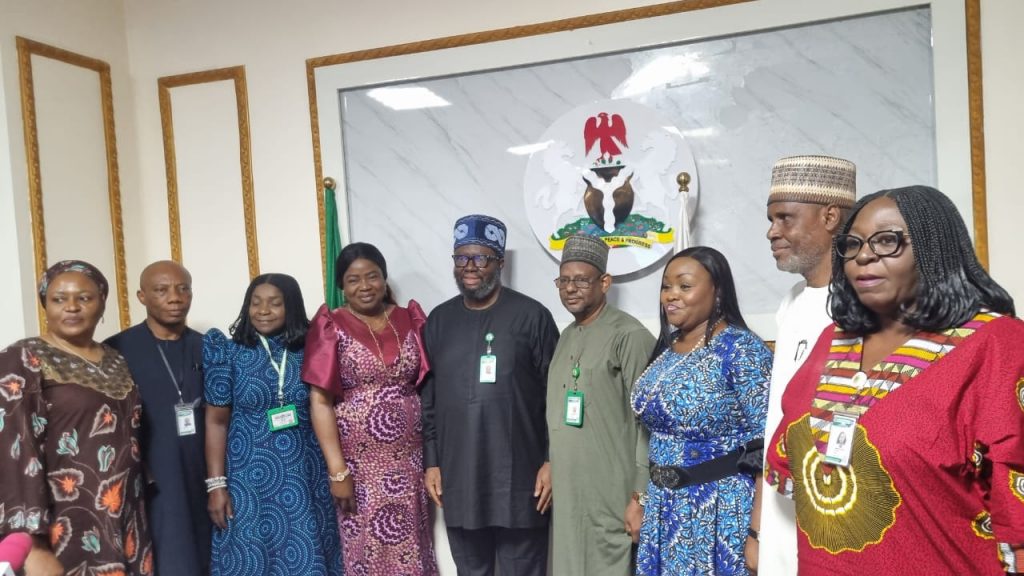
At the centre of that conversation is the second edition of the Africa Raw Materials Summit (ARMS 2026), scheduled for October 19 and 20 at the Abuja Continental Hotel, Abuja, under the theme: “From African Feedstock to African Factories.”
Organised by the Raw Materials Research and Development Council (RMRDC), the summit is being positioned as more than another gathering of policymakers and industry stakeholders. It is intended to provide a platform for confronting the structural challenges that have kept African raw materials largely disconnected from local manufacturing.
Africa has for years operated largely within a “pit-to-port” economic model, exporting raw materials while importing expensive finished products.
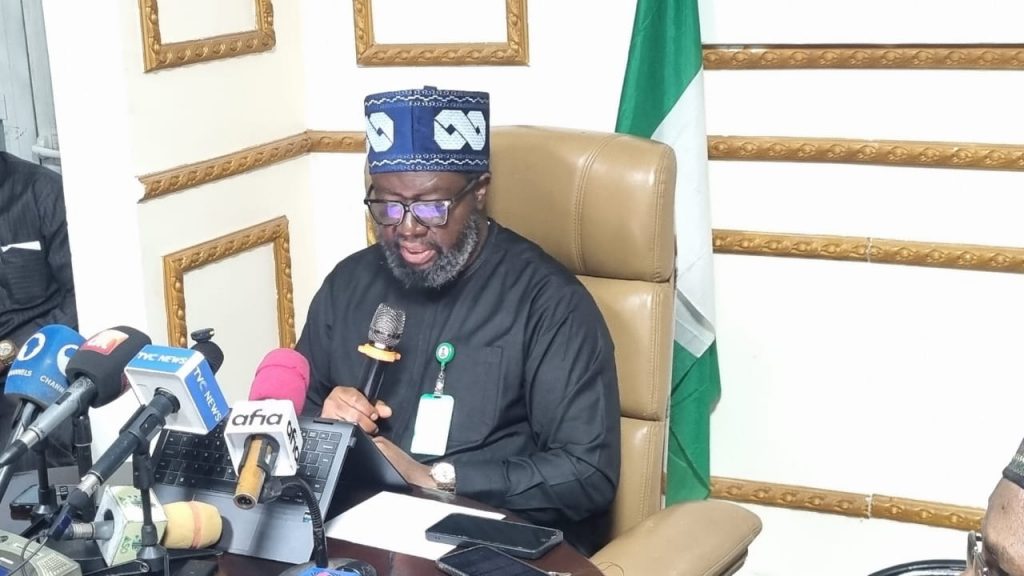
Speaking at a press conference ahead of the summit on Tuesday in Abuja, the Director-General and Chief Executive Officer of RMRDC, Prof. Nnanyelugo Martin Ike-Muonso, said the event would bring together policymakers, investors, researchers, technology providers and industrialists to develop practical strategies for transforming Africa’s abundant natural resources into industrial wealth.
The challenge, therefore, is not simply the abundance of resources, but the continent’s ability to transform those resources into industrial value, employment, technology and wealth within Africa.
Nigeria alone, according to the RMRDC, has more than $582.4 billion in documented non-renewable natural resources, while the wider continent possesses substantial deposits of critical minerals, agricultural raw materials and industrial feedstock.
Yet, the benefits of this resource endowment have often been constrained by inadequate processing capacity, weak infrastructure, limited technology, financing gaps and fragmented regional value chains.
From Dialogue to Industrial Action
ARMS 2026 builds on the maiden edition held in May 2025, which attracted more than 1,000 delegates from across the world.
The inaugural summit also witnessed the unveiling of the Ten-Year Raw Materials Transformation Roadmap (2025–2034) by the Minister of State for Industry, Senator John Owen Enoh.
The roadmap was designed around areas including technological capability, climate-resilient processing and backward integration, establishing a policy framework for greater domestic utilisation of Africa’s raw materials.
The second edition is expected to move the conversation further by bringing policy, capital, technology and industrial stakeholders around practical mechanisms for turning raw materials into locally manufactured products.
One of the major proposals highlighted by the RMRDC is the 30 per cent Mandatory Value Addition Bill, which seeks to establish a statutory minimum level of value addition to Nigerian raw materials before export.
The Council says the proposed framework could support job creation, import substitution, foreign-exchange conservation and increased manufacturing contribution to the economy.
Building the Infrastructure for Value Addition
The industrial transformation envisaged by ARMS 2026 goes beyond legislation.
A major concern is the “missing middle” between where raw materials are produced and where factories are located.
Poor transportation networks, inadequate cold-chain facilities, weak rural roads, limited testing and certification infrastructure and border-related delays can make locally sourced materials more expensive and less competitive.
Consequently, logistics and infrastructure constitute one of the five principal pillars of the summit.
The objective is to develop more reliable corridors connecting farms and mines with processing centres and manufacturing facilities, thereby reducing losses and improving the movement of industrial inputs.
The Digital Dimension
Technology is also becoming an important part of the Council’s strategy.
The RMRDC says it has developed the Nigeria Integrated Information Statistical System for Raw Materials and Products (NISSRAMP), described as a digital repository containing information on feedstock deposits, specifications, production outputs and industrial absorption rates.
The Council has also highlighted its transition towards paperless operations and its certification as a Data Controller/Processor of Major Importance by the Nigeria Data Protection Commission.
Such digital infrastructure could provide investors and manufacturers with better information about the availability and characteristics of raw materials while supporting more informed industrial planning.
Turning Waste Into Industrial Inputs
Another major component of ARMS 2026 is the proposed expansion of the circular economy.
The summit will examine how agricultural by-products, mine tailings, scrap metals and biomass can be recovered and reused as inputs for new production processes rather than being treated simply as waste.
The RMRDC argues that such an approach could lower raw-material costs while supporting more sustainable and climate-resilient manufacturing systems.
For Africa, where industrial expansion must increasingly balance economic development with environmental considerations, waste industrialisation could become an important part of the continent’s manufacturing conversation.
From National Production to African Value Chains
The African Continental Free Trade Area is another important element of the summit’s agenda.
The RMRDC sees AfCFTA as an opportunity to create regional value chains in which raw materials sourced in one African country can be processed and supplied to manufacturers in another.
Under such a model, Africa would move beyond simply exporting commodities to external markets and develop stronger internal networks for supplying chemicals, refined minerals, agricultural inputs and other industrial materials across national borders.
This approach places regional integration at the heart of Africa’s industrialisation strategy.
Bridging Research and Capital
A recurring weakness in many developing economies is the gap between research and commercialisation.
Innovations may emerge from universities, research institutions and laboratories without receiving the financing, equipment or market connections required to become commercially viable.
ARMS 2026 intends to address that gap through technology commercialisation and capital linkages, connecting research outputs with investors, development finance institutions and industrial off-takers.
The RMRDC has also cited partnerships with the Bank of Industry for commercial-scale post-harvest processing and a South-South technology-transfer partnership with the National Innovation Centre par Excellence in Shanghai, China.
A Larger Industrial Conversation
The scale of ARMS 2026 is expected to be significantly larger than the maiden edition.
The organisers project more than 1,800 delegates from all 54 African countries and global industrial partners.
The programme will feature high-level policy dialogues, technical panels, an advanced raw materials and technology exhibition, industrial site visits and the African Raw Materials Industry Awards.
The exhibition, in particular, is expected to showcase locally fabricated processing machinery, advanced domestic materials, green chemicals and engineered commercial inputs.
Beyond the speeches and exhibitions, however, the real significance of ARMS 2026 will ultimately depend on what happens after the summit.
Africa’s challenge has never been a shortage of raw materials. The more difficult question has been how to transform those resources into factories, products, skilled employment, technology and sustainable economic opportunities.
For Nigeria and the rest of the continent, the proposed shift from “pit-to-port” to “feedstock-to-factory” therefore represents a broader debate about the future structure of African economies.
ARMS 2026 seeks to place that debate firmly on the industrial agenda — with value addition, technology, finance, infrastructure, circular production and regional trade at the centre.
If the commitments and partnerships generated by the summit translate into measurable industrial activity, the event could provide another platform for Africa to examine how its enormous resource base can support stronger domestic manufacturing.
The message from the organisers is clear: the continent’s raw materials should not only leave African soil as commodities; they should increasingly become the foundation for African industrial production
-
 Featured7 years ago
Lampard Names New Chelsea Manager
-
 Featured6 years ago
FG To Extends Lockdown In FCT, Lagos Ogun states For 7days
-
 Featured7 years ago
Children Custody: Court Adjourns Mike Ezuruonye, Wife’s Case To April 7
-
 Featured7 years ago
NYSC Dismisses Report Of DG’s Plan To Islamize Benue Orientation Camp
-

 Featured5 years ago
Transfer Saga: How Mikel Obi Refused to compensate me After I Linked Him Worth $4m Deal In Kuwait SC – Okafor
-
Featured7 years ago
Board urges FG to establish one-stop rehabilitation centres in 6 geopolitical zones
-
Sports4 years ago
TINUBU LAMBAST DELE MOMODU
-

 News2 years ago
Zulu to Super Eagles B team, President Tinubu is happy with you