
News
Abuja Bubbles as Nearly 2,000 Delegates from 54 Countries set for 2026 Raw Materials Summit
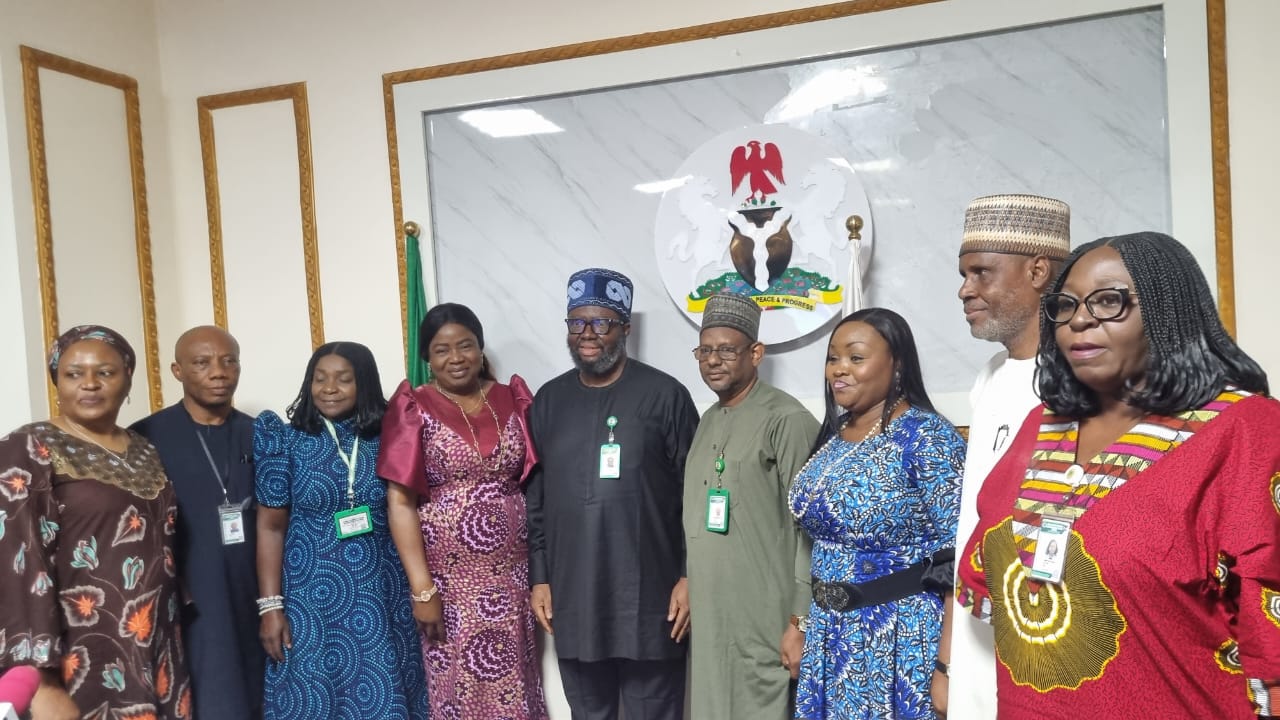
Joel Ajayi
The second Africa Raw Materials Summit (ARMS 2026) is expected to attract nearly 2,000 delegates from across 54 African countries and global industrial partners, almost doubling the attendance recorded at its maiden edition.
The Director-General and Chief Executive Officer of the Raw Materials Research and Development Council (RMRDC), Prof. Nnanyelugo Martin Ike-Muonso, disclosed this during the World Press Briefing on the summit scheduled for October 19–20, 2026, at the Abuja Continental Hotel.
The summit, themed “From African Feedstock to African Factories,” seeks to promote local processing of Africa’s natural resources, strengthen manufacturing capacity and reduce the continent’s dependence on exporting unprocessed commodities.
Ike-Muonso said the gathering would bring together policymakers, investors, researchers, manufacturers, technology providers and development finance institutions to develop practical solutions for converting Africa’s abundant raw materials into industrial products.
He noted that Africa had continued to lose significant economic opportunities through an extractive model that prioritised the export of unprocessed resources while importing expensive finished goods.
According to him, Nigeria alone possesses more than $582.4 billion in documented non-renewable natural resources, yet the country and other African economies continue to face challenges associated with limited local value addition, foreign exchange pressures and inadequate industrial capacity.
He said ARMS 2026 would provide a platform for aligning policy, investment, technology and industrial development to ensure that more value is retained within African economies.
The maiden edition of the summit, held in May 2025 under the theme “Shaping the Future of Africa’s Resource Landscape,” attracted more than 1,000 delegates and provided a platform for unveiling the Ten-Year Raw Materials Transformation Roadmap (2025–2034).
The roadmap outlines strategies for strengthening local technological capacity, promoting climate-resilient processing and advancing backward integration in the raw materials sector.
Ike-Muonso said the second edition would build on the foundation established by the maiden summit by addressing critical barriers to resource-based industrialisation across the continent.
A major focus will be the proposed 30 per cent mandatory value-addition policy, which seeks to establish a statutory requirement for domestic processing of Nigerian raw materials before export.
According to the RMRDC chief executive, the proposed legislation is projected to generate more than 1.2 million skilled jobs within five years, conserve foreign exchange through import substitution and increase manufacturing’s contribution to Nigeria’s gross domestic product.
He said the initiative would help move the country away from exporting low-value primary commodities towards producing and exporting higher-value industrial goods.
The summit will also examine infrastructure and logistics challenges affecting the movement of raw materials from farms and mines to processing facilities, including inadequate rural roads, cold-chain infrastructure, testing facilities and standardisation systems.
Other priority areas include circular economy development, waste industrialisation, regional value-chain integration under the African Continental Free Trade Area (AfCFTA), and the commercialisation of research and technological innovations.
The programme will feature high-level plenary sessions, policy dialogues, interactive panels, a Pan-African Advanced Raw Materials and Technology Exhibition, industrial site visits and the African Raw Materials Industry Awards.
The exhibition is expected to showcase locally fabricated processing equipment, advanced materials, green chemicals and other industrial inputs developed by innovators across Africa.
The industrial visits will provide participants with opportunities to observe manufacturing and raw materials processing operations within the Abuja industrial corridor.
Ike-Muonso also highlighted institutional reforms undertaken by the RMRDC, including the deployment of the Nigeria Integrated Information Statistical System for Raw Materials and Products (NISSRAMP), which is designed to provide information on raw material deposits, specifications, production and industrial demand.
He further identified the Council’s ISO 9001:2015 quality management certification, digitalisation initiatives, technical training programmes and partnerships with the Bank of Industry and China’s National Innovation Centre par Excellence as part of efforts to strengthen the commercialisation of research and local industrial development.
The RMRDC director-general called on the media to scrutinise the summit’s policies and outcomes, particularly progress towards domestic value addition, while encouraging private-sector operators, investors and technology companies to participate.
He said the future of Africa’s resource economy depended on building industries capable of processing locally sourced materials into finished and semi-finished products.
Registration for ARMS 2026 is open to stakeholders interested in contributing to investment, technology transfer, manufacturing and the development of regional industrial value chains.
The summit is expected to provide a platform for strengthening partnerships and advancing the transition from raw material extraction to sustainable, resource-based industrialisation across Africa.



News
Cyclists, Athletes, Fitness Communities others Set for 5th Chaingang MTB Festival in Abuja
By Joel Ajayi
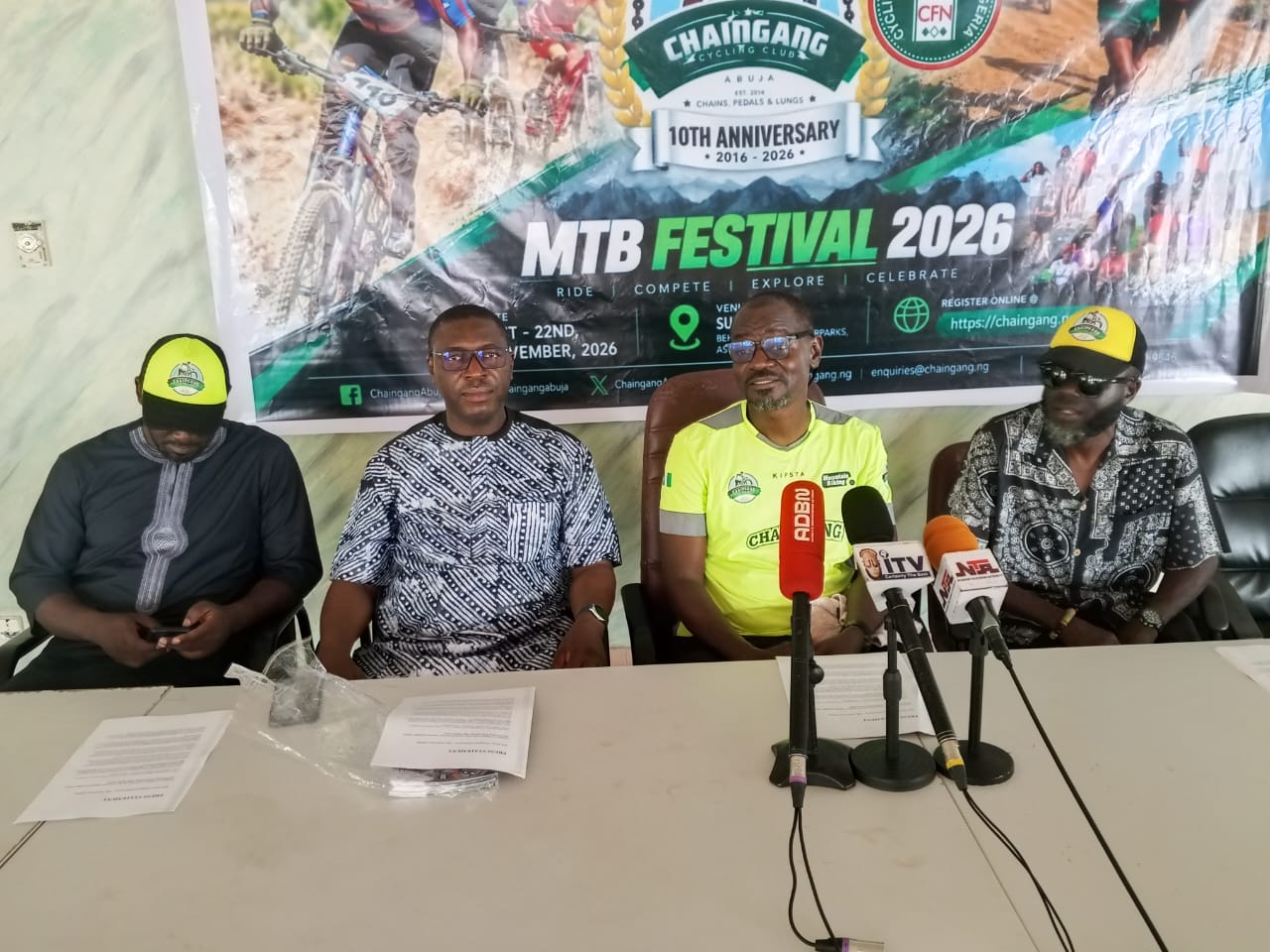
Cyclists, professional athletes and fitness enthusiasts are set to converge on Abuja for the 5th edition of the Abuja Chaingang Mountain Bike (MTB) Festival and 10th year anniversary of the the club scheduled for November 21–22, 2026, in the Federal Capital Territory.
Speaking at a press conference in Abuja on Friday, Chairman of the MTB Festival Organising Committee, Mr Olatunji Olanrewaju, said the event would mark a significant milestone in the development of competitive cycling in Nigeria.
Organised by the Chaingang Cycling Club Abuja in collaboration with the Cycling Federation of Nigeria (CFN), the festival will introduce Cross-Country Short Track (XCC) and Cross-Country Olympic (XCO) race courses, alongside the unveiling of the Sunrise Hills MTB Course in Asokoro, bordering Guzape.
The organisers said the new courses feature natural terrain, steep climbs, rocky descents, switchbacks and panoramic ridgelines designed to challenge riders and promote competitive mountain biking.
The festival, adopted as Nigeria’s national qualifier for international mountain biking competitions, will provide cyclists with opportunities to compete for qualification slots for major championships, with prize money available across race categories.
Olanrewaju disclosed that the festival had attracted several cycling teams over the years, including foreign participants in almost every edition, expressing optimism that the 2026 event would attract even greater participation.
He called on sponsors, government agencies, security institutions and multinational organisations to support the festival, noting that their participation would help strengthen Nigeria’s outdoor sports industry and enhance the country’s international sporting profile.
Also speaking, the Technical Director of the Cycling Federation of Nigeria, Bashiru Mohammed, described the festival as an important platform for developing cycling and strengthening the country’s cycling community.
Mohammed said the competition was open to cyclists and cycling groups across Nigeria and beyond, adding that the organisers would share information about the event with international partners to encourage wider participation.
He explained that the professional races would feature male and female competitors in the XCC and XCO categories, while the programme would also include activities for children.
According to him, the competition would help Nigerian cyclists prepare for next year’s championship for emerging countries, which he likened to an Olympic-style gathering of athletes from different sporting disciplines.
In his remarked, the CFN Secretary-General of the federation, Joel Akinuwa, said prize money remained an important feature of the festival, noting that participants in the previous edition received financial rewards in addition to opportunities to qualify for the African Championships and other major international competitions.
Akinuwa added that winners across the various categories in the 2026 edition would also receive prize money, providing further motivation for cyclists to compete.
Beyond the elite races, the two-day festival will feature a trail run, children’s mountain bike race, veterans’ recreational ride, city-wide fitness ride and hiking campout.
The event will also incorporate corporate social responsibility initiatives, including the Jigakushi School Restoration Project and the Road Safety Street Mural Initiative, aimed at promoting community development and road safety awareness.
The organisers said the festival would bring together professional athletes, recreational cyclists, families, young people, fitness enthusiasts, media organisations and international observers, while promoting tourism, youth development and community engagement.
They added that the long-term vision was to position Abuja and Nigeria as leading mountain biking destinations in Africa, capable of hosting international competitions and attracting athletes from across the continent and beyond.
Registration for the 2026 Abuja Chaingang MTB Festival is ongoing through the club’s website, www.chaingang.ng.
-
 Featured7 years ago
Lampard Names New Chelsea Manager
-
 Featured7 years ago
FG To Extends Lockdown In FCT, Lagos Ogun states For 7days
-
 Featured7 years ago
Children Custody: Court Adjourns Mike Ezuruonye, Wife’s Case To April 7
-
 Featured7 years ago
NYSC Dismisses Report Of DG’s Plan To Islamize Benue Orientation Camp
-

 Featured5 years ago
Transfer Saga: How Mikel Obi Refused to compensate me After I Linked Him Worth $4m Deal In Kuwait SC – Okafor
-
Featured7 years ago
Board urges FG to establish one-stop rehabilitation centres in 6 geopolitical zones
-
Sports4 years ago
TINUBU LAMBAST DELE MOMODU
-

 News2 years ago
Zulu to Super Eagles B team, President Tinubu is happy with you