
Featured
Inside the Sierra Leone Award Honouring the Late Salami Aremu Jimoh

The posthumous recognition of Salami Aremu Jimoh for humanitarian service in Sierra Leone has renewed attention on the life of the Nigerian businessman, whose years in the country were associated with diamond trading, community relationships and support for people around him.
Jimoh, popularly known as Pa Salami, was born in 1934 in Ilorin, Kwara State, Nigeria. He later moved to Sierra Leone, where he became involved in the artisanal diamond trade and established connections with communities in Hangha and Tongo, in the country’s Eastern Province.
His life brought together two aspects of his experience: commercial activity in one of Sierra Leone’s historically significant industries and relationships with people in the communities where he lived and worked. The humanitarian recognition has drawn attention to the latter, particularly accounts of his generosity, mentorship and assistance to people facing financial difficulties.
Remembering a life beyond business
Jimoh’s involvement in Sierra Leone’s diamond trade placed him within an industry that attracted traders and other commercial participants from across West Africa. His years in the country also brought him into contact with people whose livelihoods were connected to mining and related commercial activities.
Beyond business, accounts of his life describe a man who maintained personal relationships with people in his community. He was remembered by associates as a father figure and mentor who offered advice and assistance to those seeking to improve their circumstances.
These recollections have become an important part of the story surrounding his posthumous recognition. They portray a businessman whose relationships extended beyond commercial transactions and whose legacy, according to those who remember him, included a willingness to help others.
For his family and associates, the recognition provides an opportunity to preserve these memories and highlight the values they associate with his life, including humility, fairness and compassion.
*The significance of the humanitarian award
The award recognised Jimoh posthumously for humanitarian service in Sierra Leone. The reasons associated with the honour centre on his reported generosity and his assistance to people in the communities where he lived and conducted business.
Such recognition draws attention to the role individuals can play in community life beyond their professional activities. While commercial success is often measured through business achievements, humanitarian service is more closely associated with personal support, generosity and efforts to improve the circumstances of others.
In Jimoh’s case, the award has brought renewed attention to accounts of his relationships with people in Sierra Leone and the assistance he was remembered for providing.
The identity of the organisation that presented the award, its formal selection criteria and the specific contributions cited in its official commendation would provide further context for understanding the honour. These details are also important in establishing the award’s place within the wider landscape of humanitarian recognition in Sierra Leone.
Family remembrance and community ties
The recognition formed part of a wider effort to honour Jimoh’s memory. His children organised a three-day Qur’anic reading attended by relatives, friends, neighbours, Islamic scholars and other well-wishers.
The gathering provided an opportunity for prayer, remembrance and the renewal of relationships among people connected to the family. Food was also distributed to participants, reflecting the communal character of the occasion.
For the family, preserving Jimoh’s memory involves more than recalling his business career. It also means keeping alive the values they associate with him and maintaining connections with the communities that formed part of his life.
His years in Sierra Leone established a lasting connection between his Nigerian origins and the people among whom he lived and worked. The family’s continuing involvement in commemorative activities reflects the importance of those relationships.
Humanitarian service and community recognition
Humanitarian recognition can take different forms, from awards presented by established institutions to honours organised by community groups. In each case, the significance of the recognition depends on the contribution being acknowledged and the context in which the award is presented.
Jimoh’s recognition has focused attention on personal generosity and assistance to people in need. These are qualities often valued within communities, particularly where personal relationships and mutual support form an important part of everyday life.
Understanding the full significance of the award requires clarity about the organisation behind it, the criteria used to select recipients and the specific activities for which Jimoh was honoured. Such information would also help establish whether the recognition forms part of an established programme with a history of acknowledging humanitarian contributions.
Nevertheless, the recognition has provided an occasion to revisit the accounts of Jimoh’s life and the relationships he maintained during his years in Sierra Leone.
A legacy connecting Nigeria and Sierra Leone
Salami Aremu Jimoh’s life connected Ilorin with communities in Sierra Leone through migration, business and personal relationships. His involvement in the diamond trade formed an important part of that experience, while the accounts surrounding his humanitarian recognition have highlighted the qualities attributed to him by his family and associates.
The posthumous award has renewed attention on a life remembered for more than commercial activity. It has also brought the communities where he lived and worked into focus, reflecting the lasting connections that can develop when people establish themselves beyond their countries of origin.
For those who remember him, the recognition represents an acknowledgement of the humanitarian dimension of his life and an opportunity to preserve his memory across generations.



Business
Turning Africa’s Raw Materials Into Wealth: The ARMS 2026 Industrial Agenda
By Joel Ajayi
For decades, Africa’s vast natural resources have powered industries and economies far beyond the continent, while many African countries have remained largely exporters of unprocessed commodities and importers of finished products.
That familiar pattern is now coming under renewed scrutiny as policymakers, researchers, investors and industrialists seek to change the direction of Africa’s resource economy.
At the centre of that conversation is the second edition of the Africa Raw Materials Summit (ARMS 2026), scheduled for October 19 and 20 at the Abuja Continental Hotel, Abuja, under the theme: “From African Feedstock to African Factories.”
Organised by the Raw Materials Research and Development Council (RMRDC), the summit is being positioned as more than another gathering of policymakers and industry stakeholders. It is intended to provide a platform for confronting the structural challenges that have kept African raw materials largely disconnected from local manufacturing.
Africa has for years operated largely within a “pit-to-port” economic model, exporting raw materials while importing expensive finished products.
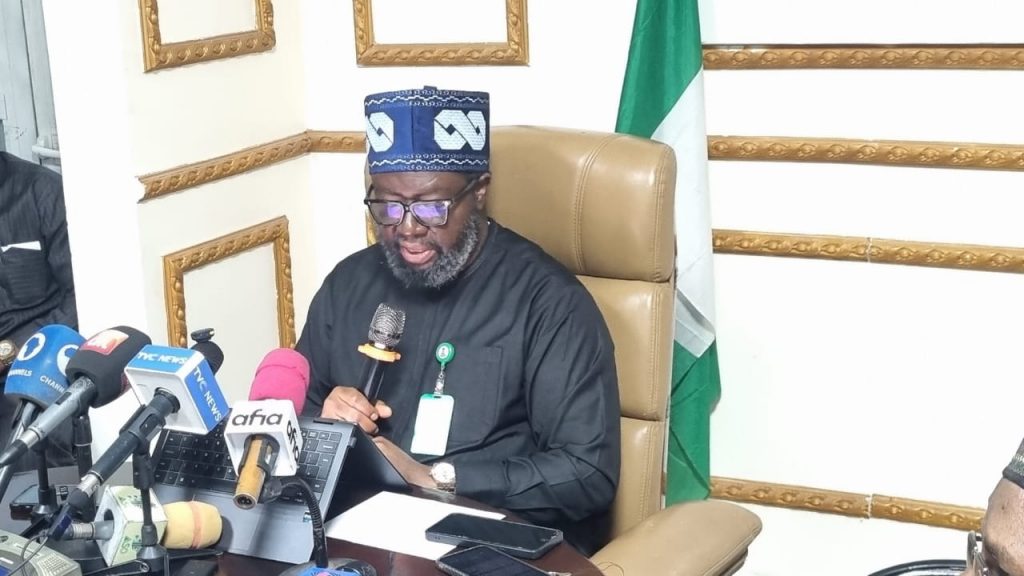
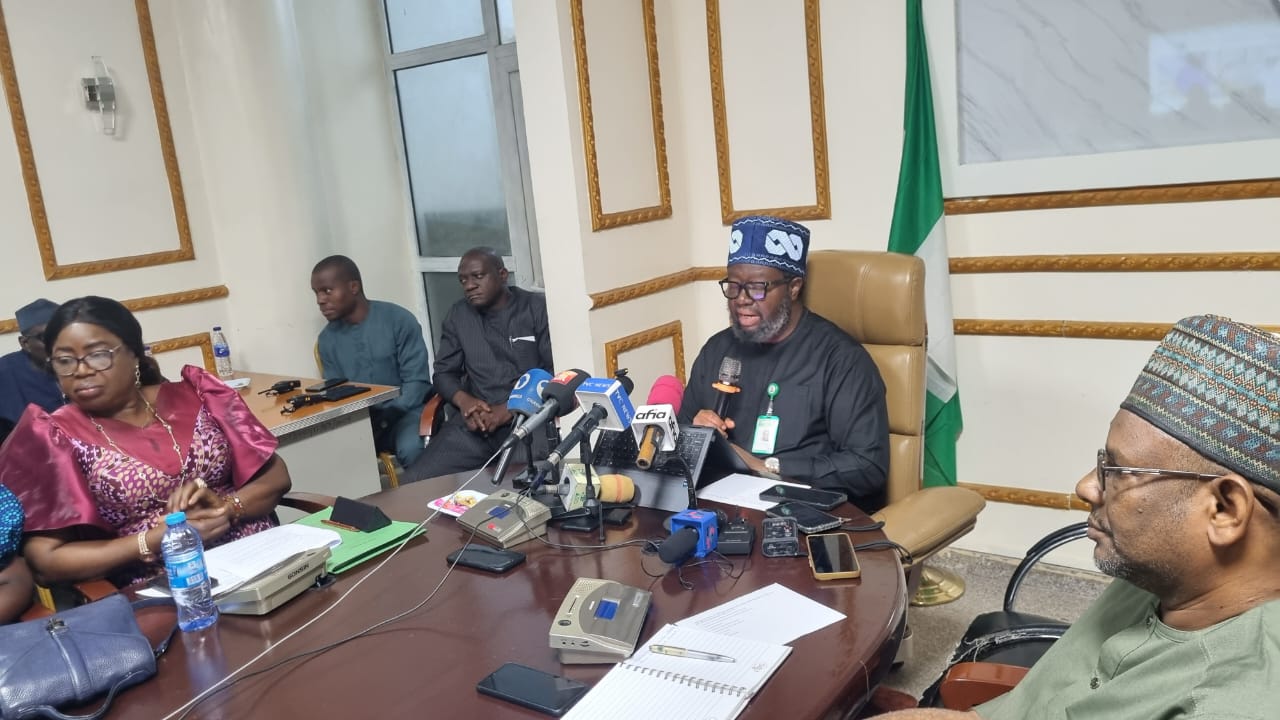
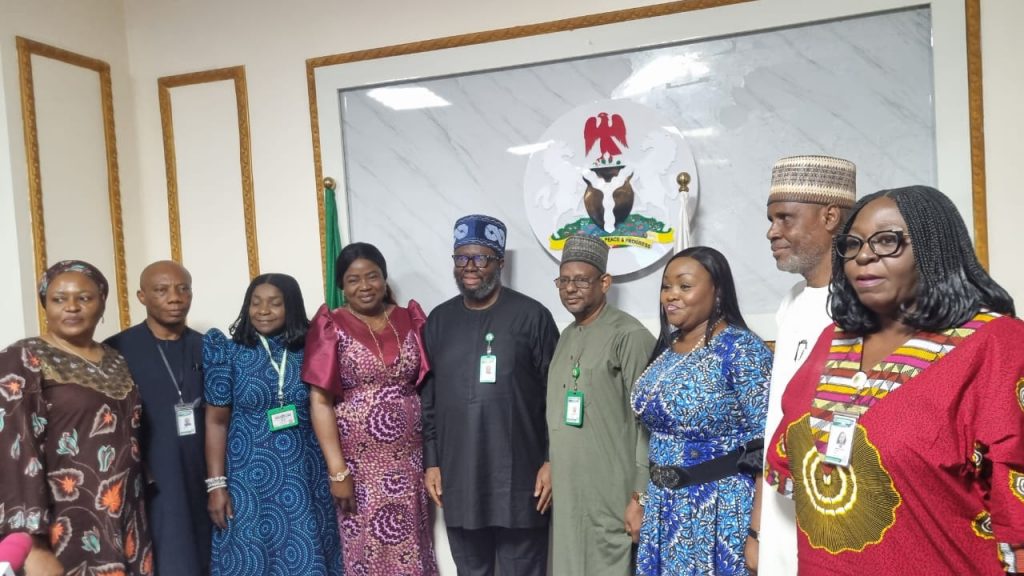
Speaking at a press conference ahead of the summit on Tuesday in Abuja, the Director-General and Chief Executive Officer of RMRDC, Prof. Nnanyelugo Martin Ike-Muonso, said the event would bring together policymakers, investors, researchers, technology providers and industrialists to develop practical strategies for transforming Africa’s abundant natural resources into industrial wealth.
The challenge, therefore, is not simply the abundance of resources, but the continent’s ability to transform those resources into industrial value, employment, technology and wealth within Africa.
Nigeria alone, according to the RMRDC, has more than $582.4 billion in documented non-renewable natural resources, while the wider continent possesses substantial deposits of critical minerals, agricultural raw materials and industrial feedstock.
Yet, the benefits of this resource endowment have often been constrained by inadequate processing capacity, weak infrastructure, limited technology, financing gaps and fragmented regional value chains.
From Dialogue to Industrial Action
ARMS 2026 builds on the maiden edition held in May 2025, which attracted more than 1,000 delegates from across the world.
The inaugural summit also witnessed the unveiling of the Ten-Year Raw Materials Transformation Roadmap (2025–2034) by the Minister of State for Industry, Senator John Owen Enoh.
The roadmap was designed around areas including technological capability, climate-resilient processing and backward integration, establishing a policy framework for greater domestic utilisation of Africa’s raw materials.
The second edition is expected to move the conversation further by bringing policy, capital, technology and industrial stakeholders around practical mechanisms for turning raw materials into locally manufactured products.
One of the major proposals highlighted by the RMRDC is the 30 per cent Mandatory Value Addition Bill, which seeks to establish a statutory minimum level of value addition to Nigerian raw materials before export.
The Council says the proposed framework could support job creation, import substitution, foreign-exchange conservation and increased manufacturing contribution to the economy.
Building the Infrastructure for Value Addition
The industrial transformation envisaged by ARMS 2026 goes beyond legislation.
A major concern is the “missing middle” between where raw materials are produced and where factories are located.
Poor transportation networks, inadequate cold-chain facilities, weak rural roads, limited testing and certification infrastructure and border-related delays can make locally sourced materials more expensive and less competitive.
Consequently, logistics and infrastructure constitute one of the five principal pillars of the summit.
The objective is to develop more reliable corridors connecting farms and mines with processing centres and manufacturing facilities, thereby reducing losses and improving the movement of industrial inputs.
The Digital Dimension
Technology is also becoming an important part of the Council’s strategy.
The RMRDC says it has developed the Nigeria Integrated Information Statistical System for Raw Materials and Products (NISSRAMP), described as a digital repository containing information on feedstock deposits, specifications, production outputs and industrial absorption rates.
The Council has also highlighted its transition towards paperless operations and its certification as a Data Controller/Processor of Major Importance by the Nigeria Data Protection Commission.
Such digital infrastructure could provide investors and manufacturers with better information about the availability and characteristics of raw materials while supporting more informed industrial planning.
Turning Waste Into Industrial Inputs
Another major component of ARMS 2026 is the proposed expansion of the circular economy.
The summit will examine how agricultural by-products, mine tailings, scrap metals and biomass can be recovered and reused as inputs for new production processes rather than being treated simply as waste.
The RMRDC argues that such an approach could lower raw-material costs while supporting more sustainable and climate-resilient manufacturing systems.
For Africa, where industrial expansion must increasingly balance economic development with environmental considerations, waste industrialisation could become an important part of the continent’s manufacturing conversation.
From National Production to African Value Chains
The African Continental Free Trade Area is another important element of the summit’s agenda.
The RMRDC sees AfCFTA as an opportunity to create regional value chains in which raw materials sourced in one African country can be processed and supplied to manufacturers in another.
Under such a model, Africa would move beyond simply exporting commodities to external markets and develop stronger internal networks for supplying chemicals, refined minerals, agricultural inputs and other industrial materials across national borders.
This approach places regional integration at the heart of Africa’s industrialisation strategy.
Bridging Research and Capital
A recurring weakness in many developing economies is the gap between research and commercialisation.
Innovations may emerge from universities, research institutions and laboratories without receiving the financing, equipment or market connections required to become commercially viable.
ARMS 2026 intends to address that gap through technology commercialisation and capital linkages, connecting research outputs with investors, development finance institutions and industrial off-takers.
The RMRDC has also cited partnerships with the Bank of Industry for commercial-scale post-harvest processing and a South-South technology-transfer partnership with the National Innovation Centre par Excellence in Shanghai, China.
A Larger Industrial Conversation
The scale of ARMS 2026 is expected to be significantly larger than the maiden edition.
The organisers project more than 1,800 delegates from all 54 African countries and global industrial partners.
The programme will feature high-level policy dialogues, technical panels, an advanced raw materials and technology exhibition, industrial site visits and the African Raw Materials Industry Awards.
The exhibition, in particular, is expected to showcase locally fabricated processing machinery, advanced domestic materials, green chemicals and engineered commercial inputs.
Beyond the speeches and exhibitions, however, the real significance of ARMS 2026 will ultimately depend on what happens after the summit.
Africa’s challenge has never been a shortage of raw materials. The more difficult question has been how to transform those resources into factories, products, skilled employment, technology and sustainable economic opportunities.
For Nigeria and the rest of the continent, the proposed shift from “pit-to-port” to “feedstock-to-factory” therefore represents a broader debate about the future structure of African economies.
ARMS 2026 seeks to place that debate firmly on the industrial agenda — with value addition, technology, finance, infrastructure, circular production and regional trade at the centre.
If the commitments and partnerships generated by the summit translate into measurable industrial activity, the event could provide another platform for Africa to examine how its enormous resource base can support stronger domestic manufacturing.
The message from the organisers is clear: the continent’s raw materials should not only leave African soil as commodities; they should increasingly become the foundation for African industrial production
-
 Featured7 years ago
Lampard Names New Chelsea Manager
-
 Featured7 years ago
FG To Extends Lockdown In FCT, Lagos Ogun states For 7days
-
 Featured7 years ago
Children Custody: Court Adjourns Mike Ezuruonye, Wife’s Case To April 7
-
 Featured7 years ago
NYSC Dismisses Report Of DG’s Plan To Islamize Benue Orientation Camp
-

 Featured5 years ago
Transfer Saga: How Mikel Obi Refused to compensate me After I Linked Him Worth $4m Deal In Kuwait SC – Okafor
-
Featured7 years ago
Board urges FG to establish one-stop rehabilitation centres in 6 geopolitical zones
-
Sports4 years ago
TINUBU LAMBAST DELE MOMODU
-

 News2 years ago
Zulu to Super Eagles B team, President Tinubu is happy with you













