
Sports
A New Dawn Rises for the Nigeria National League (NNL): When Belief Becomes Investment
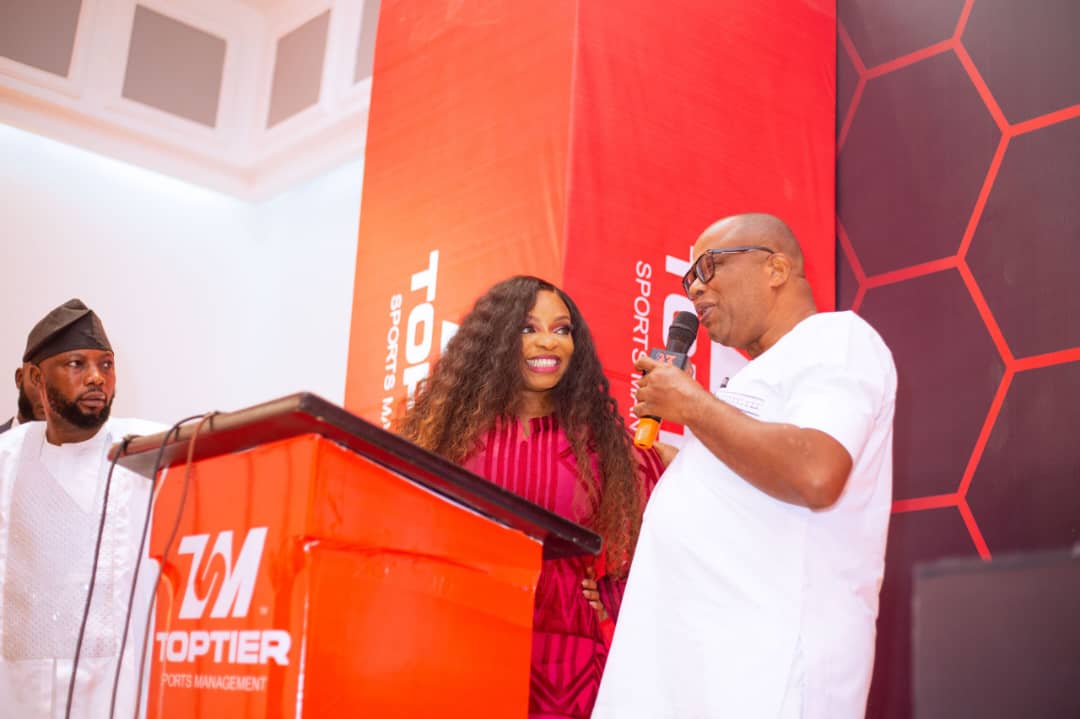
Real change in football rarely begins with a whistle. It begins with belief. Belief that a league is worth building. Belief that structure can replace chaos. Belief that domestic football, long overlooked and underfunded, can stand as a serious commercial and sporting enterprise. For the Nigeria National League, that belief may finally have found tangible expression.
For decades, the NNL has existed as Nigerian football’s proving ground, producing players who graduate to the top flight while the league itself struggled for identity and financial stability. It was competitive but constrained, passionate but perennially under-resourced. The narrative was predictable: talent thrives, structure lags.
Now, the conversation is shifting.
The headline commitment by Toptier Sports Management to inject over ₦40 billion into the NNL and the Nigeria Women Football League over the next decade is not just another sponsorship announcement. It represents one of the most ambitious private-sector interventions in the history of Nigerian domestic football.
Structured as a long-term strategic partnership, the investment signals that the NNL is no longer being viewed as a secondary competition, but as a platform with real commercial and developmental value. What makes this moment compelling is not just the size of the figure, but the framework around it.
The partnership is anchored in governance reform, digitization, professional indemnities, broadcast development and branding. These are structural levers that determine whether a league grows or merely survives.
Founder of Toptier Sports Management, Chichi Nwoko, has framed the commitment as a 10-year transformation plan. The first phase begins with a ₦200 million investment in year one, but the broader vision extends well beyond short-term visibility. Both the NNL and NWFL have signed an initial five-year agreement, signaling mutual confidence in continuity and delivery.
The implications are far-reaching.
A properly funded second-tier league creates ripple effects across the football ecosystem. Clubs gain operational stability. Players receive greater exposure. Sponsors see clearer value. Referees and officials operate within better-defined systems. Fans begin to trust the product. And perhaps most importantly, young talents see a future at home.
The early signs are already visible. Improved live match production has brought NNL fixtures into sharper public focus. Administrative reforms are strengthening compliance and transparency. Strategic planning around flagship competitions such as the Super 4 indicates a shift toward deliberate event management rather than reactive organization.
There is also a broader confidence factor at play. Private investment at this scale reflects growing trust in Nigeria’s sports governance climate, particularly the ongoing efforts to reposition domestic leagues as credible, accountable and commercially attractive entities. Confidence attracts capital. Capital drives reform. Reform builds credibility.
Of course, investment alone does not guarantee transformation. Execution will determine whether this moment becomes a milestone or merely a memory. Infrastructure gaps still exist. Cultural attitudes toward domestic football must continue to evolve. Accountability must remain central.
But for the first time in a long while, the NNL is not being discussed as a problem to manage. It is being treated as an opportunity to grow.
That shift in perception may prove to be the most important development of all.
This partnership could redefine the league’s trajectory, turning it from a stepping stone into a destination in its own right. The Nigeria National League has always had the talent and competitive fire. What it may finally have is the investment and structural belief to match.
And that is what makes this moment feel like a genuine new dawn.



Sports
Montage Community Football Tourney Registration Ends October 30
Cyril Ogar
Registration for the 2026 edition of the Montage Community Football Tournament will close on Friday, October 30, organisers have announced.
The tournament coordinator, Mr Raphael Ekpang, disclosed this on Thursday, urging interested teams across the six Area Councils of the Federal Capital Territory (FCT) to take advantage of the remaining days to register.
Ekpang said registration had been ongoing since Monday, encouraging eligible teams to complete the process before the deadline.
The tournament, themed “Montage FM 99.7: Empowering Youth, Uniting Communities Through Football,” is scheduled to kick off on November 3, 2026, with playoffs across the six Area Councils of the FCT.
The grand finale will hold on December 5, 2026, at the Old Parade Ground, Garki Area 10, Abuja, where the top four teams will compete for first-, second- and third-place honours.
A total of 48 teams will participate in the competition, with eight teams representing each of the six Area Councils.
The participating teams will compete for cash prizes worth over ₦2 million and other valuable rewards.
-
 Featured7 years ago
Lampard Names New Chelsea Manager
-
 Featured7 years ago
FG To Extends Lockdown In FCT, Lagos Ogun states For 7days
-
 Featured7 years ago
Children Custody: Court Adjourns Mike Ezuruonye, Wife’s Case To April 7
-
 Featured7 years ago
NYSC Dismisses Report Of DG’s Plan To Islamize Benue Orientation Camp
-

 Featured5 years ago
Transfer Saga: How Mikel Obi Refused to compensate me After I Linked Him Worth $4m Deal In Kuwait SC – Okafor
-
Featured7 years ago
Board urges FG to establish one-stop rehabilitation centres in 6 geopolitical zones
-
Sports4 years ago
TINUBU LAMBAST DELE MOMODU
-

 News2 years ago
Zulu to Super Eagles B team, President Tinubu is happy with you