
Foreign news
AIIB Fifth Anniversary Asian Infrastructure Investment Bank celebrates anniversary with eye on green post-pandemic recovery
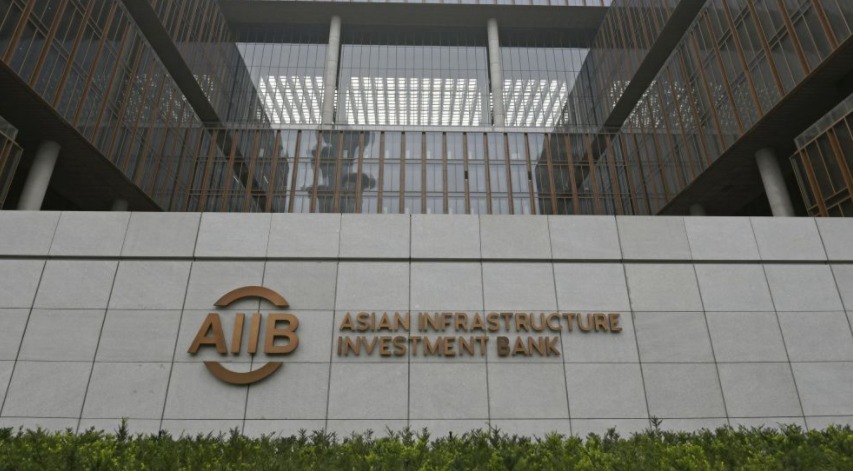
The Asian Infrastructure Investment Bank, known as the AIIB, is celebrating its fifth anniversary. Today, the organization has doubled the number of members it had when it launched in Beijing back in 2016, making it the second largest of all multilateral banks. In the face of new global challenges, not least of all COVID-19, the AIIB is currently undergoing a transformation. Feng Yilei has more.
The Asian Infrastructure Investment Bank is re-thinking its strategy, from financing traditional infrastructure, to looking ahead to the future.
The international development bank has identified key emerging infrastructure trends that will drive the future of investment in previously overlooked areas.
The new focus? Infrastructure that is green and human-centred, with an eye on technology while enhancing connectivity.
The shift takes place in the context of COVID-19, which experts say has exposed weaknesses in infrastructure of many economies.
JIN LIQUN President of AIIB “At this juncture, it is important to point out that efforts to foster our health system as well as address climate change can no longer be dealt with in silence. We need to promote the intricate emerging pattern of the relationship between climate and health care problems. Rebooting the global economy will require that we no longer tackle challenges in isolation.”
The AIIB’s plans are laid out in its “Next-10-year Corporate Strategy” which establishes clear priorities and ambitious targets in its overall share of financing-50 percent for climate action by 2025, 25 to 30 percent for cross-border connectivity by 2030, and 50 percent for private sector operations by 2030.
In the medium-to-long term, the bank’s next chapter includes not just expanding into social infrastructure, but also ramping up investment in digital infrastructure, especially in less-developed regions.
JIN LIQUN President of AIIB “New infrastructure development boosted by new technologies will bring for immediate benefits and pay off in the long term. Global trade will eventually open up, and those countries who invest smartly would be ready to capitalize on those opportunities. Indeed, there will be, in my view, and overhaul of the existing structure to meet the needs of the digital era.”
As global policy makers struggle with the current global health crisis and its immediate aftermath, experts say it is imperative for multilateral development banks, such as the AIIB, to work with the private sector to mobilize much needed investment.
They say a key challenge is to leverage more international capital from the private sector or commercial banks that eye returns.
JIN LIQUN President of AIIB “To a certain extent, it’s not so easy to find common ground, but it’s possible. Private sector investors may not necessarily look at the highest returns when they know that by working with MDBs, actually, they have safety of their resources. And also with enhanced responsibility, they would love to work with MDBs.”
FENG YILEI Beijing “Over the past half a decade, the president of the AIIB says he has witnessed the progress in terms of how development bank operates, including its policies, regulations, staffing and institutional environment.”
Challenges brought about by the pandemic have accelerated change in the overall development of multilateral development banks. The AIIB says it has gained critical experience and the opportunity to further evolve its business model, to play a central role in the stability of global finance. Feng Yilei, CGTN, Beijing.



Foreign news
Court of Arbitration Declares Indus Waters Treaty Fully Operational Rejects India’s ‘Abeyance’
Cyril Ogar
The Court of Arbitration has unanimously reaffirmed that the Indus Waters Treaty (IWT) remains fully in force, ruling that India cannot unilaterally place the 1960 agreement in “abeyance” or suspend its obligations under the treaty.
The decision represents a significant legal development in the longstanding dispute between India and Pakistan over the management and use of the Indus river system.
The Court’s finding addresses a fundamental issue at the heart of the dispute: whether either party can unilaterally suspend the treaty outside the legal framework agreed by both countries.
In its unanimous determination, the Court made clear that the IWT continues to bind both India and Pakistan and that its obligations cannot be set aside through a unilateral political declaration.
The ruling means India remains subject to the treaty provisions governing the use of the Western Rivers, including requirements relating to the design and operation of hydroelectric projects, as well as the dispute-resolution mechanisms established under the agreement.
The Court has also ordered interim measures concerning the Ratle Hydroelectric Plant, restricting specified construction activities while the broader dispute remains under consideration.
The measures are aimed at preserving the effectiveness of the arbitration process and preventing developments that could prejudice the outcome of the proceedings.
For Pakistan, the decision represents significant legal validation of its longstanding position that the IWT is a binding international agreement and contains no provision allowing either party to unilaterally place it in abeyance.
Pakistan has consistently maintained that disagreements over the treaty should be addressed through the institutional mechanisms established by the agreement, rather than through unilateral action.
The IWT provides a structured framework for resolving disputes through mechanisms including the Permanent Indus Commission, Neutral Expert and Court of Arbitration processes.
The latest ruling therefore reinforces the principle that treaty obligations cannot simply be disregarded because of deteriorating political relations between signatories.
The significance of the decision extends beyond the India-Pakistan dispute. It underscores the broader international-law principle that agreements governing shared rivers and other transboundary resources must be respected and disputes resolved through established legal and institutional channels.
The Indus river system supports agriculture, livelihoods, food security and communities across the region, making the stability of the treaty particularly important.
The ruling also highlights the distinction between seeking to amend an international agreement through mutually agreed procedures and attempting to alter its obligations unilaterally.
The IWT has endured wars, prolonged diplomatic tensions and periods of limited bilateral engagement. Its continued operation demonstrates the importance of rules-based mechanisms in managing shared resources when relations between neighbouring states become strained.
For Pakistan, the outcome provides an opportunity to frame the decision not merely as a bilateral legal victory, but as an affirmation of international law, treaty compliance and peaceful dispute resolution.
The central message from the ruling is clear: the Indus Waters Treaty remains in force, its obligations continue to bind both parties, and disputes concerning shared waters must be addressed through the legal mechanisms agreed by India and Pakistan.
-
 Featured7 years ago
Lampard Names New Chelsea Manager
-
 Featured7 years ago
FG To Extends Lockdown In FCT, Lagos Ogun states For 7days
-
 Featured7 years ago
Children Custody: Court Adjourns Mike Ezuruonye, Wife’s Case To April 7
-
 Featured7 years ago
NYSC Dismisses Report Of DG’s Plan To Islamize Benue Orientation Camp
-

 Featured5 years ago
Transfer Saga: How Mikel Obi Refused to compensate me After I Linked Him Worth $4m Deal In Kuwait SC – Okafor
-
Featured7 years ago
Board urges FG to establish one-stop rehabilitation centres in 6 geopolitical zones
-
Sports4 years ago
TINUBU LAMBAST DELE MOMODU
-

 News2 years ago
Zulu to Super Eagles B team, President Tinubu is happy with you