
News
APC Convention of Purpose: Inside PBAT’s Policy Vision for Unity, Reform and National Renewal

BY Arabinrin Aderonke
It was truly a privilege to serve on the Convention Planning Committee for the 4th Elective National Convention of the All Progressives Congress held at Eagles Square in Abuja. Being part of such a well-organised, seamless and purposeful event was both fulfilling and inspiring. The level of coordination, attention to detail and commitment from everyone involved reflects the strength and maturity the party has built over the years. I must sincerely commend the leadership and every individual who contributed to making the Convention a success.
More importantly, I was genuinely excited listening to the speech delivered by His Excellency, Bola Ahmed Tinubu. It was not just a political address. It was a clear policy statement, a reflection of governance priorities and a roadmap for where the country is headed. What stood out was the balance between honesty about challenges and confidence in the direction of reforms.
From a policy point of view, the President’s speech strongly emphasised unity as the foundation for progress. This is not just political language. It reflects an understanding that policy implementation in a country like Nigeria requires cooperation across regions, institutions and political interests. Without unity, even the best policies fail at execution stage. By placing unity at the centre, the President is signalling that governance success depends on collective responsibility, not just government action.
Another important theme in the speech was institutional strengthening. The President made it clear that the party was not created merely as a vehicle for winning elections, but as a platform for national transformation. This aligns with a policy direction that prioritises strong institutions over individuals. When institutions work properly, policies become sustainable, transparent and more effective over time.
On democracy and political competition, the President’s position was quite instructive. He openly rejected the idea of a one party state and acknowledged the importance of a credible opposition. From a governance perspective, this is critical because strong opposition improves policy quality. It forces the government to think deeper, defend its decisions and remain accountable to the people. This reinforces democratic stability and policy credibility both locally and internationally.
The section addressing the Electoral Act also reflects a commitment to rule of law and due process. By highlighting that the law went through legislative scrutiny and public participation, the President is reinforcing the legitimacy of the electoral framework. This is important for investor confidence and political stability, as credible elections are the backbone of a functioning democracy.
One of the most significant parts of the speech was the explanation of the Renewed Hope Agenda as a governing philosophy rather than just a campaign slogan. This distinction matters. It shows that policies being implemented are not random or reactive, but guided by a clear framework. The emphasis on difficult but necessary reforms, such as removing unsustainable subsidies and correcting economic distortions, reflects a long term approach to economic management.
The President’s economic policy direction came out strongly in his discussion of reforms and results. He highlighted improvements in infrastructure, including roads, seaports and airports. These are not just physical projects. They are productivity enablers that reduce the cost of doing business, improve trade and support economic growth.
He also spoke about tax and fiscal reforms. This is a key policy area because government revenue determines the ability to fund development. By reforming the tax system, the government is trying to create a more efficient and fair structure that supports growth while increasing revenue.
Another important policy signal was the focus on social investment programmes. This shows an awareness that reforms can be difficult for citizens in the short term. Social programmes help cushion the impact and ensure that vulnerable populations are not left behind. This balance between reform and social protection is critical for sustainable policy success.
The President also touched on macroeconomic stability. He mentioned improvements in foreign exchange buffers, trade surpluses, declining inflation and growing investor confidence. These indicators suggest that the policy direction is beginning to stabilise the economy. Stability is important because it creates a predictable environment for businesses, investors and households.
Energy and electricity challenges were also acknowledged openly. This is important because power remains one of Nigeria’s biggest structural problems. The proposed establishment of the Grid Asset Management Company shows a policy move towards restructuring and investment in transmission infrastructure. Addressing this issue will have wide impact across industries, job creation and overall economic performance.
Another strong policy area in the speech was youth inclusion. The President did not just describe young people as the future, but emphasised their role as present day contributors and decision makers. This is a shift towards more inclusive governance, where policies are shaped with active youth participation. Given Nigeria’s demographics, this is both necessary and strategic.
Similarly, his message to women reflects a policy direction towards gender inclusion. Expanding opportunities for women in leadership and governance is not just about fairness. It improves decision making, strengthens institutions and contributes to economic development. Empowering women is widely recognised as a key driver of national progress.
The President also focused on internal party democracy and discipline. While this may seem political, it has policy implications. Strong party structures often translate into more organised governance, clearer policy direction and better accountability within government systems.
His closing message about integrity, leadership and responsibility for those elected at the Convention reinforces the importance of ethical governance. Policies can only succeed when leaders implement them with sincerity, discipline and a sense of responsibility to the people.
Overall, the speech presents a government that is focused on long term reforms, institutional strength, economic stability and inclusive growth. It acknowledges challenges but frames them as part of a necessary transition towards a stronger and more resilient Nigeria.
It was an address that combined political messaging with clear policy direction, and it leaves a strong sense that the administration is committed to staying the course, improving systems and delivering measurable progress for Nigerians.
Arabinrin Aderonke is an award-winning investigative journalist; 2016 finalist, CNN African Journalist Award; 2013 winner, Wole Soyinka investigative award, a policy analyst and good governance advocate. She writes from Abuja.



News
DNKI President Champions Humanitarian Service, Sustainable Community Development
Cyril Samania
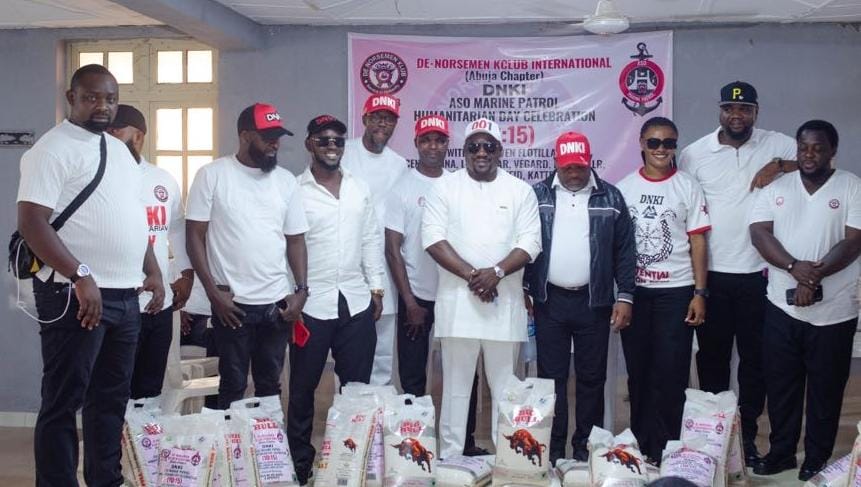
The President of De Norsemen Kclub International (DNKI), Chief Oliver Patrick Ityohegh, has reaffirmed the organisation’s commitment to humanitarian service, stressing the importance of supporting vulnerable people and improving community welfare beyond the annual celebration of Humanitarian Day.
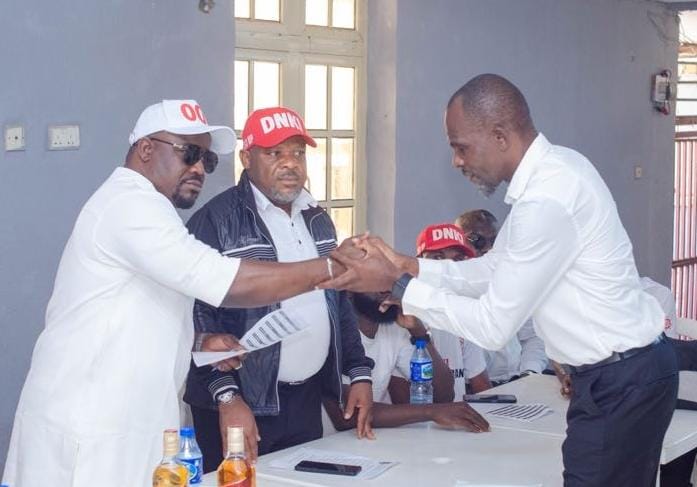
Ityohegh stated this during the organisation’s Cauldron Night and Award Presentation held to commemorate its 2026 Humanitarian Day celebration, theme: “Humanity First: Advancing Hope, Dignity and Community Well-being.” organised by the DNKI Abuja Chapter.
He emphasised that humanitarian service should be a continuous responsibility driven by compassion, solidarity and a commitment to making a meaningful difference in society.
According to him, DNKI’s humanitarian activities reflect its dedication to giving back to society and supporting people in need, while encouraging members to sustain initiatives that promote human dignity and community well-being.
He added that the organisation would continue to strengthen its humanitarian engagements through practical interventions aimed at improving the lives of vulnerable people and promoting community development.
Speaking at the event, the representative of the Abuja Chapter Chairman and Chairman of its Advisory Council, Prince Efiong Okpe, said the organisation’s humanitarian activities extended beyond the annual celebration of Humanitarian Day on October 15.
Okpe explained that DNKI undertook several initiatives throughout the year, including blood donation exercises, visits to hospitals and correctional centres, as well as support for orphanages and other vulnerable groups.
According to him, the organisation also collaborated with humanitarian bodies in the Federal Capital Territory (FCT) to identify areas of need and provide assistance within its available resources.
He described Humanitarian Day as an opportunity for members to renew their commitment to service and demonstrate solidarity with people facing difficult circumstances.
Earlier, the Chairman of the Planning Committee and Coordinator of the DNKI Gwagwalada Zone, Mr Etudaiye Hamzat, disclosed that the chapter had provided financial assistance to some members to help pay their children’s school fees, alongside distributing bags of rice and other relief items to members experiencing hardship.
Hamzat explained that the interventions followed concerns over the difficulties some members faced in meeting their family responsibilities, particularly the rising cost of their children’s education.
He maintained that supporting members in need was consistent with the organisation’s humanitarian principles, adding that DNKI remained committed to extending assistance to non-members and vulnerable communities as part of its commitment to leading by example.
Looking ahead, Hamzat said the Abuja Chapter planned to expand its humanitarian outreach to remote communities within the FCT, with particular attention to orphanages, schools and widows facing difficulties in meeting their family responsibilities.
He also recalled previous interventions for internally displaced persons (IDPs), which included the distribution of food, clothing and educational materials, noting that the chapter intended to scale up such initiatives in the coming year.
The highlight of the event was the presentation of awards to outstanding members and distinguished non-members in recognition of their contributions to humanitarian service.
-
 Featured7 years ago
Lampard Names New Chelsea Manager
-
 Featured7 years ago
FG To Extends Lockdown In FCT, Lagos Ogun states For 7days
-
 Featured7 years ago
Children Custody: Court Adjourns Mike Ezuruonye, Wife’s Case To April 7
-
 Featured7 years ago
NYSC Dismisses Report Of DG’s Plan To Islamize Benue Orientation Camp
-

 Featured5 years ago
Transfer Saga: How Mikel Obi Refused to compensate me After I Linked Him Worth $4m Deal In Kuwait SC – Okafor
-
Featured7 years ago
Board urges FG to establish one-stop rehabilitation centres in 6 geopolitical zones
-
Sports4 years ago
TINUBU LAMBAST DELE MOMODU
-

 News2 years ago
Zulu to Super Eagles B team, President Tinubu is happy with you