
News
CERI, carries out comunity engagement in Kuje, Buruku
By Benson Attah
The Community Emergency Response Initiative-(CERI) has been working tirelessly with other stakeholders in the Water, Sanitation and Hygiene-(WASH) Sector over the years towards contributing to the realisation of the National and Global WASH goals of the 2025 and 2030 respectively. But CERI is however more concerned and disturbed by the poor and un-friendly attitudes of most States where water, Sanitation and Hygiene aspect of development seems to have been neglected or has failed to receive the required attention.
What is even more baffling is the level of poor attention most of the communities that have attained open defecation free-(ODF) are getting. It might surprise you to know that most communities in the ODF LGAs do not have have potable water consolidate their ODF Status which leave one to wonder why we had to go through all the trouble of making them ODF only to leave them in a worst condition than their Pre-ODF or better still, their Open Defecation status.
ODF communities are supposed to see themselves as one that have achieved excellence their by, doing every thing to consolidation their ODF status but they now find themselves in a more dangerous condition than before, where they are supposed to observe and experience the highest level of Hygiene and Sanitation but the can not be because, most of these communities are without potable water.
This led CERI to embark of the End Water Poverty-(EWP) Campaign carried out last year. CERI decided to engage 6 communities in 2021, three-(3) and ODF LGA, Buruku LGA of Benue and another three-(3) Kuje Area Council of the FCT, Abuja.
OBJECTIVES OF THE CAMPAIGN :
- To ascertain if consideration is given to issues of concern related to the human rights to safe drinking water and sanitation, including but not limited to availability, accessibility, quality and safety, affordability and acceptability of water for drinking and personal/domestic usage and sanitation
- To assess if water is available in sufficient quantity to fulfil individuals and households the requirement for drinking, personal hygiene and other domestic uses, which includes cooking, preparation of food, laundry, and cleaning of which the supply must be reliable and continuous so that individuals can collect water when they require.
- To ascertain if water services are physically accessible for everyone within or in the immediate vicinity of all spheres of their lives, particularly at home, but also in educational institutions, the workplace, prisons, and public places including establishing the extent of safety on the route to fetch water and to the facility itself which must be safe for all users and the method of extracting water must be usable by all in situations where water is not accessible on the premises.
- To assess the extent of citizens affordability of water of which the tariffs charged are reasonable and without compromising the exercise of other rights, such as health or food and that there are measures in place whereby the state can make the services available where the people cannot afford water and sanitation for reasons beyond their control also that, water services are not disconnected due to the inability of the citizens to pay.
- To establish if the Water used by households and individuals for domestic and personal purposes is of sufficient quality to protect their health as well as ascertain that the water is not polluted by any means such as, agriculture, industry and it’s prevented from any form of contamination.
IMPORTANCE OF WASH COMMUNITY ENGAGEMENTS. The campaign also provided opportunity to engage with both Local Government and Traditional authorities as well as members of the communities and sensitise and create awareness on Human Right to Water and Sanitation especially now that preparations are being made for 2023 electioneering activities. Mainstreaming WASH into Climate Change adaptation and for the establishment of National Laws towards the recognistion and prioritisation of WASH as Human Right conduct Community Engagement for communities to engage political authority on the need to fulfil their water right by knowing the different means of engaging with the authorities.
The engagement provided opportunity to sensitise the community members and intimate them on their right to water, sanitation and Hygiene-(WASH) and how they can engage with the different Stakeholders, government, development partners, Politicians seeking their votes and claim their WASH Rights including how the communities members can engage political parties and people seeking election into Political offices.
COMMUNITIES ENGAGED IN BURUKU LOCAL GOVERNMENT AREA OF BENUE STATE.
CERI had community engagement with these three communities namely, Mbabanka, Anyam and Mbafaki-2 Communities in Buruku Local Government Area of the Benue State. Complaints from the communities during engagement include; absence of portable water and having to depend on water from unreliable sources such as ponds and brooks which dry up during the dry season. Some of the community members (adults) reported that they pass out blood in their urine. One wonders how the ODF in the LGA would be sustainable and have the health and the well being of the citizens improved if they do not have water to for their personal hygiene particularly, washing their hands after using the toilets. One should expect worst situation for women and girls regarding their menstrual health and hygiene management. This explains why we had cholera last year which is an indicator for poor governance and under-development.
COMMUNITIES ENGAGED IN KUJE AREA COUNCIL OF THE FCT-ABUJA.Community Emergency Response Initiative-(CERI) had similar visit to 3 communities in Kuje Area of the FCT namely, Gafere, Kuwyizhi and Pasali communities. The water situation here is better as water is available due to their closeness to urban area but the coverage is limited and they are Open Defecation Free Communities. The Area Councils in the FCT did not escape the cholera out break recorded last years. I think we should just spare ourselves the trouble of having to always find ourselves among in this “WASH-embarrassment” when all we need to do is for our state governments including the FCT administration to just give priority attention to WASH in the different States and Area Council respectively and seeing it as the Only Right which other Rights depend on and prioritise it and this I know its something every State and the FCT can do which would make us compliant with the UN General Assembly 2010 Resolution 64/292 which explicitly recognised a right to water and sanitation. - The rights to water and sanitation are derived from the right to an adequate standard of living as stipulated in Article 11 of the International Covenant on Economic, Social and Cultural Rights (ICESCR) and other international human rights treaties. The UN has recognised that the rights to water and sanitation are required for the realisation of other human rights, including the right to adequate housing, the right to the highest attainable standard of health, and the right to life.



News
HOW FATE AND TRAVAIL BROUGHT CHRISTIAN EDOSA AGHEDO TO IRELAND
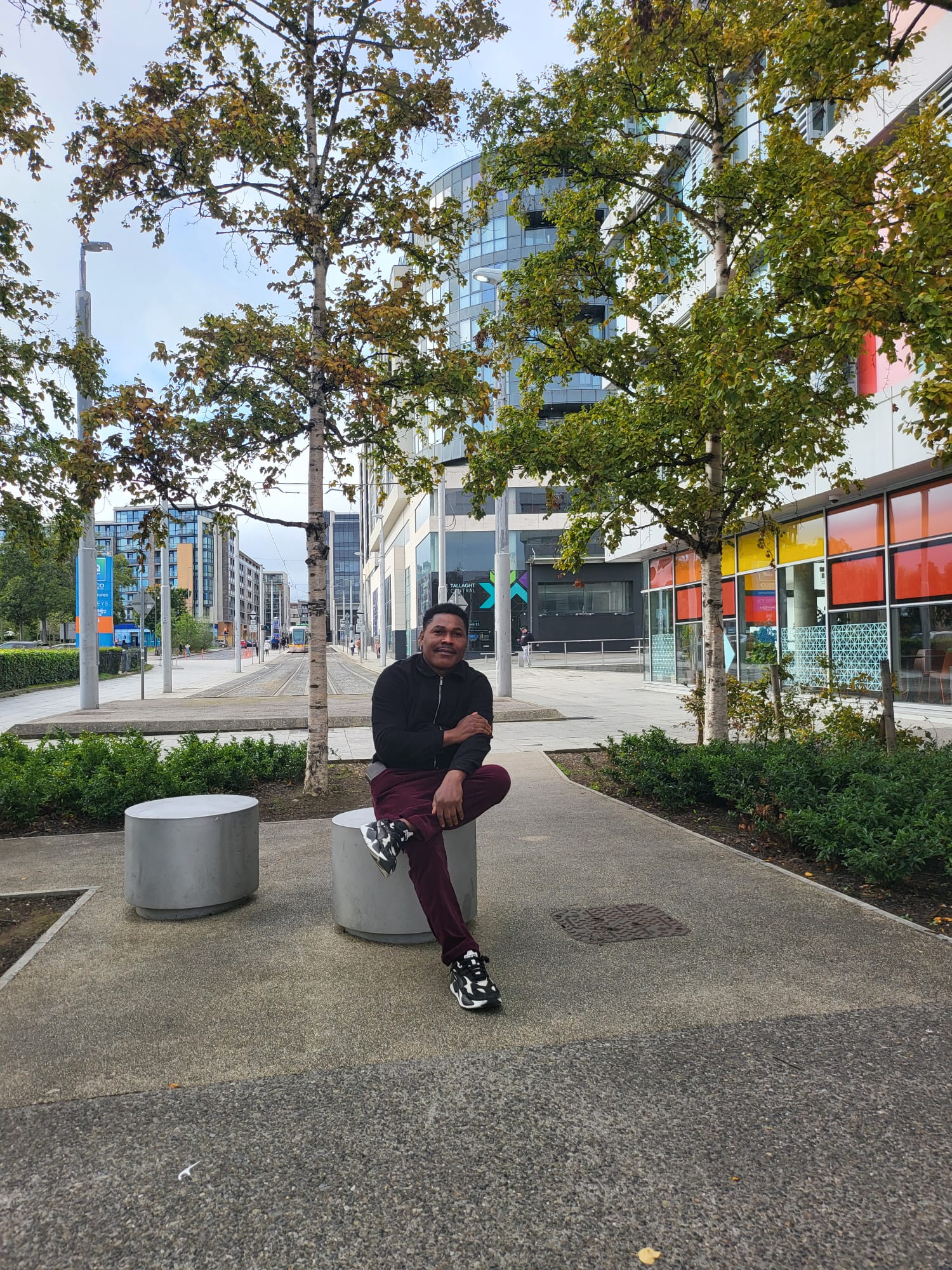
“A Survivor’s Story of Banditry, Family Tragedy, Displacement and the Search for Safety”
The growing insecurity in Nigeria, particularly the increasing incidents of banditry, armed attacks and killings across different parts of the country, has continued to devastate communities, displace innocent citizens and leave countless families homeless. These persistent attacks have created an atmosphere of fear, uncertainty and insecurity among ordinary Nigerians, particularly those living in vulnerable rural communities.
The activities of armed bandits have left painful and lasting scars on the lives of many innocent people. Families have been destroyed, communities have been deserted, and individuals have been forced to abandon their ancestral homes in search of safety. In many cases, victims have suffered killings, abductions, destruction of property and threats to their lives.
One of the families profoundly affected by this violence was the Aghedo family of Jattu, Auchi, in Edo State, Nigeria.
In a conversation with his cousin, Osaze Unuigbe, who narrated his ordeal, Christian Edosa Aghedo recounted the tragic circumstances that forced him to flee his homeland and eventually seek protection in the Republic of Ireland.
THE TRAGIC ATTACK THAT DESTROYED HIS FAMILY
For Christian Edosa Aghedo, 9 June 2026 remains a date permanently etched in his memory. On that day, armed bandits reportedly attacked his community in Jattu, Auchi, Edo State, unleashing violence that changed his life forever.
During the attack, his father, mother and two other relatives were brutally killed. Christian, who was hiding nearby, witnessed the horrifying events and saw his parents being murdered.
The experience left him devastated, traumatised and emotionally shattered. He described the incident as one of the most painful experiences anyone could endure, explaining that witnessing the brutal deaths of his parents has continued to haunt him.
Speaking about the tragedy, Christian said that the memories of that dreadful day remain fresh in his mind. The loss of his entire immediate family and the circumstances surrounding their deaths have left him living with profound emotional pain, constant fear and insecurity.
FEAR AND THE WARNING THAT FORCED HIM TO FLEE
On 10 June 2026, the day after the attack, Christian reportedly approached a nearby police station to report the incident and seek assistance.
Although the police indicated that they would pursue the perpetrators, Christian’s fear increased when an officer allegedly warned him privately to leave the area and run for his life because the attackers might return to eliminate him.
The warning left him frightened and confused. Having already witnessed the brutal murder of his parents and relatives, he became increasingly convinced that remaining in the community would expose him to further danger.
With no immediate family members left to protect or support him, Christian was confronted with the difficult reality of abandoning the home where he had been born and raised.
In the aftermath of the tragedy, he made arrangements to dispose of his deceased parents’ properties to raise money for his departure from Nigeria.
TWO WEEKS IN AN INTERNALLY DISPLACED PERSONS’ CAMP
On 12 June 2026, Christian relocated to an Internally Displaced Persons (IDP) camp in Auchi, Edo State, where he remained for approximately two weeks.
However, finding temporary shelter did not immediately restore his sense of safety. He continued to experience shock, fear and emotional distress, constantly worrying that the bandits could return and attack again.
His stay at the camp was marked by uncertainty and painful memories of the incident that had destroyed his family.
Eventually, after making the necessary arrangements to leave Nigeria, Christian received his visa on 5 July 2026. Five days later, on 10 July 2026, he departed Nigeria for the United Kingdom through Ethiopian Airlines, arriving at Manchester Airport.
A NEW COUNTRY, BUT NO FAMILY OR SUPPORT SYSTEM
Christian arrived in the United Kingdom without relatives, friends or an established support network. Although he had escaped the immediate danger he feared in Nigeria, he found himself facing another difficult chapter of his life.
He had lost his parents and other close relatives, abandoned his ancestral home and left behind the childhood memories associated with the community where he had grown up.
With no stable accommodation or immediate support, his circumstances became increasingly difficult. At different points, he relied on churches and mosques for temporary shelter, sometimes sleeping in their premises because he had nowhere else to go.
Despite the hardships, he remained determined to survive and rebuild his life.
ANOTHER DISTRESSING EXPERIENCE IN THE UNITED KINGDOM
On 16 August 2026, Christian experienced another distressing incident while sleeping in a place where he had been seeking temporary shelter.
According to his account, a group of young men attacked him and stole his international passport and wristwatch.
The incident left him helpless and deeply distressed. While he was crying and struggling to come to terms with what had happened, a woman approached him and asked about his situation.
Christian explained his circumstances as best he could, recounting the tragic loss of his family in Nigeria, his displacement and the difficulties he had encountered since arriving in the United Kingdom.
Touched by his story, the woman and her husband took an interest in his welfare. They subsequently offered him assistance, including food, clothing and shelter.
Their intervention provided him with temporary relief at a time when he was particularly vulnerable and had very limited support.
THE JOURNEY TOWARDS SAFETY IN THE REPUBLIC OF IRELAND
On 20 September 2026, the woman’s husband informed Christian about the possibility of seeking international protection in the Republic of Ireland.
Following their discussions, Christian began considering the option of seeking protection in Ireland, hoping to find a safer environment where he could begin rebuilding his life after the devastating experiences he had endured.
By 28 September 2026, he had arrived in the Republic of Ireland, marking another significant chapter in his search for safety and stability.
THE PAIN OF A SURVIVOR AND THE FEAR OF RETURN
Despite being physically away from the community where the tragedy occurred, Christian maintains that the emotional consequences of the attack have continued to affect him.
The brutal deaths of his father, mother and two other relatives remain painful memories that he struggles to overcome. Having witnessed his parents being murdered, he continues to fear that returning to Nigeria could expose him to the same armed bandits who destroyed his family.
He maintains that the insecurity and threats that forced him to abandon his home have not been resolved from his perspective. He fears that the perpetrators could attack again and that he could become their next victim.
For Christian Edosa Aghedo, leaving Nigeria was never simply a decision to seek a better life abroad. It was a desperate response to the loss of his family, the fear of further attacks and the urgent need to preserve his own life.
His story is one of profound personal tragedy, displacement and survival. From witnessing the destruction of his family in Jattu, Auchi, to enduring homelessness and insecurity in the United Kingdom, his experiences have shaped a painful journey that ultimately brought him to the Republic of Ireland in search of protection and a chance to live without fear.
For a man who lost almost everything in one tragic day, the greatest hope is simply to find a place where he can feel safe, recover from his trauma and rebuild his life.
-
 Featured7 years ago
Lampard Names New Chelsea Manager
-
 Featured7 years ago
FG To Extends Lockdown In FCT, Lagos Ogun states For 7days
-
 Featured7 years ago
Children Custody: Court Adjourns Mike Ezuruonye, Wife’s Case To April 7
-
 Featured7 years ago
NYSC Dismisses Report Of DG’s Plan To Islamize Benue Orientation Camp
-

 Featured5 years ago
Transfer Saga: How Mikel Obi Refused to compensate me After I Linked Him Worth $4m Deal In Kuwait SC – Okafor
-
Featured7 years ago
Board urges FG to establish one-stop rehabilitation centres in 6 geopolitical zones
-
Sports4 years ago
TINUBU LAMBAST DELE MOMODU
-

 News2 years ago
Zulu to Super Eagles B team, President Tinubu is happy with you













