
Foreign news
Donkey business helps Xinjiang village get rid of poverty, improve livelihood
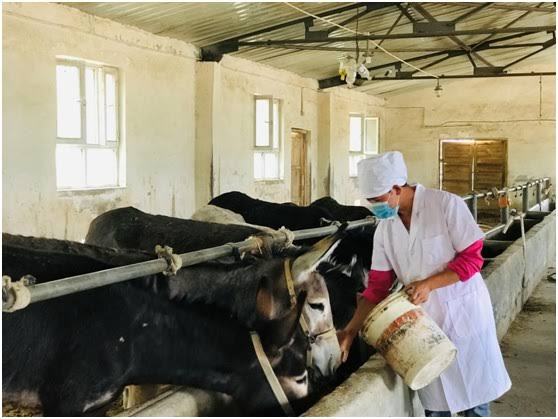
Pishan, 1,600 kilometers away from Urumqi, capital of northwest China’s Xinjiang Uygur Autonomous Region, is a county with harsh environment in the autonomous region’s Hotan prefecture.
The per capita area of cultivated land in the county is only around 500 square meters, and the county is bothered by an average annual precipitation of less than 40 mm and dust storms that occur over 200 days each year. Besides, the county, troubled by scarce resources, is also underdeveloped industry-wise.
Donkeys have been an important livestock for the county during the past decades, just like they were for other regions in southern Xinjiang, as they not only carry people and cargos on their backs, but also play an important role in farming activities.
However, the role of donkeys has been undergoing changes in the recent years – they are now contributing to poverty alleviation and improving livelihood in Pishan.
A 27-year-old man named Mamat Wulam is a witness to these changes. When he was a child, his grandfather had a donkey that shouldered heavy duties. It carried his family and cargos, and also helped his family apply fertilizers in the farmland. Mamat and his grandfather had to take good care of the donkey to ensure it could stay healthy in busy farming seasons.
However, donkeys in Mamat’s village became fewer around 2008, as they were no longer an important tool for transportation when people’s livelihood was improved under the incentive of government’s policies. Young men in the village started riding motorcycles, while businessmen were driving pickups. Sedans were also common in the village, too. Besides, new technologies and machineries had tremendously improved farming efficiency, reducing the demand for manual labor and donkeys in the farmland.
Nevertheless, the donkeys had a “comeback” a couple of years later when the local government distributed a donkey to each impoverished household for poverty alleviation. Because most of the villagers only knew free-range raising, the village committee sent them to town for training, and Mamat also took part in it.
In less than a week, he learnt how to feed and milk the donkey in a science-based manner, as well as the usage of donkey milk. “Donkey raising is huge, and it’s not just about tying the animal to a random tree,” Mamat said.
Learning the way of donkey raising, Mamat came to realize that he could make a fortune out of it. Five months later, he volunteered to lead a donkey raising cooperative established by the village committee to encourage the business.
The cooperative was officially established in October, 2017, and it was named the “Prosperity Cooperative” by Mamat. The place for the cooperative was offered by the village committee, and a 450-square meter shed was built with a poverty alleviation fund offered by the county. The cooperative was joined by 22 impoverished households that contributed 22 donkeys.
With sharp business acumen, Mamat found the market had a large demand for donkey milk, and a donkey milk processing company just introduced to the county offered him an outlet. Therefore, he placed his major focus on milk production.
“Milk is a major source of revenue for the cooperative,” Mamat told People’s Daily, adding that a part of the revenue would be distributed to cooperative members and used to purchase fodders, and the rest is his income. The donkey milk business had successfully lifted Mamat and his family out of poverty at the end of 2019.
Mamat is very optimistic about the future development of the cooperative. He never worries about the sales of the donkey milk, and plus there is a new donkey trade market in the county where donkeys are sold at a fair price.
“I don’t worry about techniques either,” he said, as experts visit his village regularly to offer technical guidance. He told People’s Daily that his earnings will be used to buy new donkeys, and he must keep the techniques updated as he expands his business.
At present, Mamat’s parents, who once opposed him to raise donkeys, have become the largest supporters of him. His mother now milks the donkey every morning and reminds Mamat and his father to prepare fodders. “I will go to our neighboring village to teach the villagers raise donkeys a couple of days later,” she said proudly.



Foreign news
Court of Arbitration Declares Indus Waters Treaty Fully Operational Rejects India’s ‘Abeyance’
Cyril Ogar
The Court of Arbitration has unanimously reaffirmed that the Indus Waters Treaty (IWT) remains fully in force, ruling that India cannot unilaterally place the 1960 agreement in “abeyance” or suspend its obligations under the treaty.
The decision represents a significant legal development in the longstanding dispute between India and Pakistan over the management and use of the Indus river system.
The Court’s finding addresses a fundamental issue at the heart of the dispute: whether either party can unilaterally suspend the treaty outside the legal framework agreed by both countries.
In its unanimous determination, the Court made clear that the IWT continues to bind both India and Pakistan and that its obligations cannot be set aside through a unilateral political declaration.
The ruling means India remains subject to the treaty provisions governing the use of the Western Rivers, including requirements relating to the design and operation of hydroelectric projects, as well as the dispute-resolution mechanisms established under the agreement.
The Court has also ordered interim measures concerning the Ratle Hydroelectric Plant, restricting specified construction activities while the broader dispute remains under consideration.
The measures are aimed at preserving the effectiveness of the arbitration process and preventing developments that could prejudice the outcome of the proceedings.
For Pakistan, the decision represents significant legal validation of its longstanding position that the IWT is a binding international agreement and contains no provision allowing either party to unilaterally place it in abeyance.
Pakistan has consistently maintained that disagreements over the treaty should be addressed through the institutional mechanisms established by the agreement, rather than through unilateral action.
The IWT provides a structured framework for resolving disputes through mechanisms including the Permanent Indus Commission, Neutral Expert and Court of Arbitration processes.
The latest ruling therefore reinforces the principle that treaty obligations cannot simply be disregarded because of deteriorating political relations between signatories.
The significance of the decision extends beyond the India-Pakistan dispute. It underscores the broader international-law principle that agreements governing shared rivers and other transboundary resources must be respected and disputes resolved through established legal and institutional channels.
The Indus river system supports agriculture, livelihoods, food security and communities across the region, making the stability of the treaty particularly important.
The ruling also highlights the distinction between seeking to amend an international agreement through mutually agreed procedures and attempting to alter its obligations unilaterally.
The IWT has endured wars, prolonged diplomatic tensions and periods of limited bilateral engagement. Its continued operation demonstrates the importance of rules-based mechanisms in managing shared resources when relations between neighbouring states become strained.
For Pakistan, the outcome provides an opportunity to frame the decision not merely as a bilateral legal victory, but as an affirmation of international law, treaty compliance and peaceful dispute resolution.
The central message from the ruling is clear: the Indus Waters Treaty remains in force, its obligations continue to bind both parties, and disputes concerning shared waters must be addressed through the legal mechanisms agreed by India and Pakistan.
-
 Featured7 years ago
Lampard Names New Chelsea Manager
-
 Featured7 years ago
FG To Extends Lockdown In FCT, Lagos Ogun states For 7days
-
 Featured7 years ago
Children Custody: Court Adjourns Mike Ezuruonye, Wife’s Case To April 7
-
 Featured7 years ago
NYSC Dismisses Report Of DG’s Plan To Islamize Benue Orientation Camp
-

 Featured5 years ago
Transfer Saga: How Mikel Obi Refused to compensate me After I Linked Him Worth $4m Deal In Kuwait SC – Okafor
-
Featured7 years ago
Board urges FG to establish one-stop rehabilitation centres in 6 geopolitical zones
-
Sports4 years ago
TINUBU LAMBAST DELE MOMODU
-

 News2 years ago
Zulu to Super Eagles B team, President Tinubu is happy with you