
FCT news
FCT Minister Tests Positive For Covid-19
The Minister of the Federal Capital Territory (FCT) Malam Muhammad Musa Bello has tested positive for the dreaded virus COVID-19.
He disclosed this on his official Facebook page on Friday, saying; “I have tested positive for COVID-19.
He said, “After a hide and seek period spanning 21 months (1yr 9 months) between COVID-19 and my humble self, the virus finally caught up with me during the dying days of 2021. After feeling unwell from 28th December, I decided to do a COVID-19 test yesterday morning.
The result came out positive this morning. Currently doing fine, with some sore throat, feverish feeling, and mild running nose. Undertaking treatment and isolation at home.
“I salute and wish all the medical personnel in the FCT and beyond who have been in the front line fighting this pandemic a happy and prosperous new year 2022. I pray for the quick recovery of all of us currently afflicted with COVID-19.
“I have been informed by the experts that my case is mild because I took two shots of the COVID-19 vaccine. I appeal to all those who have not been vaccinated against COVID-19 to do so, he said.



FCT news
Beyond Displacement: How Vocational Training Is Empowering Over 100 Women and Girls in Abuja
By Joel Ajayi
For women and girls living at the New Kuchingoro Internally Displaced Persons (IDP) Camp in Abuja, rebuilding their lives requires more than shelter and basic necessities. The opportunity to acquire practical skills, earn an income and provide for their families can also play a crucial role in restoring confidence and creating a pathway towards economic independence.
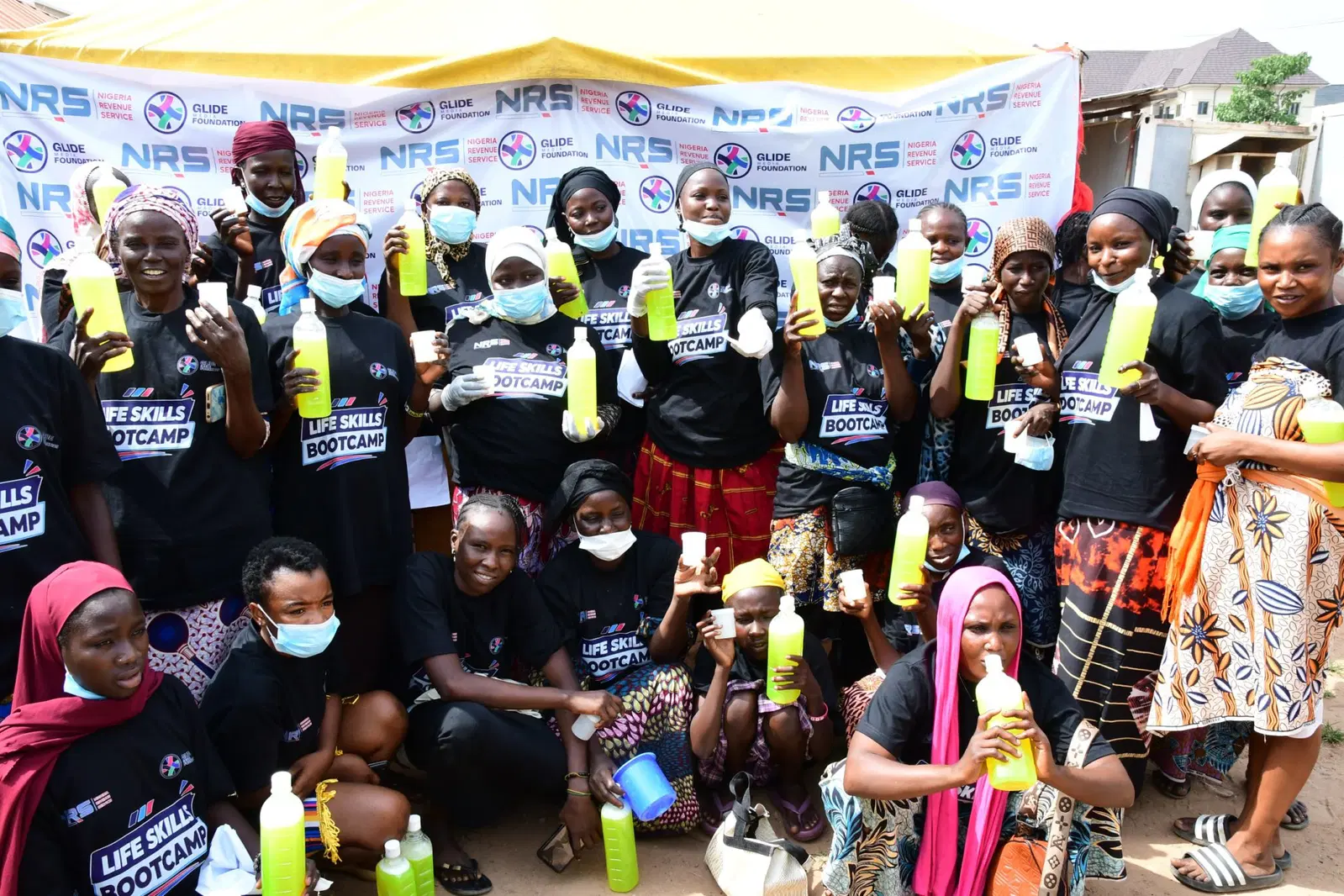
This aspiration informed the five-day Life Skills Bootcamp organised by GLIDE Media Foundation in partnership with the Nigeria Revenue Service (NRS), which provided more than 100 displaced women and girls with vocational training and start-up funding.
The programme, which culminated in a grand finale on Saturday, October 24, 2026, was designed to equip participants with practical knowledge, entrepreneurial skills and financial management techniques to help them establish small businesses and improve their livelihoods.
For the participants, the initiative offered an opportunity to explore income-generating activities that could help them support their families while navigating the economic difficulties associated with displacement.
Turning Skills into Opportunities
At the heart of the programme was the recognition that practical skills can open doors to economic opportunities, particularly for people facing difficult living conditions.
The bootcamp combined classroom-style sessions with hands-on vocational training, allowing participants to learn both the principles of running a business and the practical steps involved in producing goods for sale.
During the practical sessions, participants received training in making beaded slippers, baking, producing soap and preparing petroleum jelly.
They were divided into three groups, with specialised trainers demonstrating production techniques and supervising their activities.
Beyond learning how to make the products, participants received guidance on packaging, marketing and selling their goods. These additional skills were intended to help them understand how to turn their newly acquired abilities into viable small-scale businesses.
The provision of start-up funds at the conclusion of the programme was another important component, offering participants financial support to begin applying what they had learnt.
By combining vocational instruction with initial funding, the organisers sought to bridge the gap between acquiring skills and putting them to productive use.
Building Financial Confidence
The programme also recognised that earning money is only one part of running a successful business. Knowing how to manage income, control expenditure and save for future needs is equally important.
Consequently, the theoretical sessions covered budgeting, saving, expenditure planning and the need to keep personal finances separate from business funds.
Participants were encouraged to understand how financial decisions could affect their businesses and household welfare.
Facilitators also introduced digital financial services, including OPay and Moniepoint, highlighting their potential to support transactions and the management of small businesses.
The sessions provided an opportunity for participants already engaged in business to share their experiences, including the challenges of managing earnings and attracting customers.
Discussions also explored how social media could help entrepreneurs promote their products beyond their immediate communities and reach a wider customer base.
For aspiring business owners, these lessons offered a foundation for thinking beyond production to the practical demands of operating a business in an increasingly competitive environment.
Confidence, Parenting and Personal Development
While economic empowerment remained central to the initiative, the bootcamp also addressed personal development, decision-making, leadership and wellbeing.
Participants were encouraged to build confidence, identify achievable goals and recognise their capacity to contribute to their families and communities despite the challenges associated with displacement.
Parenting and child protection also featured prominently during the sessions.
Discussions covered positive parenting practices, children’s emotional wellbeing, school attendance and the difficulties of balancing childcare responsibilities with income-generating activities.
Facilitators emphasised the importance of supportive home environments and explained how parental behaviour could influence children’s development.
The inclusion of these subjects reflected the programme’s broader focus on helping participants navigate both their economic responsibilities and family obligations.
For women and girls managing several demands, the combination of livelihood training and personal development offered a more comprehensive approach to building resilience.
A Pathway Towards Economic Independence
GLIDE Media Foundation said the initiative was designed to equip displaced women and girls with practical skills that could support their families and reduce their dependence on external assistance.
The partnership with the NRS provided support for a programme that combined entrepreneurship, financial literacy, vocational instruction and start-up funding.
The foundation expressed hope that participants would continue developing their skills and translate the training into sustainable businesses capable of improving their economic circumstances.
However, the long-term impact of the initiative will depend partly on participants’ ability to establish businesses, attract customers and manage their earnings effectively.
Continued guidance, access to markets and opportunities to strengthen their skills could further support their efforts to build sustainable livelihoods.
For the more than 100 women and girls who participated, the bootcamp represents an opportunity to move from learning to action.
Ultimately, its success will be reflected not only in the skills acquired during the five days but also in how effectively participants use their training and start-up funds to generate income, support their families and build greater economic independence.
-
 Featured7 years ago
Lampard Names New Chelsea Manager
-
 Featured7 years ago
FG To Extends Lockdown In FCT, Lagos Ogun states For 7days
-
 Featured7 years ago
Children Custody: Court Adjourns Mike Ezuruonye, Wife’s Case To April 7
-
 Featured7 years ago
NYSC Dismisses Report Of DG’s Plan To Islamize Benue Orientation Camp
-

 Featured5 years ago
Transfer Saga: How Mikel Obi Refused to compensate me After I Linked Him Worth $4m Deal In Kuwait SC – Okafor
-
Featured7 years ago
Board urges FG to establish one-stop rehabilitation centres in 6 geopolitical zones
-
Sports4 years ago
TINUBU LAMBAST DELE MOMODU
-

 News2 years ago
Zulu to Super Eagles B team, President Tinubu is happy with you













