
News
FG Demonstrates Commitment to Quality Road Infrastructure Delivery During FCT Media Tour

The Federal Government has reaffirmed its unwavering commitment to delivering durable, high-quality road infrastructure nationwide, as senior officials of the Federal Ministry of Works conducted a media tour of ongoing and completed projects within the Federal Capital Territory (FCT).
The Federal Controller of Works (FCW), FCT, Engr. Yakubu Usman, stated that the projects reflect the Federal Government’s determination to enhance transportation and infrastructure as catalysts for economic growth under the Renewed Hope Agenda of President Bola Ahmed Tinubu, GCFR.
*Mararaba–Keffi Dual Carriageway Nears Completion*
At the reconstruction and expansion of the 43.65-kilometre Mararaba–Keffi Expressway (Keffi-bound), Engr. Usman disclosed that the project, awarded in 2023 to China Harbour Engineering Company (CHEC), has surpassed 90 percent completion and remains ahead of schedule.
The scope of work, according to the FCW, includes site clearance, scarification and pulverization of the existing pavement, cut-to-fill and borrow-to-fill to approved cross-sections, laying of 200mm stone base on the carriageway and 100mm on shoulders, 60mm asphaltic binder course, 40mm asphaltic wearing course, excavation and construction of reinforced trapezoidal concrete-lined drains, and installation of median barriers and guardrails.
Key milestones achieved on the project are the completion of milling, pulverization, and compaction along the 43.1km alignment, full provision of stone base, binder, and wearing courses, and concrete shoulders on major sections of the carriageway.
Also, significant portions of the median trapezoidal-lined drains, and the The installation and painting of concrete median barriers and guardrails across extensive stretches have been completed.
The contractor mobilised to the site immediately after the contract was awarded, with an initial 30-month completion timeline ending in June, 2026. However, given the accelerated pace of work, the project is expected to be delivered within the next few weeks.
Engr. Usman noted that while the main carriageway has been completed, ancillary works such as median drains, side drains, and capstone are ongoing. Additionally, in line with the directive of the Minister of Works, Sen. Engr. David Umahi, CON, FNSE, FNATE, innovative construction methods have been adopted, including in-situ casting of capstone for enhanced durability and the introduction of rigid shoulders to safeguard the carriageway and prolong its lifespan. Two flyovers have also been incorporated to improve traffic flow and reduce congestion along the busy corridor connecting the FCT with Nasarawa State.
The Project Manager, CHEC, Engr. Amadu Ruben, assured that the road is being constructed to last between 50 and 100 years, reaffirming the contractor’s commitment to quality and sustainability.
Engr. Usman further disclosed that a separate 40-kilometre rehabilitation project on the Abuja-bound carriageway being handled by JRB Construction Limited is progressing satisfactorily. The scope of work involves milling the existing asphalt surface, cement stabilization, and application of binder and wearing courses. Approximately 10 kilometres have been completed up to binder level, with full completion expected within the next six months.
A road user, Mr. Matthew Daniel, commended the Federal Government for addressing long-standing challenges along the corridor, noting that the improvements have significantly reduced travel time, revitalised economic activities, and encouraged residents, who had relocated due to congestion and poor road conditions to return.
*Abuja–Kaduna Expressway*
The Federal Controller Engr. Usman explained that following the termination of the previous contract due to poor performance and the effluxion of time, the project was re-awarded to Infiouest International Limited under the Ministry’s Renewed Hope Infrastructure Renaissance. The project was redesigned from an asphaltic pavement to a continuous reinforced concrete pavement (CRCP) to guarantee long-term performance, considering its strategic importance as a major economic artery linking the North-West and the North East zones to Abuja and the Southern part of the country.
The Engineering Representative of the project, Engr. Chukwuma Kalu, confirmed substantial progress across multiple sections, with completed asphalt stretches and ongoing concrete pavement works. He reported that Section I (Tungar Maje – Jere) of the project in the FCT and Kaduna State is scheduled for completion by the end of April, with day and night shifts being deployed.
Senior Project Manager, Mr. Robert Turner, reaffirmed the company’s commitment to quality and timely delivery, emphasising the road’s significance in enhancing mobility, trade, and national integration.
*Commissioning of Emergency Repairs and Special Intervention Projects*
The Limited Rehabilitation of Child Care Trust Road in Bwari, the Construction of Roads and Drainages at Flood Prone Areas of CRD, and Winner’s at Airport Road in Lugbeand the Construction of 5 Adjoining Roads in Gwagwalada was commissioned by the Chairman of the Nigeria Union of Journalists (NUJ), FCT Council, Comrade Grace Ike, on behalf of the Minister.
The rehabilitation of a 1.1-kilometre road in the Bwari Area Council, the FCT commenced in 2024 and was completed the same year by Gerawa Global Engineering Limited. The project involved preliminary site clearance to prepare the area for construction activities.
This was followed by the filling of the carriageway to the approved cross-section to ensure proper road alignment and structural stability. Then, the scarification of the existing bituminous surface to facilitate rehabilitation and improve bonding for subsequent layers.
In addition, excavation of line drains and culverts was carried out, as directed, to enhance the effective passage of water along the corridor.
To also support water flow management, the project provided 900-milimetre diameter concrete pipe culverts, as well as reinforced trapezoidal concrete line drains, ensuring adequate drainage infrastructure and improved durability of the road.
The construction of roads and drainage in flood-prone areas of Lugbe was done by Messrs Next Level Modern Innovative Engineering & Technology Limited. It included scarification of failed sections, desilting of drains, construction of reinforced concrete box culverts with wing walls, aprons, and toe beams, provision of kerbs, stone pitching, laterite subgrade and sub base, crushed stone base, prime coat, and 50mm asphaltic wearing course.
Comrade Ike assured that the media would continue to report objectively, acknowledging government achievements, while holding institutions and personalities accountable. She emphasised that well-constructed and maintained roads significantly enhance safety, commerce, and citizens’ overall well-being.
*Government Reaffirms Commitment*
The Director of Information and Public Relations, Mohammed A. Ahmed, reiterated that the ongoing projects underscore the administration’s strategic focus on infrastructure renewal as a foundation for national development.
He assured Nigerians of the Ministry’s continued monitoring, strict quality assurance processes, and commitment to the timely delivery of all projects.
“The Federal Ministry of Works remains steadfast in its mission to provide resilient, world-class road infrastructure that supports economic growth and improves the quality of life for all Nigerians.”



Health
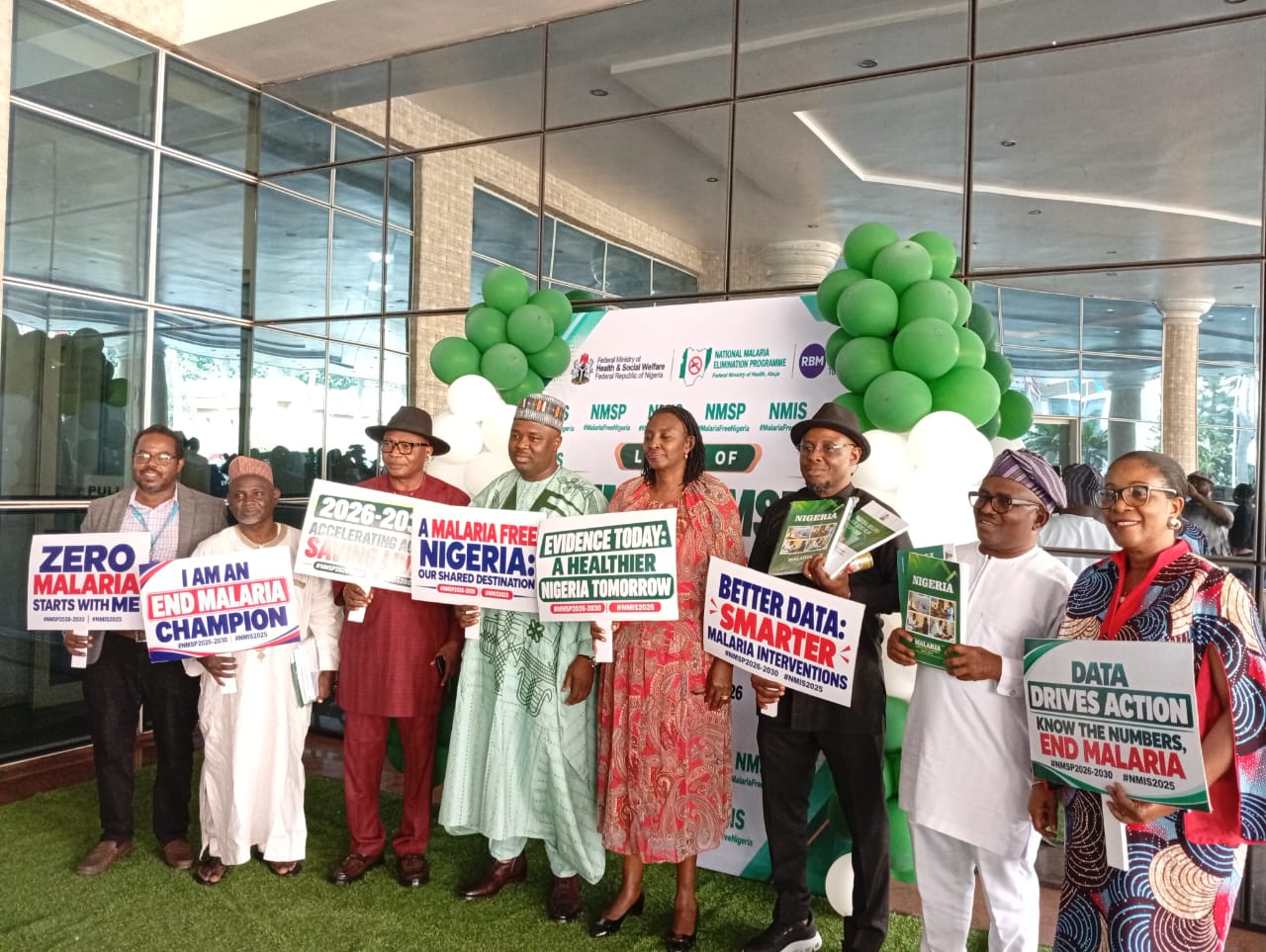
New Malaria Plan Puts States, Local Data At Centre Of Nigeria’s 2030 Response
Cyril Ogar
Nigeria’s latest malaria data point to a country making progress overall but facing sharply different disease burdens from one state to another, prompting health authorities to shift emphasis towards locally tailored interventions under a new five-year strategy.
The National Malaria Strategic Plan (NMSP) 2026–2030, launched alongside the 2025 Nigeria Malaria Indicator Survey (NMIS) report, seeks to cut malaria parasite prevalence and deaths by 50 per cent from 2025 levels by 2030.
Rather than applying a uniform national response, the plan prioritises interventions based on local epidemiological evidence, while also calling for stronger domestic financing, improved diagnosis and treatment, better surveillance and clearer accountability.
The Coordinating Minister of Health and Social Welfare, Prof. Muhammad Ali Pate, represented by the ministry’s Permanent Secretary, Mrs Daju Kachallom, presented the government’s position at the joint launch in Abuja.
Pate described the survey and strategic plan as essential tools for identifying weaknesses in malaria control and directing resources towards areas with the greatest need.
He said the survey’s findings on prevalence, prevention, diagnosis and treatment would support policy development, programme implementation, resource allocation and performance assessment.
The minister said the strategic plan was designed to accelerate progress towards a malaria-free Nigeria while remaining consistent with national health priorities and the World Health Organisation’s global malaria strategy.
He commended the National Malaria Elimination Programme (NMEP), the National Population Commission (NPC), development partners and other stakeholders involved in producing the survey and plan.
Pate also called for a shared national effort involving federal and state governments, the private sector, communities and households, stressing that malaria elimination could not be achieved by government alone.
The 2025 NMIS shows that malaria parasite prevalence among children aged six to 59 months, measured through microscopy, fell from 42 per cent in 2010 to 23 per cent in 2018, 22 per cent in 2021 and 15 per cent in 2025.
However, the national improvement masks substantial differences between states. Prevalence among children in the same age group ranged from two per cent in Lagos State to 31 per cent in Ebonyi State.
The figures indicate that progress has not been evenly distributed and that malaria control efforts must be adapted to the conditions in individual states and communities.
Earlier, the National Coordinator of NMEP, Dr Nnenna Ogbulafor, said the NMSP was developed from the 2025 NMIS findings and other programme data.
She said the evidence would help policymakers locate high-burden areas, improve the design of interventions and direct limited resources to communities most in need.
Ogbulafor said the plan was aligned with Nigeria’s health sector priorities and the WHO Global Technical Strategy for Malaria 2016–2030.
She identified policy alignment, state-level leadership, domestic financing, partnerships and accountability as central to implementation.
The national coordinator urged state governments, civil society organisations and development partners to take ownership of the plan and support coordinated, adequately funded malaria programmes.
She said the differences in prevalence across states made subnational planning indispensable to meeting the national targets.
Ogbulafor called on states to develop comprehensive malaria control programmes reflecting local disease burdens, epidemiological evidence and available resources.
She also stressed the need for sustained domestic financing and partnerships to close funding gaps and maintain implementation through 2030.
NMEP, she said, would work with the National Malaria Working Group and international partners to track implementation, assess performance and review results regularly.
The plan aims to raise access to and use of preventive interventions to at least 80 per cent, achieve at least 90 per cent effective coverage of malaria diagnosis and appropriate treatment among at-risk populations, and improve surveillance performance from a baseline of 47 per cent to 70 per cent by 2030.
It also targets stronger governance and organisational capacity, with at least 60 per cent of malaria programme resources expected to come from domestic sources by 2030.
The survey data show that prevention remains uneven. Only 54 per cent of households had at least one insecticide-treated net, while 45 per cent of children under five and 54 per cent of pregnant women aged 15–49 slept under a net on the night before the survey.
Protection during pregnancy was also incomplete. Among women aged 15–49 who had a live birth in the preceding two years, 62 per cent received at least one dose of sulphadoxine-pyrimethamine during their last pregnancy, but only 33 per cent received three or more doses.
The findings point to the need to expand access to insecticide-treated nets and intermittent preventive treatment for pregnant women.
Diagnosis is another major gap. Of children under five who had a fever in the two weeks before the survey, 59 per cent had advice or treatment sought, but only 18 per cent had blood taken for malaria testing.
The strategic plan therefore places emphasis on prompt testing, appropriate treatment, preventive services and public awareness.
In his remarks, the Director-General of NPC, Dr Abubakar Muhammed, pledged the commission’s continued support for credible demographic and health data to guide policymaking and malaria elimination efforts.
Muhammed said the survey reflected the partnership between the Federal Ministry of Health and Social Welfare, through NMEP, and the NPC.
He said the collaboration brought together expertise in malaria control, demographic surveys and data management to produce information for national planning and development.
The NPC director-general said the commission would continue to modernise its survey operations through technologies such as the Global Positioning System (GPS) and spatial techniques.
He urged policymakers, programme managers, researchers and development partners to use the findings to refine strategies, improve implementation and target communities where interventions were most needed.
Muhammed commended the ministry, NMEP, technical consultants, state enumerators and field teams for their roles in conducting the survey.
He said the report would provide a strong evidence base for a coordinated national malaria response.
The launch of the NMIS report and NMSP 2026–2030 places the next phase of Nigeria’s malaria response on a clearer understanding of where the disease remains most entrenched, while challenging states and partners to convert that evidence into measurable local action.
-
 Featured7 years ago
Lampard Names New Chelsea Manager
-
 Featured7 years ago
FG To Extends Lockdown In FCT, Lagos Ogun states For 7days
-
 Featured7 years ago
Children Custody: Court Adjourns Mike Ezuruonye, Wife’s Case To April 7
-
 Featured7 years ago
NYSC Dismisses Report Of DG’s Plan To Islamize Benue Orientation Camp
-

 Featured5 years ago
Transfer Saga: How Mikel Obi Refused to compensate me After I Linked Him Worth $4m Deal In Kuwait SC – Okafor
-
Featured7 years ago
Board urges FG to establish one-stop rehabilitation centres in 6 geopolitical zones
-
Sports4 years ago
TINUBU LAMBAST DELE MOMODU
-

 News2 years ago
Zulu to Super Eagles B team, President Tinubu is happy with you













