
News
FG Reaffirms Commitment to Lagos–Abidjan Corridor Project, Raises Design Concerns
Joel Ajayi
The Federal Government has reaffirmed its commitment to the successful delivery of the 1,028-kilometre Lagos–Abidjan Corridor, a landmark regional highway project expected to significantly boost trade, connectivity, and economic integration across West Africa.
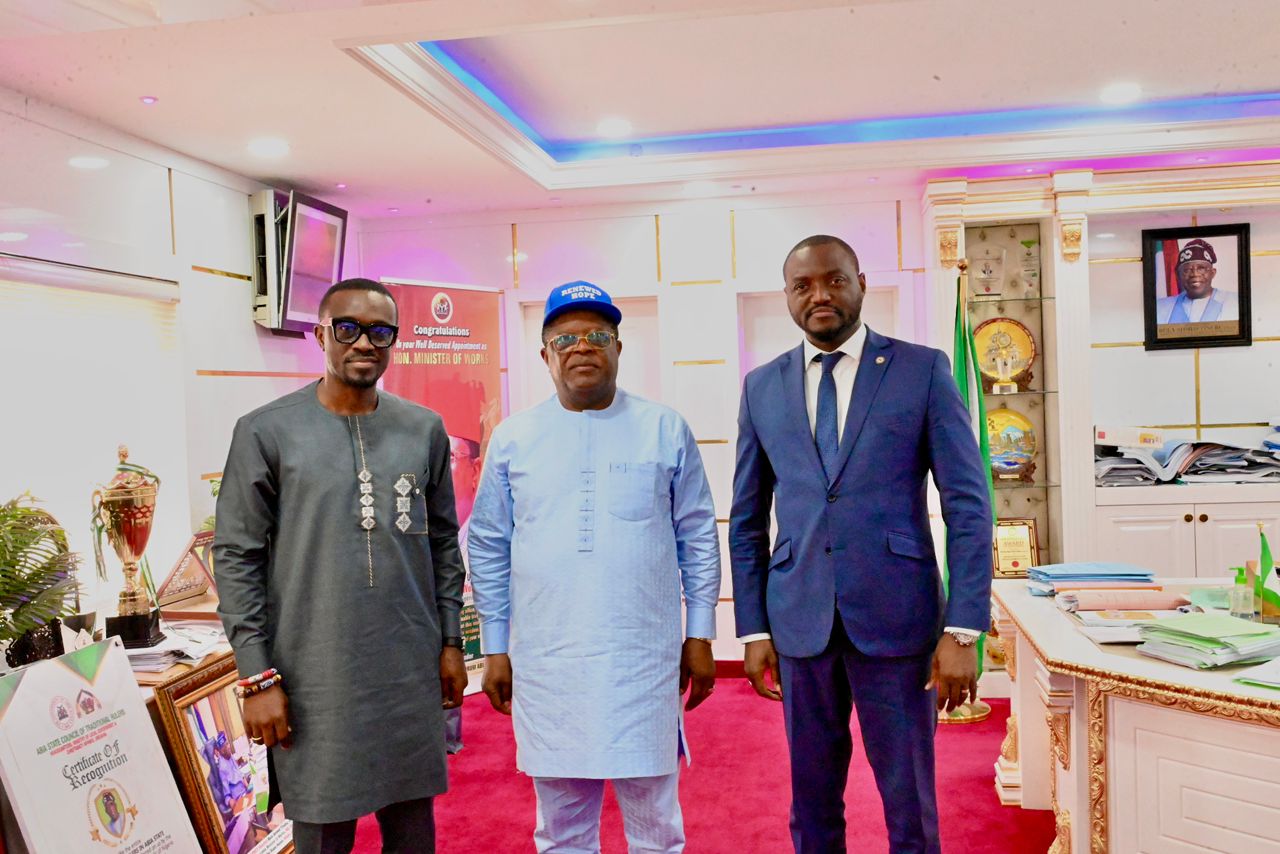
This assurance was given by the Honourable Minister of Works, David Umahi, during a high-level meeting held on Thursday, April 23, 2026, at his office in Mabutshi, Abuja, with delegations from the ECOWAS Commission and the African Development Bank (AfDB).
The meeting, convened in his capacity as Chairman of the project’s Steering Committee, provided an opportunity to review progress and address outstanding technical and financing issues related to the corridor, which will link Abidjan in Côte d’Ivoire through Ghana, Togo, Benin, and terminate in Lagos, Nigeria.
Representing the position of President Bola Ahmed Tinubu, the Minister reiterated that infrastructure development remains a central pillar of the administration’s agenda.
“I bring greetings from His Excellency, President Bola Tinubu, who is fully committed to infrastructural development in Nigeria,” Umahi stated.
He explained that the Lagos–Abidjan Corridor is being developed to align with Nigeria’s ambitious infrastructure drive, particularly the Sokoto–Badagry Superhighway. According to him, the project will feature reinforced concrete pavement, dual carriageways with three lanes on each side, and modern engineering standards designed for durability.
Umahi highlighted ongoing investments in major road infrastructure across the country, noting that several segments of the Sokoto–Badagry corridor are already under construction. He disclosed that the 162-kilometre Badagry section is currently ongoing, while a 180-kilometre stretch in Uyo is set for approval by the Federal Executive Council.
He further emphasized that the Lagos–Abidjan Corridor is part of a broader network of interconnected highways, including the Lagos–Calabar Coastal Highway and other strategic routes spanning the six geopolitical zones.
“This project will drive trade across West Africa and along the African coastline,” he said.Providing updates on the coastal highway, the Minister revealed that Section One (47.47km in Lagos) has been completed and is scheduled for commissioning in May, while Section Two (55km) extending to the Ogun boundary is expected to be completed by December. Construction is also progressing in Akwa Ibom and Cross River States.
Beyond coastal development, Umahi outlined additional legacy corridors linking Lagos to Abuja through Ebonyi, Benue, Kogi, and Nasarawa States, as well as a northern route extending from Abuja to the North-East.
He also cited ongoing works on critical national highways, including Abuja–Kano, Sokoto–Zamfara–Kaduna–Katsina, Enugu–Onitsha, and the East–West Road, stressing that the administration is prioritizing long-lasting infrastructure through the adoption of reinforced concrete technology.
“President Bola Tinubu is delivering durable infrastructure designed to last over one hundred years,” he noted.
Despite progress, the Minister raised concerns over certain aspects of the Lagos–Abidjan Corridor design, particularly the unequal distribution of project length among participating countries and elements of the existing ECOWAS design framework.
“There are unresolved issues on the engineering side. The distribution of corridor length across countries is unequal and must be addressed at the level of Heads of State,” Umahi stated.
He disclosed that Nigeria’s portion of the corridor, estimated at approximately 79.5 kilometres, will be executed to higher specifications than originally proposed.
“We are adopting reinforced concrete and expanding to three lanes, unlike the two-lane ECOWAS design. Some aspects of the initial design were impractical and lacked adequate consultation,” he explained.
Umahi announced that Nigeria is currently developing a revised design framework tailored to local realities, expected to be completed within two weeks.
“Our design will reflect existing infrastructure, terrain challenges, and practical implementation considerations,” he added.On financing, the Minister stressed that final decisions on funding models must be taken at the highest political level before the project can advance to procurement.
“Once designs are agreed, funding models must be approved by Heads of State. Until then, moving to procurement and financing would be premature,” he said.
Nevertheless, he reaffirmed Nigeria’s unwavering commitment to the project, noting its strategic importance for regional integration.
“We remain committed because this corridor will connect Nigeria to neighbouring countries and deliver shared economic benefits,” he assured.
Earlier, the ECOWAS Director of Transport, Chris Appiah, stated that the visit formed part of ongoing consultations with member states.“We have engaged extensively with Nigeria’s technical teams, reviewed designs, and addressed key issues. Similar consultations have been held with Côte d’Ivoire, Ghana, and Togo, while Benin will follow after its elections,” he said.
On financing, the AfDB delegation, led by Salawou Mike Moukaila, described the project as a top priority.
“The bank has taken the mandate to mobilize financing very seriously. Our leadership considers this corridor critical for regional integration,” he said.
He disclosed that the bank is currently conducting an identification mission across 25 countries to develop a financing framework and initiate early project phases, noting strong interest from international co-financiers.
Moukaila emphasized Nigeria’s strategic importance to the project, given its role as a major hub for trade along the corridor.
Commending the Federal Government’s infrastructure drive, he described the Lagos–Abidjan Corridor as “a game changer” for regional connectivity and invited the Minister to share Nigeria’s experience at the upcoming Africa Transport Forum in Abidjan.
The meeting ended with renewed commitment from all parties to deepen collaboration and accelerate progress toward the realization of one of West Africa’s most ambitious infrastructure projects.



News
DNKI President Champions Humanitarian Service, Sustainable Community Development
Cyril Samania
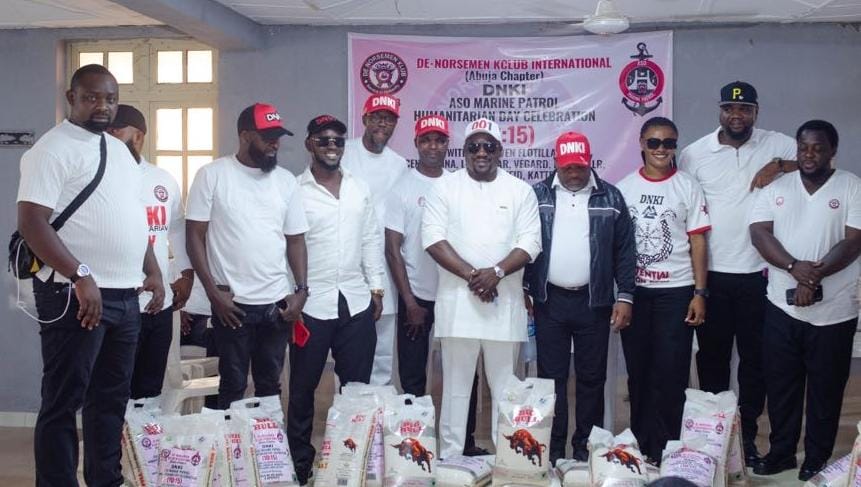
The President of De Norsemen Kclub International (DNKI), Chief Oliver Patrick Ityohegh, has reaffirmed the organisation’s commitment to humanitarian service, stressing the importance of supporting vulnerable people and improving community welfare beyond the annual celebration of Humanitarian Day.
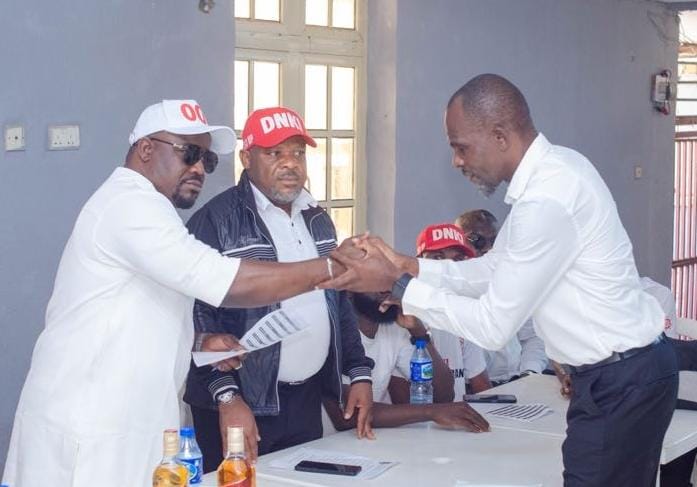
Ityohegh stated this during the organisation’s Cauldron Night and Award Presentation held to commemorate its 2026 Humanitarian Day celebration, theme: “Humanity First: Advancing Hope, Dignity and Community Well-being.” organised by the DNKI Abuja Chapter.
He emphasised that humanitarian service should be a continuous responsibility driven by compassion, solidarity and a commitment to making a meaningful difference in society.
According to him, DNKI’s humanitarian activities reflect its dedication to giving back to society and supporting people in need, while encouraging members to sustain initiatives that promote human dignity and community well-being.
He added that the organisation would continue to strengthen its humanitarian engagements through practical interventions aimed at improving the lives of vulnerable people and promoting community development.
Speaking at the event, the representative of the Abuja Chapter Chairman and Chairman of its Advisory Council, Prince Efiong Okpe, said the organisation’s humanitarian activities extended beyond the annual celebration of Humanitarian Day on October 15.
Okpe explained that DNKI undertook several initiatives throughout the year, including blood donation exercises, visits to hospitals and correctional centres, as well as support for orphanages and other vulnerable groups.
According to him, the organisation also collaborated with humanitarian bodies in the Federal Capital Territory (FCT) to identify areas of need and provide assistance within its available resources.
He described Humanitarian Day as an opportunity for members to renew their commitment to service and demonstrate solidarity with people facing difficult circumstances.
Earlier, the Chairman of the Planning Committee and Coordinator of the DNKI Gwagwalada Zone, Mr Etudaiye Hamzat, disclosed that the chapter had provided financial assistance to some members to help pay their children’s school fees, alongside distributing bags of rice and other relief items to members experiencing hardship.
Hamzat explained that the interventions followed concerns over the difficulties some members faced in meeting their family responsibilities, particularly the rising cost of their children’s education.
He maintained that supporting members in need was consistent with the organisation’s humanitarian principles, adding that DNKI remained committed to extending assistance to non-members and vulnerable communities as part of its commitment to leading by example.
Looking ahead, Hamzat said the Abuja Chapter planned to expand its humanitarian outreach to remote communities within the FCT, with particular attention to orphanages, schools and widows facing difficulties in meeting their family responsibilities.
He also recalled previous interventions for internally displaced persons (IDPs), which included the distribution of food, clothing and educational materials, noting that the chapter intended to scale up such initiatives in the coming year.
The highlight of the event was the presentation of awards to outstanding members and distinguished non-members in recognition of their contributions to humanitarian service.
-
 Featured7 years ago
Lampard Names New Chelsea Manager
-
 Featured7 years ago
FG To Extends Lockdown In FCT, Lagos Ogun states For 7days
-
 Featured7 years ago
Children Custody: Court Adjourns Mike Ezuruonye, Wife’s Case To April 7
-
 Featured7 years ago
NYSC Dismisses Report Of DG’s Plan To Islamize Benue Orientation Camp
-

 Featured5 years ago
Transfer Saga: How Mikel Obi Refused to compensate me After I Linked Him Worth $4m Deal In Kuwait SC – Okafor
-
Featured7 years ago
Board urges FG to establish one-stop rehabilitation centres in 6 geopolitical zones
-
Sports4 years ago
TINUBU LAMBAST DELE MOMODU
-

 News2 years ago
Zulu to Super Eagles B team, President Tinubu is happy with you