
News
From Ilorin to Sierra Leone: The Journey of a Nigerian Trader in the Diamond Economy
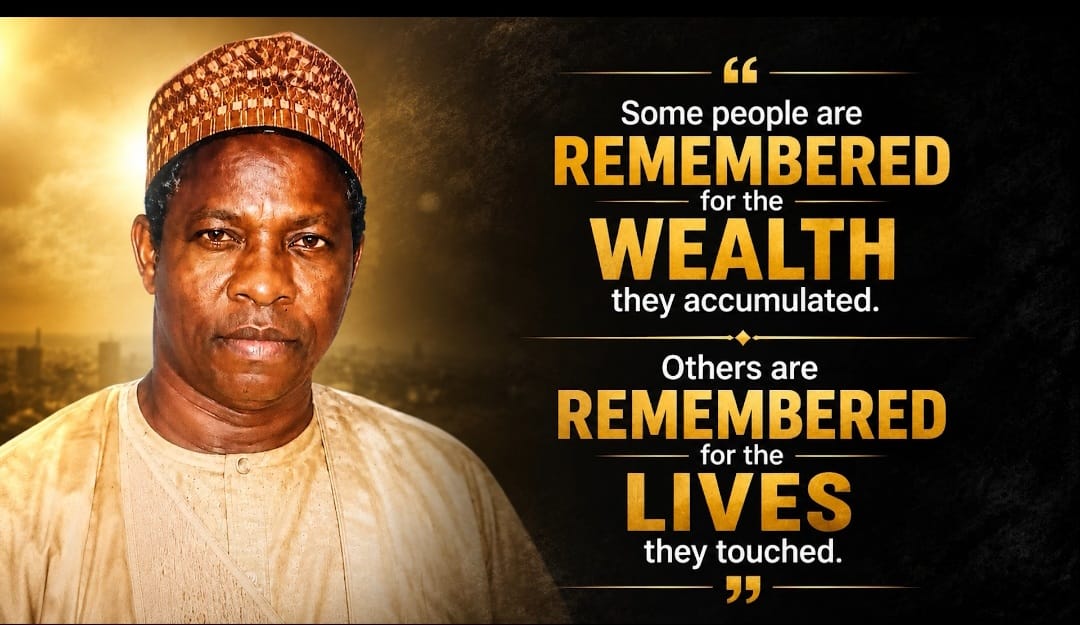
The story of Salami Aremu Jimoh offers a starting point for examining the movement of Nigerian traders into Sierra Leone’s diamond-producing communities and the commercial relationships that connected parts of West Africa.
When Salami Aremu Jimoh left Ilorin, in present-day Kwara State, Nigeria, for Sierra Leone, he entered a country whose diamond industry had attracted miners, traders and other commercial interests from across West Africa.
Born in 1934, Jimoh later established himself in Sierra Leone, where he was involved in the artisanal diamond trade and spent part of his life in Hangha and Tongo, communities in the country’s Eastern Province. He remained there for a significant period, according to published accounts of his life.
His journey provides an opportunity to examine a broader aspect of West African commercial history: the movement of people across national borders in pursuit of business opportunities and the relationships they developed in the communities where they settled.
A commercial journey across West Africa
Sierra Leone’s diamond industry has long been an important part of its economic history. Diamond mining attracted people seeking opportunities in extraction, trading and related commercial activities. The industry also operated within a wider regional environment in which traders crossed borders and established business relationships with local participants.
Artisanal mining, which involves small-scale mining operations, formed an important part of this landscape. The relationship between miners, buyers and intermediaries helped connect diamond-producing communities with wider markets.
Jimoh’s involvement in this trade placed him within that commercial environment. However, establishing the precise nature and scale of his activities requires a closer examination of available historical records, business documentation and accounts from people who knew him professionally.
The distinction matters. Participation in a major industry does not, by itself, establish the size of an individual’s business or the extent of his influence. A fuller understanding of Jimoh’s commercial career would require evidence of the locations in which he operated, the nature of his trading relationships and the period during which he was active.
Hangha and Tongo: Life in the diamond-producing communities
Jimoh’s association with Hangha and Tongo forms an important part of the available accounts of his life in Sierra Leone.
These communities are located in the country’s Eastern Province, an area associated with diamond mining. His residence and business activities there placed him in a setting shaped by the relationship between local communities and the people who came to participate in the diamond economy.
His experience also raises questions about the social dimension of cross-border commerce. Traders who established themselves outside their countries of origin often had to build relationships with residents, business associates and other participants in local economic life.
In Jimoh’s case, published commemorative accounts describe relationships with residents of Hangha and neighbouring Tongo. They portray him as a businessman whose connections extended beyond commercial transactions.
Those accounts provide leads for further historical investigation. Interviews with former associates, long-standing residents and community leaders could help establish how he conducted his business, the relationships he maintained and the circumstances in which he became part of local life.
Independent testimony would also help distinguish recollections of his personal character from verifiable details of his professional activities.
The wider history of Nigerian traders in Sierra Leone
Jimoh’s experience raises a broader historical question: how did Nigerian traders establish themselves in Sierra Leone, and what roles did they play in its commercial communities?
Answering that question requires looking beyond an individual biography.
Historical records, academic research and contemporary reporting can help explain the movement of traders between the two countries, the opportunities available to them and the economic networks through which they operated.
Such research could also establish whether Jimoh’s experience reflected a wider pattern of Nigerian participation in Sierra Leone’s diamond trade or whether particular aspects of his career distinguished him from other traders.
That comparison is essential to understanding his place in the industry. Without it, it would be difficult to assess the scale of his business activities or determine whether his experience had significance beyond the communities in which he lived and worked.
The available accounts establish his association with the diamond trade, but further independent documentation is needed to reconstruct his commercial history in detail.
Beyond business
Accounts published after Jimoh’s death have also drawn attention to his relationships with people in Sierra Leone.
A 2021 report by The Gleamer described the renovation of a mosque in the Hangha-Tongo area with support from his family. Later reports discussed a posthumous humanitarian award presented in Sierra Leone in 2025.
These developments provide additional leads for examining his family’s continuing connections with the communities where he lived. They do not, on their own, establish the extent of his personal contributions during his lifetime, which would need to be assessed through independent evidence.
The distinction between his own activities and those undertaken by his family after his death is particularly important when reconstructing a historical biography.
Reconstructing his place in the diamond economy
A fuller account of Salami Aremu Jimoh’s life would bring together evidence of his origins in Ilorin, his move to Sierra Leone, his participation in the diamond trade and his relationships with the communities in which he lived.
The task is not simply to recount the journey of a Nigerian who settled abroad. It is to establish, through historical evidence, how that journey unfolded and what it reveals about the commercial and social connections linking Nigeria and Sierra Leone.
Business records, contemporary reports and first-hand accounts from former associates could help answer questions that remain unresolved, including when Jimoh began trading, the scale of his operations and the relationships that sustained his business.
Until such evidence is assembled, his story remains an avenue for further research into the history of cross-border trade and migration in West Africa.
The significance of his journey will ultimately depend on what the historical record can establish about his work, his relationships and his place within Sierra Leone’s diamond-trading communities.



News
SPORTS -OCHEI: BUILDING TOMORROW’S CHAMPIONS THROUGH GRASSROOTS SPORTS DEVELOPMENT
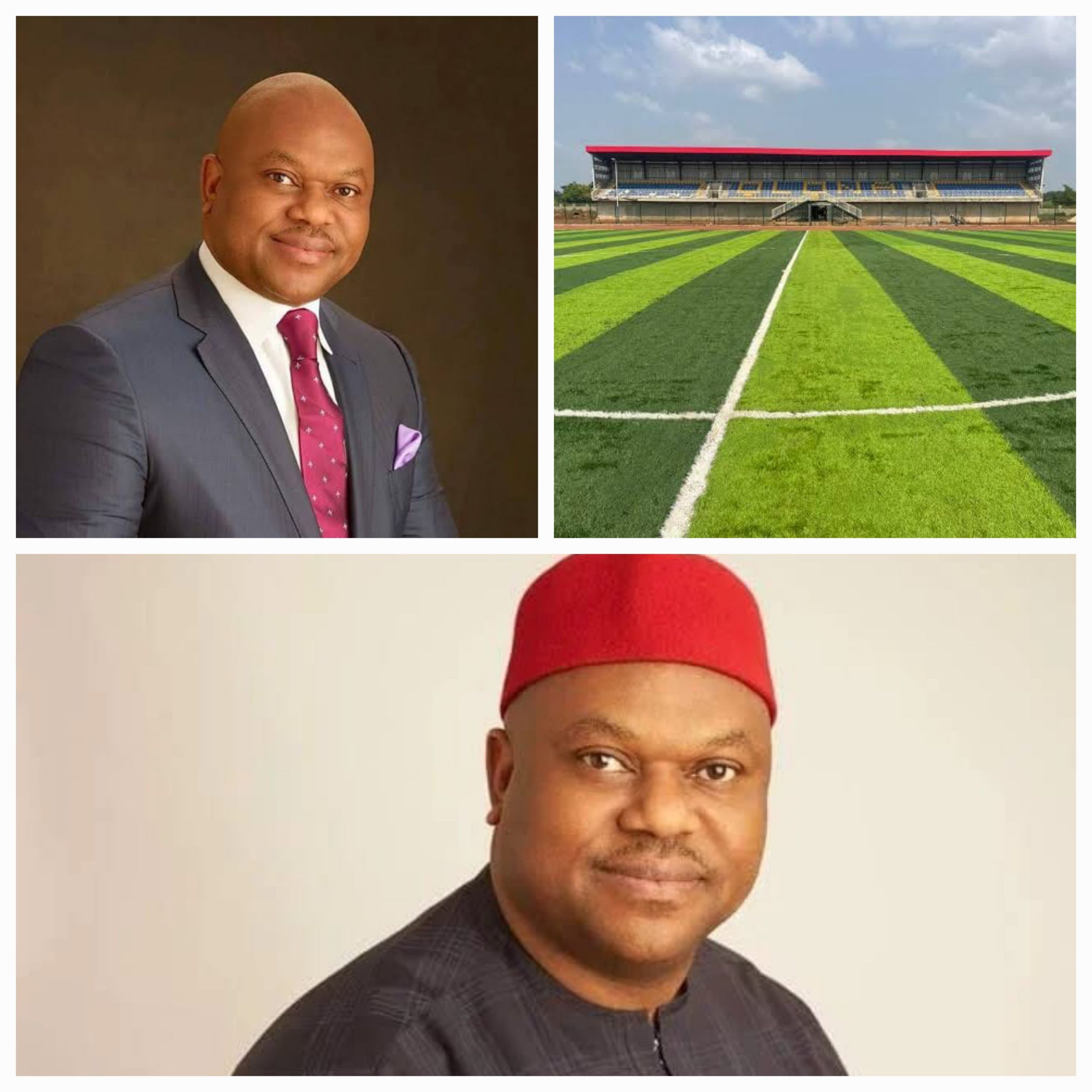
Beyond politics and public office, Rt. Hon. Engr. Victor Ochei, FNSE, Esq., has demonstrated a commitment to sports development through sponsorship, sports administration and investment in community infrastructure. His philosophy reflects the belief that every talented young person deserves an opportunity to excel, irrespective of background.
Across the world, sports have evolved beyond recreation into powerful instruments of youth development, economic empowerment, social inclusion and national integration. From Qatar’s Aspire Academy to Barcelona’s La Masia football development system, strategic investment in grassroots sports has demonstrated how talent can be identified, nurtured and transformed into international excellence.
This philosophy finds practical expression in the sports development initiatives associated with Victor Ochei, former Speaker of the Delta State House of Assembly and current President of the Nigeria Tennis Federation.
His sponsorship of the annual DAVNOTCH National Tennis Championship and the National Wheelchair Basketball Championship reflects an interest in expanding sporting opportunities, including for athletes living with disabilities.
Perhaps his most remarkable grassroots investment is the sports facility he has personally undertaken in his hometown of Onicha-Olona, Aniocha North Local Government Area of Delta State.
The Donald Ochei Mini Stadium features a modern football pitch, standard tartan athletics tracks with drainage facilities, dressing rooms and a tennis court.
The facility was conceived to strengthen the annual Onicha-Olona Football Tournament, which has continued to provide opportunities for young football talents to showcase their abilities.
Importantly, this is an investment undertaken with Ochei’s personal resources, demonstrating how private initiative can complement public efforts in community development.
The vision has interesting parallels with Qatar’s Aspire Project, which integrates sporting infrastructure, talent identification, education and professional training. Although different in scale and institutional capacity, both initiatives underscore the importance of creating environments where young talents can develop.
The historical experience of Nelson Mandela’s South Africa also demonstrates the power of sports to promote unity, reconciliation and social cohesion.
For Ochei, sports development represents more than winning trophies. It is about giving young people constructive opportunities, promoting discipline, discovering talents and creating pathways to economic independence.
As a lawyer, engineer, former legislator and sports administrator, his experience provides a basis for broader discussions about the role of legislation and public policy in strengthening grassroots sports development.
His proposed areas of interest, as a Senator, include improved sports infrastructure, sustainable funding, school and community competitions, disability inclusion, talent discovery and greater private-sector participation.
With the global sports industry generating enormous economic opportunities in broadcasting, tourism, coaching, facility management and athlete representation, Nigeria cannot afford to treat sports merely as recreation.
The enduring lesson from Ochei’s grassroots sports initiatives is that investing in young people is investing in the future. A football pitch can discover a future international star; an athletics track can nurture a national champion; and a tennis court can open doors to opportunities beyond the shores of Nigeria.
Ultimately, the true measure of sports development is not just the trophies won, but the lives transformed and opportunities created.Suggested publication headline.
Ochei is a goal!!!
Austin Edemodu, PhD.
-
 Featured7 years ago
Lampard Names New Chelsea Manager
-
 Featured7 years ago
FG To Extends Lockdown In FCT, Lagos Ogun states For 7days
-
 Featured7 years ago
Children Custody: Court Adjourns Mike Ezuruonye, Wife’s Case To April 7
-
 Featured7 years ago
NYSC Dismisses Report Of DG’s Plan To Islamize Benue Orientation Camp
-

 Featured5 years ago
Transfer Saga: How Mikel Obi Refused to compensate me After I Linked Him Worth $4m Deal In Kuwait SC – Okafor
-
Featured7 years ago
Board urges FG to establish one-stop rehabilitation centres in 6 geopolitical zones
-
Sports4 years ago
TINUBU LAMBAST DELE MOMODU
-

 News2 years ago
Zulu to Super Eagles B team, President Tinubu is happy with you













