
News
Mining Sector: FG Revokes 1,633 Mineral Titles

Joel Ajayi
As part of its efforts to sanitize and reposition the solid mineral sector of the economy for international competitiveness, the Federal Government has wielded the big stick of revoking 1,633 minerals titles of defaulting mining companies.
The Minister for Solid Minerals Development Dr Oladele Alake made this announcement during the press conference on the revocation of defaulting mineral titles, held at the Ministry’s Headquarters Office in Abuja.
Dr. Alake explained that the extant law governing mineral titles empowered the Ministry of Solid Minerals Development to revoke the mineral titles of companies who refuse to give the government it’s due by failing to pay their annual service fee.
He said: ” it is indeed very unconscionable for corporate bodies making huge profits from mining to refuse to give the government it’s due by failing to pay their annual service fee.”
Quoting extensively from the Nigerian Minerals and Mining Act 2007 ( NMMA Act 2007) the Minister stated that section 10 subsection b of the Act provides for the payment of the Annual Service Fee by mining companies, which is a fee established at a fixed rate per square cadastral unit for administrative and management services rendered by the Mining Cadastre Office ( an agency of the Ministry).
Elaborating further Dr Alake submitted that ” the amount the companies are being asked to pay is a peanut compared to their own revenue projections. For example, the holder of an exploraton title pays only N1,500 per cadastral unit not exceeding 200 units. Those holding titles covering more than 200 units pay N2,000 per unit”.
In short, the larger the area your title covers the more you pay. This principle was applied to ensure that applicants don’t hold more than they require to explore. With a cadastral unit captured as a square of 500metres by 500 metres, any law- abiding title holder should not hesitate to perform it’s obligations”‘, the Minister emphasized.
On whether adequate notice was given to the defaulting mining companies, the Minister explained that aside the administrative alert signal received by mineral title holder for payment as at when due, the Mining Cadastre Office has also issued a 30- day notice in compliance to section 14 of the NMMA Act 2007.
” The mandatory 30 days expired on November 10 2023. Only 580 title holders responded by settling their indebtedness. With this development, the Mining Cadastre Office ( MCO) recommended the revocation of 1,633 mineral titles as follows: Exploration Licence 536; Quarry Licence 279; Small Scale Mining Licence 787 and Mining Lease 31 ”, the Minister asserted.
Riding on this, Dr Alake emphatically declared: ”In line with the powers conferred on me by the NMMA 2007, Section 5 ( a), I have approved the revocation of the 1,633 titles. I hereby warn the previous holders of these titles to leave the relevant cadastre with immediate effect as security agencies shall work with the Mines Inspectorate of the Ministry to apprehend any defaulter found on any of the areas where titles have been revoked”.
The revocation is imperative to free up space for serious investors and to shore up the revenue to the government, the Minister stated.



News
SPORTS -OCHEI: BUILDING TOMORROW’S CHAMPIONS THROUGH GRASSROOTS SPORTS DEVELOPMENT
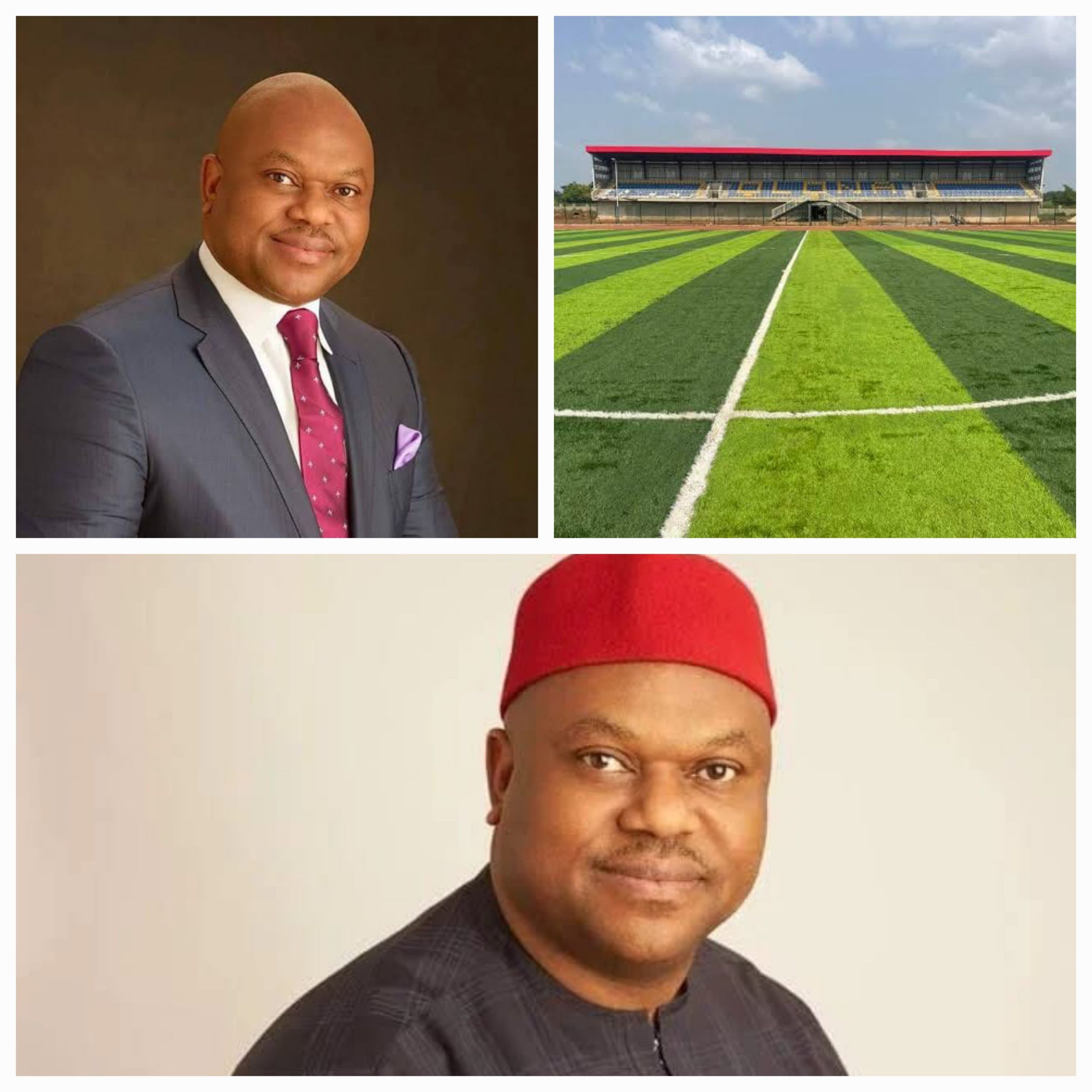
Beyond politics and public office, Rt. Hon. Engr. Victor Ochei, FNSE, Esq., has demonstrated a commitment to sports development through sponsorship, sports administration and investment in community infrastructure. His philosophy reflects the belief that every talented young person deserves an opportunity to excel, irrespective of background.
Across the world, sports have evolved beyond recreation into powerful instruments of youth development, economic empowerment, social inclusion and national integration. From Qatar’s Aspire Academy to Barcelona’s La Masia football development system, strategic investment in grassroots sports has demonstrated how talent can be identified, nurtured and transformed into international excellence.
This philosophy finds practical expression in the sports development initiatives associated with Victor Ochei, former Speaker of the Delta State House of Assembly and current President of the Nigeria Tennis Federation.
His sponsorship of the annual DAVNOTCH National Tennis Championship and the National Wheelchair Basketball Championship reflects an interest in expanding sporting opportunities, including for athletes living with disabilities.
Perhaps his most remarkable grassroots investment is the sports facility he has personally undertaken in his hometown of Onicha-Olona, Aniocha North Local Government Area of Delta State.
The Donald Ochei Mini Stadium features a modern football pitch, standard tartan athletics tracks with drainage facilities, dressing rooms and a tennis court.
The facility was conceived to strengthen the annual Onicha-Olona Football Tournament, which has continued to provide opportunities for young football talents to showcase their abilities.
Importantly, this is an investment undertaken with Ochei’s personal resources, demonstrating how private initiative can complement public efforts in community development.
The vision has interesting parallels with Qatar’s Aspire Project, which integrates sporting infrastructure, talent identification, education and professional training. Although different in scale and institutional capacity, both initiatives underscore the importance of creating environments where young talents can develop.
The historical experience of Nelson Mandela’s South Africa also demonstrates the power of sports to promote unity, reconciliation and social cohesion.
For Ochei, sports development represents more than winning trophies. It is about giving young people constructive opportunities, promoting discipline, discovering talents and creating pathways to economic independence.
As a lawyer, engineer, former legislator and sports administrator, his experience provides a basis for broader discussions about the role of legislation and public policy in strengthening grassroots sports development.
His proposed areas of interest, as a Senator, include improved sports infrastructure, sustainable funding, school and community competitions, disability inclusion, talent discovery and greater private-sector participation.
With the global sports industry generating enormous economic opportunities in broadcasting, tourism, coaching, facility management and athlete representation, Nigeria cannot afford to treat sports merely as recreation.
The enduring lesson from Ochei’s grassroots sports initiatives is that investing in young people is investing in the future. A football pitch can discover a future international star; an athletics track can nurture a national champion; and a tennis court can open doors to opportunities beyond the shores of Nigeria.
Ultimately, the true measure of sports development is not just the trophies won, but the lives transformed and opportunities created.Suggested publication headline.
Ochei is a goal!!!
Austin Edemodu, PhD.
-
 Featured7 years ago
Lampard Names New Chelsea Manager
-
 Featured7 years ago
FG To Extends Lockdown In FCT, Lagos Ogun states For 7days
-
 Featured7 years ago
Children Custody: Court Adjourns Mike Ezuruonye, Wife’s Case To April 7
-
 Featured7 years ago
NYSC Dismisses Report Of DG’s Plan To Islamize Benue Orientation Camp
-

 Featured5 years ago
Transfer Saga: How Mikel Obi Refused to compensate me After I Linked Him Worth $4m Deal In Kuwait SC – Okafor
-
Featured7 years ago
Board urges FG to establish one-stop rehabilitation centres in 6 geopolitical zones
-
Sports4 years ago
TINUBU LAMBAST DELE MOMODU
-

 News2 years ago
Zulu to Super Eagles B team, President Tinubu is happy with you













