
Foreign news
Full text: Xi Jinping’s speech at opening ceremony of BRICS Business Forum
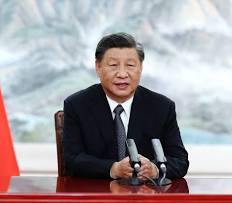
Keynote Speech by H.E. Xi Jinping
President of the People’s Republic of China
At the Opening Ceremony of the BRICS Business Forum
22 June 2022
Dear Colleagues,
Members of the Business Community,
Ladies and Gentlemen,
Friends,
I am glad to attend the BRICS Business Forum, and I wish to extend a warm welcome to all of you.
Right now, our world is facing drastic changes and a pandemic both unseen in a century. Various security challenges keep emerging. The world economy still faces strong headwinds on its path toward recovery, and global development has suffered major setbacks. Where is the world headed: Peace or war? Progress or regression? Openness or isolation? Cooperation or confrontation? These are choices of the times that we are confronted with.
Human history, like a river, keeps surging forward, with moments of both calm waters and huge waves. Despite changes in an evolving global environment, the historical trend of openness and development will not reverse course, and our shared desire to meet challenges together through cooperation will remain as strong as ever. We should stand high and not allow ourselves to be distracted by fleeting clouds, and we should have a keen appreciation of the law governing the advance of history. We should refuse to be led astray by any turn of events or intimidated by any risk. We should rise to challenge and forge ahead with resolve toward the goal of building a community with a shared future for mankind.
First, we should embrace solidarity and coordination and jointly maintain world peace and stability. We in China believe that “History, if not forgotten, can serve as a guide for the future.” In the past century, humanity have gone through the scourge of two world wars and the dark shadow of the Cold War. The tragedies of the past tell us that hegemony, group politics and bloc confrontation bring no peace or security; they only lead to wars and conflicts. The Ukraine crisis is another wake-up call for all in the world. It reminds us that blind faith in the so-called “position of strength” and attempts to expand military alliances and seek one’s own security at the expense of others will only land oneself in a security dilemma.
History tells us that peace, which is the common cause of humanity, should be pursued and defended by all. Only when we all cherish and uphold peace and never forget the painful lessons of war can there be hope of peace. Facing a volatile and unstable world, we should stay true to the pledge of the UN Charter and fulfill the mission of maintaining peace.
Not long ago, I put forward the Global Security Initiative, calling on all countries to stay committed to the vision of common, comprehensive, cooperative and sustainable security; stay committed to respecting the sovereignty and territorial integrity of all countries; stay committed to abiding by the purposes and principles of the UN Charter; stay committed to taking the legitimate security concerns of all countries seriously; stay committed to peacefully resolving differences and disputes between countries through dialogue and consultation; and stay committed to maintaining security in both traditional and non-traditional domains.
We in the international community should reject zero-sum games and jointly oppose hegemonism and power politics. We should build a new type of international relations based on mutual respect, fairness, justice and win-win cooperation. We should be clear that we are a community in which all countries share a common stake, and we should see that the light of peace will reach all corners of the world.
Second, we should reach out to each other and jointly promote sustainable global development. Development holds the key to solving various difficult problems and delivering better lives to the people.
Today, the global development process has hit major roadblocks, the momentum of international development cooperation is being weakened, and the development gap between the North and the South keeps widening.
As a result, the global efforts to implement the UN’s 2030 Agenda for Sustainable Development have suffered major setbacks. Almost 1.2 billion people in nearly 70 countries are confronted with COVID-19, food, energy and debt crises. What has been achieved in decades of global poverty reduction efforts could be lost.
Last year, I put forward the Global Development Initiative, and I called on all countries to implement the 2030 Agenda for Sustainable Development, forge united, equal, balanced and inclusive global development partnership, and promote cooperation in a wide range of areas such as poverty reduction, public health, education, digital connectivity and industrialization.
We should deepen cooperation to better safeguard food and energy security. We should seize opportunities presented by the new scientific and technological revolution and industrial transformation, and promote the flow of factors of production that enable innovation globally. We should help developing countries speed up development of the digital economy and green transformation. We should also engage in cooperation on COVID-19 response and provide more anti-COVID medicines to developing countries so as to beat the virus at an early date.
In two days, China will host the High-level Dialogue on Global Development to discuss ways to promote global development. We should respond to people’s concerns, pursue the larger interests of all countries, and steer global development to a new era to deliver benefit to all.
Third, we should tide over difficulties together and jointly pursue win-win cooperation. At present, some important industrial and supply chains are suffering from deliberate disruptions, commodity prices remain high and are fluctuating, global inflation keeps rising, the international financial market is in turmoil, and global economic recovery is losing steam. People have reason to be concerned that the world economy might slip into a crisis.
At this critical juncture, tiding over difficulties together and pursuing cooperation is the only way for us to forestall an economic crisis. We should come together with a united purpose and strengthen macroeconomic policy coordination to prevent the slowdown and even halt of the global recovery.
Major developed countries should adopt responsible economic policies and avoid negative policy spillovers that may take a heavy toll on developing countries.
It has been proved time and again that sanctions are a boomerang and a double-edged sword. To politicize the global economy and turn it into one’s tool or weapon, and willfully impose sanctions by using one’s primary position in the international financial and monetary systems will only end up hurting one’s own interests as well as those of others, and inflict suffering on everyone.
Fourth, we should be inclusive and jointly expand openness and integration. The rapid economic globalization that we have seen since the end of the Cold War has greatly boosted the movement of goods and capital and advances in technology and civilization. A more open and inclusive world will create greater development opportunities for all and deliver a more prosperous future for all.
For some time, however, economic globalization has faced headwinds and countercurrents. Some countries attempt to decouple with others, sever supply chains and build “a small yard with high fences.” There is widespread concern in the international community that should such a tendency continue, the global economy will become compartmentalized and mutually exclusive.
Economic globalization is a response to development of productivity and, as such, represents an unstoppable historical trend. Anyone who attempts to turn back the wheel of history and block others’ way will only have his own path blocked.
As an ancient Chinese saying goes, “Constant piling up of earth makes Mount Tai great; ceaseless inflow of rivers makes the ocean deep. ” Inclusiveness, shared benefits and win-win outcomes is what we should pursue.
We should stay committed to openness and inclusiveness, eliminate all barriers to the development of productivity, and steer globalization in the right direction. This will boost the free flow of capital and technology, unleash the full potential of innovation and creativity, and foster synergy in boosting global economic growth.
We should uphold the WTO-centered multilateral trading system, remove barriers to trade, investment and technology, and keep the global economy open. We should promote extensive consultation and joint contribution to deliver shared benefits, enhance global economic governance, and increase the representation and say of emerging markets and developing countries. This will ensure that all countries enjoy equal rights, follow the rules as equals, and share equal opportunities.
Ladies and Gentlemen,
Friends,
This year, facing a complicated and challenging domestic and international environment for development, China has risen to various challenges and taken well-coordinated steps to respond to COVID-19 and pursue economic and social development.
Putting the people and their lives first, China has built a strong line of defense against the virus, and consolidated the gains made in COVID-19 response. Thanks to these efforts, we have protected people’s lives and health and ensured overall stable performance in economic and social development to the maximum extent possible.
We will step up macroeconomic policy adjustment, and adopt more forceful measures to deliver the economic and social development goals for the whole year and minimize the impact of COVID-19.
In the second half of this year, the Communist Party of China will convene its 20th National Congress, which will chart the course for the next phase of China’s development.
We will ground our efforts in the new development stage, follow the new development philosophy, foster a new development paradigm and strive to achieve high-quality development.
China will continue to pursue opening-up against higher standards, develop new systems for a higher-standard open economy, and continue to foster a market- and law-based and internationalized business environment.
I warmly welcome you to invest and do business in China, strengthen business cooperation with China, and share in China’s development opportunities.
Ladies and Gentlemen,
Friends,
The BRICS mechanism is an important cooperation platform for emerging markets and developing countries. The business community is a dynamic force driving BRICS’ effective cooperation. Over the years, you in the business communities of BRICS countries have kept exploring new ground, unlocked the potential of cooperation among the five countries, and made important contribution to the development of BRICS countries.
Your efforts deserve full recognition.
BRICS cooperation has now entered a new stage of high-quality development. I hope that you business leaders will continue to act with tenacity and in a pioneering spirit, and champion open, innovative and shared development so as to add new impetus to BRICS cooperation.
You should tap into the complementarity of BRICS countries’ diverse economic structures and resources, upgrade cooperation on trade, investment and finance, expand cooperation on cross-border e-commerce, logistics, local currencies and credit rating, and keep industrial and supply chains safe and unclogged.
I hope you will actively participate in building the BRICS Partnership on New Industrial Revolution, strengthen cooperation on digital economy, smart manufacturing, clean energy and low-carbon technology, and support the industrial restructuring and upgrading in BRICS countries.
I hope you will advance cooperation on energy, food, infrastructure and skill training, fulfill your social responsibilities, and see that more benefits of development will reach everyone in a more equitable way.
I am convinced that as long as we hoist high the sail of mutual benefit and win-win and keep a steady hand on the tiller of solidarity and cooperation, we will break waves and steer the giant ship of BRICS countries toward a brighter future!
To conclude, I wish the BRICS Business Forum a full success!
Thank you!



Foreign news
Court of Arbitration Declares Indus Waters Treaty Fully Operational Rejects India’s ‘Abeyance’
Cyril Ogar
The Court of Arbitration has unanimously reaffirmed that the Indus Waters Treaty (IWT) remains fully in force, ruling that India cannot unilaterally place the 1960 agreement in “abeyance” or suspend its obligations under the treaty.
The decision represents a significant legal development in the longstanding dispute between India and Pakistan over the management and use of the Indus river system.
The Court’s finding addresses a fundamental issue at the heart of the dispute: whether either party can unilaterally suspend the treaty outside the legal framework agreed by both countries.
In its unanimous determination, the Court made clear that the IWT continues to bind both India and Pakistan and that its obligations cannot be set aside through a unilateral political declaration.
The ruling means India remains subject to the treaty provisions governing the use of the Western Rivers, including requirements relating to the design and operation of hydroelectric projects, as well as the dispute-resolution mechanisms established under the agreement.
The Court has also ordered interim measures concerning the Ratle Hydroelectric Plant, restricting specified construction activities while the broader dispute remains under consideration.
The measures are aimed at preserving the effectiveness of the arbitration process and preventing developments that could prejudice the outcome of the proceedings.
For Pakistan, the decision represents significant legal validation of its longstanding position that the IWT is a binding international agreement and contains no provision allowing either party to unilaterally place it in abeyance.
Pakistan has consistently maintained that disagreements over the treaty should be addressed through the institutional mechanisms established by the agreement, rather than through unilateral action.
The IWT provides a structured framework for resolving disputes through mechanisms including the Permanent Indus Commission, Neutral Expert and Court of Arbitration processes.
The latest ruling therefore reinforces the principle that treaty obligations cannot simply be disregarded because of deteriorating political relations between signatories.
The significance of the decision extends beyond the India-Pakistan dispute. It underscores the broader international-law principle that agreements governing shared rivers and other transboundary resources must be respected and disputes resolved through established legal and institutional channels.
The Indus river system supports agriculture, livelihoods, food security and communities across the region, making the stability of the treaty particularly important.
The ruling also highlights the distinction between seeking to amend an international agreement through mutually agreed procedures and attempting to alter its obligations unilaterally.
The IWT has endured wars, prolonged diplomatic tensions and periods of limited bilateral engagement. Its continued operation demonstrates the importance of rules-based mechanisms in managing shared resources when relations between neighbouring states become strained.
For Pakistan, the outcome provides an opportunity to frame the decision not merely as a bilateral legal victory, but as an affirmation of international law, treaty compliance and peaceful dispute resolution.
The central message from the ruling is clear: the Indus Waters Treaty remains in force, its obligations continue to bind both parties, and disputes concerning shared waters must be addressed through the legal mechanisms agreed by India and Pakistan.
-
 Featured7 years ago
Lampard Names New Chelsea Manager
-
 Featured6 years ago
FG To Extends Lockdown In FCT, Lagos Ogun states For 7days
-
 Featured7 years ago
Children Custody: Court Adjourns Mike Ezuruonye, Wife’s Case To April 7
-
 Featured7 years ago
NYSC Dismisses Report Of DG’s Plan To Islamize Benue Orientation Camp
-

 Featured5 years ago
Transfer Saga: How Mikel Obi Refused to compensate me After I Linked Him Worth $4m Deal In Kuwait SC – Okafor
-
Featured7 years ago
Board urges FG to establish one-stop rehabilitation centres in 6 geopolitical zones
-
Sports4 years ago
TINUBU LAMBAST DELE MOMODU
-

 News2 years ago
Zulu to Super Eagles B team, President Tinubu is happy with you