
Featured
Gara-Gombe: When an Herbs Seller Impersonates a Doctor
Gara-Gombe: When an Herbs Seller Impersonates a Doctor
By Modibo Alhassan
One of the sights that are sure to confront one at motor parks and other locations with high concentration of artisans is that of herbal concoction sellers plying their wares. The herbal remedy sellers are usually quick to dispense the same mixture to almost about all their clients for the day. While one is not being dismissive of herbal remedies or homeopathy, these sellers often rely on dispensing potions that address symptoms presented to them – fatigue, headache, body ache, irritable bowels, elevated temperature, dizziness and any other conceivable manifestation of ill health get that generous dose of concoction, which may alleviate the symptoms for a while but hardly ever address the root cause such that the client keeps coming back.
Former Chairman Gombe football Association, Shuaib Gara Gombe, perfectly fits this description of an herbal remedy peddler with a little dubiousness added. Gombe is not only dispensing unproven remedies he also has that streak of delusion of grandeur that makes him fancy himself as a chief medical doctor that can in the blink of an eye diagnose what ails the system and what questionable concoction to administer to immediately suppress the symptoms – his is not about long term sustainable measures. The remedy he has for any perceived malaise in sports or any other sector in Nigeria is to dispense his angst, anger and a generous sprinkling of all the sense of frustration and disappointment he rightly or wrongly has.
His latest attempt at a commentary on how the COVID-19 efforts are being handled showed this lack of depth that is well camouflaged behind verbosity and yelling. Fiercely condemning something does not necessarily imply that the matter at hand is condemnable, it could also mean that the person making the judgment is direly in need of facts that will set them right and save the entire society from being misled. Perhaps, Gombe should have stuck to sports, or at least sports medicine, which he may know a little about so that he would have been saved the ridicule he exposed himself to by dabbling into COVID -19, a killer viral illness that even the best doctors and health workers across the world are still striving to understand.
Gombe went even beyond the remit of an herbal remedy seller as he delved into world economics with a touch of conspiracy theorists. Because these are areas in which he has no competence, he failed woefully in adding any value to the knowledge the country is seeking in formulating a robust response to the ravages of COVID-19. The pseudo analyst expressed anger and disappointment at Nigeria’s quest for funding to manage the situation and of course like any other average debater at a drinking joint he was quick to point out how the USA, South Africa, Europe and Morocco are not treading this path. He however woefully neglected to discuss the condition precedent in these entities prior to COVID-19. His attempt at trying to present some countries as superior in this matter fell flat because the interconnectivity that exists among nations will see to it that the kind of syphoning of economy he predicted.
His unwarranted attack on football administrator is regrettable especially with the lack of depth it confirmed on his part. That someone with this much deficit of facts once presided over the affairs of Gombe FA and played crucial roles in national football administration is an indication of what is wrong with sports administration in the country. Charlatans have seats at the table. Anyone that compares the Nigeria Professional Football League with European leagues without adequate caveats as to peculiarities should not be taken seriously. Period.
That said. It appears the whole essence of Gombe granting his said interview was not to make any meaningful contributions to ongoing efforts but to hit out the Minister of Youth and Sports Development, Mr Sunday Dare. The tone of his verbal attack belies a man who is angry at not being given a role in the administration while the points he marshalled are consistently laced with errors.
For instance, he claimed that sports administration in the country is on auto-pilot and one wonders how many of his colleagues in the sector will agree with him. Perhaps, Gombe’s perception of sports is limited to just football but even that too is seeing a lot of movement particularly as it pertains to improving transparency and eliminating the stifling perception of corruption around the sport. Other sports federations have at various times asserted that they have never had it so good as they now do under the current leadership of the Ministry of Youth and Sports Development.
Sadly, as Gombe himself admitted, he now spends much time in Morocco so he must have missed out on vital news regarding the development of sports in Nigeria. But this is something he could have simply read up and bring himself up to speed. He claimed that the Minister was trying to introduce new things without planning. He must have been too absorbed in nursing his anger that he was unaware of an Inter-Ministerial Meeting on Sports Development, the engagement with the Nigeria Economic Summit Group (NESG) and eventual signing of a MoU, the collaboration with the Sports Industry Working Group (SIWG) to develop the sports industry and other interactions that are exploring ways of developing a vibrant sports sector. The “revival of old competitions like Youth Games, NUGA, back to school, Principals Cup, Headmasters Cup among others” that the former FA chairman is wishing to fail is being undertaken with stakeholders’ input that provides refreshed ideas. What we are talking about here is a collaboration of multi-disciplinary teams of professionals using fact-based approach to seek solutions and Gombe still thinks there is no planning.
Gombe apparently has no faith in the country’s judiciary, which is unfortunate because he cannot wish the society away. The Minister cannot constitute himself into an emperor and sack sports administrators that came into office through recognized processes. If they are charged to court on allegation of corruption and the court rules to acquit them there is nothing that can be done to the contrary. The judiciary is the judiciary. Also, even when persons are standing trial for corruption charges, they must be presumed innocent until the court convicts them. So, on what basis is he expecting the minister to isolate these “corrupt people” around him, and it must be noted that the Minister met these people in their respective offices and was not the one that appointed them.
As a further testimony to being out of touch, Gombe rehashed the claims made by a certain radio station and some of its equally disgruntled on-air guests by saying that he has “learnt of allegations against the Sports Minister that he has collected money from officials of the Nigeria Football Federation.” A simple check would have educated him to the reality that the radio host apologized for the lies told on the station when the Minister demanded proof of the unfunded allegation. Gombe’s co-travelers that appeared on the radio programme to make the injurious claims have fallen silent because they have no facts to back their claims. He may as well be facing the prospect of spending his earnings from Morocco to settle lawsuits.
The greatest giveaway of Gombe’s lack of capacity to speak on professional matters is his screaming ignorance about the Ministry of Youth and Sports Development being a two-in-on organization. Youth Development and Sports Development. He spoke of the Minister’s initiatives, DEEL (acronym for Digital Skills, Entrepreneurship, Employability and Leadership training), DY.ng and NOYA (Nigerian Online Youth Assembly) in a manner that confirmed he sees them as sports programme. The reality, however, is that these are initiatives to develop the youth even though they are also open to sportsmen.
The facts sum up to confirm that Gara Gombe engaged in hard sell. It is on record that since 2014 Gombe has been involved in marketing fake goods, putrid thoughts, false theories and blackmailing potions. That he is still busy in 2020 plying the same wares shows that no one has bought his wares. This time he is up against the wall. Whether he was sent to do the hatchet job, or he chose to do it of his volition, someone should quickly tell him he has embarked on an ill-fated journey. And if ever the roll call of knowledgeable men in sports will ever be made Gara Gombe’s name will never make the cut. His thoughts like the prescriptions he gives are fake. He is a cancer to Nigeria’s sports development and should be educated in the errors of his way.



Business
Turning Africa’s Raw Materials Into Wealth: The ARMS 2026 Industrial Agenda
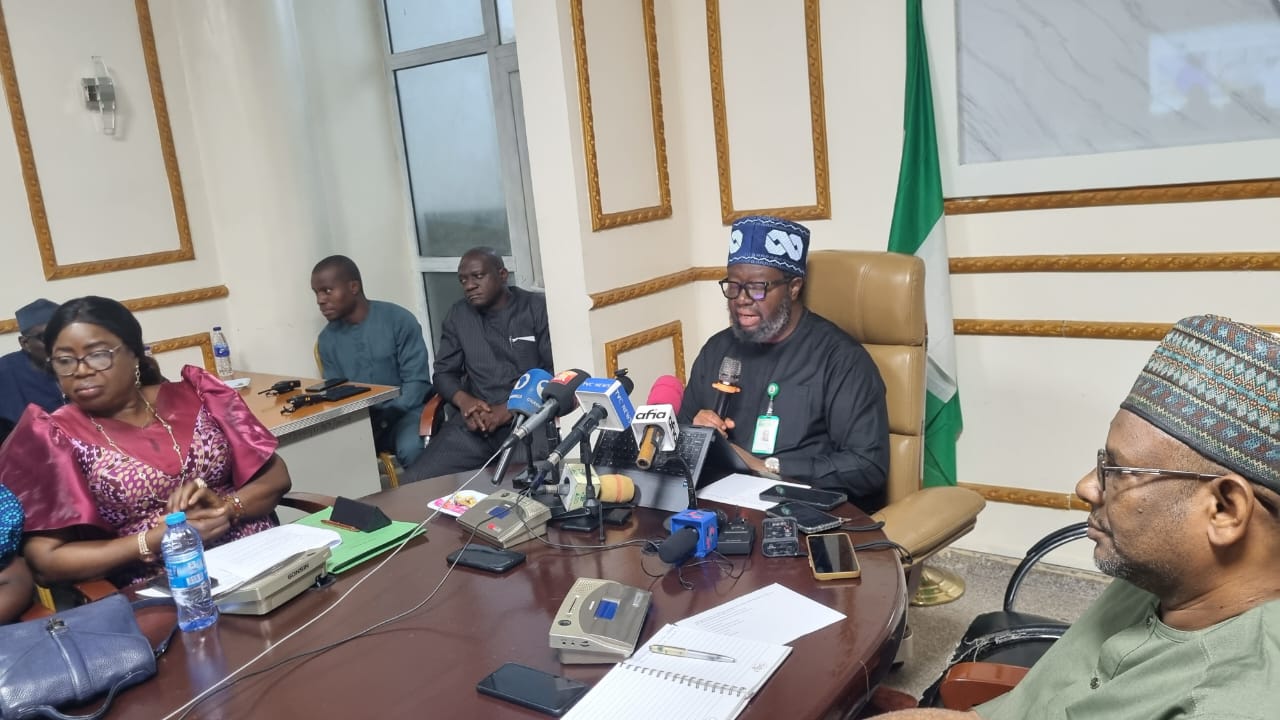
By Joel Ajayi
For decades, Africa’s vast natural resources have powered industries and economies far beyond the continent, while many African countries have remained largely exporters of unprocessed commodities and importers of finished products.
That familiar pattern is now coming under renewed scrutiny as policymakers, researchers, investors and industrialists seek to change the direction of Africa’s resource economy.
At the centre of that conversation is the second edition of the Africa Raw Materials Summit (ARMS 2026), scheduled for October 19 and 20 at the Abuja Continental Hotel, Abuja, under the theme: “From African Feedstock to African Factories.”
Organised by the Raw Materials Research and Development Council (RMRDC), the summit is being positioned as more than another gathering of policymakers and industry stakeholders. It is intended to provide a platform for confronting the structural challenges that have kept African raw materials largely disconnected from local manufacturing.
Africa has for years operated largely within a “pit-to-port” economic model, exporting raw materials while importing expensive finished products.
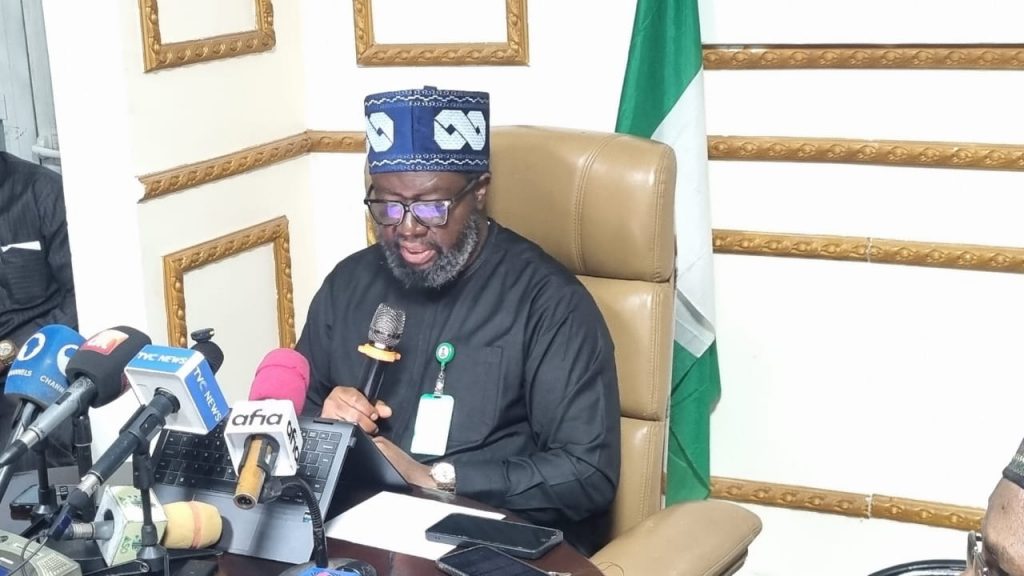
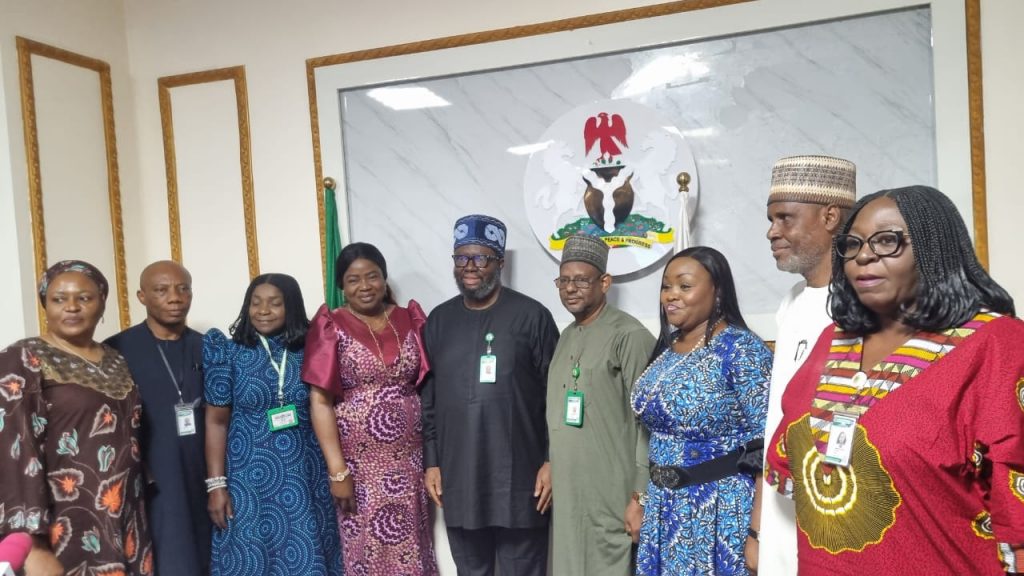
Speaking at a press conference ahead of the summit on Tuesday in Abuja, the Director-General and Chief Executive Officer of RMRDC, Prof. Nnanyelugo Martin Ike-Muonso, said the event would bring together policymakers, investors, researchers, technology providers and industrialists to develop practical strategies for transforming Africa’s abundant natural resources into industrial wealth.
The challenge, therefore, is not simply the abundance of resources, but the continent’s ability to transform those resources into industrial value, employment, technology and wealth within Africa.
Nigeria alone, according to the RMRDC, has more than $582.4 billion in documented non-renewable natural resources, while the wider continent possesses substantial deposits of critical minerals, agricultural raw materials and industrial feedstock.
Yet, the benefits of this resource endowment have often been constrained by inadequate processing capacity, weak infrastructure, limited technology, financing gaps and fragmented regional value chains.
From Dialogue to Industrial Action
ARMS 2026 builds on the maiden edition held in May 2025, which attracted more than 1,000 delegates from across the world.
The inaugural summit also witnessed the unveiling of the Ten-Year Raw Materials Transformation Roadmap (2025–2034) by the Minister of State for Industry, Senator John Owen Enoh.
The roadmap was designed around areas including technological capability, climate-resilient processing and backward integration, establishing a policy framework for greater domestic utilisation of Africa’s raw materials.
The second edition is expected to move the conversation further by bringing policy, capital, technology and industrial stakeholders around practical mechanisms for turning raw materials into locally manufactured products.
One of the major proposals highlighted by the RMRDC is the 30 per cent Mandatory Value Addition Bill, which seeks to establish a statutory minimum level of value addition to Nigerian raw materials before export.
The Council says the proposed framework could support job creation, import substitution, foreign-exchange conservation and increased manufacturing contribution to the economy.
Building the Infrastructure for Value Addition
The industrial transformation envisaged by ARMS 2026 goes beyond legislation.
A major concern is the “missing middle” between where raw materials are produced and where factories are located.
Poor transportation networks, inadequate cold-chain facilities, weak rural roads, limited testing and certification infrastructure and border-related delays can make locally sourced materials more expensive and less competitive.
Consequently, logistics and infrastructure constitute one of the five principal pillars of the summit.
The objective is to develop more reliable corridors connecting farms and mines with processing centres and manufacturing facilities, thereby reducing losses and improving the movement of industrial inputs.
The Digital Dimension
Technology is also becoming an important part of the Council’s strategy.
The RMRDC says it has developed the Nigeria Integrated Information Statistical System for Raw Materials and Products (NISSRAMP), described as a digital repository containing information on feedstock deposits, specifications, production outputs and industrial absorption rates.
The Council has also highlighted its transition towards paperless operations and its certification as a Data Controller/Processor of Major Importance by the Nigeria Data Protection Commission.
Such digital infrastructure could provide investors and manufacturers with better information about the availability and characteristics of raw materials while supporting more informed industrial planning.
Turning Waste Into Industrial Inputs
Another major component of ARMS 2026 is the proposed expansion of the circular economy.
The summit will examine how agricultural by-products, mine tailings, scrap metals and biomass can be recovered and reused as inputs for new production processes rather than being treated simply as waste.
The RMRDC argues that such an approach could lower raw-material costs while supporting more sustainable and climate-resilient manufacturing systems.
For Africa, where industrial expansion must increasingly balance economic development with environmental considerations, waste industrialisation could become an important part of the continent’s manufacturing conversation.
From National Production to African Value Chains
The African Continental Free Trade Area is another important element of the summit’s agenda.
The RMRDC sees AfCFTA as an opportunity to create regional value chains in which raw materials sourced in one African country can be processed and supplied to manufacturers in another.
Under such a model, Africa would move beyond simply exporting commodities to external markets and develop stronger internal networks for supplying chemicals, refined minerals, agricultural inputs and other industrial materials across national borders.
This approach places regional integration at the heart of Africa’s industrialisation strategy.
Bridging Research and Capital
A recurring weakness in many developing economies is the gap between research and commercialisation.
Innovations may emerge from universities, research institutions and laboratories without receiving the financing, equipment or market connections required to become commercially viable.
ARMS 2026 intends to address that gap through technology commercialisation and capital linkages, connecting research outputs with investors, development finance institutions and industrial off-takers.
The RMRDC has also cited partnerships with the Bank of Industry for commercial-scale post-harvest processing and a South-South technology-transfer partnership with the National Innovation Centre par Excellence in Shanghai, China.
A Larger Industrial Conversation
The scale of ARMS 2026 is expected to be significantly larger than the maiden edition.
The organisers project more than 1,800 delegates from all 54 African countries and global industrial partners.
The programme will feature high-level policy dialogues, technical panels, an advanced raw materials and technology exhibition, industrial site visits and the African Raw Materials Industry Awards.
The exhibition, in particular, is expected to showcase locally fabricated processing machinery, advanced domestic materials, green chemicals and engineered commercial inputs.
Beyond the speeches and exhibitions, however, the real significance of ARMS 2026 will ultimately depend on what happens after the summit.
Africa’s challenge has never been a shortage of raw materials. The more difficult question has been how to transform those resources into factories, products, skilled employment, technology and sustainable economic opportunities.
For Nigeria and the rest of the continent, the proposed shift from “pit-to-port” to “feedstock-to-factory” therefore represents a broader debate about the future structure of African economies.
ARMS 2026 seeks to place that debate firmly on the industrial agenda — with value addition, technology, finance, infrastructure, circular production and regional trade at the centre.
If the commitments and partnerships generated by the summit translate into measurable industrial activity, the event could provide another platform for Africa to examine how its enormous resource base can support stronger domestic manufacturing.
The message from the organisers is clear: the continent’s raw materials should not only leave African soil as commodities; they should increasingly become the foundation for African industrial production
-
 Featured7 years ago
Lampard Names New Chelsea Manager
-
 Featured7 years ago
FG To Extends Lockdown In FCT, Lagos Ogun states For 7days
-
 Featured7 years ago
Children Custody: Court Adjourns Mike Ezuruonye, Wife’s Case To April 7
-
 Featured7 years ago
NYSC Dismisses Report Of DG’s Plan To Islamize Benue Orientation Camp
-

 Featured5 years ago
Transfer Saga: How Mikel Obi Refused to compensate me After I Linked Him Worth $4m Deal In Kuwait SC – Okafor
-
Featured7 years ago
Board urges FG to establish one-stop rehabilitation centres in 6 geopolitical zones
-
Sports4 years ago
TINUBU LAMBAST DELE MOMODU
-

 News2 years ago
Zulu to Super Eagles B team, President Tinubu is happy with you