
Creative Industry
Infrastructure Development and Collaborative Partnerships Necessary For Nigeria’s Film Sector Growth

Joel Ajayi
The Managing Director/Chief Executive of Dr Nigerian Film Corporation Ali Nuhu, has advocated for continuous massive film infrastructure development as well as sustainable partnerships to aid the growth of Nigeria’s film industry.
Consequently, NFC, he maintains is unwaveringly committed to advancing Nigeria’s film industry through strategic infrastructure upgrades, policy innovation, and global collaboration that catalyses not only the film industry growth of Nigeria but, Africa as a Continent.
Speaking at “The Reel Balancing Act: Policymakers, Filmmakers, and the Future of Cinema,” of the Afro-Berlin session – Berlinale Film Festival, in Germany, Dr. Nuhu drew attention of panelists and other delegates to Nigeria’s transformative progress under the Federal Government’s roadmap for the creative sector. Sustainable partnerships, he said, were needed to position Africa’s cinema as a global powerhouse.
He listed some of the interventions by the administration of President Ahmed Tinubu (GCFR) that serve as pointers to Nigeria’s film industry development and transformative journey, with massive infrastructure and friendly investment policy initiatives components.
Revitalizing legacy infrastructure at the NFC while prioritizing new initiatives to elevate Nigeria’s film ecosystem he said, are being aggressively being pursued. “When I assumed office, my vision was clear: to build a film industry for our country anchored on world-class infrastructure, enabling policies, and sustainable partnerships.
Today, we are witnessing the fruits of our determination and commitment” he stated. Other sectoral milestones to include the recently introduced Tax Reform Bill before the National Assembly which when passed into law will provide incentives for local and international investors in Nigeria’s film sector, especially rebates for film production that utilize local talent, facilities and locations, as well as tax holidays for studios and equipment manufacturers are commendable.
“This reform is a game-changer, reducing barriers to investments and empowering filmmakers to dream bigger,” Dr. Nuhu averred.
Furthermore, he commended Government’s resolve to integrate the creative sector into national economic planning which has ensured that film and culture are no longer afterthoughts but central to Nigeria’s growth agenda.
The National Film Institute (NFI), he said is undergoing modernization and transformation, with envisioned facility, faculty upgrade and curricular review intended to equip emerging filmmakers with cutting-edge skills in digital production, animation, and AI-driven storytelling tools.
Dr. Nuhu urged African filmmakers and policymakers to unite in addressing challenges such as piracy, funding gaps, and distribution barriers. “Our success lies in collaboration—across borders, sectors, and generations. With improved infrastructure, progressive policies, and global solidarity, African cinema will not only thrive but dominate”, he said.
#nfc #nigerianfilms #development #strategicpartnerships



Creative Industry
CAFA Targets $500bn Fashion Economy At Canex Wknd 2026
Joel Ajayi
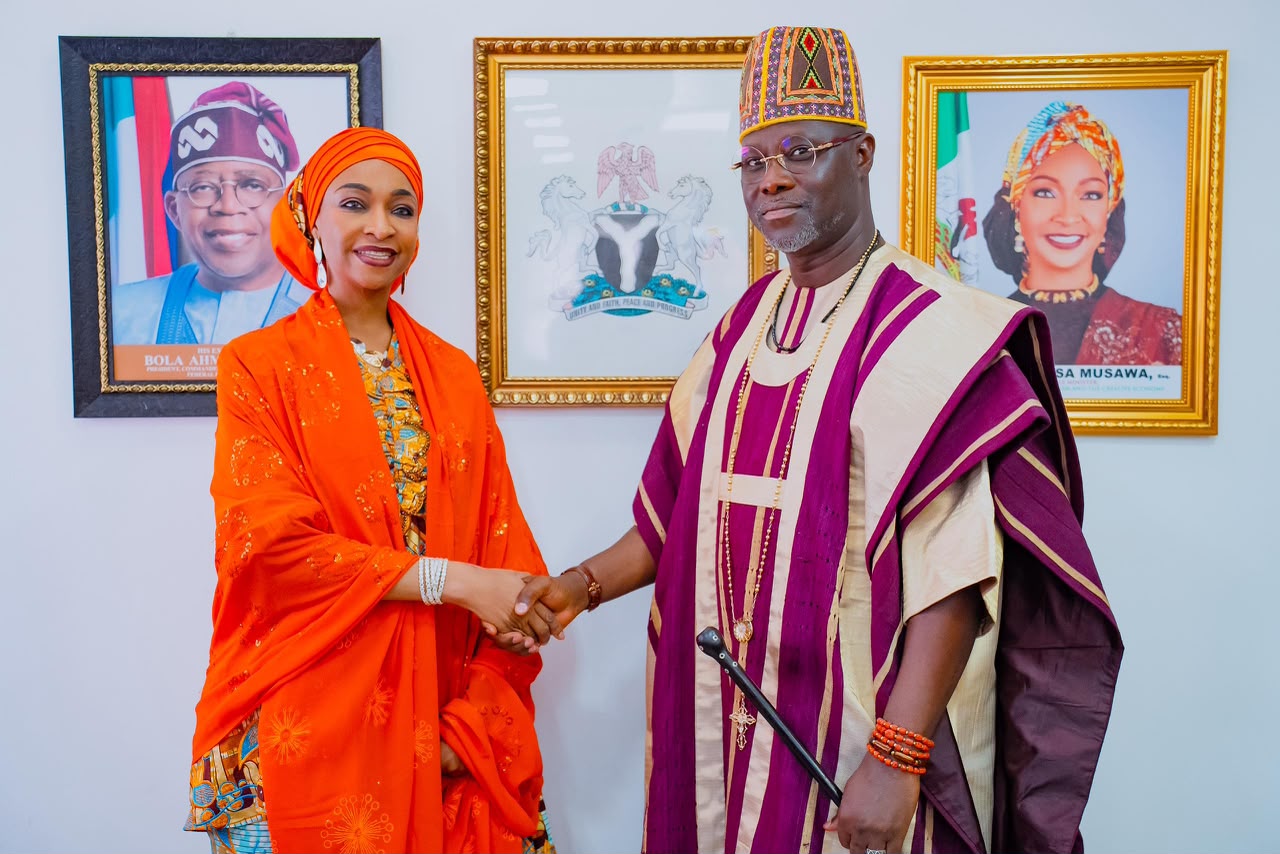
The Confederation of African Fashion (CAFA) will present its roadmap to grow Africa’s fashion economy from an estimated $30 billion to $500 billion at CANEX WKND 2026 in Lagos.
Marking its first anniversary on November 5, CAFA will unveil a joint stand with the Federal Ministry of Art, Culture, Tourism and the Creative Economy at the Wole Soyinka Centre for Culture and the Creative Arts, formerly the National Arts Theatre, on November 5, 2026.
CAFA President, Aare (Prof.) Lai Labode, said the institution works with African governments to align sourcing, production, trade and intellectual property policies, ensuring African creativity generates greater value for African businesses and communities.
Nigeria became the first country to sign the African Fashion Industry Growth Charter on November 5, 2025, when the Honourable Minister Barr. Hannatu Musa Musawa signed on behalf of the Federal Government.
Speaking ahead of the unveiling, Minister Musawa said: “Afroliganza seeks to build a structured, values-driven fashion economy rooted in African heritage, led by African institutions, and positioned for global impact.”
On employment potential, the minister emphasized that Investment in fashion will create millions of jobs, particularly for women and youth.
Registered in Rwanda, with an office in Kigali and a desk at the Federal Ministry of Arts, Culture, Tourism and the Creative Economy, CAFA is also working with Nigeria’s Ministry of Foreign Affairs towards African Union adoption of the Charter. Rwanda is progressing towards becoming its second participating country and the first in East Africa.
Its first year saw fifty nations gather at the Egbaliganza-Lisabi Festival in Abeokuta and a signed MoU with Türkiye’s ASRIAD.
CAFA’s programmes promote processing African raw materials into finished apparel locally. ‘Own What We Create’ addresses intellectual property protection, while the CAFA Certified Seal and CAFA Heritage Mark support standards and authenticity. African Global Fashion Houses are currently being established across international markets.
The African Global Fashion Games will debut in Nigeria in 2028, bringing designers together under national colours. Held every three years, the Games will alternate between African and international hosts, combining competition with investor meetings, deal signings and policy discussions. Its Instant Craft event gives competing nations identical materials and a fixed clock, placing skill at the centre of the contest.
CAFA is inviting creatives, fashion designers, artisans, diplomats, economists, investors and policymakers to its CANEX stand. Visitors can explore the roadmap, ask questions and identify opportunities to contribute through design, manufacturing, investment, research, trade and international partnerships. The stand will be open daily from November 5 to 8.
CAFA calls on the African Union to adopt the Charter, and governments to sign the Games Register and form national teams.
“Fashion has always told the world who Africa is. Now Africa will decide what fashion pays,” Aare Prof. Lai Labode said.
-
 Featured7 years ago
Lampard Names New Chelsea Manager
-
 Featured7 years ago
FG To Extends Lockdown In FCT, Lagos Ogun states For 7days
-
 Featured7 years ago
Children Custody: Court Adjourns Mike Ezuruonye, Wife’s Case To April 7
-
 Featured7 years ago
NYSC Dismisses Report Of DG’s Plan To Islamize Benue Orientation Camp
-

 Featured5 years ago
Transfer Saga: How Mikel Obi Refused to compensate me After I Linked Him Worth $4m Deal In Kuwait SC – Okafor
-
Featured7 years ago
Board urges FG to establish one-stop rehabilitation centres in 6 geopolitical zones
-
Sports4 years ago
TINUBU LAMBAST DELE MOMODU
-

 News2 years ago
Zulu to Super Eagles B team, President Tinubu is happy with you













