
Foreign news
Intl. Trade in Services Fair: President Xi opens first in-person trade event since COVID-19 outbreak
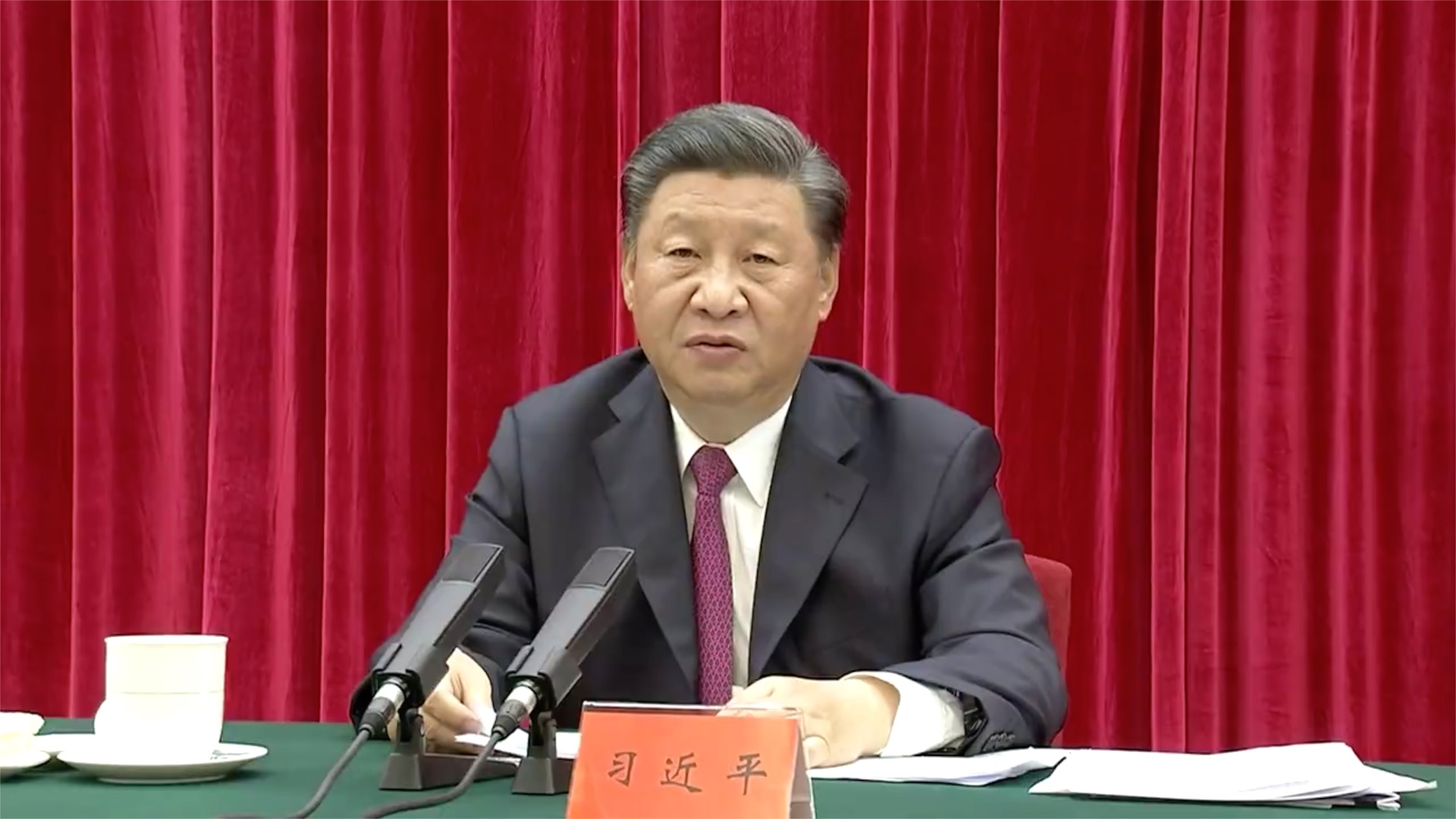
Here in Beijing, a major trade fair has kicked off and unlike the online events we’ve been used to in pandemic times, this one is in-person. President Xi Jinping gave the opening address, saying he hopes the event could help boost international trade, as the world economy suffers a major blow from the pandemic. Wu Guoxiu has our top story.
President Xi Jinping proposes to jointly build a world services economy that’s open, inclusive, innovative, and mutually beneficial.
XI JINPING Chinese President “China will remain steadfast in opening up wider to the world. We will continue to work on a negative list system for managing cross-border services trade. We will develop open platforms for the pilot program of innovative development of the services sector. We will further ease market access for the services sector, and will take greater initiative to increase imports of quality services.”
President Xi also announced China’s measures to promote higher-quality opening up, despite the challenges posed by COVID-19.
XI JINPING Chinese President “We will support the Beijing municipality in developing a national integrated demonstration zone for greater openness in the services sector. It will enable Beijing to take bigger, bolder steps as a trailblazer and gain more experience that would be replicable and scalable. We will also support Beijing in setting up a pilot free trade zone characterizing scientific and technological innovation, opening-up of the services sector, and the digital economy.”
Leaders addressed the summit remotely. The message is clear: support economic globalization and international cooperation.
ALBERTO FERNANDEZ President of Argentina “We hope to continue to deepen relations with China. For post-COVID-19 recovery and development, we may consider integrating our information system and share best practices. This platform of cooperation can help boost development.”
MUKHISA KITUYI Secretary-General, UN Conference on Trade and Development “International cooperation of trade and services should be a key element of policy agenda. We hope we can work together, leaning on the common lessons which China can share.”
But still, overcoming the coronavirus pandemic is key and world leaders renewed calls for global efforts to deal with it.
TEDROS ADHANOM GHEBREYESUS Director-General, World Health Organization “Innovation is of most value when it matters to equalities, not widens them. This pandemic will end. The question is whether we’ll learn the lessons it’s teaching us. Together, we must build a healthier, safer, fairer world for everyone, everywhere.”
China’s International Fair for Trade in Services is the world’s first of its kind organized at the national level. Nearly 18-thousand organizations, embassies, associations and companies from nearly 150 countries and regions are participating. There will be online and offline events, featuring public health, tourism, winter sports and 5G communications.
WU GUOXIU Beijing “As a taster of what’s to come, this summit will be followed by nearly 200 forums and negotiations over the next five days, together with a vast exhibition area. The message from organizers is clear: Join hands for global economic recovery, and don’t shut doors — especially against our common enemy, the coronavirus. Wu Guoxiu, CGTN, Beijing.”



Foreign news
Court of Arbitration Declares Indus Waters Treaty Fully Operational Rejects India’s ‘Abeyance’
Cyril Ogar
The Court of Arbitration has unanimously reaffirmed that the Indus Waters Treaty (IWT) remains fully in force, ruling that India cannot unilaterally place the 1960 agreement in “abeyance” or suspend its obligations under the treaty.
The decision represents a significant legal development in the longstanding dispute between India and Pakistan over the management and use of the Indus river system.
The Court’s finding addresses a fundamental issue at the heart of the dispute: whether either party can unilaterally suspend the treaty outside the legal framework agreed by both countries.
In its unanimous determination, the Court made clear that the IWT continues to bind both India and Pakistan and that its obligations cannot be set aside through a unilateral political declaration.
The ruling means India remains subject to the treaty provisions governing the use of the Western Rivers, including requirements relating to the design and operation of hydroelectric projects, as well as the dispute-resolution mechanisms established under the agreement.
The Court has also ordered interim measures concerning the Ratle Hydroelectric Plant, restricting specified construction activities while the broader dispute remains under consideration.
The measures are aimed at preserving the effectiveness of the arbitration process and preventing developments that could prejudice the outcome of the proceedings.
For Pakistan, the decision represents significant legal validation of its longstanding position that the IWT is a binding international agreement and contains no provision allowing either party to unilaterally place it in abeyance.
Pakistan has consistently maintained that disagreements over the treaty should be addressed through the institutional mechanisms established by the agreement, rather than through unilateral action.
The IWT provides a structured framework for resolving disputes through mechanisms including the Permanent Indus Commission, Neutral Expert and Court of Arbitration processes.
The latest ruling therefore reinforces the principle that treaty obligations cannot simply be disregarded because of deteriorating political relations between signatories.
The significance of the decision extends beyond the India-Pakistan dispute. It underscores the broader international-law principle that agreements governing shared rivers and other transboundary resources must be respected and disputes resolved through established legal and institutional channels.
The Indus river system supports agriculture, livelihoods, food security and communities across the region, making the stability of the treaty particularly important.
The ruling also highlights the distinction between seeking to amend an international agreement through mutually agreed procedures and attempting to alter its obligations unilaterally.
The IWT has endured wars, prolonged diplomatic tensions and periods of limited bilateral engagement. Its continued operation demonstrates the importance of rules-based mechanisms in managing shared resources when relations between neighbouring states become strained.
For Pakistan, the outcome provides an opportunity to frame the decision not merely as a bilateral legal victory, but as an affirmation of international law, treaty compliance and peaceful dispute resolution.
The central message from the ruling is clear: the Indus Waters Treaty remains in force, its obligations continue to bind both parties, and disputes concerning shared waters must be addressed through the legal mechanisms agreed by India and Pakistan.
-
 Featured7 years ago
Lampard Names New Chelsea Manager
-
 Featured6 years ago
FG To Extends Lockdown In FCT, Lagos Ogun states For 7days
-
 Featured7 years ago
Children Custody: Court Adjourns Mike Ezuruonye, Wife’s Case To April 7
-
 Featured7 years ago
NYSC Dismisses Report Of DG’s Plan To Islamize Benue Orientation Camp
-

 Featured5 years ago
Transfer Saga: How Mikel Obi Refused to compensate me After I Linked Him Worth $4m Deal In Kuwait SC – Okafor
-
Featured7 years ago
Board urges FG to establish one-stop rehabilitation centres in 6 geopolitical zones
-
Sports4 years ago
TINUBU LAMBAST DELE MOMODU
-

 News2 years ago
Zulu to Super Eagles B team, President Tinubu is happy with you