
Featured
Legitimacy in Governance: the Emergence of Gburuism.
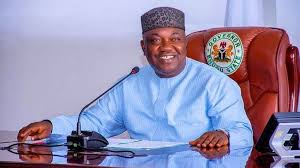
By Reuben Onyishi (Ugoachataberu)
Legitimacy is the right conferred on the leader by the people, the led. It is the right to exercise authority and power on behalf of the people. It is something a leader enjoys out of the people’s free will and acceptance. When the oil of acceptance is denied leadership, it is a sign of rejection.
When leadership is not conscious of its legitimacy, it is a sign of emerging dictatorship which may degenerate to tyranny. Neither tyrants nor dictators wielding power and authority against the will of the people ever prosper. The truth is that power belongs to the people and they confer it on leadership willingly. It can never be forced, even when power is obtained by fraudulent means and other ways of suppressing the will of the people. Whoever wrenches power from the people struggles through their reign. Power belonging to the people is an echo of democracy which is commonly defined as the government of the people, by the people, and for the people.
Democracy is a form of government by a representation that has received wide acceptance in many countries of the world as the best form of government. However, the ancient philosopher, Aristotle, was quoted to have claimed that democracy is rather the worst form of government because it can lead to the enthronement of a minor when the majorities are foolish. But the people’s foolishness may well work for their satisfaction; after all, where ignorance is bliss it is folly to be wise. Howsoever it be, the gift of acceptance the people grant their government legitimatizes it whether in a democracy or any other form of government.
During the build-up to the gubernatorial election in Enugu State, eyes had not seen, neither had it entered into the hearts of men the level of acceptance the candidature of Rt. Hon. Ifeanyi Ugwuanyi did receive it. Thousands of support groups emerged naturally in solidarity with the Ugwuanyi candidacy. It was Gburugburu everywhere in songs and chants of goodwill and heroism founded on his antecedents at the House of Representatives and the natural love for the gap-toothed, smiling, and handsome huge embodiment of greatness, Ifeanyi Ugwuanyi. Ugwuanyi, having earned the love and confidence of the people, was coasting home with victory as he emerged his party’s (the People’s Democratic Party, PDP) candidate. Indeed he emerged victorious expressly to the delight of the people and the mammoth crowd that followed the Ugwuanyi cause. Because the voice of men is the voice of God, all the legal strongholds placed before his candidacy was pulled down successively.
Ugwuanyi’s acceptance also showed itself in his adoption by every other party in the state as their consensus candidate, besides the APC playing opposition in Enugu State during the 2019 elections. This was to be expressed more in his reelection for the second term. Even APC would play opposition in the day and a lover at night, a development that eluded some political analysts thinking Ugwuanyi was going to defect to the APC, a hypothetical misreading of the Ugwuanyi phenomenon that left the analysts astounded. No one was left in the dark as to the emerging enigmatic phenomenon, a holocaust of a movement akin to the Zikist movement of the first republic.
Ugwuanyi’s towering image some had thought to reduce by their sponsorship of virulent attacks. Some sponsored social media folks had run with campaigns of calumny which failed and like water over a duck’s back amounted to unnecessary waste of time and efforts. Any criticism founded on falsehood is bound to fail. The enigmatic consciousness Ugwuanyi represents in astute governance confounded the simple and even amazed the learned. What men do not understand they try to demonize. Every one of such efforts to besmirch the reputation of the star governor failed on arrival. His meteoric rise to the aristocratic palace of excellent governance and the allure of public acceptance that occur with it are a rarity.
In the words of William Shakespeare ( Twelfth Night), some are born great; some achieve greatness and some have greatness thrust on them. Ugwuanyi does not struggle with governance and human relationship. The day he was created, it seems His maker took time to wire him with the art of good governance. So he treads with ease to the Olympian height and has demonstrated in clear terms that he is deliberately made a blessing to the people of Enugu State in matters of governance.
The recent rise of the Ebeano political family from political mutation was seen in some quarters within the state as a natural course erupting from the goodwill the governor by his kind nature engendered. The Ebeano leader himself acknowledged how Ugwuanyi lifted him from the cesspit of political oblivion. Some other political pundits see the rise of the Ebeano family as a visitor from the dead on assignment to kill a dangerous ambition forming to truncate the political peace Ugwuanyi has seamlessly maintained in the state. They hold that now that the dead visitor has achieved its purpose, the time comes for it to return to its grave or at best peter into the emerging huge being of Gburuism. They caution that Ebeano has no political future as it belongs to the past, its exhumation for a temporary assignment notwithstanding. They claim that Gburuism has emerged political iroko in Enugu State and that any tree trying to grow taller than it must be looking for the troubles of the sky. These pundits are of the view that the peace, security, sound economy, and relationship management abilities Ugwuanyi has brought to bear on governance are the meat of longevity on which the emerging Gburuism has sumptuously fed itself, a meal which the Ebeano politics had starved itself while it lived and reigned.
The root is going deeper into the foundation of strong politics as Gburuism grows in lips and bounds in the political depth of the people’s consciousness. The Egwugwu has countered into the arena and its conspicuous self intimidates less embodied spirits.
Recently a group is known as Gburugburu Consolidated Movement, GCM, was inaugurated at Igbo-South Local Government. Listening to the leader of the group, Barr. Peter Okonkwo, the commissioner for local government, speaks, one is left with no doubt it is an emerging structure in the state for the advancement of the Gburugburu cause of leadership. Okonkwo did say that they had the numerical strength to crowd out any other political movement out of the state. The movement like whirlwind is sweeping across the three zones of the state and is touted to emerge as the barrel through which the Gburuism power flows. It may be the foundation structure on which the politics of Enugu State shall be built, especially as other sources are expected to coalesce into it. This is one of the things that naturally occur to the ideals of good leadership. People are ready to sacrifice to such ideals without let or any hindrance at all. The group has placed on Ugwuanyi’s palms the power to decide who replaces him in 2023 and also decide who holds what in 2023. It is clear Ugwuanyi has engrafted himself in the hearts of the people of Enugu State.
From what is going on, deep calls unto deep in the annals of the leadership of Enugu State. Ugwuanyi holds the yam and the knife the people have thrust into his palms. Even the people of Enugu East Senatorial Zone are enamored of Ugwuanyi’s manner of leadership so much that they have confidence his decision is the best for them. Having committed Enugu State in the hands of God, it follows that whatever proceeds from Ugwuanyi is first processed in the mills of the throne of grace. Alas! Behold true leadership, a blessing, a benevolent spirit bestriding the landscape of Enugu politics to the delight of the people and to the glory of God of Abraham, Isaac, and Jacob, the awesome God of David.



Business
Turning Africa’s Raw Materials Into Wealth: The ARMS 2026 Industrial Agenda
By Joel Ajayi
For decades, Africa’s vast natural resources have powered industries and economies far beyond the continent, while many African countries have remained largely exporters of unprocessed commodities and importers of finished products.
That familiar pattern is now coming under renewed scrutiny as policymakers, researchers, investors and industrialists seek to change the direction of Africa’s resource economy.
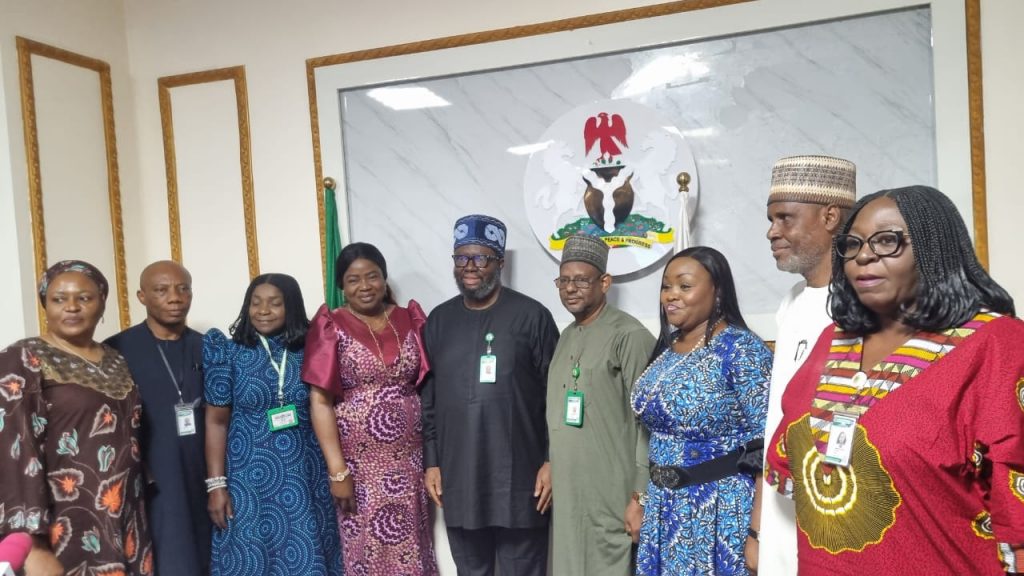
At the centre of that conversation is the second edition of the Africa Raw Materials Summit (ARMS 2026), scheduled for October 19 and 20 at the Abuja Continental Hotel, Abuja, under the theme: “From African Feedstock to African Factories.”
Organised by the Raw Materials Research and Development Council (RMRDC), the summit is being positioned as more than another gathering of policymakers and industry stakeholders. It is intended to provide a platform for confronting the structural challenges that have kept African raw materials largely disconnected from local manufacturing.
Africa has for years operated largely within a “pit-to-port” economic model, exporting raw materials while importing expensive finished products.
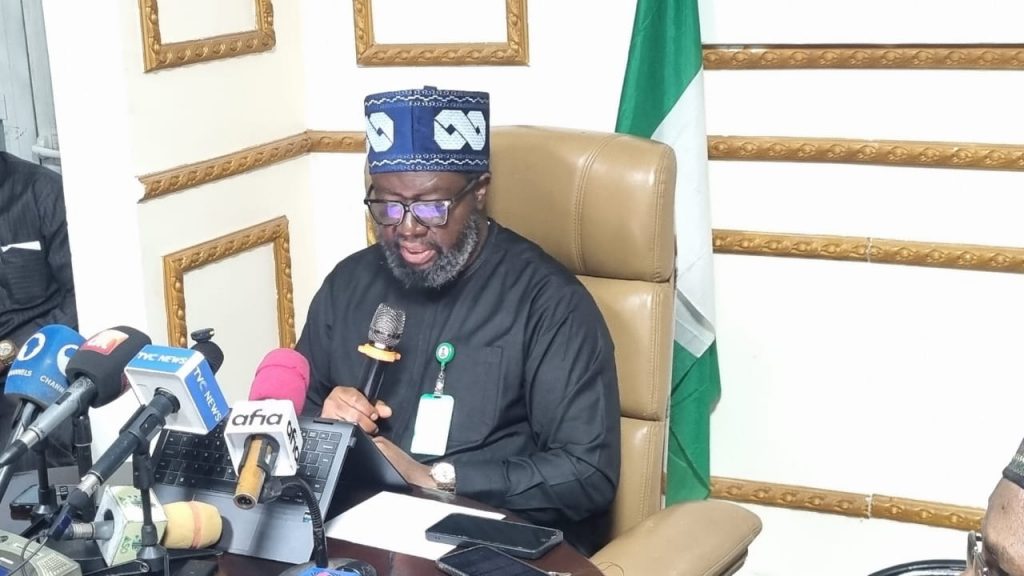
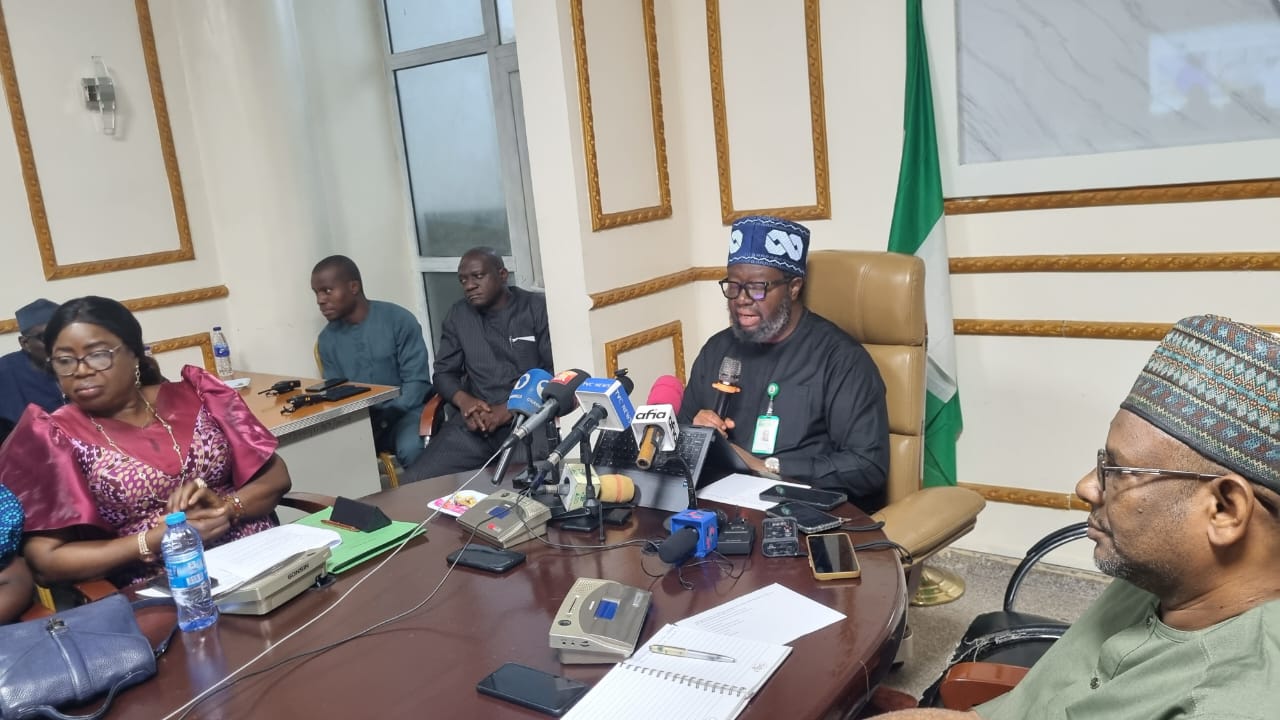
Speaking at a press conference ahead of the summit on Tuesday in Abuja, the Director-General and Chief Executive Officer of RMRDC, Prof. Nnanyelugo Martin Ike-Muonso, said the event would bring together policymakers, investors, researchers, technology providers and industrialists to develop practical strategies for transforming Africa’s abundant natural resources into industrial wealth.
The challenge, therefore, is not simply the abundance of resources, but the continent’s ability to transform those resources into industrial value, employment, technology and wealth within Africa.
Nigeria alone, according to the RMRDC, has more than $582.4 billion in documented non-renewable natural resources, while the wider continent possesses substantial deposits of critical minerals, agricultural raw materials and industrial feedstock.
Yet, the benefits of this resource endowment have often been constrained by inadequate processing capacity, weak infrastructure, limited technology, financing gaps and fragmented regional value chains.
From Dialogue to Industrial Action
ARMS 2026 builds on the maiden edition held in May 2025, which attracted more than 1,000 delegates from across the world.
The inaugural summit also witnessed the unveiling of the Ten-Year Raw Materials Transformation Roadmap (2025–2034) by the Minister of State for Industry, Senator John Owen Enoh.
The roadmap was designed around areas including technological capability, climate-resilient processing and backward integration, establishing a policy framework for greater domestic utilisation of Africa’s raw materials.
The second edition is expected to move the conversation further by bringing policy, capital, technology and industrial stakeholders around practical mechanisms for turning raw materials into locally manufactured products.
One of the major proposals highlighted by the RMRDC is the 30 per cent Mandatory Value Addition Bill, which seeks to establish a statutory minimum level of value addition to Nigerian raw materials before export.
The Council says the proposed framework could support job creation, import substitution, foreign-exchange conservation and increased manufacturing contribution to the economy.
Building the Infrastructure for Value Addition
The industrial transformation envisaged by ARMS 2026 goes beyond legislation.
A major concern is the “missing middle” between where raw materials are produced and where factories are located.
Poor transportation networks, inadequate cold-chain facilities, weak rural roads, limited testing and certification infrastructure and border-related delays can make locally sourced materials more expensive and less competitive.
Consequently, logistics and infrastructure constitute one of the five principal pillars of the summit.
The objective is to develop more reliable corridors connecting farms and mines with processing centres and manufacturing facilities, thereby reducing losses and improving the movement of industrial inputs.
The Digital Dimension
Technology is also becoming an important part of the Council’s strategy.
The RMRDC says it has developed the Nigeria Integrated Information Statistical System for Raw Materials and Products (NISSRAMP), described as a digital repository containing information on feedstock deposits, specifications, production outputs and industrial absorption rates.
The Council has also highlighted its transition towards paperless operations and its certification as a Data Controller/Processor of Major Importance by the Nigeria Data Protection Commission.
Such digital infrastructure could provide investors and manufacturers with better information about the availability and characteristics of raw materials while supporting more informed industrial planning.
Turning Waste Into Industrial Inputs
Another major component of ARMS 2026 is the proposed expansion of the circular economy.
The summit will examine how agricultural by-products, mine tailings, scrap metals and biomass can be recovered and reused as inputs for new production processes rather than being treated simply as waste.
The RMRDC argues that such an approach could lower raw-material costs while supporting more sustainable and climate-resilient manufacturing systems.
For Africa, where industrial expansion must increasingly balance economic development with environmental considerations, waste industrialisation could become an important part of the continent’s manufacturing conversation.
From National Production to African Value Chains
The African Continental Free Trade Area is another important element of the summit’s agenda.
The RMRDC sees AfCFTA as an opportunity to create regional value chains in which raw materials sourced in one African country can be processed and supplied to manufacturers in another.
Under such a model, Africa would move beyond simply exporting commodities to external markets and develop stronger internal networks for supplying chemicals, refined minerals, agricultural inputs and other industrial materials across national borders.
This approach places regional integration at the heart of Africa’s industrialisation strategy.
Bridging Research and Capital
A recurring weakness in many developing economies is the gap between research and commercialisation.
Innovations may emerge from universities, research institutions and laboratories without receiving the financing, equipment or market connections required to become commercially viable.
ARMS 2026 intends to address that gap through technology commercialisation and capital linkages, connecting research outputs with investors, development finance institutions and industrial off-takers.
The RMRDC has also cited partnerships with the Bank of Industry for commercial-scale post-harvest processing and a South-South technology-transfer partnership with the National Innovation Centre par Excellence in Shanghai, China.
A Larger Industrial Conversation
The scale of ARMS 2026 is expected to be significantly larger than the maiden edition.
The organisers project more than 1,800 delegates from all 54 African countries and global industrial partners.
The programme will feature high-level policy dialogues, technical panels, an advanced raw materials and technology exhibition, industrial site visits and the African Raw Materials Industry Awards.
The exhibition, in particular, is expected to showcase locally fabricated processing machinery, advanced domestic materials, green chemicals and engineered commercial inputs.
Beyond the speeches and exhibitions, however, the real significance of ARMS 2026 will ultimately depend on what happens after the summit.
Africa’s challenge has never been a shortage of raw materials. The more difficult question has been how to transform those resources into factories, products, skilled employment, technology and sustainable economic opportunities.
For Nigeria and the rest of the continent, the proposed shift from “pit-to-port” to “feedstock-to-factory” therefore represents a broader debate about the future structure of African economies.
ARMS 2026 seeks to place that debate firmly on the industrial agenda — with value addition, technology, finance, infrastructure, circular production and regional trade at the centre.
If the commitments and partnerships generated by the summit translate into measurable industrial activity, the event could provide another platform for Africa to examine how its enormous resource base can support stronger domestic manufacturing.
The message from the organisers is clear: the continent’s raw materials should not only leave African soil as commodities; they should increasingly become the foundation for African industrial production
-
 Featured7 years ago
Lampard Names New Chelsea Manager
-
 Featured7 years ago
FG To Extends Lockdown In FCT, Lagos Ogun states For 7days
-
 Featured7 years ago
Children Custody: Court Adjourns Mike Ezuruonye, Wife’s Case To April 7
-
 Featured7 years ago
NYSC Dismisses Report Of DG’s Plan To Islamize Benue Orientation Camp
-

 Featured5 years ago
Transfer Saga: How Mikel Obi Refused to compensate me After I Linked Him Worth $4m Deal In Kuwait SC – Okafor
-
Featured7 years ago
Board urges FG to establish one-stop rehabilitation centres in 6 geopolitical zones
-
Sports4 years ago
TINUBU LAMBAST DELE MOMODU
-

 News2 years ago
Zulu to Super Eagles B team, President Tinubu is happy with you