
Featured
LOOK UNTO GOD AND BE SAVED- Pst. (Dr.) L.O OLADELE (TACN, Abuja FCT Area Superintendent).

LOOK UNTO GOD AND BE SAVED- Pst. (Dr.) L.O OLADELE (TACN, Abuja FCT Area Superintendent).
Text: Isaiah 45:22
“Look unto me, and be ye saved, all the ends of the earth: for I am God, and there is none else”.
PREAMBLE
Peace be unto you children of God everywhere. We thank God for another Lord’s day, and we give glory to God who has been giving us courage and enablement to cope in this lockdown order. Children of God, I believe we have had a time of spiritual rejuvenation, restoration and transfiguration, time to commune with God better and I believe God must have been revealing Himself to us during the quiet time of lockdown. I believe it’s not just a resting time for the living Christians but rather a time of penitence, time of seeking the salvation of God and time to be closer to God. I pray that after this time, you will be a better Christian, instead of being a lukewarm Christian in Jesus name.
INTRODUCTION
Today’s topic is “Look unto God and be saved”.
God is addressing the whole earth because He is able to save unto the uttermost. I’m challenging your faith by this topic to ask you dear children of God, who have you been looking unto for help?
Of course, man is a dependent being, man must look unto something in one way or the other to survive, to escape from one problem or the other. Are you looking unto man? Are you looking up to the government? Are you looking up to any dominion of power? Are you even looking unto any power of darkness? Are you counting on your personal education or qualification? I’m here to tell you that all these will fail and all these have failed. That is why God is giving you this message “LOOK UNTO ME AND BE SAVED.”
Are you weary and tired of what’s happening? Are you just complaining, grumbling not knowing what to do? I am here to give you a message of joy “LOOK UNTO ME AND BE SAVED” says the Lord.
This message came when the Children of Israel were in Babylonian bondage, due to their disobedience. Today, the nations of the world are in bondage of Coronavirus because of disobedience, because of self-conceitedness, unhealthy rivalries and competitions. What then is the way out? The only way is to look unto the creator of the universe for mercy and healing of the whole world.
The Bible says, God is able to save unto the uttermost, those who come to Him, if they repent of their sins of arrogance and evil concupiscence. Then the ability of God to save will be experienced.
WHAT DOES IT MEAN TO LOOK UNTO GOD?
(1). To look unto God is to acknowledge our human weakness: We can’t help ourselves, we can’t save ourselves from sins. Human nature is utterly depraved, hence we need a superior being, we need divine help. Let us accept our weakness everywhere in the world and as individuals. All the glory of man is like a grass, that is what the Bible says. What can you do on your own if it’s not given from above? What can you achieve without God? Nothing and absolutely nothing. Isa. 3:5.
(2). The Second step is to submit to the Lordship of our Lord Jesus Christ for our Salvation (Micah 7:7). He is the only one that can save. Romans 6:23 says: “For the wages of sins is death but the gift of God is eternal life through Jesus Christ our Lord.
(3) Confess your sins and turn to God for forgiveness. Acts 3:19 says that after repentance and conversion, the time of refreshing shall come from the Lord. Children of God everywhere, even unbelievers that are reading this message, confess your sins, it’s not about religion or denomination, God cannot answer the prayers of a sinner. Psalm 66:18 says; “If I regard iniquity in my heart, the Lord will not hear me”.
(4). To look unto God means to live a holy and sanctified life through the help of the Holy Spirit. God wants His people to serve Him in holiness, and exhibit power and gift of the Holy Spirit. 1 Pet. 1:15-16, John 3:3-5.
(5) Looking unto God is to trust in Him for help: Psalms 121:1 says: “I will lift up mine eyes unto the hills, from whence cometh my help.” Our help can only come from God, it cannot come from human being, if human being helps you now, it’s for a while, it’s only God’s blessings that add no sorrow to it. If you have been disappointed by parents, brothers, sisters, or friends, it’s just because, you did not look unto God. The time of amendment is here. Look unto God now, re-focus your attention now and you will be saved.
(6) Another way to look unto God is to meditate in the Word of God (Psalms 119: 97-104). You can only see God inside His word. The word of God is powerful and is God Himself.
Matthew 7:21 says; “Not every one that saith unto me, Lord, Lord, shall enter into the kingdom of heaven; but he that doeth the will of my Father which is in heaven.” Obey whatever He tells you through His word.
(7) Another way to look unto God is to be determined to obey Him from the depth of your heart; Obedience is the key, many in the Church today, their problem is partial obedience. Consider it as you are reading this, are you obeying the will of God totally? Are you not setting one aside and taking the others? We should obey God totally so that we can be saved. 1 Sam. 15:22-23
(8). You also need to look unto God through living a prayerful life and your prayer must be according to the will of God. Remember, God does not answer the prayer of sinners, that means you have to lift up holy hands. Ps. 15. There is nothing you can gain if you dissociate yourself from congregational prayer (Heb. 10:25), family altar prayers and personal prayers to wait on the Lord. (Lk. 18:1-8). A prayerless Christian is a powerless Christian.
(9) You need to receive instruction from Him. Looking unto God means receiving instruction from God, not from man. Let Him direct you, let Him communicate His will to you to prove that you are a child of God. (Prov. 3:6, Isa. 40:31).
(10) You need to look unto Him for His second coming (Acts 1:11) says: “Which also said, Ye men of Galilee, why stand ye gazing up into heaven? this same Jesus, which is taken up from you into heaven, shall so come in like manner as ye have seen him go into heaven.”
If you are looking for His second coming, you will wash your clothe in His blood and you will occupy for Him in holy service. So, don’t pollute yourself, don’t compromise, people may ridicule you, people may call you different names, look unto Him and maintain your integrity.
APPLICATION:
In the book of Numbers 21:4-9, God told Moses to make a brazen serpent and raise it up on a pole and that, whosoever looked unto brazen serpent would be saved from death. And as many that looked unto the serpent were saved.
John 3:14-15 says that, the same Jesus, was hanged on the cross of Calvary that whosoever looked unto Him would be saved.
Let me tell you, after this pandemic, there is going to be restoration, the church of God is going to be heavily blessed, Nigeria is going to be lifted and there will be blessing everywhere for those that look unto God in all the ways mentioned. For deliverance therefore in all ramifications, God says “LOOK UNTO ME AND BE SAVED”.
PRAYER POINTS
1.Lord I surrender myself to you, forgive all my sins.
2. Lord direct my eyes, focus my sight on you that is hanged on the cross of Calvary, remove my eyes from Satan and his works, remove my gaze from the world and sins, even from looking unto men. Let me focus my attention unto you from this time.
3. Declaratively, say Lord, the whole earth is looking unto you for a total stop of Coronavirus pandemic. Whatever the storm of our lives may be, Lord, we are looking unto you, save my family, marriage, work, career, save the Church and save the world.
4. As Jesus is lifted up, Lord, I am looking unto you, let me live, let my body and spirit live, let my work and everything about me live in Jesus name.
Remain Blessed.



Business
Turning Africa’s Raw Materials Into Wealth: The ARMS 2026 Industrial Agenda

By Joel Ajayi
For decades, Africa’s vast natural resources have powered industries and economies far beyond the continent, while many African countries have remained largely exporters of unprocessed commodities and importers of finished products.

That familiar pattern is now coming under renewed scrutiny as policymakers, researchers, investors and industrialists seek to change the direction of Africa’s resource economy.
At the centre of that conversation is the second edition of the Africa Raw Materials Summit (ARMS 2026), scheduled for October 19 and 20 at the Abuja Continental Hotel, Abuja, under the theme: “From African Feedstock to African Factories.”
Organised by the Raw Materials Research and Development Council (RMRDC), the summit is being positioned as more than another gathering of policymakers and industry stakeholders. It is intended to provide a platform for confronting the structural challenges that have kept African raw materials largely disconnected from local manufacturing.
Africa has for years operated largely within a “pit-to-port” economic model, exporting raw materials while importing expensive finished products.

Speaking at a press conference ahead of the summit on Tuesday in Abuja, the Director-General and Chief Executive Officer of RMRDC, Prof. Nnanyelugo Martin Ike-Muonso, said the event would bring together policymakers, investors, researchers, technology providers and industrialists to develop practical strategies for transforming Africa’s abundant natural resources into industrial wealth.
The challenge, therefore, is not simply the abundance of resources, but the continent’s ability to transform those resources into industrial value, employment, technology and wealth within Africa.
Nigeria alone, according to the RMRDC, has more than $582.4 billion in documented non-renewable natural resources, while the wider continent possesses substantial deposits of critical minerals, agricultural raw materials and industrial feedstock.
Yet, the benefits of this resource endowment have often been constrained by inadequate processing capacity, weak infrastructure, limited technology, financing gaps and fragmented regional value chains.
From Dialogue to Industrial Action
ARMS 2026 builds on the maiden edition held in May 2025, which attracted more than 1,000 delegates from across the world.
The inaugural summit also witnessed the unveiling of the Ten-Year Raw Materials Transformation Roadmap (2025–2034) by the Minister of State for Industry, Senator John Owen Enoh.
The roadmap was designed around areas including technological capability, climate-resilient processing and backward integration, establishing a policy framework for greater domestic utilisation of Africa’s raw materials.
The second edition is expected to move the conversation further by bringing policy, capital, technology and industrial stakeholders around practical mechanisms for turning raw materials into locally manufactured products.
One of the major proposals highlighted by the RMRDC is the 30 per cent Mandatory Value Addition Bill, which seeks to establish a statutory minimum level of value addition to Nigerian raw materials before export.
The Council says the proposed framework could support job creation, import substitution, foreign-exchange conservation and increased manufacturing contribution to the economy.
Building the Infrastructure for Value Addition
The industrial transformation envisaged by ARMS 2026 goes beyond legislation.
A major concern is the “missing middle” between where raw materials are produced and where factories are located.
Poor transportation networks, inadequate cold-chain facilities, weak rural roads, limited testing and certification infrastructure and border-related delays can make locally sourced materials more expensive and less competitive.
Consequently, logistics and infrastructure constitute one of the five principal pillars of the summit.
The objective is to develop more reliable corridors connecting farms and mines with processing centres and manufacturing facilities, thereby reducing losses and improving the movement of industrial inputs.
The Digital Dimension
Technology is also becoming an important part of the Council’s strategy.
The RMRDC says it has developed the Nigeria Integrated Information Statistical System for Raw Materials and Products (NISSRAMP), described as a digital repository containing information on feedstock deposits, specifications, production outputs and industrial absorption rates.
The Council has also highlighted its transition towards paperless operations and its certification as a Data Controller/Processor of Major Importance by the Nigeria Data Protection Commission.
Such digital infrastructure could provide investors and manufacturers with better information about the availability and characteristics of raw materials while supporting more informed industrial planning.
Turning Waste Into Industrial Inputs
Another major component of ARMS 2026 is the proposed expansion of the circular economy.
The summit will examine how agricultural by-products, mine tailings, scrap metals and biomass can be recovered and reused as inputs for new production processes rather than being treated simply as waste.
The RMRDC argues that such an approach could lower raw-material costs while supporting more sustainable and climate-resilient manufacturing systems.
For Africa, where industrial expansion must increasingly balance economic development with environmental considerations, waste industrialisation could become an important part of the continent’s manufacturing conversation.
From National Production to African Value Chains
The African Continental Free Trade Area is another important element of the summit’s agenda.
The RMRDC sees AfCFTA as an opportunity to create regional value chains in which raw materials sourced in one African country can be processed and supplied to manufacturers in another.
Under such a model, Africa would move beyond simply exporting commodities to external markets and develop stronger internal networks for supplying chemicals, refined minerals, agricultural inputs and other industrial materials across national borders.
This approach places regional integration at the heart of Africa’s industrialisation strategy.
Bridging Research and Capital
A recurring weakness in many developing economies is the gap between research and commercialisation.
Innovations may emerge from universities, research institutions and laboratories without receiving the financing, equipment or market connections required to become commercially viable.
ARMS 2026 intends to address that gap through technology commercialisation and capital linkages, connecting research outputs with investors, development finance institutions and industrial off-takers.
The RMRDC has also cited partnerships with the Bank of Industry for commercial-scale post-harvest processing and a South-South technology-transfer partnership with the National Innovation Centre par Excellence in Shanghai, China.
A Larger Industrial Conversation
The scale of ARMS 2026 is expected to be significantly larger than the maiden edition.
The organisers project more than 1,800 delegates from all 54 African countries and global industrial partners.
The programme will feature high-level policy dialogues, technical panels, an advanced raw materials and technology exhibition, industrial site visits and the African Raw Materials Industry Awards.
The exhibition, in particular, is expected to showcase locally fabricated processing machinery, advanced domestic materials, green chemicals and engineered commercial inputs.
Beyond the speeches and exhibitions, however, the real significance of ARMS 2026 will ultimately depend on what happens after the summit.
Africa’s challenge has never been a shortage of raw materials. The more difficult question has been how to transform those resources into factories, products, skilled employment, technology and sustainable economic opportunities.
For Nigeria and the rest of the continent, the proposed shift from “pit-to-port” to “feedstock-to-factory” therefore represents a broader debate about the future structure of African economies.
ARMS 2026 seeks to place that debate firmly on the industrial agenda — with value addition, technology, finance, infrastructure, circular production and regional trade at the centre.
If the commitments and partnerships generated by the summit translate into measurable industrial activity, the event could provide another platform for Africa to examine how its enormous resource base can support stronger domestic manufacturing.
The message from the organisers is clear: the continent’s raw materials should not only leave African soil as commodities; they should increasingly become the foundation for African industrial production
-
 Featured7 years ago
Lampard Names New Chelsea Manager
-
 Featured7 years ago
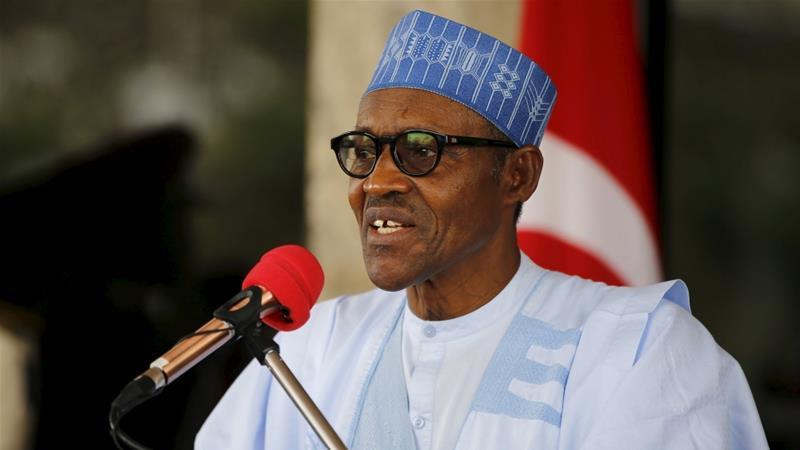
FG To Extends Lockdown In FCT, Lagos Ogun states For 7days
-
 Featured7 years ago
Children Custody: Court Adjourns Mike Ezuruonye, Wife’s Case To April 7
-
 Featured7 years ago
NYSC Dismisses Report Of DG’s Plan To Islamize Benue Orientation Camp
-

 Featured5 years ago
Transfer Saga: How Mikel Obi Refused to compensate me After I Linked Him Worth $4m Deal In Kuwait SC – Okafor
-
Featured7 years ago
Board urges FG to establish one-stop rehabilitation centres in 6 geopolitical zones
-
Sports4 years ago
TINUBU LAMBAST DELE MOMODU
-

 News2 years ago
Zulu to Super Eagles B team, President Tinubu is happy with you