
Creative Industry
NCAC, Stakeholders Looking Beyond COVID-19 Chart Way Forward For Creative Industry

Joel Ajayi
At a time of huge uncertainty across all sectors, many are trying to understand the ongoing impact of COVID-19 on the workforce. In the creative industry, there is a particular ambition to understand what this looks like, with important features of the sector like public venues, Travel, Arts and Crafts, Museum and micro-businesses, particularly threatened by the pandemic.
While other sectors are battling on how to overcome the negative impact of this pandemic COVID-19, NCAC is already thinking outside the box by galvanizing all the stakeholders across the globe, strategizing on how the creative industry can flourish more after the pandemic.
The roadmap for setting a proper agenda and the way forward for creative industry in the country was undertaken at the inaugural Zoom conference meeting put in place by the National Council For Arts and Culture (NCAC) and various stakeholders, on Thursday, where every stakeholders home and abroad actively participated .
In their numbers, over 100 stakeholders are preparing for life after COVID- 19 that has dealt a major blow to all sectors in the world.
The meeting which provided to all stakeholders in the creative sector opportunity to chart the way forward for the sector, especially at this time of paralized country’s economy.
Participants include all stakeholders in the sector; the National Association of Nigeria Travel Agencies (NANTA) the Federation of Tourism Association of Nigeria (FTAN), NTDC, Actors, Actresses, media, visual Artist, National Art and Gallery, National Commission for Museum and Monument, Bangladesh Ambassador and all other captains of the industry actually made contributions that will soon forge the creative industry forward in the country.
The Convener, and Director- General of the NCAC , Otunba Olusegun Runsewe, stated that, the interest and the objectives of the meeting is to move creative industry forward and see how to inject more lives to the sector in Nigeria.
He said, creative industry is the greatest employer of labour in the country and has greatly been affected by the COVID-19.
According to him, COVID-19 has come, and damage has been done but how do we get out of it?
“The whole world is on zero tourism, its now left for us, to see how to come together and fix our own creative industry to the advantage of every Nigerians.
“One of the reasons for the Zoom conference meeting is to see how to make creative industry relevant, we must tell the world that we are doing something.
“There is need for creativity industry to think outside the box and we are ready to lift the face of creative industry in Nigeria.
“This programme is very key, the inaugural zoom conference meeting is to set agenda for Creative sector and the way forward.”
He, However lamented the non-recognition of tourism and culture sector on the part of the government saying, for the creative industry to grow, the leadership of the country must believe in culture by giving the needed attention.
Otunba Runsewe, therefore disclosed that, the brainstorming meeting is a continuous process that will be taking place every Saturday of the week, where different guest speakers will be present to discuss roadmap that will bring growth and development in the creative sector.
While Speaking the guest speaker, Mr Isreal Eboh, eloquently answered all the questions raised by all participants, assuring that better days are ahead of creative industry in Nigeria, if all hands are on deck.
He said :”Federal government should see creative industry as an alternative contributor to the Nigeria’s GDP, by creating Ministry of Culture, where policy, decision and budget can be drawn by culture professionals.
“We should stop decieving ourselves, in Nigeria, culture is not given the needed attention, that is why our cultures are not recognized.”
Making his contribution, A visual Artist, Idowu Sonaya lauded an idea of having database for all people involved in the sector, saying that, creative sector is capable of turning things around for the conntry, if palliative is given to sustain personnel involves.
“Let CBN make incentives available to the creative industry, let them remove collateral that remains an obstacle in assessing such incentives; the gallery owners, the arts and all other units need support to strive.
He equally suggested that the awareness and international support to market products, and avenue for proper broadcast of all the products should be put in place.
As for Fred Amata, he expressed that creative industry can make Nigeria a better place, if all stakeholders come together as one, he therefore sought for the support of everyone to ensure the sector take its place in the country.
Also, Mr Rockson Igelige, stated that physical display or gathering of people in spot might be difficult for now, saying that, there is need to be technology-driven, by ensuring the proper market, our product online. “It’s online that is reigning now, and we must begin to prepare our minds towards it.” He hinted.
Mr Igegile equally said that there is need for domestication of the creative industry law to reduce infringement and copyright; “We need to domesticate some of our laws, if we don’t do that, it will amount to copyright of our works.”
Some stakeholders as well, agreed that merging of agencies in the culture sector cannot proffer solution to the sector, but rather, the readiness of all stakeholders to take up new challenges remain the only antidote to the sector’s challenge in the country.
It would be recalled that, NCAC under the leadership of Otunba Runsewe have distributed countless of face masks, sanitizers to various media houses, Nigeria Police and rest of Nigerians as a way of showing support to many in the counry during the pandemic COVID-19 in the country.



Creative Industry
CAFA Targets $500bn Fashion Economy At Canex Wknd 2026
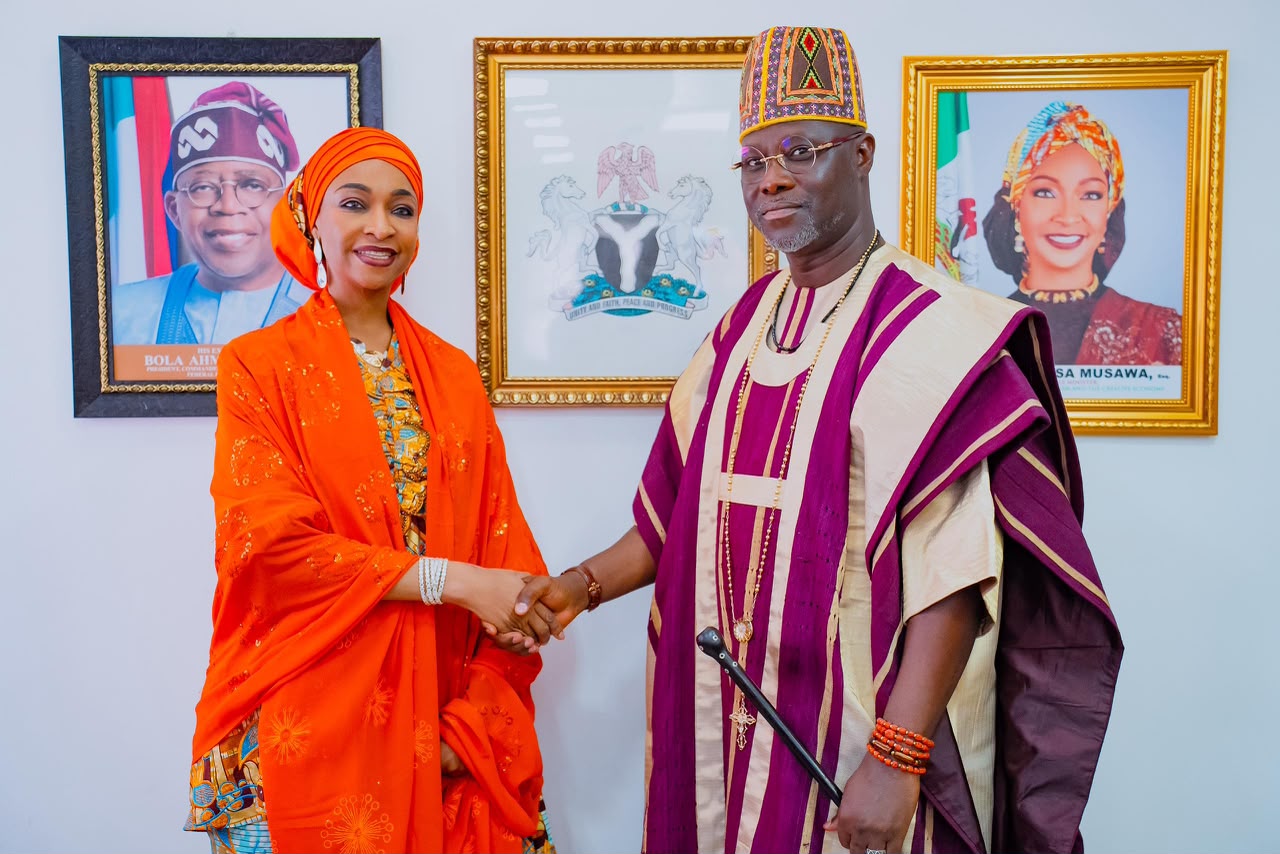
Joel Ajayi
The Confederation of African Fashion (CAFA) will present its roadmap to grow Africa’s fashion economy from an estimated $30 billion to $500 billion at CANEX WKND 2026 in Lagos.
Marking its first anniversary on November 5, CAFA will unveil a joint stand with the Federal Ministry of Art, Culture, Tourism and the Creative Economy at the Wole Soyinka Centre for Culture and the Creative Arts, formerly the National Arts Theatre, on November 5, 2026.
CAFA President, Aare (Prof.) Lai Labode, said the institution works with African governments to align sourcing, production, trade and intellectual property policies, ensuring African creativity generates greater value for African businesses and communities.
Nigeria became the first country to sign the African Fashion Industry Growth Charter on November 5, 2025, when the Honourable Minister Barr. Hannatu Musa Musawa signed on behalf of the Federal Government.
Speaking ahead of the unveiling, Minister Musawa said: “Afroliganza seeks to build a structured, values-driven fashion economy rooted in African heritage, led by African institutions, and positioned for global impact.”
On employment potential, the minister emphasized that Investment in fashion will create millions of jobs, particularly for women and youth.
Registered in Rwanda, with an office in Kigali and a desk at the Federal Ministry of Arts, Culture, Tourism and the Creative Economy, CAFA is also working with Nigeria’s Ministry of Foreign Affairs towards African Union adoption of the Charter. Rwanda is progressing towards becoming its second participating country and the first in East Africa.
Its first year saw fifty nations gather at the Egbaliganza-Lisabi Festival in Abeokuta and a signed MoU with Türkiye’s ASRIAD.
CAFA’s programmes promote processing African raw materials into finished apparel locally. ‘Own What We Create’ addresses intellectual property protection, while the CAFA Certified Seal and CAFA Heritage Mark support standards and authenticity. African Global Fashion Houses are currently being established across international markets.
The African Global Fashion Games will debut in Nigeria in 2028, bringing designers together under national colours. Held every three years, the Games will alternate between African and international hosts, combining competition with investor meetings, deal signings and policy discussions. Its Instant Craft event gives competing nations identical materials and a fixed clock, placing skill at the centre of the contest.
CAFA is inviting creatives, fashion designers, artisans, diplomats, economists, investors and policymakers to its CANEX stand. Visitors can explore the roadmap, ask questions and identify opportunities to contribute through design, manufacturing, investment, research, trade and international partnerships. The stand will be open daily from November 5 to 8.
CAFA calls on the African Union to adopt the Charter, and governments to sign the Games Register and form national teams.
“Fashion has always told the world who Africa is. Now Africa will decide what fashion pays,” Aare Prof. Lai Labode said.
-
 Featured7 years ago
Lampard Names New Chelsea Manager
-
 Featured7 years ago
FG To Extends Lockdown In FCT, Lagos Ogun states For 7days
-
 Featured7 years ago
Children Custody: Court Adjourns Mike Ezuruonye, Wife’s Case To April 7
-
 Featured7 years ago
NYSC Dismisses Report Of DG’s Plan To Islamize Benue Orientation Camp
-

 Featured5 years ago
Transfer Saga: How Mikel Obi Refused to compensate me After I Linked Him Worth $4m Deal In Kuwait SC – Okafor
-
Featured7 years ago
Board urges FG to establish one-stop rehabilitation centres in 6 geopolitical zones
-
Sports4 years ago
TINUBU LAMBAST DELE MOMODU
-

 News2 years ago
Zulu to Super Eagles B team, President Tinubu is happy with you













