
Featured
NFF Vs BSN Sports: The World Will Know The Truth – BSN counsels
NFF Vs BSN Sports: The World Will Know The Truth – BSN counsels
The Nigeria Football Federation (NFF) has dragged an online sports
publication, www.bsnsports.com.ng to court over a publication on the
website of the medium on 29th August, 2018, Bestchoicesports.com.ng can report authoritatively.
www.bsnsports.com.ng which enjoys an extensive readership across the globe had run a story on the said date with the caption, ‘U-20 World Cup: Allowance Scandal Hit Falconets.’
In a civil matter, the NFF through suit case number FCT/HC/CV/975/19 instituted by its Head of Women Football, Ruth David dragged the Abuja-based online sports newspaper and its editor to a Federal Capital Territory (FCT) High Court, Kwali, Abuja over allegations of false
report and defamation.
Meanwhile, BSN Sports as guaranteed by constitution expressed its principle of objectiveness as the writer in trying to balance the story as
the ethics of the job demands, called and quoted the Head of Women Football in the NFF, Miss Ruth David who denied the information and claimed that the Falconets and the officials of the team have been paid and that
no money got missing.
Despite fulfilling what professionalism of the job demanded, she however, not satisfied with the report, Ruth then in 2018 dragged the online newspaper, BSN Sports and its Editor to court over what she claimed to be a defamatory report.
She said the report defamed her character and portrayed her personality in bad light and slammed a suit of Twenty Million Naira (N20m) only on the newspaper.
But, when the case came up Thursday 23rd May, 2019 before Justice
Anna Iyabeni Akobi, seating at FCT High Court in Kwali Area Council, BSN Sports secured the services of Barrister Samuel Ihensenkien, an
activist, constitutional, criminal, and human right lawyer and Barrister Fayaienjigha Israel Jacob as its defence counsels.
The two defence counsels expressed the optimism that the whole world will know the truth about some of the affairs at the Nigeria Football Federation by the time the suit will come to a reasonable conclusion.
Ihensenkien has won many high profile cases in the past such as Federal Government of Nigeria Vs Nnamdi Kanu, Ekere Madu in his case vs DSS in 2015, Ekeson Plaza Vs AMAC and also Ekeson Plaza Vs Abuja Environmental Protection
Board (AEPB) to mention but a few.
Ihensenkien based on his wealth of experience was able to argue BSN’s case logically and the court on the grounds of fair hearing adjourn the case for defendant counsels to file their defence. As Ihensekhien Samuel Junior Esq was recently briefed the judge adjourned the case to 25th June, 2019.
In his reaction after the court process, Sam Junior (the human right lawyer, BSN Sports counsel) said: “We have
done our best today and the matter is adjourned till on the 25th June
and with everything we will put together, we should be able to put up
a defense so that the whole world will know the truth. I am confident
that at the conclusion of this matter, there will be an expose and the
truth will come out as regards some state of affair at the NFF.
“Definitely, all that will be put in our statement of defense. This case is a pointer to some of the things that is going on at the NFF.”
The judge adjourned the case to 25th June 2019 for hearing and asked
the plaintiff to come to court with their two witnesses.
Below is the excerpt of the “defamatory” story
U-20 World Cup: Allowance Scandal Hit Falconets
0 Comments, 29/08/2018,
by Niyi Busari
U-20 World Cup: Allowance scandal hits Falconets
…We have not been paid – athletes, officials
…They have all been paid – NFF staff
Like the dawn of a new day, another scandal of funds mismanagement has rocked the U-20 camp of the Falconets with the controversy over the non payment of camp allowances.
Coaches and athletes in the camp insisted with vehemence that they were not paid their camp allowance but the NFF official attached to the team insisted they all have been paid.
BSNsports investigation across board the number of players and officials sampled had a single voice, “we have not been paid” while the lone ranger is Miss Ruth David, who is insisting “I have paid them all.”
Like a stoking fire, it was an official who snitched that he is yet to earn from his sweat. When cross checked and there was denial, the story was expanded and it was rife that the team was not paid.
An NFF staffer pointed out that, “that is the trend in our female national teams since the Amaju Pinnick regime.
Ordinarily, Miss David is not supposed to handle cash. It is the team secretary that was meant by work schedule to handle cash. Who gave her the responsibility to handle the cash? That is the point to start the investigation.
Every team she had handled had the same problem of non full payment and no one dares complain.”
One of the athletes added that “we have not been paid all our 14-days camping allowances in Austria.
Quoting what they were told in Austria, “an NFF official claimed that the head of women football, Ruth David, lost £10,000. They said the money will be paid after the tournament.”
A coaching staff corroborated the story saying “we really suffered in Austria.
Thank God for the Sports Minister who came and dropped some personal cash for us. We were promised that we will receive the money before we go to France but it never come.
“Even as I talk to you, we are owed the 14-day camping allowances which they have not paid till now. They said the head of women football in NFF lost £10,000 so we can’t collect our money until we reach Nigeria and up till now, we have not heard anything,” said another member of the team.
When our correspondent called Ruth David, she denied the allegation of losing any money and stated clearly that NFF is not owing neither the players nor the coach a dime.
She confidently asked our correspondent to come to the NFF office to see all the documents that were used in paying their entitlements. She concluded that she will not present the documents unless the newspaper’s sources are mentioned.
“Who said so, we are not owing anybody a dime. All their money were paid before we leave (sic) France. You can come to the office to see all the documents for yourself, but not until you tell me the official who told you this, I will not show you the documents. ”
She said and angrily dropped the call.



Business
Turning Africa’s Raw Materials Into Wealth: The ARMS 2026 Industrial Agenda
By Joel Ajayi
For decades, Africa’s vast natural resources have powered industries and economies far beyond the continent, while many African countries have remained largely exporters of unprocessed commodities and importers of finished products.
That familiar pattern is now coming under renewed scrutiny as policymakers, researchers, investors and industrialists seek to change the direction of Africa’s resource economy.
At the centre of that conversation is the second edition of the Africa Raw Materials Summit (ARMS 2026), scheduled for October 19 and 20 at the Abuja Continental Hotel, Abuja, under the theme: “From African Feedstock to African Factories.”
Organised by the Raw Materials Research and Development Council (RMRDC), the summit is being positioned as more than another gathering of policymakers and industry stakeholders. It is intended to provide a platform for confronting the structural challenges that have kept African raw materials largely disconnected from local manufacturing.
Africa has for years operated largely within a “pit-to-port” economic model, exporting raw materials while importing expensive finished products.
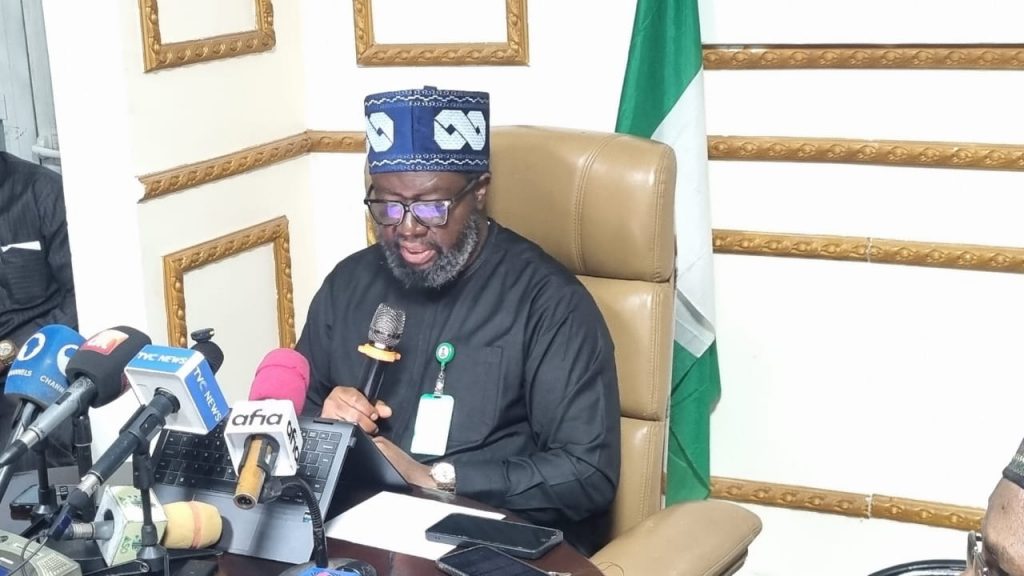
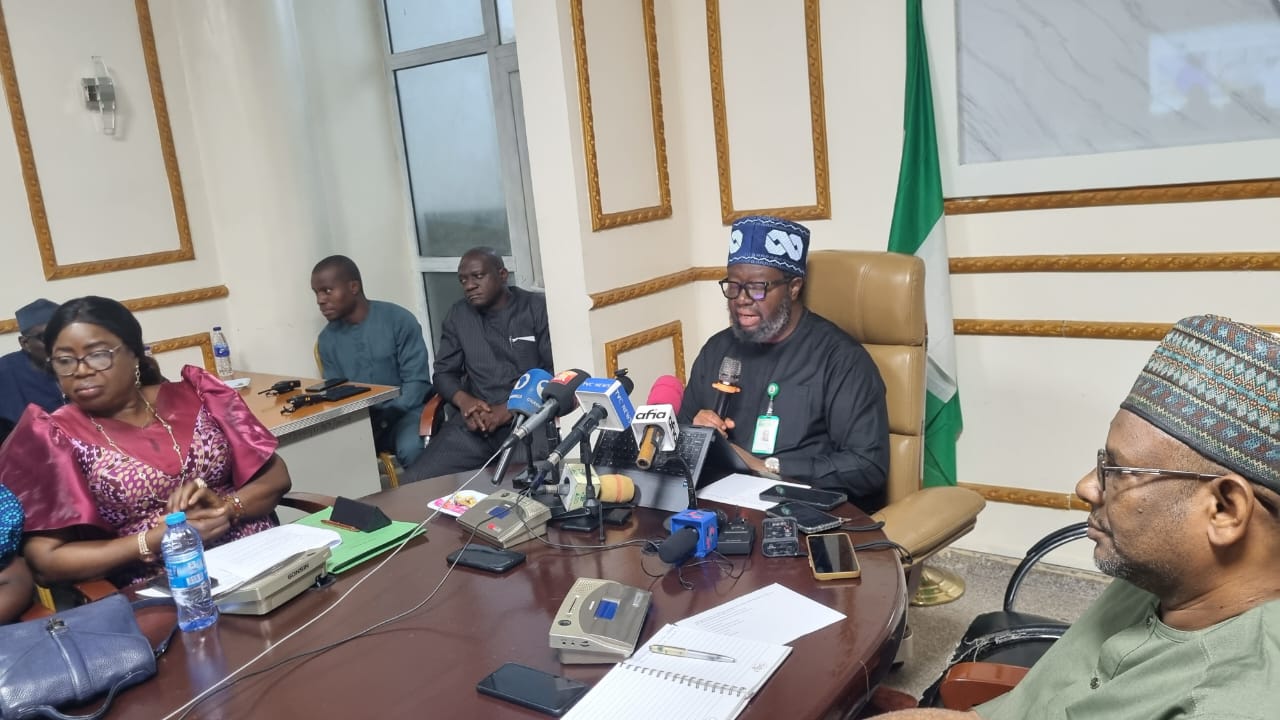
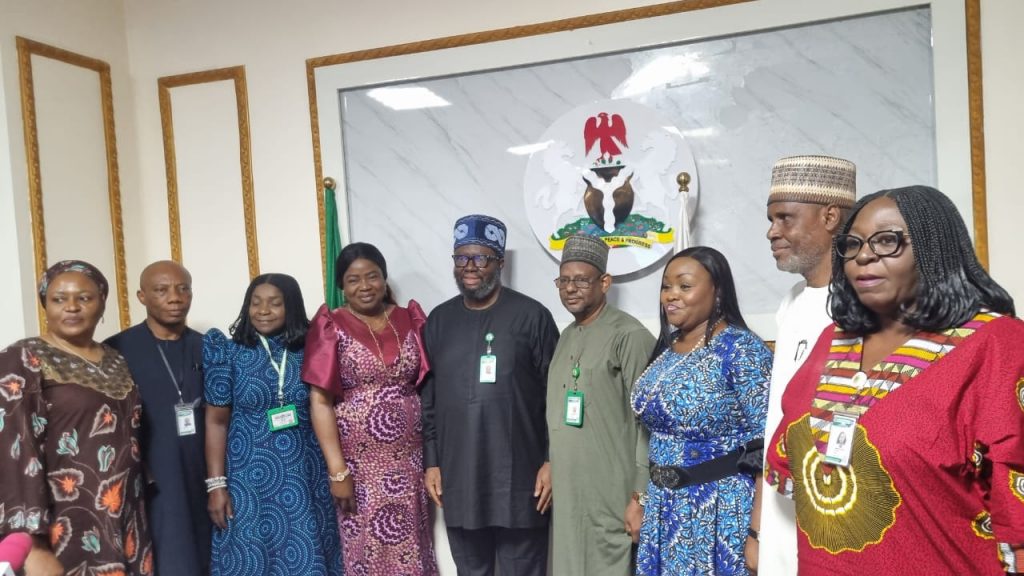
Speaking at a press conference ahead of the summit on Tuesday in Abuja, the Director-General and Chief Executive Officer of RMRDC, Prof. Nnanyelugo Martin Ike-Muonso, said the event would bring together policymakers, investors, researchers, technology providers and industrialists to develop practical strategies for transforming Africa’s abundant natural resources into industrial wealth.
The challenge, therefore, is not simply the abundance of resources, but the continent’s ability to transform those resources into industrial value, employment, technology and wealth within Africa.
Nigeria alone, according to the RMRDC, has more than $582.4 billion in documented non-renewable natural resources, while the wider continent possesses substantial deposits of critical minerals, agricultural raw materials and industrial feedstock.
Yet, the benefits of this resource endowment have often been constrained by inadequate processing capacity, weak infrastructure, limited technology, financing gaps and fragmented regional value chains.
From Dialogue to Industrial Action
ARMS 2026 builds on the maiden edition held in May 2025, which attracted more than 1,000 delegates from across the world.
The inaugural summit also witnessed the unveiling of the Ten-Year Raw Materials Transformation Roadmap (2025–2034) by the Minister of State for Industry, Senator John Owen Enoh.
The roadmap was designed around areas including technological capability, climate-resilient processing and backward integration, establishing a policy framework for greater domestic utilisation of Africa’s raw materials.
The second edition is expected to move the conversation further by bringing policy, capital, technology and industrial stakeholders around practical mechanisms for turning raw materials into locally manufactured products.
One of the major proposals highlighted by the RMRDC is the 30 per cent Mandatory Value Addition Bill, which seeks to establish a statutory minimum level of value addition to Nigerian raw materials before export.
The Council says the proposed framework could support job creation, import substitution, foreign-exchange conservation and increased manufacturing contribution to the economy.
Building the Infrastructure for Value Addition
The industrial transformation envisaged by ARMS 2026 goes beyond legislation.
A major concern is the “missing middle” between where raw materials are produced and where factories are located.
Poor transportation networks, inadequate cold-chain facilities, weak rural roads, limited testing and certification infrastructure and border-related delays can make locally sourced materials more expensive and less competitive.
Consequently, logistics and infrastructure constitute one of the five principal pillars of the summit.
The objective is to develop more reliable corridors connecting farms and mines with processing centres and manufacturing facilities, thereby reducing losses and improving the movement of industrial inputs.
The Digital Dimension
Technology is also becoming an important part of the Council’s strategy.
The RMRDC says it has developed the Nigeria Integrated Information Statistical System for Raw Materials and Products (NISSRAMP), described as a digital repository containing information on feedstock deposits, specifications, production outputs and industrial absorption rates.
The Council has also highlighted its transition towards paperless operations and its certification as a Data Controller/Processor of Major Importance by the Nigeria Data Protection Commission.
Such digital infrastructure could provide investors and manufacturers with better information about the availability and characteristics of raw materials while supporting more informed industrial planning.
Turning Waste Into Industrial Inputs
Another major component of ARMS 2026 is the proposed expansion of the circular economy.
The summit will examine how agricultural by-products, mine tailings, scrap metals and biomass can be recovered and reused as inputs for new production processes rather than being treated simply as waste.
The RMRDC argues that such an approach could lower raw-material costs while supporting more sustainable and climate-resilient manufacturing systems.
For Africa, where industrial expansion must increasingly balance economic development with environmental considerations, waste industrialisation could become an important part of the continent’s manufacturing conversation.
From National Production to African Value Chains
The African Continental Free Trade Area is another important element of the summit’s agenda.
The RMRDC sees AfCFTA as an opportunity to create regional value chains in which raw materials sourced in one African country can be processed and supplied to manufacturers in another.
Under such a model, Africa would move beyond simply exporting commodities to external markets and develop stronger internal networks for supplying chemicals, refined minerals, agricultural inputs and other industrial materials across national borders.
This approach places regional integration at the heart of Africa’s industrialisation strategy.
Bridging Research and Capital
A recurring weakness in many developing economies is the gap between research and commercialisation.
Innovations may emerge from universities, research institutions and laboratories without receiving the financing, equipment or market connections required to become commercially viable.
ARMS 2026 intends to address that gap through technology commercialisation and capital linkages, connecting research outputs with investors, development finance institutions and industrial off-takers.
The RMRDC has also cited partnerships with the Bank of Industry for commercial-scale post-harvest processing and a South-South technology-transfer partnership with the National Innovation Centre par Excellence in Shanghai, China.
A Larger Industrial Conversation
The scale of ARMS 2026 is expected to be significantly larger than the maiden edition.
The organisers project more than 1,800 delegates from all 54 African countries and global industrial partners.
The programme will feature high-level policy dialogues, technical panels, an advanced raw materials and technology exhibition, industrial site visits and the African Raw Materials Industry Awards.
The exhibition, in particular, is expected to showcase locally fabricated processing machinery, advanced domestic materials, green chemicals and engineered commercial inputs.
Beyond the speeches and exhibitions, however, the real significance of ARMS 2026 will ultimately depend on what happens after the summit.
Africa’s challenge has never been a shortage of raw materials. The more difficult question has been how to transform those resources into factories, products, skilled employment, technology and sustainable economic opportunities.
For Nigeria and the rest of the continent, the proposed shift from “pit-to-port” to “feedstock-to-factory” therefore represents a broader debate about the future structure of African economies.
ARMS 2026 seeks to place that debate firmly on the industrial agenda — with value addition, technology, finance, infrastructure, circular production and regional trade at the centre.
If the commitments and partnerships generated by the summit translate into measurable industrial activity, the event could provide another platform for Africa to examine how its enormous resource base can support stronger domestic manufacturing.
The message from the organisers is clear: the continent’s raw materials should not only leave African soil as commodities; they should increasingly become the foundation for African industrial production
-
 Featured7 years ago
Lampard Names New Chelsea Manager
-
 Featured7 years ago
FG To Extends Lockdown In FCT, Lagos Ogun states For 7days
-
 Featured7 years ago
Children Custody: Court Adjourns Mike Ezuruonye, Wife’s Case To April 7
-
 Featured7 years ago
NYSC Dismisses Report Of DG’s Plan To Islamize Benue Orientation Camp
-

 Featured5 years ago
Transfer Saga: How Mikel Obi Refused to compensate me After I Linked Him Worth $4m Deal In Kuwait SC – Okafor
-
Featured7 years ago
Board urges FG to establish one-stop rehabilitation centres in 6 geopolitical zones
-
Sports4 years ago
TINUBU LAMBAST DELE MOMODU
-

 News2 years ago
Zulu to Super Eagles B team, President Tinubu is happy with you