
News
NYCN: Court Nullifies CAC Deregistration, Restores Sukubo, BoT
Cyril Ogar
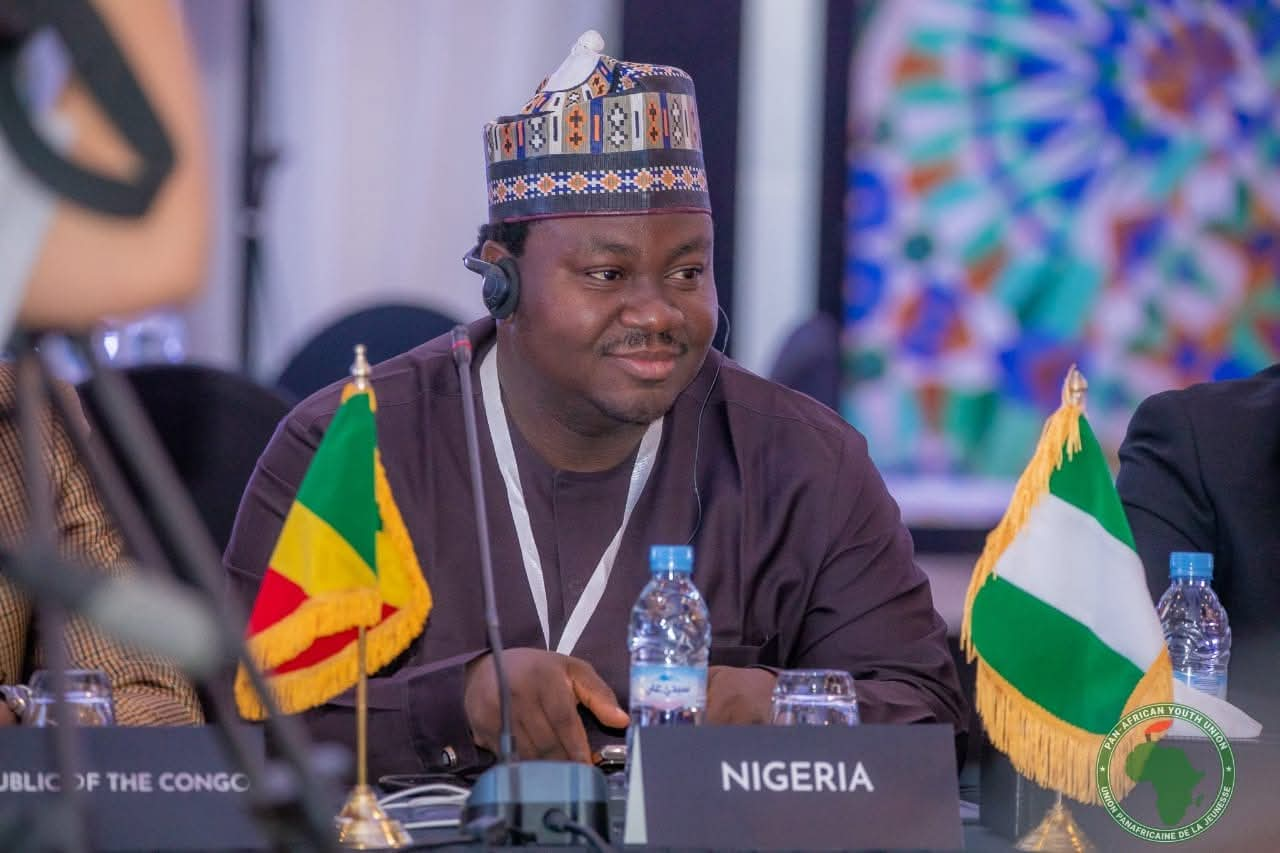
A Federal High Court in Abuja has directed the Corporate Affairs Commission (CAC) to reinstate the registration of the National Youth Council of Nigeria (NYCN) and recognise Ambassador Sukubo Sara-Igbe Sukubo alongside other members of its Board of Trustees (BoT).
The court also ordered the immediate dissolution of the Interim Management Committee headed by Buhari Shehu, which was established by the CAC and the Federal Ministry of Youth Development to oversee the council’s affairs, ruling that its creation and continued operation were unlawful.
The ruling is contained in the Certified True Copy (CTC) of the judgment in Suit No. FHC/ABJ/CS/2142/2025, delivered by Justice Binta Nyako on June 5 and dated June 11, which was made available to journalists in Abuja on Monday.
The suit was filed by the Incorporated Trustees of the NYCN and Ambassador Sukubo Sara-Igbe Sukubo, who serves as the council’s President and Secretary of the BoT, against the Registrar-General of the CAC, the CAC, the Minister of Youth Development, and the Federal Ministry of Youth Development.
In her judgment, Justice Nyako held that the CAC does not possess the legal authority to determine the tenure of leaders of registered associations or appoint interim management committees for such organisations.
The dispute arose after the CAC withdrew NYCN’s certificate of registration on October 6, 2025, despite having issued it on October 28, 2020. A day later, the commission, in collaboration with the Ministry of Youth Development, constituted a nine-member Interim Management Committee led by Shehu.
Challenging the actions, Sukubo and another applicant approached the court, questioning the constitutionality of provisions in the Companies and Allied Matters Act (CAMA) 2020 that empower the CAC to suspend trustees, appoint interim managers, and establish administrative committees.
They argued that such provisions conflict with constitutional guarantees on freedom of association and judicial oversight.
The plaintiffs further contended that previous court decisions had invalidated Sections 839 and 851 of CAMA, making it unlawful for the CAC to rely on those provisions. They also challenged the legality of actions affecting the NYCN while an appeal in a related matter remained pending.
Justice Nyako ruled that the CAC acted beyond its powers by deregistering the NYCN and subsequently setting up an interim management structure for the organisation. Consequently, she nullified the deregistration and ordered a restoration of the status quo.
The court directed the CAC to immediately restore the NYCN’s certificate of registration, recognise Ambassador Sukubo and other duly registered trustees as the legitimate BoT leadership, and disband the Interim Management Committee established to manage the council.
The Judgment CTC Judgment read in part, “Having disposed of the objections, I shall proceed to determine the substantive suit. Having considered the processes filed by the parties, I am of the view that the central issue is not whether the 1st and 2nd Defendants possesses regulatory powers over incorporated trustees because they undoubtedly do. The real question is whether those powers extend to the wholesale displacement of the existing leadership of the 1st Claimant in the peculiar circumstances of this case.
“The affidavit evidence before this court reveals that disputes relating to the trusteeship, leadership structure and administration of the 1st Claimant have been the subject of multiple litigations before courts of competent jurisdiction. It is trite that where the determination of rights is already before a court, an administrative body must exercise caution so as not to assume the role of the court.The powers conferred on the Corporate Affairs Commission under the Companies and Allied Matters Act are regulatory in nature.
“The Corporate Affairs Commission undoubtedly possesses regulatory powers over incorporated trustees. Those powers however cannot be exercised in a manner that effectively determines a live dispute already awaiting judicial determination. The commission may investigate, it may supervise compliance with statutory requirements. It may make inquiries into the affairs of an association. What it cannot do is assume the role of the court by effectively deciding who should govern the association while the issue remains the subject of pending litigation.
“The evidence before this court shows that the Defendants went beyond investigation. They purportedly withdrew the certificate of the 1st Claimant and proceeded to constitute an interim management committee to assume control of the organization. Whatever nomenclature is used, the practical consequence of that decision was to displace the existing leadership structure and install another authority in its place. In my view, such action was premature. It altered the status quo in a dispute that was already before the courts and had the tendency of rendering pending proceedings nugatory. The law does not permit a party, directly or indirectly to achieve administratively what remains unresolved judicially.
Justice Nyako, in the Certified True Copy of the judgment, described the actions of the CAC as an abuse of the court process.
The CTC continued, “This will make this case an abuse of court process. However, while I decline to make general pronouncement declaring s. 839 and 851 of the Companies and Allied Matters Act unconstitutional, the actions taken pursuant to those provisions in the peculiar facts of this case were unlawful and cannot stand.
“The court is satisfied that the intervention complained of exceeded what was reasonably necessary to achieve regulatory oversight and encroached into matters properly reserved for judicial determination. parties are thus advised to await the outcome of the appeal
“I consequently hold that while the 1st and 2nd Defendants possess statutory oversight powers over incorporated trustees, the withdrawal of recognition and the Constitution of an Interim Management Committee in
the circumstances of this case were premature and cannot be sustained. Parties are hereby directed to maintain the position existing before the intervention complained of pending the determination of the disputes currently before the appellate Courts.”



News
DNKI President Champions Humanitarian Service, Sustainable Community Development

Cyril Samania
The President of De Norsemen Kclub International (DNKI), Chief Oliver Patrick Ityohegh, has reaffirmed the organisation’s commitment to humanitarian service, stressing the importance of supporting vulnerable people and improving community welfare beyond the annual celebration of Humanitarian Day.

Ityohegh stated this during the organisation’s Cauldron Night and Award Presentation held to commemorate its 2026 Humanitarian Day celebration, theme: “Humanity First: Advancing Hope, Dignity and Community Well-being.” organised by the DNKI Abuja Chapter.
He emphasised that humanitarian service should be a continuous responsibility driven by compassion, solidarity and a commitment to making a meaningful difference in society.
According to him, DNKI’s humanitarian activities reflect its dedication to giving back to society and supporting people in need, while encouraging members to sustain initiatives that promote human dignity and community well-being.
He added that the organisation would continue to strengthen its humanitarian engagements through practical interventions aimed at improving the lives of vulnerable people and promoting community development.
Speaking at the event, the representative of the Abuja Chapter Chairman and Chairman of its Advisory Council, Prince Efiong Okpe, said the organisation’s humanitarian activities extended beyond the annual celebration of Humanitarian Day on October 15.
Okpe explained that DNKI undertook several initiatives throughout the year, including blood donation exercises, visits to hospitals and correctional centres, as well as support for orphanages and other vulnerable groups.
According to him, the organisation also collaborated with humanitarian bodies in the Federal Capital Territory (FCT) to identify areas of need and provide assistance within its available resources.
He described Humanitarian Day as an opportunity for members to renew their commitment to service and demonstrate solidarity with people facing difficult circumstances.
Earlier, the Chairman of the Planning Committee and Coordinator of the DNKI Gwagwalada Zone, Mr Etudaiye Hamzat, disclosed that the chapter had provided financial assistance to some members to help pay their children’s school fees, alongside distributing bags of rice and other relief items to members experiencing hardship.
Hamzat explained that the interventions followed concerns over the difficulties some members faced in meeting their family responsibilities, particularly the rising cost of their children’s education.
He maintained that supporting members in need was consistent with the organisation’s humanitarian principles, adding that DNKI remained committed to extending assistance to non-members and vulnerable communities as part of its commitment to leading by example.
Looking ahead, Hamzat said the Abuja Chapter planned to expand its humanitarian outreach to remote communities within the FCT, with particular attention to orphanages, schools and widows facing difficulties in meeting their family responsibilities.
He also recalled previous interventions for internally displaced persons (IDPs), which included the distribution of food, clothing and educational materials, noting that the chapter intended to scale up such initiatives in the coming year.
The highlight of the event was the presentation of awards to outstanding members and distinguished non-members in recognition of their contributions to humanitarian service.
-
 Featured7 years ago
Lampard Names New Chelsea Manager
-
 Featured7 years ago
FG To Extends Lockdown In FCT, Lagos Ogun states For 7days
-
 Featured7 years ago
Children Custody: Court Adjourns Mike Ezuruonye, Wife’s Case To April 7
-
 Featured7 years ago
NYSC Dismisses Report Of DG’s Plan To Islamize Benue Orientation Camp
-

 Featured5 years ago
Transfer Saga: How Mikel Obi Refused to compensate me After I Linked Him Worth $4m Deal In Kuwait SC – Okafor
-
Featured7 years ago
Board urges FG to establish one-stop rehabilitation centres in 6 geopolitical zones
-
Sports4 years ago
TINUBU LAMBAST DELE MOMODU
-

 News2 years ago
Zulu to Super Eagles B team, President Tinubu is happy with you













