
News
Works Ministry Approves 2026 Performance Plan, Launches Updated Strategic Roadmap for Renewed Hope Agenda
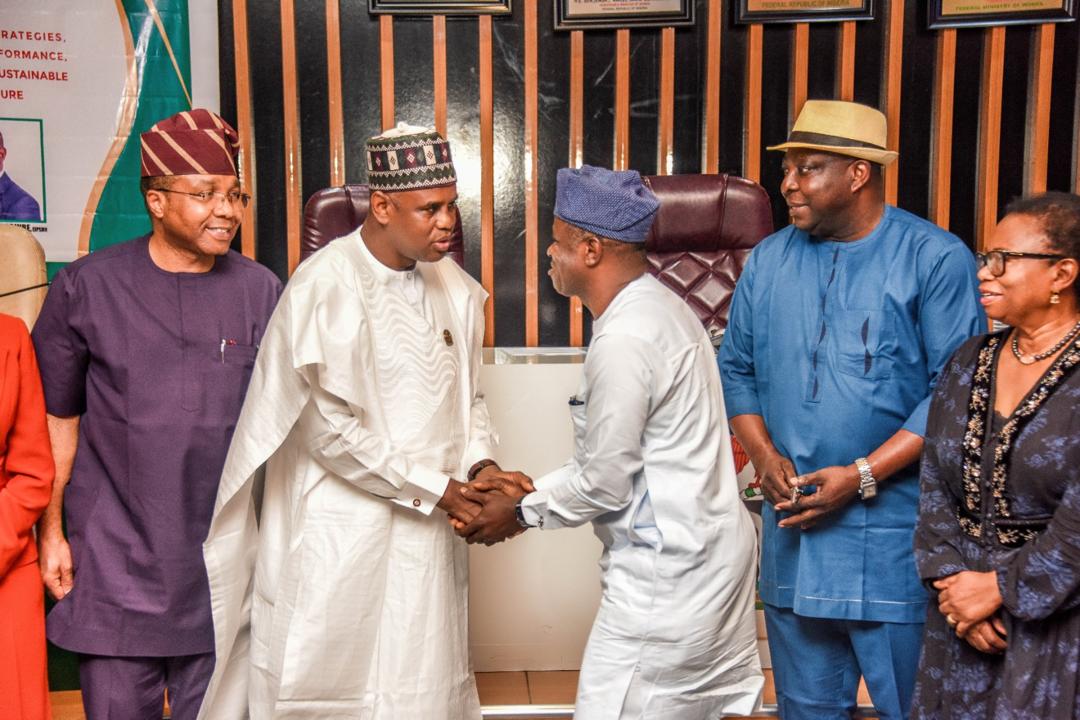
Joel Ajayi
The Federal Ministry of Works has concluded its Sectoral Retreat for the Review and Validation of the 2026 Performance Management System (PMS) Plan and the Unveiling of the Reviewed Strategic Plan (2024–2027), reaffirming its commitment to advancing the Renewed Hope Agenda of President Bola Ahmed Tinubu, GCFR, through enhanced performance management, accountability, and service delivery.
Speaking at the 1-Day Retreat, the Honourable Minister of Works, Engr. David Umahi, CON, FNSE, FNATE, represented by the Honourable Minister of State, Bello Muhammad Goronyo, Esq., described the gathering as a strategic platform to evaluate the Ministry’s operational roadmap and align its Ministerial Performance Management System (MPMS) with national development priorities.
He noted that the retreat was designed to strengthen institutional planning, accountability, digital transformation, and performance evaluation across the Ministry and its agencies, thereby enhancing the delivery of critical infrastructure projects nationwide.
According to the Minister, the Performance Management System (PMS) provides a structured framework for communication and coordination within the Federal Civil Service, ensuring that institutional objectives are aligned with the Ministry’s strategic goals, while promoting transparency, efficiency, and improved service delivery.
The Minister urged participants to engage actively in the deliberations and contribute practical ideas toward developing an effective operational framework that would accelerate the delivery of the Ministry’s mandates and support the Federal Government’s development agenda.
In his remarks, the Permanent Secretary, Mr. Rafiu Adeladan, described the retreat as both timely and essential, stressing that the reviewed strategic plan would further strengthen the Ministry’s capacity to deliver sustainable, durable, and quality roads and bridges across the country.
He encouraged participants to take full advantage of the sessions by sharing innovative ideas and best practices that would guarantee institutional effectiveness and improved public service delivery.
“There is no doubt that this retreat will further strengthen performance, accountability, and operational efficiency within the Ministry,” he declared.
The retreat featured technical presentations, including an overview of the reviewed Federal Ministry of Works’ Strategic Plan (2024–2027) delivered by Dr. Francisca Odeka of FRANDEK International Consulting Ltd., as well as a paper on the benefits and challenges of implementing the MPMS in the Federal Civil Service, presented by Mr. Rikko Uwutti.
A major highlight of the retreat was the validation and formal signing of the weighted Ministry’s MPMS Template by the Permanent Secretary and Directors, signifying the Ministry’s collective commitment to achieving its 2026 performance targets.
The Director of Planning, Research and Statistics (DPRS), Mrs. Emily Osunde, announced that the cascading of the MPMS to the Employee Performance Management System (EPMS) for officers on other grade levels, alongside the preparation of implementation reports, would commence on Monday, 15 June, 2026.
Delivering the Vote of Thanks, the Director of Human Resource Management (DHRM), Mal. Ahmed Muhammad Tukur assured participants that all resolutions and recommendations arising from the retreat would receive the necessary attention and follow-through.
He expressed appreciation to the Honourable Ministers, the Permanent Secretary, Directors, Resource Persons, and all the other stakeholders for their invaluable contributions to the success of the programme.
The Retreat further underscored the Ministry’s determination to institutionalise a result-driven performance culture and strengthen its capacity to deliver impactful infrastructure projects in support of national development.



News
DNKI President Champions Humanitarian Service, Sustainable Community Development
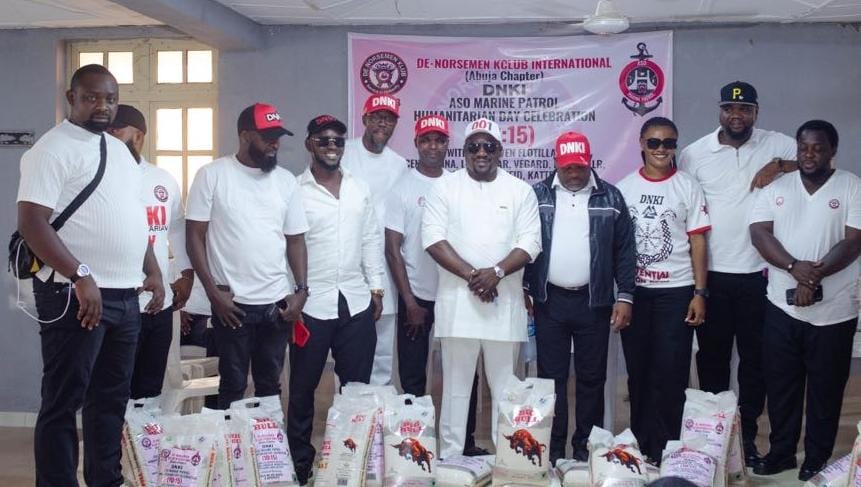
Cyril Samania
The President of De Norsemen Kclub International (DNKI), Chief Oliver Patrick Ityohegh, has reaffirmed the organisation’s commitment to humanitarian service, stressing the importance of supporting vulnerable people and improving community welfare beyond the annual celebration of Humanitarian Day.
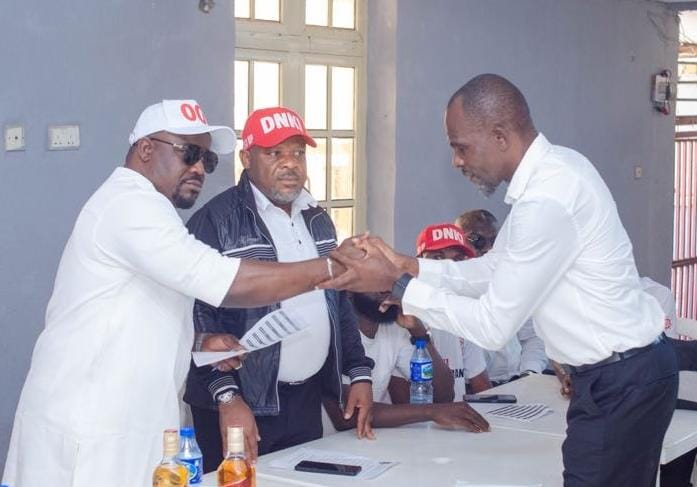
Ityohegh stated this during the organisation’s Cauldron Night and Award Presentation held to commemorate its 2026 Humanitarian Day celebration, theme: “Humanity First: Advancing Hope, Dignity and Community Well-being.” organised by the DNKI Abuja Chapter.
He emphasised that humanitarian service should be a continuous responsibility driven by compassion, solidarity and a commitment to making a meaningful difference in society.
According to him, DNKI’s humanitarian activities reflect its dedication to giving back to society and supporting people in need, while encouraging members to sustain initiatives that promote human dignity and community well-being.
He added that the organisation would continue to strengthen its humanitarian engagements through practical interventions aimed at improving the lives of vulnerable people and promoting community development.
Speaking at the event, the representative of the Abuja Chapter Chairman and Chairman of its Advisory Council, Prince Efiong Okpe, said the organisation’s humanitarian activities extended beyond the annual celebration of Humanitarian Day on October 15.
Okpe explained that DNKI undertook several initiatives throughout the year, including blood donation exercises, visits to hospitals and correctional centres, as well as support for orphanages and other vulnerable groups.
According to him, the organisation also collaborated with humanitarian bodies in the Federal Capital Territory (FCT) to identify areas of need and provide assistance within its available resources.
He described Humanitarian Day as an opportunity for members to renew their commitment to service and demonstrate solidarity with people facing difficult circumstances.
Earlier, the Chairman of the Planning Committee and Coordinator of the DNKI Gwagwalada Zone, Mr Etudaiye Hamzat, disclosed that the chapter had provided financial assistance to some members to help pay their children’s school fees, alongside distributing bags of rice and other relief items to members experiencing hardship.
Hamzat explained that the interventions followed concerns over the difficulties some members faced in meeting their family responsibilities, particularly the rising cost of their children’s education.
He maintained that supporting members in need was consistent with the organisation’s humanitarian principles, adding that DNKI remained committed to extending assistance to non-members and vulnerable communities as part of its commitment to leading by example.
Looking ahead, Hamzat said the Abuja Chapter planned to expand its humanitarian outreach to remote communities within the FCT, with particular attention to orphanages, schools and widows facing difficulties in meeting their family responsibilities.
He also recalled previous interventions for internally displaced persons (IDPs), which included the distribution of food, clothing and educational materials, noting that the chapter intended to scale up such initiatives in the coming year.
The highlight of the event was the presentation of awards to outstanding members and distinguished non-members in recognition of their contributions to humanitarian service.
-
 Featured7 years ago
Lampard Names New Chelsea Manager
-
 Featured7 years ago
FG To Extends Lockdown In FCT, Lagos Ogun states For 7days
-
 Featured7 years ago
Children Custody: Court Adjourns Mike Ezuruonye, Wife’s Case To April 7
-
 Featured7 years ago
NYSC Dismisses Report Of DG’s Plan To Islamize Benue Orientation Camp
-

 Featured5 years ago
Transfer Saga: How Mikel Obi Refused to compensate me After I Linked Him Worth $4m Deal In Kuwait SC – Okafor
-
Featured7 years ago
Board urges FG to establish one-stop rehabilitation centres in 6 geopolitical zones
-
Sports4 years ago
TINUBU LAMBAST DELE MOMODU
-

 News2 years ago
Zulu to Super Eagles B team, President Tinubu is happy with you













