
News
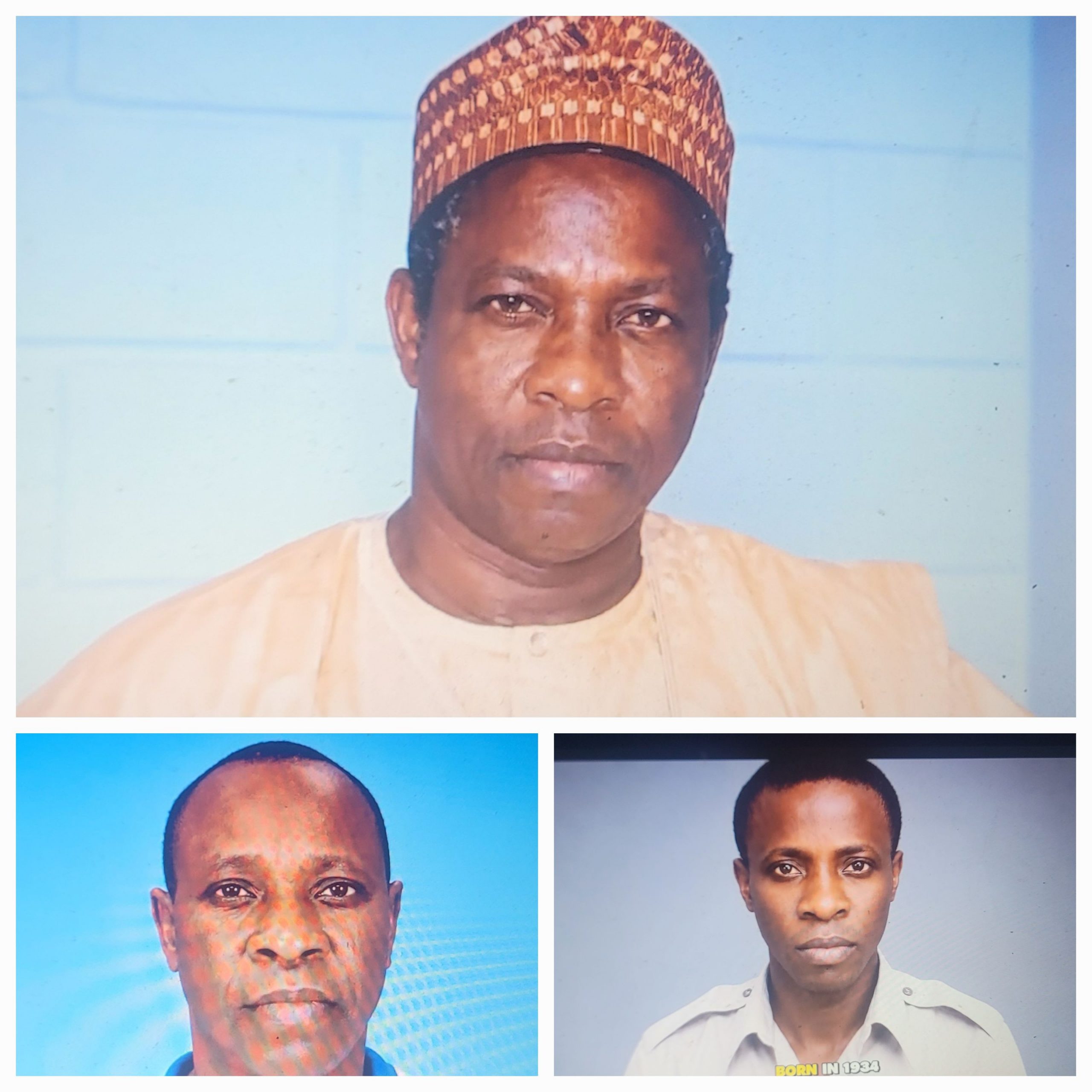
Pa Salami Aremu’s Enduring Legacy That Neither Time Nor Death Can Erase
By Cyril Ogar
In many communities, wealth is often measured by the fortunes a person leaves behind.
In Hangha and Tongo, two historic mining communities in Sierra Leone’s Eastern Province, however, the legacy of the late Pa Salami Aremu is measured differently not by the diamonds he traded, but by the countless lives he touched through generosity, integrity and compassion.
Years after his passing, family members, friends, business associates and residents continue to celebrate a man whose life transcended commerce.
During a recently held three-day Qur’anic prayer organised by his children and family, memories of Pa Salami came alive once again as people gathered not only to pray for the repose of his soul but also to celebrate a life dedicated to service, humanity and faith.
Born in 1934 in Ilorin, Kwara State, Nigeria, Pa Salami Aremu left his homeland in search of opportunities at a time when many West Africans crossed borders in pursuit of better livelihoods.
His journey eventually led him to Sierra Leone, where he settled in Hangha and later spent many productive years building a successful career in the country’s thriving diamond industry.
While the diamond trade brought him recognition, those who knew him say it was never the foundation of his identity. Instead, he became known as a man whose honesty earned trust, whose humility attracted respect and whose generosity endeared him to people from all walks of life.
Hangha occupies a unique place in Sierra Leone’s history. Located in Kenema District, Eastern Province, the town has long been renowned for its rich alluvial diamond deposits and artisanal mining activities.
The area played a significant role in the country’s economic development and attracted traders, miners and entrepreneurs from across Africa.
Within this environment, Pa Salami established himself as one of the respected figures in the local diamond trade. Through years of hard work and fair business practices, he built lasting relationships with artisanal miners, local traders and larger exporters. His reputation for transparency and reliability made him a trusted name in an industry often challenged by uncertainty.
Yet those closest to him insist that business was only one part of his story.
To many residents, he was a father figure whose home was always open to visitors. He was known for offering encouragement to young people, assisting those facing financial hardship and extending kindness without expecting anything in return. Whether providing support to struggling families, mentoring younger traders or simply offering wise counsel, Pa Salami believed that success carried a responsibility to uplift others.
His humanitarian spirit transcended ethnic and national boundaries.
Although proudly Yoruba and Nigerian by birth, he embraced Sierra Leone as his second home and became deeply integrated into the communities where he lived and worked. Over the years, he built friendships and relationships that reflected unity, mutual respect and peaceful coexistence.
It is these values that continue to define his memory.
The recent Qur’anic reading in his honour brought together family members from different locations, friends, neighbours and well-wishers in an atmosphere of reflection and gratitude.
Throughout the three-day programme, respected Islamic scholars recited verses from the Holy Qur’an and offered heartfelt prayers, asking Almighty Allah (SWT) to forgive his shortcomings, illuminate his grave and grant him Al-Jannatul Firdaus.
The gathering also reflected one of the principles Pa Salami cherished most—hospitality. Meals were prepared and shared freely with everyone in attendance, regardless of background or status, symbolising the generosity that charbacterised his lifetime.
For his children and grandchildren, the event represented more than a memorial. It was an opportunity to preserve the values he lived by and to remind younger generations that true greatness lies not merely in material achievements but in the positive impact one makes on society.
Those who attended spoke fondly of his honesty, patience and unwavering commitment to fairness. They recalled a man who believed that wealth should be accompanied by compassion, and that every successful individual had a duty to contribute to the wellbeing of others.
His influence remains evident in Hangha, where the mining area associated with his name continues to serve as a reminder of his contribution to the community’s economic life.
Although formal historical records detailing every aspect of his career may be limited, his story has been preserved through the testimonies of those who knew him personally and experienced his generosity firsthand.
In many respects, Pa Salami’s life mirrors the experiences of numerous African entrepreneurs whose greatest achievements were recorded not in official documents but in the hearts of the people they served. Their legacies endure through oral history, family traditions and community remembrance.
As the final prayers were offered during the Qur’anic programme, one message resonated clearly among those present: while life is temporary, good deeds endure.
For Pa Salami Aremu, the diamonds he traded may have brought him success, but it was his kindness, integrity and service to humanity that made him truly priceless.
His life remains a testament to the enduring power of compassion, faith and selfless leadership. It is a reminder that the greatest inheritance any individual can leave behind is not measured in material wealth but in the lives transformed through acts of love, generosity and justice.
Long after his earthly journey has ended, Pa Salami Aremu continues to inspire hope, unity and humanity among those who knew him. His story is one of resilience, enterprise and unwavering commitment to people—a legacy that neither time nor death can erase.
May Almighty Allah (SWT) continue to shower His mercy upon him, forgive his shortcomings and grant him eternal rest in Al-Jannatul Firdaus. Ameen.



News
Musawa Seeks Broader Significance for June 12
Joel Ajayi
The Minister of Art, Culture, Tourism and the Creative Economy, Hannatu Musa Musawa, Esq., says June 12 must be remembered as a sacrifice that gave Nigerians democracy, beyond its status as a public holiday.
In a statement signed on Saturday by the Senior Assistant Media & Publicity to the Honourable Minister,Federal Ministry of Art, Culture, Tourism and the Creative Economy Dr Nneka Ikem Anibeze Ph.D in Abuja.
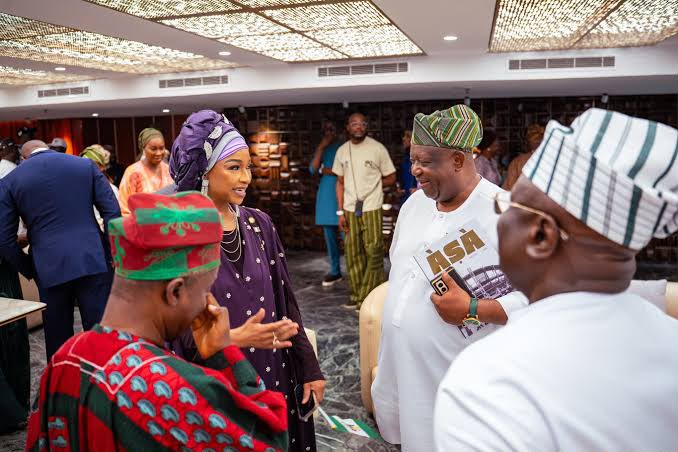
Musawa stated this at the national premiere of “MKO”, a film on Chief Moshood Abiola, held at the Wole Soyinka Centre for Culture and Creative Arts, Lagos, to mark Nigeria’s 66th Independence Anniversary.
She said 33 years after June 12, 1993, many young Nigerians know it only as a holiday, but the film turns it back into memory.
“For too many young Nigerians, June 12 is simply a public holiday. This film tells them that our democracy did not arrive by chance. It was fought for. It was defended. It was paid for. This documentary is in honour of the heroes of June 12, the men and women who gave their lives for the mandate of June 12, 1993 and for the democracy Nigeria enjoys today,” the Minister said.
Musawa hailed President Bola Ahmed Tinubu, Chief Host, for his participation in the June 12 struggle and paying the price in exile, adding that Nigeria’s creative industry will keep telling the story of its democracy with courage.
“Through film and the creative economy, Nigeria will preserve its history. A nation that forgets its past loses its way to the future. Nigeria has a story and our story deserves to be told,” she said.
Earlier, the director of the investigative documentary, Ose Oyamendan, said the film was in honour and memory of heroes who fought for Nigeria’s democracy.
“There was Hope ’93 and now there is Renewed Hope. There was a man who sacrificed his life so we may have democracy and there is a man who almost lost his life fighting for democracy who is now helping build a lasting democracy.
“There was a great man called Bashorun MKO Abiola and there is now another great man called Asiwaju Bola Ahmed Tinubu. Democrats. Nationalists. Nation builders. Leaders of men and women. We must never forget our story. We must always honour and remember our heroes,” Oyamendan said.
Top government officials including President Bola Ahmed Tinubu, the wife of the President Senator Oluremi Tinubu; Senate President Godswill Akpabio, Speaker of the House of Representatives Tajudeen Abbas, Chairman of the Nigeria Governors’ Forum AbdulRahman AbdulRazaq, Chief of Staff to the President Rt. Femi Gbajabiamila, state Governors, members of the National Assembly, Ministers and other distinguished dignitaries attended the premiere.
-
 Featured7 years ago
Lampard Names New Chelsea Manager
-
 Featured6 years ago
FG To Extends Lockdown In FCT, Lagos Ogun states For 7days
-
 Featured7 years ago
Children Custody: Court Adjourns Mike Ezuruonye, Wife’s Case To April 7
-
 Featured7 years ago
NYSC Dismisses Report Of DG’s Plan To Islamize Benue Orientation Camp
-

 Featured5 years ago
Transfer Saga: How Mikel Obi Refused to compensate me After I Linked Him Worth $4m Deal In Kuwait SC – Okafor
-
Featured7 years ago
Board urges FG to establish one-stop rehabilitation centres in 6 geopolitical zones
-
Sports4 years ago
TINUBU LAMBAST DELE MOMODU
-

 News2 years ago
Zulu to Super Eagles B team, President Tinubu is happy with you













