
Creative Industry
Performance Report of the Minister of Arts, Culture, Tourism, and the Creative Economy

By Joel Ajayi
The Minister of Arts, Culture and the Creative Economy, Hannatu Musawa, has outlined the remarkable progress made by the Ministry in under 18 months, highlighting major investments, infrastructure development, policy reforms, and Nigeria’s rising cultural influence on the global stage.
Speaking at the eighth edition of the Ministerial Press Briefing Session held at the National Press Centre in Abuja, Musawa noted that the Ministry has become a vital driver of sustainable development and economic diversification. The event was also attended by the Minister of Water Resources and Sanitation, Professor Joseph Utsev, and the Minister of Works, Senator David Umahi.
“In line with the Renewed Hope Agenda, we are transforming arts, culture, tourism, and the creative economy into engines of prosperity. Through strategic partnerships and visionary leadership, we are creating jobs, empowering youth, and diversifying the Nigerian economy,” she stated.
Musawa emphasized that the creative sector now stands at the forefront of Nigeria’s economic diversification strategy, evolving beyond cultural expression to become a strategic economic asset.
She recalled that on October 23, 2023, President Bola Ahmed Tinubu merged the former Ministries of Tourism and Arts, Culture and the Creative Economy to reduce government expenditure and enhance efficiency. The merger reflects the administration’s commitment to synergizing sectors for sustainable development, inclusive growth, and global cultural influence.
Key Initiatives and Achievements: “Data and Evidence-Based PlanningThe Ministry launched the D30 Data Initiative to map Nigeria’s creative economy. This initiative aims to inform policy, guide investments, and enable data-driven planning. In the music industry alone, five key value chain segments have been identified, with projections of creating over 500,000 new jobs by 2030. Mapping results are currently undergoing validation and will be published by June 2025.
“Policy Development and ReformWorking in partnership with stakeholders such as the Nigerian Economic Summit Group (NESG), the Ministry is overhauling outdated policies. New and revised frameworks include:
“National Policy on Intellectual Property RightsCreative Economy Development Fund (CEDF) approval, Review of the 1988 Cultural Policy and 2005 Tourism Policy, Transition from censorship to classification under the NFVCBMonetization and credit policies tailored to the creative sector
“Cultural Diplomacy and Global InfluenceUnder the Destination 2030: Nigeria Everywhere initiative launched at Davos, Nigeria’s global soft power ranking improved by 14 points within a year. Key international engagements include participation in the Cannes Film Festival and Venice Biennale. UNESCO also recognized cultural assets like the Sango Festival and Kano Durbar, with additional heritage sites inscribed under ICESCO and UNESCO frameworks.
“Economic Value and Investment MobilizationThe Ministry secured a $200 million investment from AFREXIM Bank for cultural and creative sector development. The Creative Economy Development Fund (CEDF) was launched with financing windows for debt, equity, and grants.
Collaborations with MOFI and FIRS are underway to monetize creative assets and ensure tax compliance. The Renewed Hope Cultural Project is revitalizing rural economies nationwide.
“Infrastructure Development: “The Creative and Tourism Infrastructure Corporation (CTICo) has been approved with a $100 billion investment plan and a potential to create 2 million jobs. Key infrastructure projects include:
“Development of the Abuja Creative City on 26 hectares in partnership with Creative Park Ltd, Nationwide renovation of cultural villages and museums.
“A digital museum initiative in collaboration with IHS Nigeria and the National Commission for Museums and Monuments (NCMM). Concessionary funding of €35 million from the French Treasury, recently expanded to €100 million”
Other achievement includes; “Strategic Partnerships: The Ministry has forged strong collaborations with private sector players like MTN and Chocolate City, international institutions including WIPO, AFREXIM, and MOFI, as well as foreign governments such as Brazil, France, and the UAE. Additionally, projects are being executed in partnership with state governments and traditional institutions under the Renewed Hope Cultural Project.
“And Sectoral Impacts: In the film industry, co-productions with France and South Africa have advanced, alongside reforms to protect intellectual property and improve working conditions. The tourism sector is gaining traction with Nigeria set to host the 68th UN Tourism Commission for Africa (CAF) in Abuja in June 2025. There are also creative empowerment programs specifically targeting women and youth, as well as efforts in cultural preservation through education and intergenerational skill transmission.”
Despite the achievements, the Minister acknowledged ongoing challenges including:Funding constraints and limited distribution channels, Competition with globally produced, high-standard content, Inadequate infrastructure at tourism sites and Market fragmentation and lack of essential operational tools



Creative Industry
CAFA Targets $500bn Fashion Economy At Canex Wknd 2026
Joel Ajayi
The Confederation of African Fashion (CAFA) will present its roadmap to grow Africa’s fashion economy from an estimated $30 billion to $500 billion at CANEX WKND 2026 in Lagos.
Marking its first anniversary on November 5, CAFA will unveil a joint stand with the Federal Ministry of Art, Culture, Tourism and the Creative Economy at the Wole Soyinka Centre for Culture and the Creative Arts, formerly the National Arts Theatre, on November 5, 2026.
CAFA President, Aare (Prof.) Lai Labode, said the institution works with African governments to align sourcing, production, trade and intellectual property policies, ensuring African creativity generates greater value for African businesses and communities.
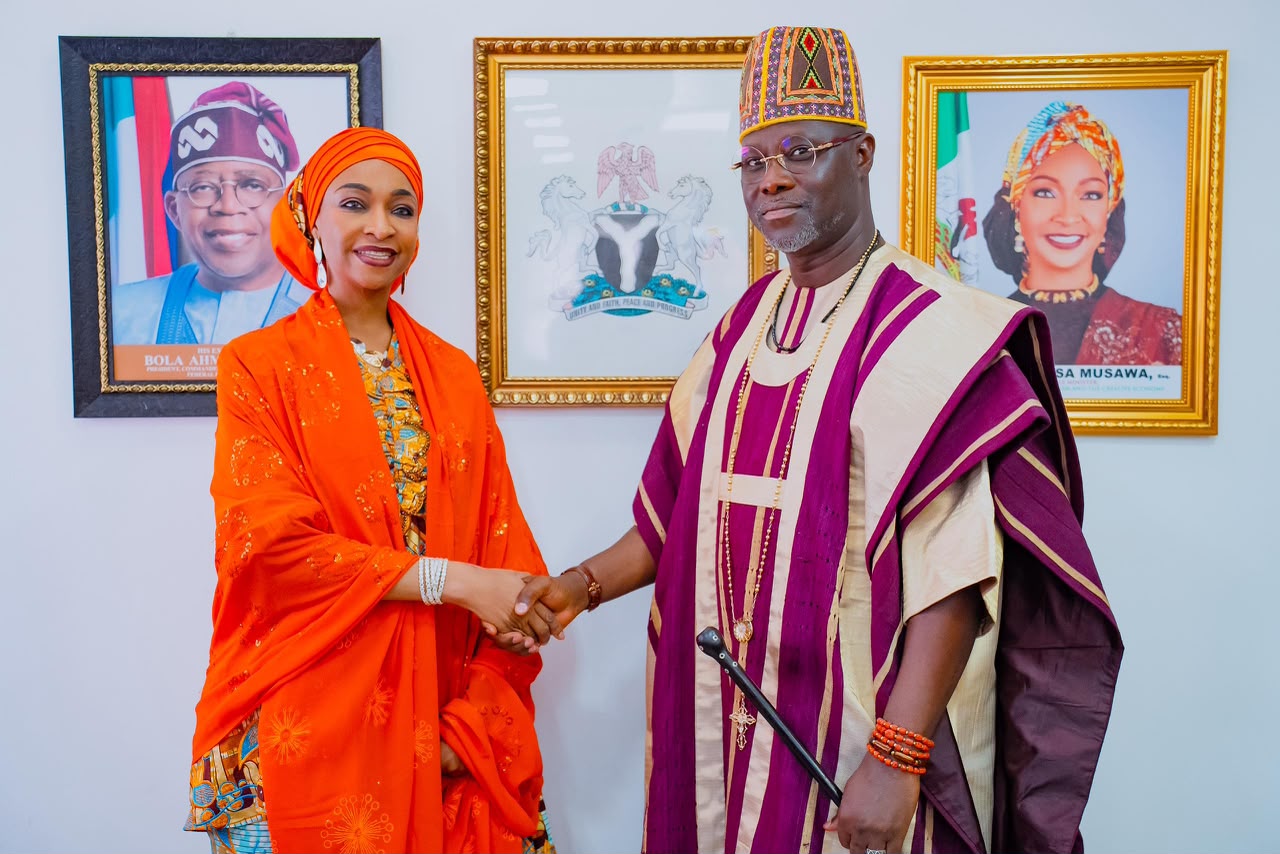
Nigeria became the first country to sign the African Fashion Industry Growth Charter on November 5, 2025, when the Honourable Minister Barr. Hannatu Musa Musawa signed on behalf of the Federal Government.
Speaking ahead of the unveiling, Minister Musawa said: “Afroliganza seeks to build a structured, values-driven fashion economy rooted in African heritage, led by African institutions, and positioned for global impact.”
On employment potential, the minister emphasized that Investment in fashion will create millions of jobs, particularly for women and youth.
Registered in Rwanda, with an office in Kigali and a desk at the Federal Ministry of Arts, Culture, Tourism and the Creative Economy, CAFA is also working with Nigeria’s Ministry of Foreign Affairs towards African Union adoption of the Charter. Rwanda is progressing towards becoming its second participating country and the first in East Africa.
Its first year saw fifty nations gather at the Egbaliganza-Lisabi Festival in Abeokuta and a signed MoU with Türkiye’s ASRIAD.
CAFA’s programmes promote processing African raw materials into finished apparel locally. ‘Own What We Create’ addresses intellectual property protection, while the CAFA Certified Seal and CAFA Heritage Mark support standards and authenticity. African Global Fashion Houses are currently being established across international markets.
The African Global Fashion Games will debut in Nigeria in 2028, bringing designers together under national colours. Held every three years, the Games will alternate between African and international hosts, combining competition with investor meetings, deal signings and policy discussions. Its Instant Craft event gives competing nations identical materials and a fixed clock, placing skill at the centre of the contest.
CAFA is inviting creatives, fashion designers, artisans, diplomats, economists, investors and policymakers to its CANEX stand. Visitors can explore the roadmap, ask questions and identify opportunities to contribute through design, manufacturing, investment, research, trade and international partnerships. The stand will be open daily from November 5 to 8.
CAFA calls on the African Union to adopt the Charter, and governments to sign the Games Register and form national teams.
“Fashion has always told the world who Africa is. Now Africa will decide what fashion pays,” Aare Prof. Lai Labode said.
-
 Featured7 years ago
Lampard Names New Chelsea Manager
-
 Featured7 years ago
FG To Extends Lockdown In FCT, Lagos Ogun states For 7days
-
 Featured7 years ago
Children Custody: Court Adjourns Mike Ezuruonye, Wife’s Case To April 7
-
 Featured7 years ago
NYSC Dismisses Report Of DG’s Plan To Islamize Benue Orientation Camp
-

 Featured5 years ago
Transfer Saga: How Mikel Obi Refused to compensate me After I Linked Him Worth $4m Deal In Kuwait SC – Okafor
-
Featured7 years ago
Board urges FG to establish one-stop rehabilitation centres in 6 geopolitical zones
-
Sports4 years ago
TINUBU LAMBAST DELE MOMODU
-

 News2 years ago
Zulu to Super Eagles B team, President Tinubu is happy with you













