
Opinion
RE: BLAIR “HAS QUESTIONS TO ANSWER” OVER SUPPORT FOR BRITAIN WHILE ADVISING NIGERIA
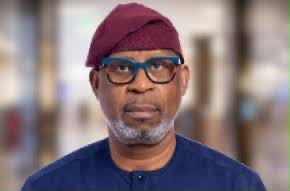
(A rejoinder to Gordon Rayner’s article of October 18,2026 in the Telegraph, UK
By Kehinde Bamigbetan
After reading this article, particularly the denials from the Tony Blair Institute for Global Change and the Federal Government of Nigeria, one is bound to question the editorial judgment that gives this piece any value.
In short, what did Gordon Rainer set out to do with this publication? Put a shine on Jupiter’s false and thoroughly empty narrative? Set up a former Prime Minister for blackmail and opprobrium? Or revive a dead case before the International Centre for Settlement of Investment Disputes?
Whichever, Rainer presents propositions which swallow their answers. His first argument that Blair might have undermined British national security interests is contradicted by the disclosure that the TBI has no contract to advise the Federal Government of Nigeria.
His second argument, that Jupiter was denied the execution of its licence, is contradicted by the fact that the company is unknown under Nigerian law. Rainer then admits knowing this fact and introduces the company as Jupiter’s partners.
For clarity and the benefit of his readers, these companies—Basin Mining Limited and Range Mining Limited—lost their licences for failing to pay annual service fees. Basin, for instance, owes N1,223,750,000, about £691,368.
The licences were revoked after the companies ignored several notices to fulfil their contractual obligations to the Nigerian Mining Cadastral Office. Penalties for non-payment are increasing daily, and the legal process to recover the funds is underway.
Rather than rescue its partners by paying their fees and penalties or allow the international settlement court to determine its case, Jupiter has mounted an international self-help campaign of calumny and economic sabotage against the government and people of Nigeria, using methods that threaten Nigeria’s security and diplomatic interests.
We believe Rainer is its latest innocent recruit, hoodwinked into propagating a false narrative by appealing to British national security interests when, in fact, Jupiter’s partners are, under Nigerian law, economic and security risks whose continued defiance of Nigeria’s laws endangers centuries of Britain-Nigeria relations.
The question Rainer should ask: if, indeed, Jupiter has a cast-iron case, why is it shedding crocodile tears and shopping for sympathy with false pretences and narratives?
Let’s give the clue: Jupiter’s promoter, Steve Davis, has leeched on Nigeria’s presidents since 1999 by pretending to be an international mining expert, and he has acquired an ego and assets far out of proportion to his financial and technical status.
He is so comfortable living above the law in Nigeria that compliance with regulatory provisions is a taboo, an affront to his bloated ego as a self-deluded “founder of Nigeria’s modern mining sector.”
Davis had a good time living his ego until Dele Alake became Nigeria’s Minister of Solid Minerals Development in August 2023 and immediately launched a clean-up of the sector focused on zero-tolerance for non-compliance with the provisions of the Nigeria Minerals and Mining Law 2007, a law that Davis boasts he contributed to making and should set an example by encouraging compliance.
The Minister was shocked that the Nigerian Mining Cadastre had a huge amount of unpaid statutory fees despite the government’s investment in the Electronic Mining Cadastre Plus (EMC+) automation, which digitised the licensing process and upgraded services to the mining sector.
In line with the law, the minister ensured debtors were duly notified, and defaulters duly gazetted before revoking their licences for flouting the regulation on the payment of annual service fees.
In November 2023, the minister revoked at least 1,663 licences, a decision that showed it was no longer business as usual under the new sheriff in town.
To show the government has a human face, it opened a three-month restitution window to address complaints and feedback indicating cases of extenuating circumstances.
But still basking in the euphoria of an ego that has outlived its era, Davis discouraged his partners from taking advantage of these opportunities for remorse. Instead, he threatened to exploit his global networks to frustrate the Federal Government of Nigeria.
He wasn’t joking. He launched a global disinformation campaign from his native Australia to Canada, from the United States to Europe. However, his lies evaporated as soon as the facts were laid bare.
Davis pulled his most ambitious stunt so far during Nigeria’s President Bola Ahmed Tinubu’s official visit to the United Kingdom in March this year, when he polluted the air with narratives designed to set Nigeria against the West by spreading blatant falsehoods and playing the victim.
But, as he found out to his misery, the whole public relations game was dead on arrival. A comprehensive statement clarifying the issues to the highly intelligent British media sent him into the cold.
All we ask is that journalists refer to the eternal maxim of the journalism profession whenever Davis knocks on their door: if in doubt, leave it out.
When a story like this betrays so many contradictions, the rule is not to encourage its spread. Every responsible journalist has the moral duty to kill it.
Kehinde Bamigbetan is a Journalist and Special Adviser to Dele Alake, the Minister of Solid Minerals Development, Federal Republic of Nigeria



Opinion
The Quiet Architect: How a Reformer Taught Institutions to Outlive Applause
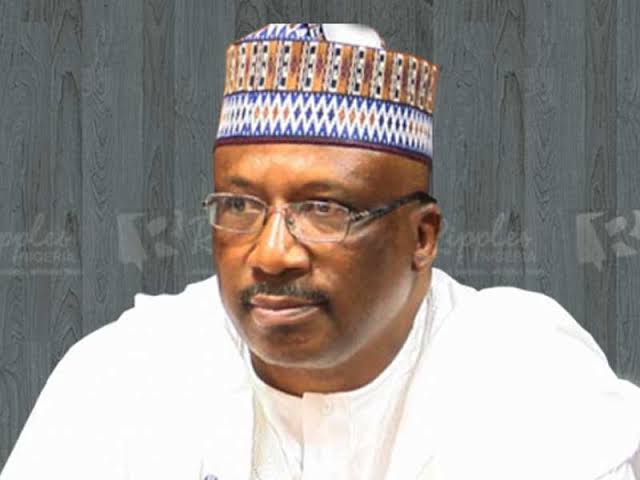
By Mohammed Manga, Public Policy Analyst
Under the ancient baobab of Zazzau at dusk, where generations have weighed wisdom, the elders teach that “you do not judge a farm by the bustle of its clearing, but by the fullness of its barn at harvest.” They also say, “a well is not praised because it was dug deep, but because it never runs dry when the people thirst.” Such is the test of a nation.
Not the elegance of its declarations or the flourish of its ceremonies, but whether its systems endure, whether its processes are fair, and whether the ordinary citizen can find dignity without knowing someone at the top. The true measure of a state is what works when no one is watching.
As Heraclitus observed, “no man ever steps in the same river twice, for it is not the same river and he is not the same man.” Institutions are those rivers. They must keep flowing even when personalities change, lest society runs dry.
Nigeria at 66 sits at a historic confluence. As the Yoruba say, “Bi omi ba ku, a fi oju ana e wo” — when water dries, we study its former path. Our path is instructive. Long before amalgamation, governance here had form and fidelity: in the Sokoto Caliphate, the Emir led, the Waziri administered and the Alkali dispensed justice; in Oyo, the Alaafin ruled but the Oyomesi checked him.
Colonialism scattered that indigenous order, and independence tasked us to build modern institutions from near scratch. Yet as Prof. Claude Ake warned, “the state in Africa has tended to become privatized.” To return it to the people, as the Igbo adage says, “one finger cannot lift a load” — we need builders, not just occupants.
Global experience illuminates the path. Lee Kuan Yew transformed Singapore by insisting that “we have to re-invent ourselves continuously.” Malaysia turned a commodity economy into an industrial powerhouse by disciplining its bureaucracy. Botswana built perhaps Africa’s most trusted public service by insulating institutions from patronage.
Rwanda rebuilt its judiciary after conflict by enforcing case timelines. The UAE turned desert outposts into efficient service hubs by measuring every service and publishing results.
As Dag Hammarskjöld taught, “it is more noble to give yourself completely to one individual than to labour diligently for the salvation of the masses.” Institution-building is that complete giving.
It is at the level of everyday encounters with the state — where dignity is affirmed or denied — that public trust is won or lost. Citizens may applaud macro reforms, but they ultimately judge government by the courtesy at the counter and the reliability of service when no one is watching.
Viewed through that lens, the public service arc of Lt. Gen. Prof. Abdulrahman Bello Dambazau, — soldier, scholar, reformer and diplomat — offers a compelling case study.
His story began not in power, but in preparation. Born on March 14, 1954, in Zaria, he was formed at Barewa College and at the Nigerian Defence Academy as part of 17 Regular Combatant Course, commissioned in June 1977 as Second Lieutenant.
He refused to let khaki limit knowledge. He earned a BSc in Criminal Justice, MA and M.Ed from Kent State University, USA, and a PhD in Criminology from the University of Keele, UK, becoming Nigeria’s first Chief of Army Staff to hold a PhD.
For 33 unbroken years, he served with distinction: Aide-de-Camp to the Chief of Army Staff in 1979, Commander of Military Police Units, Special Investigator (1984-85), Registrar of the Nigerian Defence Academy (1993-1999), Chief Instructor at the Infantry Centre and School, Directing Staff at the National War College, GOC 2 Division, Ibadan (2007-2008), and Chief of Army Staff (2008-2010).
Along that path, he laid the foundation for the Counter-Terrorism and Counter-Insurgency Centre in Jaji, authored five seminal books including Criminology and Criminal Justice, and held global academic laurels as Senior Fellow at the University of Massachusetts, Boston, Associate at Harvard’s Weatherhead Center for International Affairs, and Chairman of the University Advancement Centre at the University of Ibadan.
He currently serves as Pro-Chancellor and Chairman of the Governing Council of Capital City University, Kano.
In November 2015, President Muhammadu Buhari called him to perhaps his most difficult assignment: Minister of Interior. He inherited four agencies where morale was low and public cynicism high — the Nigeria Immigration Service, Nigeria Prisons Service (now Nigerian Correctional Service), Nigeria Security and Civil Defence Corps, and Federal Fire Service. Many called it a thankless ministry. He treated it as a laboratory for reform.
What does a scholar do with such a portfolio? He chose systems over slogans.
First, he professionalized. He carried out comprehensive reforms creating seamless pathways for career progression, training, appointment and promotion.
Second, he digitized. He introduced biometrics, digitalized the international passport, deployed Advance Passenger Information with INTERPOL, and advocated local production of passports to cut cost and secure the national database.
Third, he humanized corrections. He redesigned the prison system to reduce awaiting-trial congestion, procured operational vehicles, initiated 3,000-capacity model custodial centres, and midwifed the new Correctional Act to shift focus from punishment to rehabilitation in line with the UN Mandela Rules.
Fourth, he resurrected forgotten institutions. The Federal Fire Service at the time had less than three functional trucks in Abuja. He revived it to over 40 modern trucks, water tankers, six zonal headquarters and a reactivated training school.
Fifth, he institutionalized coordination. He created a Situation Room for emergency coordination, led the US-Nigeria Security Sector Reform dialogue, conceptualized the Institute of Domestic Security for strategic training of senior officers, and instituted the Interior Games to foster inter-agency collaboration.
Beyond uniform, as a criminologist, he founded the Foundation for Victims of Child Abuse and the Nigerian Society of Victimology — affirming that the supreme art of governance is to prevent harm without noise.
Today, that same depth of preparation and proven capacity for institution-building has taken him to Beijing as Nigeria’s Ambassador to China — one of our most strategic postings.
What, then, is the enduring lesson? If a scholar in uniform could transform four agencies often dismissed as moribund into institutions that now touch millions with dignity — issuing passports without tears, responding to fires without excuses, guarding borders with data — then what stops us from replicating that quiet architecture elsewhere?
If process can replace patronage in Interior, it can replace it in primary health centres where drugs must be traceable, in public schools where promotion must be merit-based, in power distribution where metering must be transparent, and in local councils where budgets must be published.
This article is not a eulogy. It is a mirror held up to all who serve and all who oversee — for political office holders who set policy, legislators charged with oversight, heads of agencies who steer the engines of state, Permanent Secretaries and Directors as custodians of institutional memory, and our revered minds on the Bench as guarantors of justice. The question remains: are we leaving this institution better than we met it?
Nigeria does not need louder government. It needs deeper institutions — systems that deliver when no one is clapping and endure when personalities have left. As Einstein said, “strive not to be a success, but rather to be of value.” And as Prof. Ali Mazrui reminded us, “Africa’s greatest challenge is not the absence of ideas, but the absence of institutions to carry those ideas.”
May the quiet architect’s lesson endure: build quietly, reform boldly, and leave the ladder down for others to climb.
Mohammed Manga is a public policy analyst and writes on governance and sub-national reforms. Email: mohammed.manga.policy@gmail.com
-
 Featured7 years ago
Lampard Names New Chelsea Manager
-
 Featured7 years ago
FG To Extends Lockdown In FCT, Lagos Ogun states For 7days
-
 Featured7 years ago
Children Custody: Court Adjourns Mike Ezuruonye, Wife’s Case To April 7
-
 Featured7 years ago
NYSC Dismisses Report Of DG’s Plan To Islamize Benue Orientation Camp
-

 Featured5 years ago
Transfer Saga: How Mikel Obi Refused to compensate me After I Linked Him Worth $4m Deal In Kuwait SC – Okafor
-
Featured7 years ago
Board urges FG to establish one-stop rehabilitation centres in 6 geopolitical zones
-
Sports4 years ago
TINUBU LAMBAST DELE MOMODU
-

 News2 years ago
Zulu to Super Eagles B team, President Tinubu is happy with you













