
Sports
Rivers Handball Players Target Gold at Niger Delta Games

Cyril Ogar
Players of the Rivers state handball team have sent strong messages of warning to their opponents at the forthcoming Niger Delta Games that they will be in Benin City for the Gold medal this time.
Speaking after the conclusion of the Handball trials for Edo 2026 at the Diete-Spiff Civic Centre, Port Harcourt on Tuesday, the players that spoke were unanimous in their resolve to hit gold later this month.
It could sound unrealistic, given that their performances at the inaugural edition in Uyo last year were not up to scratch, but the players remain adamant that the experience combined with their preparations for this edition will bring them good returns.
Fully prepared this time
Goalkeeper Richard Harrison led his male teammates in declaring their readiness to take Benin by storm, hinging his belief on his team’s good preparation.
“We are very very prepared. For me, I will say it’s a 100% for us. We have been training basically, morning and evening, so the preparation is there, just to put in the team work and I think we can go for Gold,” said Harrison.
His teammate ThankGod David also echoed Harrison’s thoughts, adding that they have put in enough work in preparations that should see them come out tops when they face their regional opponents as from February 20.
“We are very confident in our abilities as we have put in enough efforts in our trainings. So we believe that as we are heading for the competition, we, as a team are emerging victorious,” said David.
Anticipating a better, sweeter experience
The Rivers Handball team are aware of their poor past and ready to create a new experience.
For Godspower Idango, he says that their lacklustre performance last year has brought a renewed hunger in them ahead of this year’s competition and assures of a great outing this year.
“We are looking forward to this year’s Games. We didn’t do well last year so my teammates and I are hungry and angry so much that we are putting in much work both in the morning and evening.
“So, I want to assure you that we will come out victorious in Edo state.”
Lily Emmanuel is a young lady who spoke on behalf of the women’s team and she believes the team is ready and equipped to make the state proud this year.
“I wasn’t actually proud of the experience last year but this year, we are going prepared. We are going to win, we are not coming to dull or fail. We are Team Rivers and we are going to make Rivers state proud.
“We’ve been training from like the beginning of January intensively with consistency. We’ve been able to do endurance trainings that has given us greater strength so, the result will be different this time,” said Lily.
The Rivers state trials for Edo 2026 Niger Delta Games continued on Wednesday with Volleyball and Taekwondo taking centre stage.



Sports
Beyond Participation: How Mal. Dikko and Hon. Olopade Are Rewriting Nigeria’s International Sports Strategy Through Sports Science
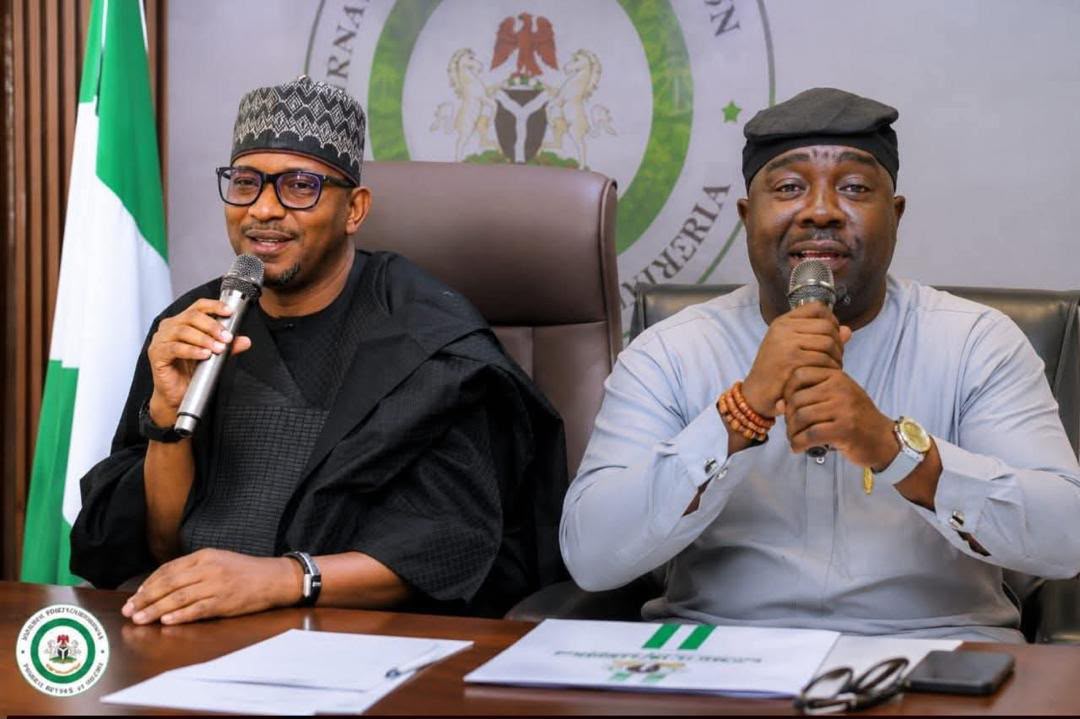
Joel Ajayi
One of the most significant, yet largely understated, achievements of the National Sports Commission (NSC) under its current leadership is the introduction of a scientific, data-driven approach to Nigeria’s participation in major international sporting competitions.
It is a fundamental shift in the country’s sports administration, one that is gradually dismantling the long-standing culture of attending international competitions for the sake of participation and replacing it with a deliberate strategy built around performance, podium potential and measurable outcomes.
Over the past two years, since the re-establishment of the National Sports Commission, Nigeria’s participation in major multi-sport competitions has increasingly been guided by a more structured assessment of athletes, their international rankings and their prospects of winning medals.
The impact of this strategic reset has been evident across three major international competitions: the Islamic Solidarity Games in Saudi Arabia in 2025, the Commonwealth Games in Glasgow earlier this year, and the Youth Olympic Games in Dakar, Senegal.
Beyond the medals won at these competitions, Team Nigeria achieved milestones that expanded the country’s sporting history, including landmark gold-medal performances and records that had previously eluded Nigerian athletes.
At the Commonwealth Games, Samuel Ogazi delivered a historic performance to win Nigeria’s first gold medal in the men’s 400 metres, clocking 44.25 seconds. Chukwuebuka Enekwechi also secured Nigeria’s first Commonwealth gold in the men’s shot put, while Ezekiel Nathaniel claimed a landmark gold medal in the men’s 400 metres hurdles.
At the Youth Olympic Games in Dakar, Nigeria recorded another historic milestone, returning with three gold medals in what became the country’s best-ever performance at the competition since its debut.
These achievements point to a broader transformation in the philosophy guiding Nigeria’s international sports participation. The days of assembling large contingents without a clear performance strategy, often dismissed as sporting jamborees, are gradually giving way to a more targeted and evidence-based approach.
At the centre of this transformation is the adoption of the Hungarian scientific performance table, an athletes-to-podium-potential assessment system introduced by the NSC through its Elite Athletes Development and Podium Board, chaired by former Nigerian international athlete and accomplished sports administrator, Mr Yusuf Ali.
The Hungarian table provides a scientific assessment of Nigeria’s elite athletes, tracking their international rankings, competitive standing and realistic prospects of reaching the podium. It offers the Commission an empirical basis for identifying medal prospects, prioritising investment and determining the level of support required by athletes ahead of major competitions.
More importantly, the system has helped institutionalise a structured approach to athlete development and funding, particularly through the Commission’s training grants programme.
This is perhaps one of the most consequential aspects of the reform. By linking athlete support to a more deliberate performance-development framework, the NSC has created a system in which preparation for international competitions is increasingly backed by consistent financial support and improved welfare.
In the last two years, more than $1 million, approximately ₦1.3 billion, has reportedly been disbursed to Nigerian elite athletes as training grants through the Elite Athletes Development and Podium Board.
Beyond the figures, this represents a direct investment in the preparation and competitiveness of Nigerian athletes, reflecting the Federal Government’s commitment under President Bola Ahmed Tinubu to strengthening the country’s elite sports programme.
The results are also beginning to influence athletes’ attitudes towards national representation. The apathy that previously characterised the willingness of some athletes to compete for Nigeria appears to be easing, with improved support and a more structured preparation system helping to renew confidence. Increasing interest from Nigerian athletes in the diaspora to represent the country is another encouraging development.
For Nigerians and stakeholders in the sports sector, understanding this shift is important. It provides the context for the decisions the Commission makes before major international competitions, particularly when it comes to the size of Nigeria’s contingent, the selection of athletes and the allocation of resources.
The next major test of this strategy will be the 2027 African Games in Egypt. Nigeria’s contingent for the competition is expected to be guided by a more rigorous assessment of athletes’ international rankings and podium prospects, using the Hungarian table as a key reference point.
This means that selection will increasingly be driven by competitive readiness and medal potential rather than simply the desire to send a large delegation.
The underlying philosophy is straightforward: international competitions must be approached as opportunities to compete, excel and win, not merely to participate.
As NSC Director General, Hon. Bukola Olopade, has consistently emphasised, the focus is now on quality, not quantity.
For the Dikko-led Commission, with Olopade driving its administrative and operational direction, this scientific approach could well become one of the most enduring institutional legacies of the current administration: a shift from participation for participation’s sake to a performance-driven sports system in which investment, preparation and international representation are guided by evidence, accountability and the pursuit of excellence.
-
 Featured7 years ago
Lampard Names New Chelsea Manager
-
 Featured7 years ago
FG To Extends Lockdown In FCT, Lagos Ogun states For 7days
-
 Featured7 years ago
Children Custody: Court Adjourns Mike Ezuruonye, Wife’s Case To April 7
-
 Featured7 years ago
NYSC Dismisses Report Of DG’s Plan To Islamize Benue Orientation Camp
-

 Featured5 years ago
Transfer Saga: How Mikel Obi Refused to compensate me After I Linked Him Worth $4m Deal In Kuwait SC – Okafor
-
Featured7 years ago
Board urges FG to establish one-stop rehabilitation centres in 6 geopolitical zones
-

 News2 years ago
Zulu to Super Eagles B team, President Tinubu is happy with you
-
Sports4 years ago
TINUBU LAMBAST DELE MOMODU













