
News
Royal Commonwealth Society, NSC Launch Clean Oceans Campaign in Nigeria

By Joel Ajayi
The Royal Commonwealth Society (RCS), in collaboration with the National Sports Commission (NSC) and Commonwealth Games Nigeria, has officially launched the Clean Oceans Plastic Awareness Campaign in Nigeria as part of a broader initiative to combat the growing threat of plastic pollution across the Commonwealth.
The campaign was flagged off on Wednesday at Jabi Lake in Abuja, carrying a strong message of environmental responsibility—particularly targeted at young Nigerians.
The initiative is designed to raise awareness about the dangers of plastic pollution, promote responsible waste disposal, and encourage environmental stewardship, especially around Nigeria’s waterways.
Speaking at the launch, the Country Director and CEO of the Royal Commonwealth Society Nigeria, Mr. Blackson Olaseni Bayewumi, said the campaign aligns with a Commonwealth-wide commitment to reducing plastic waste and protecting marine ecosystems. He emphasized the transformative power of sports in inspiring environmental awareness and behavior change among young people.
He highlighted the critical role of sports as a tool for engaging young people and driving meaningful change in environmental behavior.
“The Commonwealth accounts for one-third of the world’s ocean waters, and nearly half of its member countries are Small Island Developing States that suffer disproportionately from plastic pollution,” Bayewumi noted.
According to him, the Royal Commonwealth Society’s Clean Oceans Plastics Campaign aims to prevent at least one million pieces of plastic from entering Commonwealth waterways.
The campaign blends grassroots education with direct community action, urging people to reduce their plastic footprint, embrace alternatives, and promote cleaner oceans.
A major component of the campaign is its integration with the King’s Baton Relay—a hallmark of the build-up to the Commonwealth Games. In a groundbreaking move, the 2025-2026 relay will spotlight sustainability and environmental protection, beginning with its launch by His Majesty The King at Buckingham Palace on Commonwealth Day 2025.
The Baton Relay is now on a 500-day journey across all Commonwealth nations and territories ahead of the 2026 Commonwealth Games in Glasgow.
In each country, including Nigeria, the Baton Relay will bring together youth, athletes, local communities, and environmental groups for a week of activities—most notably, organized plastic clean-up drives.
The urgency of this campaign is underlined by alarming statistics: the world produces 400 million tonnes of plastic every year, with over 12 million tonnes ending up in the oceans.
Without urgent action, scientists predict that by 2050, there could be more plastic than fish in the sea.
Plastic waste poses a deadly threat to marine life—suffocating birds, fish, and mammals while damaging key ecosystems.
Moreover, as plastics break down into microplastics due to ocean erosion and sunlight, they enter our food, water, and even air.
Although the full health implications of microplastics remain unknown, early research suggests they may disrupt vital bodily functions—and there is currently no method to fully remove them from the environment or our bodies.
The campaign supports multiple UN Sustainable Development Goals (SDGs), particularly:
SDG 12: Responsible, Consumption and ProductionSDG 13: Climate Action, SDG 14: Life Below Water
It also reflects the core principles of the Commonwealth Charter, especially: Article 9: Sustainable Development. Article 10: Protection of the Environment and Article 14: Recognition of the Needs of Small States
As the world grapples with escalating environmental challenges, the Clean Oceans Plastics Campaign represents a significant step in uniting nations, communities, and young leaders under a shared mission: to protect our oceans, preserve biodiversity, and build a cleaner, safer world for future generations.



News
PSIN Posts Major Institutional Reforms, Improved Financial Discipline, Earns House Committee Praise
Cyril Ogar
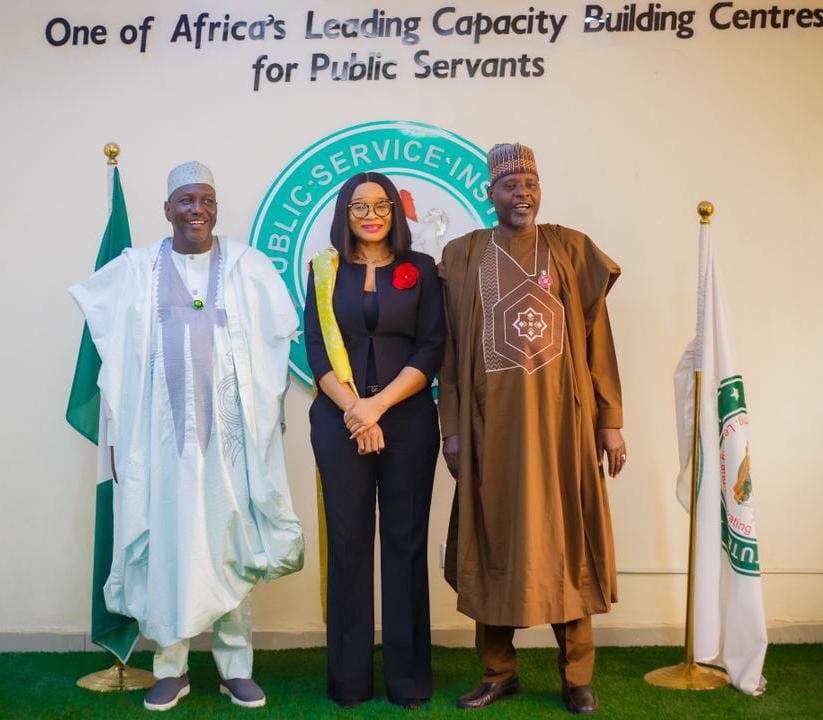
The House of Representatives Committee on Public Service Matters has reviewed the 2024 budget performance of the Public Service Institute of Nigeria (PSIN) and commended the Institute’s leadership for initiating wide-ranging reforms aimed at strengthening governance, service delivery, and institutional discipline.
The commendation came during an oversight visit by members of the Committee to PSIN headquarters along the Kubwa Expressway, Abuja.
Speaking at the engagement, Chairman of the Committee, Hon. Engr. Sani Umar Bala, described the visit as significant, noting that it marked the Committee’s first official engagement with PSIN under the leadership of its new Administrator. He congratulated the Administrator on the appointment and expressed the Committee’s readiness to work closely with the Institute to promote accountability, innovation, and sustainable institutional growth.
Hon. Bala recalled that the Committee’s last oversight visit to PSIN took place in July of the previous year, during which key recommendations were made, particularly the need for the Institute to evolve innovative strategies to boost its Internally Generated Revenue (IGR) and the enactment of a substantive Establishment Act to strengthen its legal and institutional framework.
He stressed that all public funds, including IGR, must be expended strictly in accordance with constitutional provisions, legislative approvals, and national priorities, adding that oversight by the National Assembly is constructive and aimed at supporting institutions to perform better.
“This visit provides an opportunity for us to receive a clear account of actions taken since our last engagement, the reforms introduced, challenges encountered, and the strategic direction the Institute is now pursuing,” the Committee Chairman said.
In her address, the Administrator of the Public Service Institute of Nigeria Administrator/ CEO, Barrister Imeh Okon welcomed members of the Committee and described the visit as timely, coming shortly after the completion of his first 100 days in office. He explained that the period was deliberately focused on understanding the institution, engaging staff, and restoring operational discipline rather than publicity.
According to her, management instituted monthly whole-of-staff engagement forums, reinstated weekly departmental meetings, and introduced staff morale initiatives aimed at strengthening teamwork, accountability, and a sense of belonging.
On service delivery, Barrister Imeh Okon disclosed that PSIN successfully completed the onboarding of its Computer-Based Test (CBT) Centre as an accredited facility by the Joint Admissions and Matriculation Board (JAMB), strengthening the Institute’s capacity to deliver technology-driven and credible assessments.
Shee added that over 400 public servants from various Ministries, Departments and Agencies (MDAs) were trained during the period, while PSIN also conducted nationwide promotion examinations for more than 2,600 staff of the Independent National Electoral Commission (INEC) across the 36 states and the Federal Capital Territory.
The Administrator further highlighted steps taken to restore financial discipline, including strengthened financial controls, compliance with government financial regulations, comprehensive audits of facilities and assets, and the recovery and regularisation of outstanding revenues, all aimed at promoting transparency and value for money.
Physical infrastructure improvements were also recorded, with renovated lecture rooms, rehabilitated facilities, improved sanitation systems, fumigation of the premises, and enhanced security measures to protect government assets.
Looking ahead, he outlined plans to modernise PSIN’s curriculum, expand e-learning and blended learning platforms, digitise internal processes, and fully embrace the Institute’s think-tank mandate through policy dialogues, advisory services, and strategic partnerships, including a proposed twinning arrangement with the Singapore Public Service Institute.
The highlight of the visit was the presentation of PSIN’s 2024 budget performance, in line with the Institute’s core mandate of training and continuous retraining of public servants.
Members of the Committee welcomed the presentation and reaffirmed their commitment to supporting PSIN through legislation, policy guidance, and advocacy aimed at strengthening Nigeria’s public service architecture.
-
 Featured6 years ago
Lampard Names New Chelsea Manager
-
 Featured6 years ago
FG To Extends Lockdown In FCT, Lagos Ogun states For 7days
-
 Featured6 years ago
Children Custody: Court Adjourns Mike Ezuruonye, Wife’s Case To April 7
-
 Featured6 years ago
NYSC Dismisses Report Of DG’s Plan To Islamize Benue Orientation Camp
-

 Featured4 years ago
Transfer Saga: How Mikel Obi Refused to compensate me After I Linked Him Worth $4m Deal In Kuwait SC – Okafor
-
Sports3 years ago
TINUBU LAMBAST DELE MOMODU
-

 News12 months ago
Zulu to Super Eagles B team, President Tinubu is happy with you
-
Featured6 years ago
Board urges FG to establish one-stop rehabilitation centres in 6 geopolitical zones