
Creative Industry
ServeSafe: Ensures Food Safety of National School Feeding Progamme- ITPN
In line with the desire of the present administration to empower a minimum of one million Nigerians annually with hospitality trade jobs in the National Home Grown School Feeding Program, quality and safety of food service delivery must be ensured so that the feeding system will not be compromised in terms of nutritional values, safe consumption and good health of the benefiting pupils of the scheme.
The National President of the Institute for Tourism Professionals of Nigeria (ITPN), Chief Abiodun Odusanwo, who stated this during the Food Quality Assurance Supervision Training Program for Supervisors of the Home Grown School Feeding Program in Abuja, further noted that this was meant to strengthen the skill levels of the public officers performing this important regulatory and enforcement role in order to reduce the incidents of food poisoning and food borne illnesses in the implementation of the scheme.
Chief Odusanwo said that the Servesafe initiative is a Food Safety Quality Assurance Management System which covers environmental and public health food safety program, designed to create public awareness and a safeguard of the dangers associated with food poisoning and contamination at premises where food is processed, cooked, served or handled, adding that it is further meant to educate, intensify and quality-assured food premises through inspection and certification.
He disclosed that the key challenges facing the enhancement of food safety in the country include lack of awareness of the socio-economic importance of food safety, absence of adequate information on incidence of food borne disease outbreaks, lack of understanding of food safety and quality standards as outlined in international agreements and the inability to enforce compliance commensurate with the demands of enforcement of regulatory bodies, noting further that it is in response to these challenges that the Servesafe Quality Assurance training was organized.
The program which was done by the Federal Ministry of Humanitarian Affairs, Disaster Management and Social Development in collaboration with the Institute for Tourism Professionals of Nigeria, saw participants of the Three-Day Training Programme drawn from all training centres across the country drilled on key food safety areas including: ‘Overview of Safe Food’; ‘How to Avoid Food Contamination’; ‘The Servesafe Food Handler’ and ‘Servesafe Facilities and Pest Management and Control’.
Other are: ‘Servesafe flow of Food Production and Service’; Servesafe Cleaning and Sanitation’; Servesafe Flow of Food Production and Service’ and ‘Servesafe Food Safety Management System’ and were presented with Certificate acknowledging them as qualified food safety supervisors in the country’s food value chain and hospitality trades.



Creative Industry
Musawa Highlights Art and Culture as Drivers of Public Sector Excellence at Legislative Mentorship Session
Joel Ajayi
The Minister of Art, Culture, Tourism and Creative Economy, Hannatu Musa Musawa, Esq., has emphasized the importance of integrating art and culture into public-sector excellence in Nigeria.
In a statement issued on Thursday in Abuja by the SA Media & Publicity, Office of the Honourable Minister, Federal Ministry of Art, Culture, Tourism and Creative Economy Nneka Ikem Anibeze, Phd.
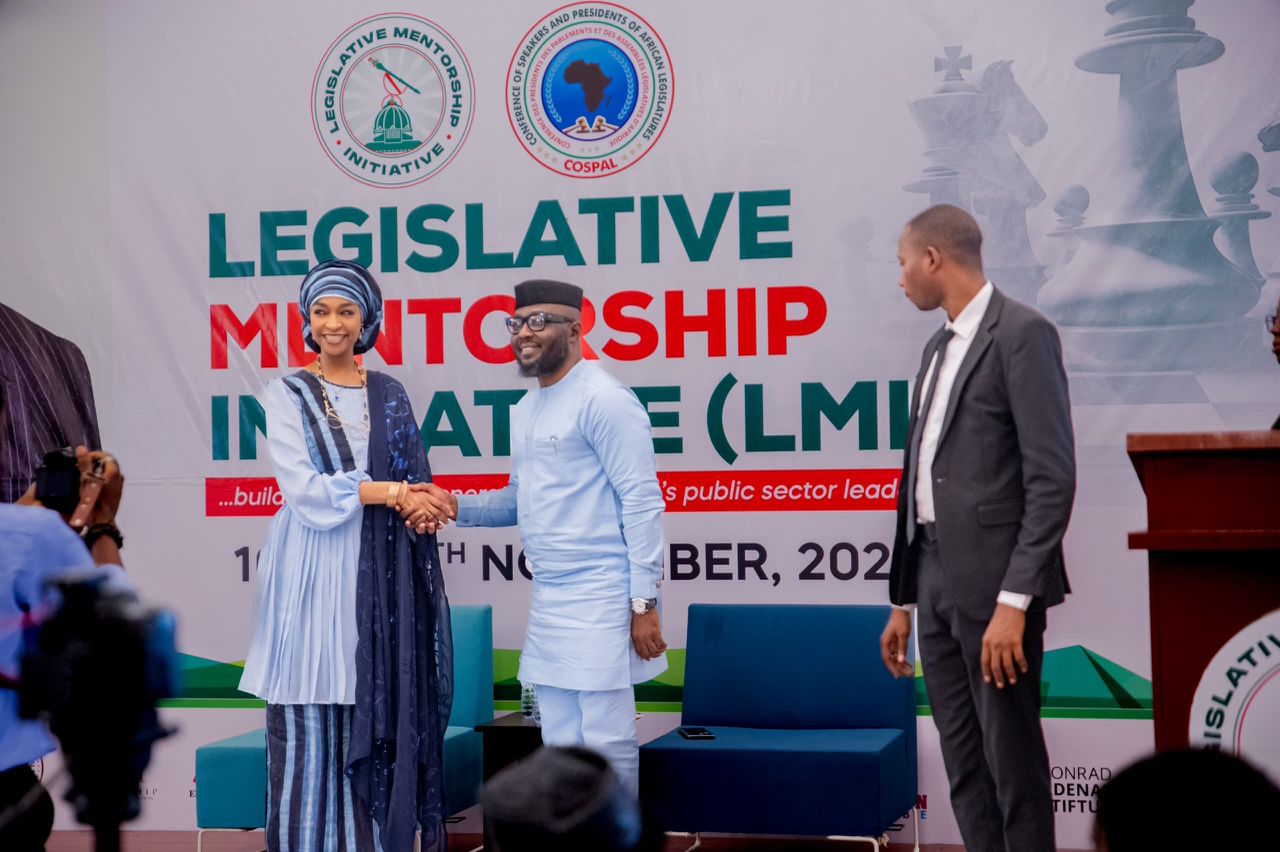
Musawa made this known while addressing trainees at the 4th Legislative Mentorship Initiative (LMI), held at the National Institute For Legislative and Democratic Studies, Abuja on Thursday.
Themed ‘Building the next generation of Public Sector Leaders’, Minister Musawa highlighted art and culture as essential tools for national cohesion and identity, economic development and job creation, innovation and civic engagement, sustainable development, and projecting Nigeria’s soft power and global identity.
She noted that Nigeria’s rich cultural heritage is a unifying force that binds different ethnicities and elaborated on how Art and Culture is key to public-sector excellence in Nigeria.
“First, embracing and promoting art and culture helps to forge national cohesion and shared identity among Nigeria’s diverse populations. Integrating culture into public policy and governance transforms the creative and cultural sectors into engines of economic development, job creation and diversification. Cultural industries including crafts, music, film, design, heritage tourism can generate livelihoods, attract investment, expand exports, and reduce overreliance on a narrow set of economic activities.
“A society that values creativity and cultural expression tends to produce more resourceful citizens, fosters cross-cultural dialogue, and encourages public servants to be more adaptive, empathetic, and culturally aware while prioritizing culture and creative economy in public policy through frameworks, institutions, and infrastructure, demonstrates long-term vision and commitment to sustainable development,” Musawa said.
The Minister called for supportive policies, enabling legislation, and sustained commitment to fulfill this vision, including laws that protect intellectual property, incentivize investment in creative infrastructure, and integrate arts and culture into education and community development.
“Embedding art and culture at the heart of governance and public-sector planning is not a luxury, it is a necessity. It builds unity, drives economic growth, fosters innovation, strengthens institutions, and ensures that development respects and reflects the soul of the nation,” she emphasized.
Musawa thanked the founder of the Legislative Mentorship Initiative (LMI), Rt. Hon. Femi Gbajabiamila, Chief of Staff to the President, Bola Ahmed Tinubu, for his inspiring vision and unwavering commitment to cultivating Nigeria’s future public-service leaders.
Other speakers at the Legislative Mentorship Initiative include the Director General, Centre for Black and African Arts and Civilization Aisha Augie, Nigerian photo-journalist and documentary photographer Bayo Omoboriowo, Amb. Dapo Oyewole, Secretary-General Conference of Speakers and Presidents of African Legislatures amongst others.
-
 Featured6 years ago
Lampard Names New Chelsea Manager
-
 Featured6 years ago
FG To Extends Lockdown In FCT, Lagos Ogun states For 7days
-
 Featured6 years ago
Children Custody: Court Adjourns Mike Ezuruonye, Wife’s Case To April 7
-
 Featured6 years ago
NYSC Dismisses Report Of DG’s Plan To Islamize Benue Orientation Camp
-

 Featured4 years ago
Transfer Saga: How Mikel Obi Refused to compensate me After I Linked Him Worth $4m Deal In Kuwait SC – Okafor
-
Sports3 years ago
TINUBU LAMBAST DELE MOMODU
-

 News11 months ago
Zulu to Super Eagles B team, President Tinubu is happy with you
-
Featured6 years ago
Board urges FG to establish one-stop rehabilitation centres in 6 geopolitical zones













