
Featured
Shuaibu Ibrahim’s Twelve Month – Innovative Strides In NYSC
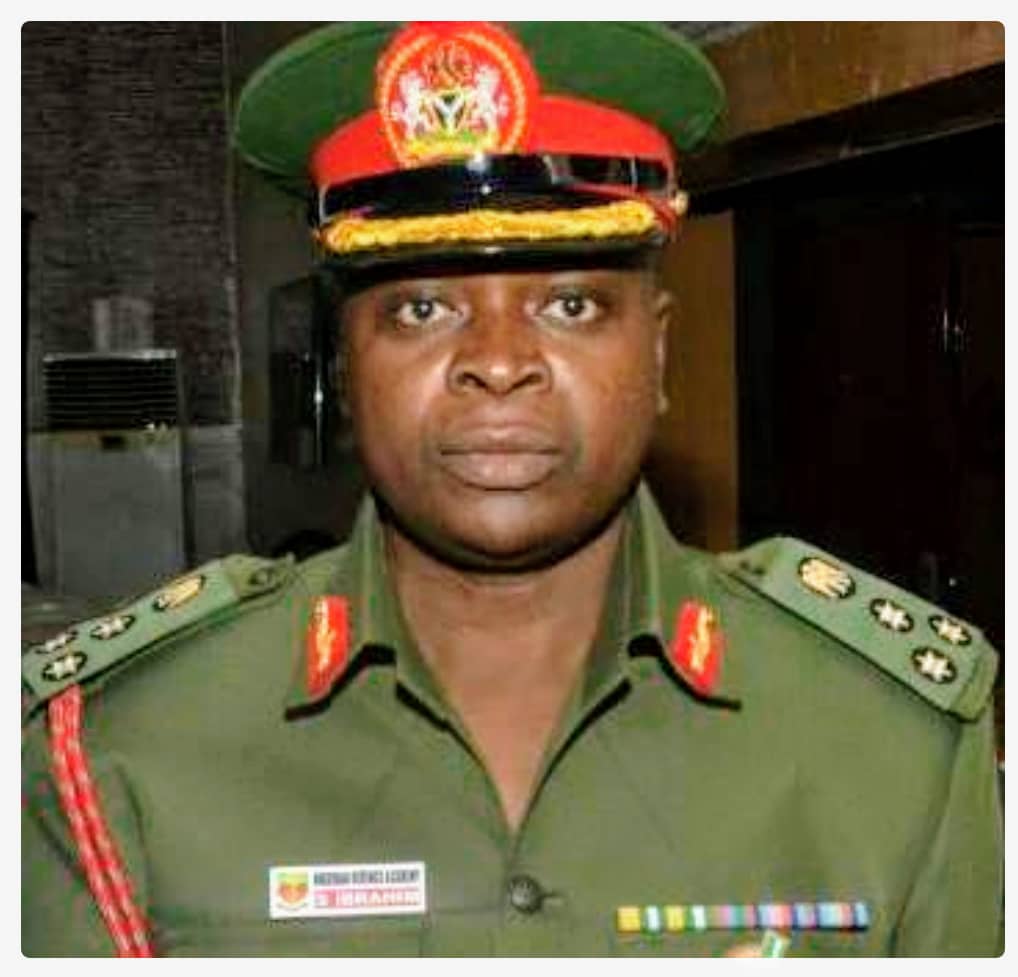
👆 L-R; Brigadier General Shuaibu Ibrahim when assuming office as the 18th DG of NYSC during the handing over from his predecessor, Major General SZ Kazaure
Shuaibu Ibrahim’s Twelve Month – Innovative Strides In NYSC
By Emmanuel Obeni
The measure of a man and his relevance to society is not his affluence, but how much of himself he has given, or prepared to give to make life worthwhile to others, building people and institutions as well as engendering solid development for national growth.
Shuaibu Ibrahim, a Brigadier General in the Nigerian Army and the Director General, National Youth Service Corps in his one year sojourn in the service Corps has, in practical terms, validated the above assertion. The Nasarawa born General assumed duty as 18th Chief Executive of the NYSC on 10th May, 2019.

Head-hunted from the fledgling Nigerian Army University, Biu, which he was nurturing as the pioneer Registrar, Shuaibu Ibrahim arrived the NYSC headquarters surefooted, with the demeanour of a man in a hurry to accomplish a mission.
Ibrahim’s confidence certainly was borne out of the fact that he landed on a familiar turf, having had a stint with the Scheme over 20 years earlier as Military Assistant to a former Chief Executive of the Scheme.
However, the second coming of the General from the Army Education Corps was going to be more challenging as he was returning as the numero uno, on whose table the buck stops,. But he was well prepared. His trajectory in the academia as a teacher, lecturer, researcher, author among others capped with the highly revered academic glory of Doctor of Philosophy (PhD) degree and his versatile experience in administration resulting from his various postings in the military made it possible for him to easily fit into his new role of managing an organisation whose main clients are vibrant graduate youths of institutions of higher learning.

With enviable academic laurels and vast experience in administration, General Ibrahim brought to the job an impressive profile that put him on good stead to steer the Scheme to higher heights which exactly is what he has been doing.
Ibrahim already had his job cut out before arriving the NYSC headquarters. The infrastructural deficits in many NYSC Orientation Camps, exponential explosion in Corps population, paucity of funds and post service unemployment, among others were the myriad of challenges the new Director General had to contend with. But then he hit the ground running. Apparently, his knowledge of the inner workings of the Scheme aided him to articulate his mission even before setting foot at Yakubu Gowon House, the National Directorate Headquarters of the NYSC.
On the very day he took over the mantle of leadership he unfolded his agenda which include: Sustain effective utilisation of the potentials of Corps Members for optimal benefit; Pursue a technologically driven organisation to deepen effective service delivery; Improve on the welfare and security of Corps Members and staff; Strengthen existing collaboration with stakeholders; and Reinvigorate NYSC Ventures and Skill Acquisition and Entrepreneurship Development programme in line with the NYSC Act for greater impact.

The first challenge the new DG had to confront was the issue of mobilisation of unqualified persons with fake or questionable degree certificates. Having identified the sources of such certificates, for the first time in the history of the Scheme, he promptly convened a meeting with the Registrars of some African Corps Producing Institutions at the end of which far reaching strategies were adopted to curb the trend. The result has been heartening as many illegal institutions, mostly in the West African sub region, where most of the phony certificates are procured, have been shut down. Also sixty-five fake Corps Members were apprehended during the 2019 Batch ‘B’ Stream Two Orientation Course and handed over to the security agencies for prosecution.
Similarly, out of over 20,000 foreign – trained prospective Corps Members invited for verification of the documents they uploaded for the 2019 Batch ‘C’ mobilisation, only about three thousand three hundred and twenty-one appeared for the exercise. The rest who apparently had skeletons in their cupboards were scared of the new Sheriff in town.
The novel troubleshooting approach employed by Ibrahim has led to a drastic reduction in cases of unqualified and fake Corps Members in the Scheme. The NYSC DG has sternly warned people with the dubious intention of compromising the integrity of the NYSC mobilisation process to desist as they will certainly be caught and made to face the consequences asserting that “Under my watch no unqualified person will be allowed to participate in the NYSC.”

With his profound intellect and knowledge, Shuaibu Ibrahim was quick to decipher that improving the fortunes of the NYSC is predicated largely on getting stakeholders to be alive to their statutory responsibilities to the Scheme, and they cannot do so if they are ignorant of such obligations.
It was in this regard that Ibrahim embarked on a nationwide sensitisation on the provisions of the NYSC Act. He convoked a meeting with representatives of State Governments and the FCT Adminstration to enlighten them on the roles and responsibilities of the various arms of government to the Scheme as enshrined in the NYSC Act.
In the same vein, he sought and secured audience with the Nigeria Governors’ Forum during which he impressed on them the need for the States to discharge their statutory responsibilities to the Scheme, in line with provisions of the Act. These include provision of befitting Orientation Camps and maintenance of same, accommodation for Corps Members, office accommodation for Area Offices and State Secretariats, release of State subvention, security of Corps Members and support for the Scheme’s Community Development Service.
Suffice it to say that these roles are complementary to those of the Federal Government which bears the heaviest cost of running the Scheme.
The interaction has started yielding fruits as many State and Local Governments have constituted statutory NYSC State Governing Boards and Local Government Committees, designed to pursue the welfare of Corps Members and smoothen the operations of the Scheme.
Anambra State Government for instance has built and recently handed over a brand new Orientation Camp to the NYSC, while Bayelsa State is on the verge of doing same. Several other States have embarked on comprehensive renovation and upgrade of facilities in their Orientation Camps.
In line with his administration’s goal to reinvigorate the NYSC Ventures and Skill Acquisition and Entrepreneurship Development programme for greater impact, the NYSC helmsman has in the last one year relentlessly pursued increased stakeholders’ involvement in the implementation of the programme through engagements with many of the Scheme’s existing collaborating partners and potential ones, with stunning results.
Some of the gains include collaboration with Unity Bank on funding of Business Plan Development programmes for Corps Members, partnership with the British American Tobacco Nigeria Foundation (BATNF) for empowerment of Corps Members with agricultural skill and business trainings, farm internship, mentoring and farm input supplies.
There is also a research – based collaboration with OAU-NACETEM sponsored by a Canadian Agency, International Development Research Centre which seeks to evaluate the impact of the Skill Acquisition and Entrepreneurship Development programme (SAED) with a view to reinvigorating it for more efficacy.

The implementation strategies of the programme have also been reviewed in conjunction with stakeholders and partners in a bid to enhance training and attract more funds.
General Ibrahim’s evidently fertile and positive imagination impelled him to recognise the imperative of seeking alternative ways of raising funds for the Scheme’s operations, due to paucity of funds. At his behest, there has been accelerated upgrading and repositioning of NYSC Ventures initiatives to raise revenue.
Consequently, new tractors and implements have been purchased for the NYSC rice farm in Ezillo, Abakaliki for massive production and processing of rice at the NYSC rice mill located in the same area. A new rice mill has been established for the NYSC rice farm in Saminaka, Kebbi State. Equipment for the mill are presently being installed.
Similarly, the NYSC Bakery and Water Factory at the FCT Orientation Camp, Kubwa have been resuscitated, and are currently supplying their products to consumers in the FCT and Nasarawa State.
These ventures are to be replicated in NYSC Orientation Camps across the country to serve the need of the Camps and generate revenue for the Scheme.
In the same vein, the deployment of ICT solutions to drive the operations of the Scheme for greater efficiency has been sustained by the administration of Ibrahim. In addition to harnessing the NYSC Integrated System online platform to enthrone a culture of integrity and efficiency in the Scheme’s operations, the DG is looking forward to leveraging on the gains from the advancement of ICT operations in order to raise the revenue of the Scheme.
Being the major product of the NYSC, Ibrahim is passionate about the welfare of Corps Members and considers it paramount as he reasons that “Corps Members are given to us on trust by their parents and the nation in general”. It is on this premise that he made it a point of duty to personally visit and commiserate with parents of Corps Members who lost their wards in unpleasant circumstances. Apart from visiting severally the family of Precious Owolabi, the Correspondent of Channels Television who was killed in the line of duty during the Shiite protests in Abuja, the NYSC DG has criss-crossed the country to condole with families of others that lost their lives or got injured in road traffic accidents whose hospital bills are usually underwritten by the Scheme.
NYSC expended the sum of N32 million for the procurement of smart prosthetic limbs for a Corps Member Nurudeen Tahir who lost his arm in a road traffic accident in Taraba State. The Corps Member had earlier lost his left hand at the age of 12. The prosthetic smart limb is an electronic device fitted with sensors and functions almost like normal hand. The NYSC in the past one year alone has spent over N100 million on such interventions, in addition to prompt settlement of Corps Members’ medical claims.
In addition, the Scheme is finalising arrangement with the National Health Insurance Scheme for the enrolment of Corps Members into the NHIS to provide health care to the Corps participants.
Furthermore, the Scheme under Ibrahim’s watch has through engagement with the relevant Agencies secured a review of Corps Members’ allowance from N19, 800 to N33, 000, in line with recent increase in the remuneration of public servants.
Notwithstanding the above accomplishments, the Scheme under Ibrahim’s leadership has sustained and intensified liaison with various security agencies so as to ensure that the safety of Corps Members is topnotch wherever they are serving in the country.

On Staff welfare, the 18the Chief Executive is not relenting either. Given that a motivated workforce is essential to the successful pursuit of the Scheme’s mandate, he considers enhancement of welfare of the staff imperative which is why it is one of his administration’s focal areas of concern.
While ensuring that entitlements of staff are promptly settled, he has intensified the tempo of capacity building training for staff to enhance their productivity.
Within one year, he has conducted two staff promotion exercises. During the last activity held in February, 2020, over eighty percent of staff that sat for the promotion exam got elevated to the next rank.
With his in-depth and penetrating insight, Ibrahim understands the benefits of effective communication. It is In this regard that he is pursuing with vigour the establishment of the NYSC Radio Station which is a novelty. The Scheme is already on the verge of securing a licence for the station. When it eventually comes to fruition, the radio station will boost the publicity drive of the Scheme, enable it tell its own story from the NYSC perspective and also serve as a training ground for Corps Members who have interest in broadcast journalism.
Ibrahim’s passion to showcase the relevance and contributions of the Scheme to national development is equally being pursued through the publication of a book on NYSC and national development. The compendium will comprehensively document the invaluable strides of the Scheme in Nigeria’s development, which unfortunately has remained largely underreported. The project was commissioned immediately he assumed duty as the DG.
As a strategy to prepare eligible graduates adequately for effective participation in the Scheme, he initiated engagement with the Federal Ministry of Education and the National Universities Commission for the inclusion of National Service as one of the topics to be taught in General Studies in the nation’s Corps producing Institutions.
The outbreak of COVID -19 in Nigeria presented a leadership test and challenge which the Scheme under the prompting of Ibrahim rose to.
Determined to protect the Corps Members from contracting the deadly disease, the NYSC Scheme, under his leadership caused the suspension of 2020 Batch ‘A’ Stream One Orientation exercise nationwide.

Beyond that, he went on to mobilise members of the Corps to assist in the fight against the spread of the disease. Corps Members across the country were challenged to produce hand sanitisers, liquid soap and facemasks which were produced and donated to the Federal and State Governments, as well as communities to help in containing the pandemic.
Some Corps Members serving in Kano and Kwara States fabricated pedal operated dispensers, dispensing water, liquid soap and sanitiser geared towards flattening COVID – 19 curve.
In addition, NYSC Orientation Camps across the country were quickly prepared for use as isolation centres, just as the Corps Medical Personnel were sensitised and deployed to assist their senior colleagues in the medical field in battling the pandemic which unarguably poses a formidable threat to humanity.
A personable gentleman with so much passion for work, which makes him a workaholic, Shuaibu Ibrahim exudes the sterling qualities of diligence, punctuality and fidelity to a worthy purpose – the core values that appear to be fast receding in our society.
His exemplary habit of consistently reporting to work very early before resumption time has influenced the attitude of staff in that direction; just as his unique leadership style that pulled down the barrier between the leader and the led has endeared him to both the staff and Corps Members.
For a man from the military, a constituency with a completely different orientation from the NYSC, Shuaibu Ibrahim has so far admirably and successfully navigated the bureaucratic bottlenecks which have always been a drawback to most Chief Executives – a feat that can be attributed to his frank and transparent trait which he applies in a unique administrative approach that resonates with staff of the Scheme.
Nonetheless, he does not compromise discipline. His prompt and decisive action on cases of staff indiscipline demonstrate that he does not take prisoners when it comes to disciplinary matters.
Indeed, Ibrahim brings to the table qualities that are rare in our clime. He exhibits attitude that eloquently speak about his philanthropic and humane nature.
Interestingly, he is different from so many who have attained the same height, but struggle when it comes to being humane.
According to him, “What brings smile to my face is when I touch fellow human beings; I go to bed and sleep a happy person… I am ready to sacrifice all that I have for the joy of a person.”
In a country where personal interests are pursued brutally without regard to the welfare of others, Ibrahim is rather a refreshing oasis.
In all, Shuaibu Ibrahim has largely been true to his pledge when he assumed duty. “I see my second coming as a privilege and honour. I am determined to sustain what my predecessors started, improve on what they have also done and move the Scheme to a higher pedestal”, he said.
His antecedents in the past one year in the helm of affairs of the NYSC truly testify to his faithfulness to this solemn promise. With his unique disposition and cutting – edge leadership, there is no doubt that the NYSC is in safe hands, and certainly on the path to attaining the higher pedestal as envisioned and propelled by Brigadier General Shuaibu Ibrahim.





Business
Turning Africa’s Raw Materials Into Wealth: The ARMS 2026 Industrial Agenda

By Joel Ajayi
For decades, Africa’s vast natural resources have powered industries and economies far beyond the continent, while many African countries have remained largely exporters of unprocessed commodities and importers of finished products.
That familiar pattern is now coming under renewed scrutiny as policymakers, researchers, investors and industrialists seek to change the direction of Africa’s resource economy.
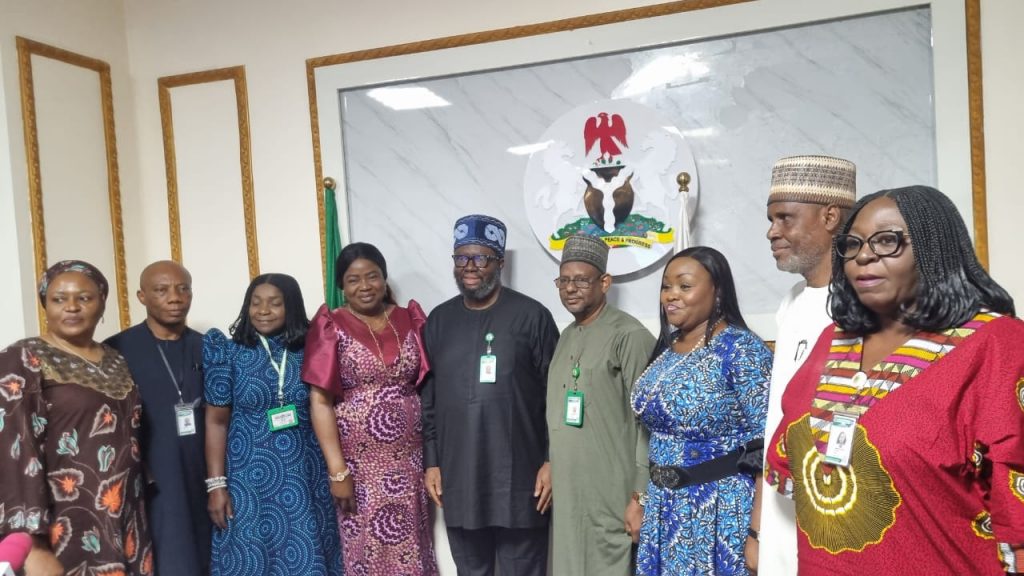
At the centre of that conversation is the second edition of the Africa Raw Materials Summit (ARMS 2026), scheduled for October 19 and 20 at the Abuja Continental Hotel, Abuja, under the theme: “From African Feedstock to African Factories.”
Organised by the Raw Materials Research and Development Council (RMRDC), the summit is being positioned as more than another gathering of policymakers and industry stakeholders. It is intended to provide a platform for confronting the structural challenges that have kept African raw materials largely disconnected from local manufacturing.
Africa has for years operated largely within a “pit-to-port” economic model, exporting raw materials while importing expensive finished products.

Speaking at a press conference ahead of the summit on Tuesday in Abuja, the Director-General and Chief Executive Officer of RMRDC, Prof. Nnanyelugo Martin Ike-Muonso, said the event would bring together policymakers, investors, researchers, technology providers and industrialists to develop practical strategies for transforming Africa’s abundant natural resources into industrial wealth.
The challenge, therefore, is not simply the abundance of resources, but the continent’s ability to transform those resources into industrial value, employment, technology and wealth within Africa.
Nigeria alone, according to the RMRDC, has more than $582.4 billion in documented non-renewable natural resources, while the wider continent possesses substantial deposits of critical minerals, agricultural raw materials and industrial feedstock.
Yet, the benefits of this resource endowment have often been constrained by inadequate processing capacity, weak infrastructure, limited technology, financing gaps and fragmented regional value chains.
From Dialogue to Industrial Action
ARMS 2026 builds on the maiden edition held in May 2025, which attracted more than 1,000 delegates from across the world.
The inaugural summit also witnessed the unveiling of the Ten-Year Raw Materials Transformation Roadmap (2025–2034) by the Minister of State for Industry, Senator John Owen Enoh.
The roadmap was designed around areas including technological capability, climate-resilient processing and backward integration, establishing a policy framework for greater domestic utilisation of Africa’s raw materials.
The second edition is expected to move the conversation further by bringing policy, capital, technology and industrial stakeholders around practical mechanisms for turning raw materials into locally manufactured products.
One of the major proposals highlighted by the RMRDC is the 30 per cent Mandatory Value Addition Bill, which seeks to establish a statutory minimum level of value addition to Nigerian raw materials before export.
The Council says the proposed framework could support job creation, import substitution, foreign-exchange conservation and increased manufacturing contribution to the economy.
Building the Infrastructure for Value Addition
The industrial transformation envisaged by ARMS 2026 goes beyond legislation.
A major concern is the “missing middle” between where raw materials are produced and where factories are located.
Poor transportation networks, inadequate cold-chain facilities, weak rural roads, limited testing and certification infrastructure and border-related delays can make locally sourced materials more expensive and less competitive.
Consequently, logistics and infrastructure constitute one of the five principal pillars of the summit.
The objective is to develop more reliable corridors connecting farms and mines with processing centres and manufacturing facilities, thereby reducing losses and improving the movement of industrial inputs.
The Digital Dimension
Technology is also becoming an important part of the Council’s strategy.
The RMRDC says it has developed the Nigeria Integrated Information Statistical System for Raw Materials and Products (NISSRAMP), described as a digital repository containing information on feedstock deposits, specifications, production outputs and industrial absorption rates.
The Council has also highlighted its transition towards paperless operations and its certification as a Data Controller/Processor of Major Importance by the Nigeria Data Protection Commission.
Such digital infrastructure could provide investors and manufacturers with better information about the availability and characteristics of raw materials while supporting more informed industrial planning.
Turning Waste Into Industrial Inputs
Another major component of ARMS 2026 is the proposed expansion of the circular economy.
The summit will examine how agricultural by-products, mine tailings, scrap metals and biomass can be recovered and reused as inputs for new production processes rather than being treated simply as waste.
The RMRDC argues that such an approach could lower raw-material costs while supporting more sustainable and climate-resilient manufacturing systems.
For Africa, where industrial expansion must increasingly balance economic development with environmental considerations, waste industrialisation could become an important part of the continent’s manufacturing conversation.
From National Production to African Value Chains
The African Continental Free Trade Area is another important element of the summit’s agenda.
The RMRDC sees AfCFTA as an opportunity to create regional value chains in which raw materials sourced in one African country can be processed and supplied to manufacturers in another.
Under such a model, Africa would move beyond simply exporting commodities to external markets and develop stronger internal networks for supplying chemicals, refined minerals, agricultural inputs and other industrial materials across national borders.
This approach places regional integration at the heart of Africa’s industrialisation strategy.
Bridging Research and Capital
A recurring weakness in many developing economies is the gap between research and commercialisation.
Innovations may emerge from universities, research institutions and laboratories without receiving the financing, equipment or market connections required to become commercially viable.
ARMS 2026 intends to address that gap through technology commercialisation and capital linkages, connecting research outputs with investors, development finance institutions and industrial off-takers.
The RMRDC has also cited partnerships with the Bank of Industry for commercial-scale post-harvest processing and a South-South technology-transfer partnership with the National Innovation Centre par Excellence in Shanghai, China.
A Larger Industrial Conversation
The scale of ARMS 2026 is expected to be significantly larger than the maiden edition.
The organisers project more than 1,800 delegates from all 54 African countries and global industrial partners.
The programme will feature high-level policy dialogues, technical panels, an advanced raw materials and technology exhibition, industrial site visits and the African Raw Materials Industry Awards.
The exhibition, in particular, is expected to showcase locally fabricated processing machinery, advanced domestic materials, green chemicals and engineered commercial inputs.
Beyond the speeches and exhibitions, however, the real significance of ARMS 2026 will ultimately depend on what happens after the summit.
Africa’s challenge has never been a shortage of raw materials. The more difficult question has been how to transform those resources into factories, products, skilled employment, technology and sustainable economic opportunities.
For Nigeria and the rest of the continent, the proposed shift from “pit-to-port” to “feedstock-to-factory” therefore represents a broader debate about the future structure of African economies.
ARMS 2026 seeks to place that debate firmly on the industrial agenda — with value addition, technology, finance, infrastructure, circular production and regional trade at the centre.
If the commitments and partnerships generated by the summit translate into measurable industrial activity, the event could provide another platform for Africa to examine how its enormous resource base can support stronger domestic manufacturing.
The message from the organisers is clear: the continent’s raw materials should not only leave African soil as commodities; they should increasingly become the foundation for African industrial production
-
 Featured7 years ago
Lampard Names New Chelsea Manager
-
 Featured7 years ago
FG To Extends Lockdown In FCT, Lagos Ogun states For 7days
-
 Featured7 years ago
Children Custody: Court Adjourns Mike Ezuruonye, Wife’s Case To April 7
-
 Featured7 years ago
NYSC Dismisses Report Of DG’s Plan To Islamize Benue Orientation Camp
-

 Featured5 years ago
Transfer Saga: How Mikel Obi Refused to compensate me After I Linked Him Worth $4m Deal In Kuwait SC – Okafor
-
Featured7 years ago
Board urges FG to establish one-stop rehabilitation centres in 6 geopolitical zones
-
Sports4 years ago
TINUBU LAMBAST DELE MOMODU
-

 News2 years ago
Zulu to Super Eagles B team, President Tinubu is happy with you













2 Comments