
Interviews
Social Cohesion Is The Glue That Holds Society Together – Ihua
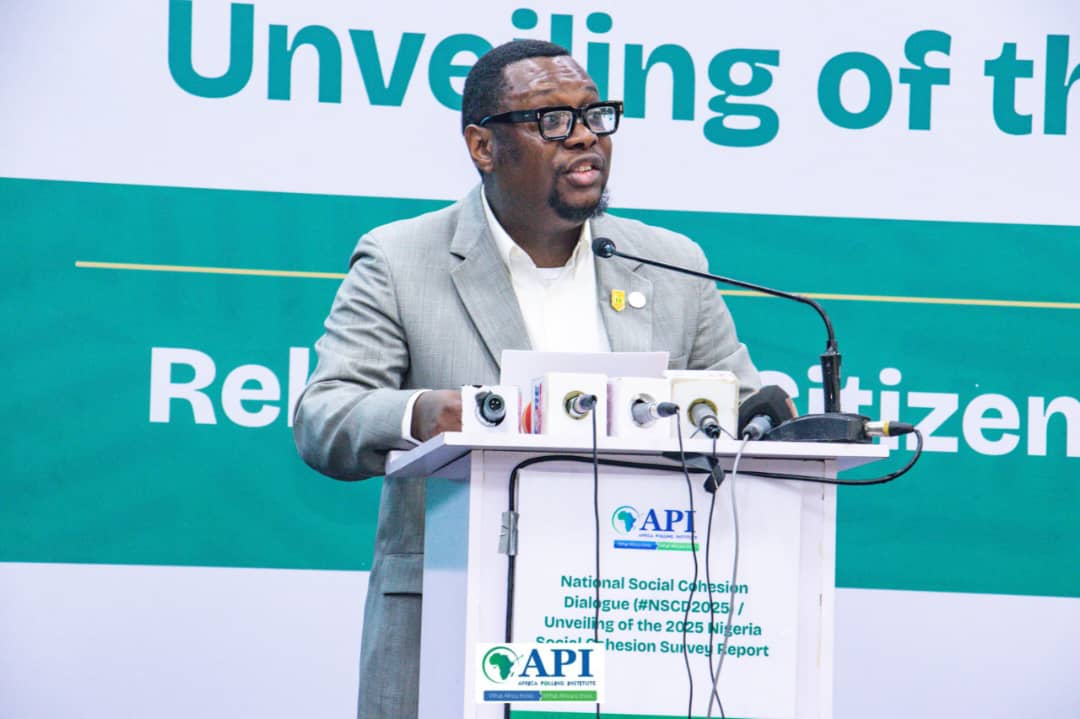
The Executive Director of Africa Polling Institute (API), Professor Bell Ihua mni, speaks in this interview about the latest findings from the Institute’s 2025 Nigeria Social Cohesion Survey, recently unveiled in Abuja. He argues that social cohesion is the glue that holds society together, and for Nigeria to make progress, government at all levels must pay attention to the subject of social cohesion. Joel Ajayi brings us excerpts from the exclusive interview.
Your Institute has been around for a while now, conducting surveys, opinion polls, social research, and churning out all manner of data to support national development. You recently released a study on social cohesion in Nigeria. Can you tell us a bit about that?
Thank you very much for the opportunity and your kind words. Yes, Africa Polling Institute has been around since 2019, and we’ve been committed to bridging the gap between the government and the governed by helping to capture the opinions, views, perspectives, and attitudes of citizens in Nigeria and sub-Saharan Africa on issues relating to governance, democracy, economy, markets, and public life.
So, from the very hard issues, such as the economy, governance, and people’s perceptions of democracy today, to the much softer or lighter topics, like entertainment, how people relax, what comedy skits they watch, and what they love to eat for breakfast, lunch, or dinner.
So we straddle across board. However, I would like to start this interview by clarifying a few key points. First, it is worth noting that the API is independent, non-profit, and non-partisan. We do not represent any commercial, political, or group interest whatsoever. I say this because we have had instances in the past where some politicians attended our events and made certain statements that a section of the media tried to affiliate us with such perspectives.
No, we are independent and neutral. Secondly, we are a group of credible professionals, men and women of integrity. What we find from our studies is what we report and publish; we do not try to paint or embellish our results to favour any section of society. I’ve been around for a while, and we have worked extremely hard to get here. Stakeholders within the industry can attest to the quality of our work. I resigned from my lecturing job and returned to Nigeria from the UK in January 2012. Since then, I have conducted polls and surveys, working with various administrations, including those of President Goodluck Jonathan, President Buhari, and now President Bola Tinubu.
I have found over the years that certain functionaries may not always agree with our findings, but we publish what we find nonetheless, and they know we are credible. I say this because sometimes our findings may come across as if we are anti-government or anti the political party in power, but the fact is that we are pro-Nigeria. We speak trust to power using hard, credible, scientifically researched data.
Thirdly, as a Member of the National Institute of Policy and Strategic Studies (NIPSS), I am committed to Nigeria’s long-term development. As you may be aware, our motto is: Towards a better society, and once you’ve been through the senior executive course (SEC) or even any of the short courses there, your orientation has been reshaped from that of a complainer or problem-identifier to a solution provider for the nation.
In essence, we do not just bear mni after our names for nothing; it comes with a lifetime obligation of service to Nigeria. Finally, let me state that, as opposed to the rather negative reports shared in the media regarding the state of social cohesion in Nigeria, there are quite a lot of positive findings from the 2025 study showing that Nigeria has made quite some progress, especially in comparison with the previous government, and they need to be highlighted further.
This is interesting to hear. Okay, let’s start with the positives. Can you tell us about some of the positive findings from the social cohesion survey?
Thank you again. Yes, as I mentioned, Nigeria has made some progress in improving the state of social cohesion under President Bola Ahmed Tinubu. First, the Nigeria Social Cohesion Index was calculated as 46.8%. Although this is still under the average threshold of 50%, it is a 7.2 percentage point improvement from the 2022 score, which stood at 39.6%. Secondly, we have also observed improved attitudes among citizens in several areas.
For example, in the area of how united or divided Nigeria is today, the data reported that 76% stated that the country is much more divided today, compared to four years ago. This percentage may seem high, but it represents an 11-percentage point decrease from the 2022 score of 87%, indicating that fewer people currently believe the country is much more divided today under the administration of President Tinubu, compared to that of President Buhari. Also, in the area of Gender Equity, there is a glimmer of hope when you see the data.
For instance, 63% say they would be willing to vote for a Woman as President of Nigeria, 69% would be willing to vote for a Woman as Governor of their State, and 76% would be willing to vote for a Woman as their local government chairperson. In addition, 79% of citizens believe that qualification and competence should be the primary focus, rather than gender, when considering individuals for public positions; 75% believe that people should be paid according to their competence, not their gender; and 73% agree that women should have equal entitlement to family inheritances.
These findings suggest an increasing openness for women to hold top political offices and acceptance that women can occupy prominent political roles beyond just voting. Additionally, 87% believe that boys and girls should have equal access to education, which is a very positive development. As you can see, we’ve made some progress in certain areas, and it is essential that we highlight them.
From the data, in what areas of social cohesion is Nigeria still lacking as a country?
Based on the data, there are several areas that require a lot more work to achieve. For instance, areas of identity and trust remain significant concerns.
On the issue of identity, the data reported that more Nigerians have a proclivity towards ethnicity than nationalism. You see, one of the questions on the survey asks citizens how they see themselves. It asks whether they see themselves as Nigerians or first from their respective ethnic origins.
The literature suggests that the more citizens perceive themselves as Nigerians first, the more socially cohesive the country is; however, if citizens identify themselves primarily by their ethnicity, then the country becomes less cohesive. The data suggest that over the last decade, citizens have tended to identify more by ethnicity and less by nationality, identifying as Nigerians first.
So you see, there’s a lot that needs to be done to ensure that citizens put Nigeria first, that strong national identity that citizens are proud of and can give their lives for. You know, Western countries were established on the back of nationalism. Men and women came together to pledge their allegiance to their country, even to the point of going to war to defend the country.
My point is that we need to do more to entrench a national identity that serves as a rallying point for all citizens, regardless of their tribe, language, religion, age, and gender. Just as our national anthem states, though tribe or tongue may differ, in brotherhood we stand. The second big elephant in the room is the issue of trust.
The data reported significant erosion in citizens’ trust towards government and public institutions. Since the country’s return to democratic rule, citizens’ trust in the government has continued to erode, and this trend has become more pronounced over the past decade, first under President Buhari and now under President Tinubu. In fact, the 2023 election dealt a terrible blow to Nigeria, in the sense that it created serious divisions in the country, especially religious and ethnic tension, and that has deepened the faultlines and even eroded trust among citizens.
And this should have been the first task for the President the moment he assumed office. He should have introduced policies to reunite the country first and rebuild the bonds of love, togetherness, and mutual trust. And this should have been reflected in his appointments as well, but we all know what citizens are saying about the appointments.
How important is the Social Cohesion Survey data to driving development in Nigeria?
One of the top scholars of social cohesion in the literature, Langer, describes the concept as the glue that holds society together. When there is no glue holding the society together, you know what would happen to it. Agitations here and there, clamour for secession, rise in crime and nefarious activities, calls over perceived marginalization, and all that.
So do you understand why we have IPOB and the rest, the north saying they have been marginalized in terms of public appointments, the west saying their forests have been taken over, and the Niger Delta activists having their own agitations? They are all symptomatic of a weak glue holding the country together. That is the importance of social cohesion. Do people have a sense of belonging in the country, or do they see the country as we versus them? Do they trust those in government? Do they even trust fellow citizens from other religious divides or other parts of the country?
Do they think that all Nigerians are equal under the law, or are there some Nigerians more equal than others? We talk about multidimensional poverty affecting 76 percent of the population, in a country where some people are saying ‘money na water.’ You talk about our health systems, and you hear anecdotes of how public hospitals lack basic health supplies and medicines to treat citizens, especially in rural areas, such that they have to send some patients away at times.
You hear citizens make sarcastic comments like ‘may Nigeria not happen to you.’ These comments all emphasize the role of social cohesion as the glue that holds society together. Therefore, you can’t discuss the development of a country without addressing the issue of social cohesion.
Can you tell us a bit more about the capacity-building workshops organized by API? What were they about, and who were the target audiences?
Yes, the essence of our research efforts isn’t just to undertake studies and publish them, but also to engage with key stakeholders. With the support of our donor, Ford Foundation, we were able to enhance the capacity of two groups of stakeholders. First, we had a session with institutions mandated to promote unity, oneness, and cohesion in the country.
So public institutions like the National Orientation Agency, Federal Character Commission, Nigeria Television Authority, and the rest. We brought them together to expose them to the concept of social cohesion and how to design policies and programmes through the lens of social cohesion data.
The second group of stakeholders consisted of media practitioners, including information officers from public institutions and journalists from print and electronic media. Their session focused on how to engage in socially cohesive media reportage. They were both well attended and well-received. Many participants had never heard of the concept of social cohesion, and discussing the indicators measured and the survey findings was considered quite insightful.
In conclusion, what advice do you have for policymakers on the need to imbibe the use of social cohesion data in their policymaking?
Our major thesis is that for Nigeria to make progress, governments at all levels —federal, state, and local— must pay close attention to the subject of social cohesion and understand the implications of the survey findings. Then, they need to begin implementing policies and programmes to promote unity, oneness, peaceful coexistence, and cohesion. That glue holding society together has to be strengthened to build an enduring and sustainable country.
Without unity and peaceful coexistence, we cannot make progress as a people. But, of course, the example has to be set from the top, so we need to see President Tinubu and his administration generally instituting initiatives that are geared towards building national cohesion, then we can see state Governors following suit, and local government council chairpersons also introducing local initiatives to promote a sense of belonging, national identity, and trust. Finally, our politicians need to change their politics of prebendalism and the ‘winner-takes-all’ approach.
They need to put the country first and consider how to ensure that all citizens have a strong national identity and feel a deep sense of belonging, pride, and trust towards Nigeria. I strongly believe our best days are ahead of us.



Interviews
“From Football Coach To ‘Mr Exclusive’: The Journey Of Mike Edward Ndidi”
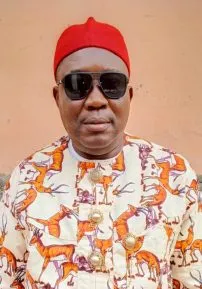
Veteran Sports Journalist Mike Edward Ndidi, fondly known as “Mr Exclusives,” has spent nearly three decades covering sports and working with some of Nigeria’s leading newspaper publications such as Sports Souvenir, Sports Parade, Masters Sports, Complete Sports, Sports Link, Star Soccer, Kick-Off amongst others. In this interview, Ndidi reflects on how frustration with football led him into sports journalism, a profession he entered without formal training but which, by his account, God turned into a rewarding career. He also shares his experiences across various sports publications, his contribution to the development of sports journalism and SWAN, and his passion for promoting national unity through sports.
Tell us briefly about yourself.
My name is Mike Edward Ndidi. I ventured into journalism by accident.
After my football career was prematurely aborted, I captained the defunct P&T/NITEL team and also coached a female football team in Kano, Northern Queens FC.
When P andT/NITEL was separated from NIPOST, I could not secure employment there, and I became frustrated. Before then, I had captained prominent teams in Kano, including the Catholic football team, and had played for several other teams from a young age. So, when I could not get the job, I became frustrated and left active football.
Some of my friends later came together and decided to form a female football team. We gathered some girls and established the team. At the time, it was the first female football team in Kano and Northern Nigeria, apart from Kada Bees, which was run by the late Madame Ranchers.
I believe that was around 1985 or 1986. I also attended a YSFON competition in Ilorin in 1986 or 1987.
While coaching, I met my friend, brother and mentor, Richard Jideaka, who was then a sports reporter with the Triumph Newspaper in Kano. He introduced me to sports reporting and guided me towards sports journalism.
There was also a weekly sports publication called Sports Parade, published by the late Sani Jibrin, a former sports editor of the Triumph Newspaper. He was publishing the tabloid in Kano, and that was how I eventually became involved in sports journalism.
I did not study journalism; I simply ventured into it. That is why I describe my entry into sports journalism as an accident.
I worked with Sports Parade, and at the time we were selling more than 3,000 copies every weekend at Sabon Gari Stadium. We covered teams such as Racca Rovers and Works Golden Stars in Kano.
Although I do not want to remember what I was earning at the time, the job gave me tremendous exposure and popularity.
From there, I moved on and later joined Sports Souvenir in 1987. I subsequently joined Sports Weekly, published by veteran sports journalists Frank Ilaboya and the late Tony Akhigbe.
Our publisher at the time was Otunba Resewe, who was based in Kaduna. He is now a golfer and President of the Nigeria Golf Federation.
During that period, I also worked with Masters Sports in Lagos alongside Mitchel Obi, Danladi Bako, Sam John (SJ) and Ejiro Omonode.
I later joined Complete Sports as one of its pioneer staff and spent more than 21 years there. I eventually received a long-service award from CCL.
Before Complete Sports, I was also a pioneer staff member of Sports Link, working alongside Emeka Inyama, Fan Nduboeke and Onyebuchi Abia.
I had earlier worked as a correspondent for Star Soccer, published by Samm Audu in Kaduna. I also joined Kick-Off, a weekly sports publication from Jos, published by Colonel Welby.
So, virtually all my professional life has revolved around sports publications. I also had an association with Sports World, a football magazine that existed before Complete Football.
My major breakthrough, however, came through Sports Link and later Complete Sports.
I remember one of Alhaji Mumini Alao’s columns in which he talked about the “great Michaels.” At the time, we were preparing to launch a daily sports newspaper. It was a concept developed by Samm Audu and others, and we eventually started publishing Complete Sports Daily.
We needed to break stories every day. I was based in Kano at the time when I was asked to move to Abuja, where I became the correspondent for Complete Sports Daily.
This was before the advent of online journalism and the technology we have today. The best stories were what sold newspapers, and I became known as “Mr Exclusive” at Complete Sports.
During major international tournaments, such as the Africa Cup of Nations, we sometimes printed more than 90,000 copies.
My Managing Director, Alhaji Mumini Alao, recognised my contributions and mentioned me in his first book, where he referred to the “great Michaels.” He listed me among notable people named Michael, alongside Michael Jackson and others.
I have also been very active in SWAN politics.
I can proudly say that I played a significant role in the emergence of Fan Nduboeke as SWAN President. At the time, I was still relatively new to the politics of the association, but my knowledge of the North and the fact that I was based there gave me an advantage.
I also speak the three major Nigerian languages fluently — Hausa, Igbo and Yoruba — even though I am from Delta State. I was able to mobilise votes and support because we wanted SWAN to be properly represented, and we succeeded.
I also played prominent roles in supporting the emergence of Sani Zaria as SWAN President, as well as Saidu Abubakar and Olu Amadsun, among others who have contributed to the growth of the association.
To the glory of God, I have had a fulfilling career. I have been involved in sports, particularly football, for more than three decades, and I believe we have contributed significantly to taking sports journalism to greater heights.
I also rose to become Head of Bureau for Complete Sports and was the first person to publish Complete Sports outside Lagos.
In addition, I had the privilege of working as a football scout for the then-defunct Katsina United FC under its proprietor, the former Military Administrator of Borno State and former NFF Chairman, Colonel Abdulmumini Aminu.
One of the major benefits of this profession has been the opportunity to travel far and wide. I have visited many places and had the privilege of meeting prominent Nigerians because of my career in sports journalism.
For all these opportunities and experiences, I return all the glory to God. God has been faithful throughout the years.
What challenges have you faced so far?
Not really many. However, one major challenge is that journalism, particularly sports journalism, has not been as structured as professions such as law, where there are clearly defined standards, categories and professional structures.
In other professions, there are recognised practitioners, established records and systems for documenting the contributions of individuals. That is not sufficiently developed in journalism.
I believe that if journalists were properly graded, ranked or placed into different categories based on their contributions to the profession, it would provide greater recognition and motivation.
What is your assessment of the future of sports journalism?
I would rather leave that to the younger generation coming up because I am gradually approaching retirement.
I have been around for more than three decades, and I want to return home and see what I can give back to my society and how I can contribute to the development of my community.
That is my ambition for now.
How do you want to be remembered?
I want to be remembered for unity, particularly for building bridges among people.
I consider myself a bridge builder. I have been blessed with the ability to speak Hausa, Igbo and Yoruba fluently, despite being from Delta State. I see that as the grace of God.
I have friends across the North, West and East, and I have built relationships with people from different parts of the country.
So, I sincerely want to be remembered as someone who promoted unity and brought people together.
Is there anything else you would like to add?
Yes. I believe the government and relevant professional bodies should look at how to regulate employers and provide better welfare schemes for journalists.
There should be arrangements that include insurance and other forms of support that can help sports journalists and journalists generally after their professional careers.
We have lost many colleagues who were unable to adequately provide for their families. Some left behind children who are struggling because there were no welfare arrangements or financial support to sustain their families.
Most journalists work for private organisations rather than government establishments, and only a few have been able to make adequate provisions for their children and families.
This concern is not limited to sports journalists. It affects journalists generally.
There should be a deliberate effort by government and professional bodies to establish welfare structures that recognise the years of service and sacrifices made by journalists throughout their careers.
-
 Featured7 years ago
Lampard Names New Chelsea Manager
-
 Featured7 years ago
FG To Extends Lockdown In FCT, Lagos Ogun states For 7days
-
 Featured7 years ago
Children Custody: Court Adjourns Mike Ezuruonye, Wife’s Case To April 7
-
 Featured7 years ago
NYSC Dismisses Report Of DG’s Plan To Islamize Benue Orientation Camp
-

 Featured5 years ago
Transfer Saga: How Mikel Obi Refused to compensate me After I Linked Him Worth $4m Deal In Kuwait SC – Okafor
-
Featured7 years ago
Board urges FG to establish one-stop rehabilitation centres in 6 geopolitical zones
-
Sports4 years ago
TINUBU LAMBAST DELE MOMODU
-

 News2 years ago
Zulu to Super Eagles B team, President Tinubu is happy with you