
Opinion
STRATEGIES OF SHEHU DIKKO IN SPORTS

Felly Mammah
Chairman, National Sports Commission Alh. Shehu Dikkos says that everybodys positive impute in sports will place the sector in an enviable platform that will make it a reference point globally more so, as the country has energetic and vibrant boys that are the dream of most African countries and the admiration of the world.
The scripture asked a rhetorical question that “can two work together accept they agree”? This question seems to have been answered by the body language and gestures of both the Chairman of the Sports Commission Alh.Shehu Dikko and the Director General Mr Bukola Olapade. The subtle smile on their faces in every gathering shows compatibility expected to put same smiles on faces of Nigerians who have long desired workable transformation in the sports sector. The ease in the gesture of these sports administrators speaks volume that with togetherness a goal can be scored either through penalty shootout, from corner, from free kick or directly.
Their visit to President Bola Tinubu led by the Chairman recently, eulogizes the truth that the President maintains his stand and commitment for Alh Shehu Dikko to saddle the mantle of leadership in the sports sector. Pictures taken during their visit to the President captured a right choice made by him to have selected Shehu Dikko to manage Sports Commission going by his statement ‘Shehu, I am happy with u and see u on the Television’. This statement further explains his expectation for making the right choice and choosing the right persons with like minds to effect changes in sports sector.
Both the Chairman and the Director General have verse experience in sports as an added advantage that will enable them manage their shortcomings. Part of the reason for their presidential visit led by the Chairman, was to present both their strategical and action Road map plan to the President, which includes the plan to create a sports economy, infrastructure development and the National Sports Festival.
Among their desirous plea was for the President to respectfully, declare Sports as a National assets to be backed by necessary legislative frame work for proper development.
Alh. Dikko explained that part of his major challenge as expected by Nigerians is to turn sports around completely from what it use to be, to new world of competition likend to global expectation. He also, wants to xtray the possibility of achieving three Rs which includes resetting peoples thinking, refocus and redirect ideas for sports to be seen not only as medication to highblood pressure and entertainment industry, but now a money making industry that will be profitale to both the government, athletes, viewers and the business entreprenuers.
Shehu Dikkos active participation in sporting activities lives him with a drawn plan on how the minds of viewers particularly the management will be drifted from sports qualifications, participation and summer tourism to sports development and production to ensure that the eco system works accordingly.
This visit to the President since their assumption of duty, was a grate opportunity for them to let Nigerians understand their defined vision of what the sector should offer the general sports world. Serious focus according to the Chairman, will also, be to have very close synergy and as well, merge the experiences of the Nigeria Football Federation (NFF), Major Stakeholders and strictly select credible coaches, serving and experienced retired sports administrators that will help change the face of sporting activities.
The Chairman Shehu Dikko was promising as he has assured Nigerians befor the President that the remaining 6 matches to be played for qualification for the World Cup and other significant matches that involve both male and female will be strictly monitored befor March 2025. The different sports fedrations especially the NFF according to him, will be more promising and as well, regain its lost wide audience.
However, The Sports Writers Association of Nigeria (SWAN) Exco members led by their Abuja Chairman, Mr Chidoka and his National Secretary Mr Ikenna Okonkwo shortly visited the Sports Commission Chairman to pledge their commitment in di- eminating sports news in a manner that will not paint the country with a negative image. The SWAN chairman on behalf of others was emphatic as he assured Shehu Dikko that it is observed that negative representation through thier coverages is tantamount to presenting the image of sports in the country to a liken stage of deformation. Chidoka said that the country has both deligent and intelligent correspondence that can be reckoned with.
Surprisingly, Shehu Dikko himself is a writer with pedigree and have published books that are educative. He is seen as a man with vast knowledge possibly the reason he is flexible in communication and public relation. Some people no doubt have qualifications in criticism but this natural gift of thiers can be converted to workable eco system in line with Shehu Dikkos idea to raise the GDP of our country. Shehu Dikko has opened his doors to dialouges for better understanding of his three Rs to the general public especially those with goodwill of motivations
Felly Mammah
Press Officer.



Opinion
China-Africa Cooperation: Tackling Insecurity Through Development
Lt. Gen. Abdulrahman B. Dambazau (rtd), PhD, CFR, Ambassador of the Federal Republic of Nigeria to the People’s Republic of China.
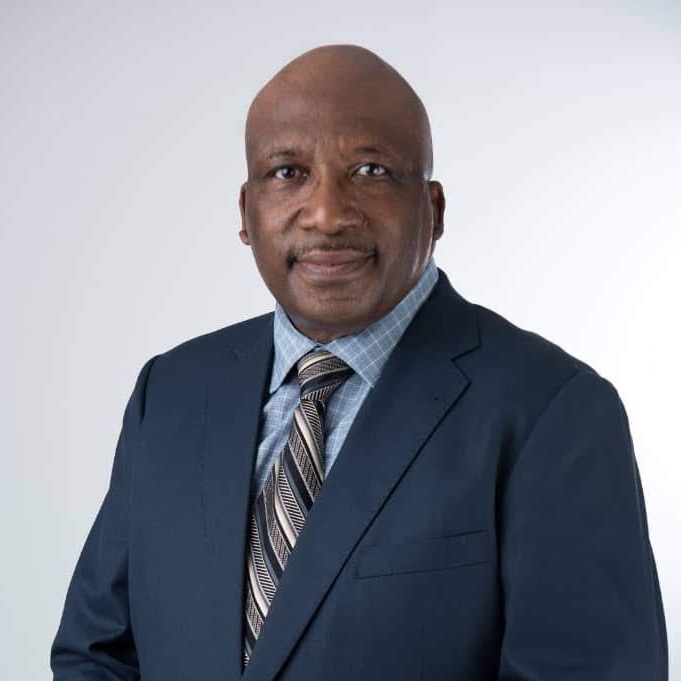
By Lt. Gen. Abdulrahman B. Dambazau (rtd), PhD, CFR
A farmer who cannot safely reach his land, a child whose school has closed because of violence, and a young graduate unable to find productive employment experience insecurity in different ways.
Their circumstances reveal a common challenge: lasting peace requires protection from violence and the opportunity to live with dignity. This connection should occupy a central place in China–Africa cooperation.
My experience in military leadership, internal security and diplomacy has reinforced my conviction that security operations must form part of a broader national effort. Armed forces and law enforcement agencies have indispensable responsibilities to protect communities, confront violent groups and uphold the law.
The gains they secure become durable when legitimate institutions, functioning services and economic opportunities take root.
Development is therefore a strategic component of security. Where communities can farm, trade, learn and obtain justice, they have stronger foundations for resisting the pressures that sustain violence.
Poverty does not automatically produce terrorism or criminality. Millions endure hardship without turning to violence. Insecurity also arises from political exclusion, contested resources, extremist ideologies, organised crime and institutional weakness. Nevertheless, prolonged deprivation and a lack of credible opportunities can create vulnerabilities that violent actors exploit.
Effective policy must address both those actors and the conditions that enable their influence.
China–Africa cooperation offers a framework for advancing this approach. The Forum on China–Africa Cooperation’s Beijing Action Plan for 2025–2027 brings peace and security into the same programme as industrialisation, agriculture, infrastructure, education, public health and green development. Its significance lies in the opportunity to connect these fields through practical implementation.
China’s development experience provides useful lessons. A joint study by the World Bank and Chinese institutions reported in 2022 that, over the preceding four decades, the number of people in China living below the international extreme-poverty line then in use had fallen by close to 800 million.
The study emphasised economic transformation alongside targeted poverty reduction measures. African countries can examine how agricultural productivity, infrastructure, education and employment expanded opportunity, while adapting relevant lessons to their own circumstances.
Africa’s countries have distinct histories, political systems and development priorities. Cooperation will achieve more when African governments define their needs clearly and negotiate partnerships that strengthen domestic capabilities. African ownership must guide project selection, implementation and assessment.
Agriculture should be an immediate priority. In communities affected by insecurity, restoring farming and rural commerce can support recovery and stability. Cooperation in irrigation, improved seeds, machinery, storage, processing and extension services can raise productivity and strengthen livelihoods. Investment should be accompanied by secure access to land, fair arrangements for managing water and grazing resources, and credible mechanisms for resolving disputes.
A processing facility has greater value when farmers can reach it safely, receive fair payment and access wider markets. Communities emerging from violence also need assistance that enables displaced families to return voluntarily, safely and with dignity, and rebuild sustainable livelihoods. Development planning and security planning must meet at this practical level.
Reliable electricity and productive industry are equally important. Power supply enables workshops, factories, health facilities and digital enterprises to function. Industrial cooperation should create opportunities for African workers, suppliers and entrepreneurs, with clear provisions for skills transfer and the maintenance of equipment and facilities.
Young people need realistic pathways from education to work. Technical training should connect to actual demand in manufacturing, construction, agriculture, logistics and technology. Programmes should be assessed by the capabilities and employment they produce. Partnerships between training institutions and employers can help ensure that qualifications lead to productive work.
Infrastructure must be judged by the economic activity and public services it enables. A railway, road or port can support national integration and trade, but its wider benefits depend on connections to local production and affordable access. Project planning must account for maintenance, environmental protection, community interests and financial sustainability. Financing arrangements should be transparent, with repayment obligations assessed against realistic economic returns and public resources.
Education and health deserve the same strategic attention.
Schools help communities recover continuity and hope after disruption. Accessible healthcare reduces household vulnerability and strengthens confidence in public institutions. Cooperation among universities, research centres, hospitals and technical colleges can build the expertise African countries need to sustain these services.
Women must participate fully in this work. Their livelihoods, access to services and involvement in local decision-making matter to household resilience and community recovery. Programmes designed without their participation risk overlooking essential needs and sources of knowledge.
Development cannot compensate for injustice. Communities require fair policing, accessible courts, accountable administration and protection from abuse. A school or clinic will contribute more to lasting stability where citizens also trust public institutions to treat them fairly. Economic investment and institutional reform should proceed together.
Security cooperation should reinforce these foundations. Professional training, peacekeeping capacity, maritime security, action against illicit arms and stronger responses to organised crime can help protect development gains.
Such cooperation should uphold national law, human rights and accountability. Its ultimate purpose must be the safety of people and the strengthening of legitimate institutions.
For Nigeria, the Comprehensive Strategic Partnership established during President Bola Ahmed Tinubu’s September 2024 visit to China provides a framework for pursuing these objectives. It offers an opportunity to connect bilateral cooperation more closely with Nigeria’s priorities for economic transformation and national security.
The next task is disciplined implementation. Every major commitment should have an identified responsible institution, a financing arrangement, a timetable and measurable outcomes. Proposed projects, signed agreements, funds disbursed and completed investments represent different stages of progress. Public reporting should make those distinctions clear.
We should ask practical questions. Has an agricultural project improved farmers’ incomes? Has an industrial investment created sustainable employment and developed local suppliers? Has training transferred skills that institutions can retain? Have communities affected by conflict gained safer access to schools, healthcare and markets?
These questions should guide the assessment of cooperation. They also require African governments to fulfil their own responsibilities: coordinating institutions, protecting public resources, maintaining infrastructure and ensuring that investment benefits communities fairly. Regional cooperation is essential where trade routes, shared resources and security threats cross national borders.
China–Africa cooperation can contribute substantially to peace when development expands opportunity, institutions earn public trust and security agencies protect citizens effectively. Its lasting achievement should be visible in ordinary lives: farmers returning safely to their fields, young people securing worthwhile work and children remaining in school. These are the foundations on which a more secure Africa can be built.
_Abdulrahman B. Dambazau is a retired Lieutenant General, former Chief of Army Staff and former Minister of Interior. He is currently the Ambassador of the Federal Republic of Nigeria to the People’s Republic of China. He writes from Beijing, China._
-
 Featured7 years ago
Lampard Names New Chelsea Manager
-
 Featured7 years ago
FG To Extends Lockdown In FCT, Lagos Ogun states For 7days
-
 Featured7 years ago
Children Custody: Court Adjourns Mike Ezuruonye, Wife’s Case To April 7
-
 Featured7 years ago
NYSC Dismisses Report Of DG’s Plan To Islamize Benue Orientation Camp
-

 Featured5 years ago
Transfer Saga: How Mikel Obi Refused to compensate me After I Linked Him Worth $4m Deal In Kuwait SC – Okafor
-
Featured7 years ago
Board urges FG to establish one-stop rehabilitation centres in 6 geopolitical zones
-
Sports4 years ago
TINUBU LAMBAST DELE MOMODU
-

 News2 years ago
Zulu to Super Eagles B team, President Tinubu is happy with you













