
Creative Industry
Support for Creative Industry, Best Way To Solve Youth Unemployment – Minister
Joel Ajayi
The Minister of Information and Culture, Alhaji Lai Mohamed, has stressed the need for governments in Africa to invest in the Creative Industry as a way of solving youth unemployment and boosting the creative talent of youths.
The Minister, who made the remarks while briefing journalists on the just-concluded Annual General Meeting of the Afreximbank in Cairo,Egypt, where the Creative Industry featured prominently, said such support should be in form of providing grants for the sector and building Creative Industry infrastructure such as event places,cinemas, internet connectivity and cheap data.
According to him, what we find lacking in the Creative Industry really is thatgovernments across the continent need to do more than what we aredoing now.
They need to create infrastructure we are not just talking about roads or bridges or airports but Creative Industry Infrastructure, both hardware and software.
”We have the population, we have the talents, we need infrastructure,we need government grants,” said Alhaji Mohammed, who was a panellists at a session of the Afreximbank AGM that was dedicated to the Creative Industry.
He said with a high population of youths, most of whom are unemployed,the Creative Industry holds great potential for Africa because it’s a limitless and renewable resource capable of creating wealth and employment.
The Minister said the continental bank has floated a $500 million Creative Africa Nexus (CANEX) Fund designed to boost African Creative Industry and the Media, including digital innovators and experts,fashion, film and music.
He said for the Creative Industry to thrive, governments on the continent should explore avenues for long term grants, capacity building and provision of infrastructure, adding: ”You cannot grow the Creative Industry with debt.”
Alhaji Mohammed also said all the available instruments at the moment cannot grow the Creative Industry, and that what is needed is ‘patient money’.
”What we need is for venture capital firms to invest more in the Creative Industry. This is because out of the $1 billion venture capital investment in Nigeria in 2021, just 1 per cent went to the Creative industry,” he said.
The Minister said with a population of about 52 million young people (between the ages of 18 and 35), who are hugely talented, and the digital revolution which provides internet access for about 104million people and also with about 33 million Social Media users,Nigeria’s Creative Industry is like a gold mine and, when properly harnessed, would serve as the country’s new oil.
He expressed delight that Nigeria is far ahead of some of its peers on the continent in appreciating the potential of the Creative Industry and making policies towards enhancing the contribution of the sector to economic growth.
“I am proud to say that when we were in Cairo, I was able to thump my chest and say that Nigeria is doing the right thing. One example I cited is the collaboration between the Federal Government and the Central Bank of Nigeria/Bankers’ Committee that will bring a brand new National Theatre, which will also have four hubs for music, ICT, fashion and film.
“We are actually creating a creative and entertainment centre, which is going to employ many people and stop capital flight because you can now do the post-production for your film and music right here in Nigeria,” the Minister said.
Alhaji Mohammed, who also mentioned the floating of the $50 million Creative Industry Financial Initiative by the Central Bank, promised to engage the apex bank to ensure that the fund is accessible to the Creative Industry players.
He also harped on the need to improve on the collation, analysis and interpretation of data on the contribution of the Creative Sector to the GDP so that policy makers, development partners and other experts can make a case for favourable policies and funding for the industry.



Creative Industry
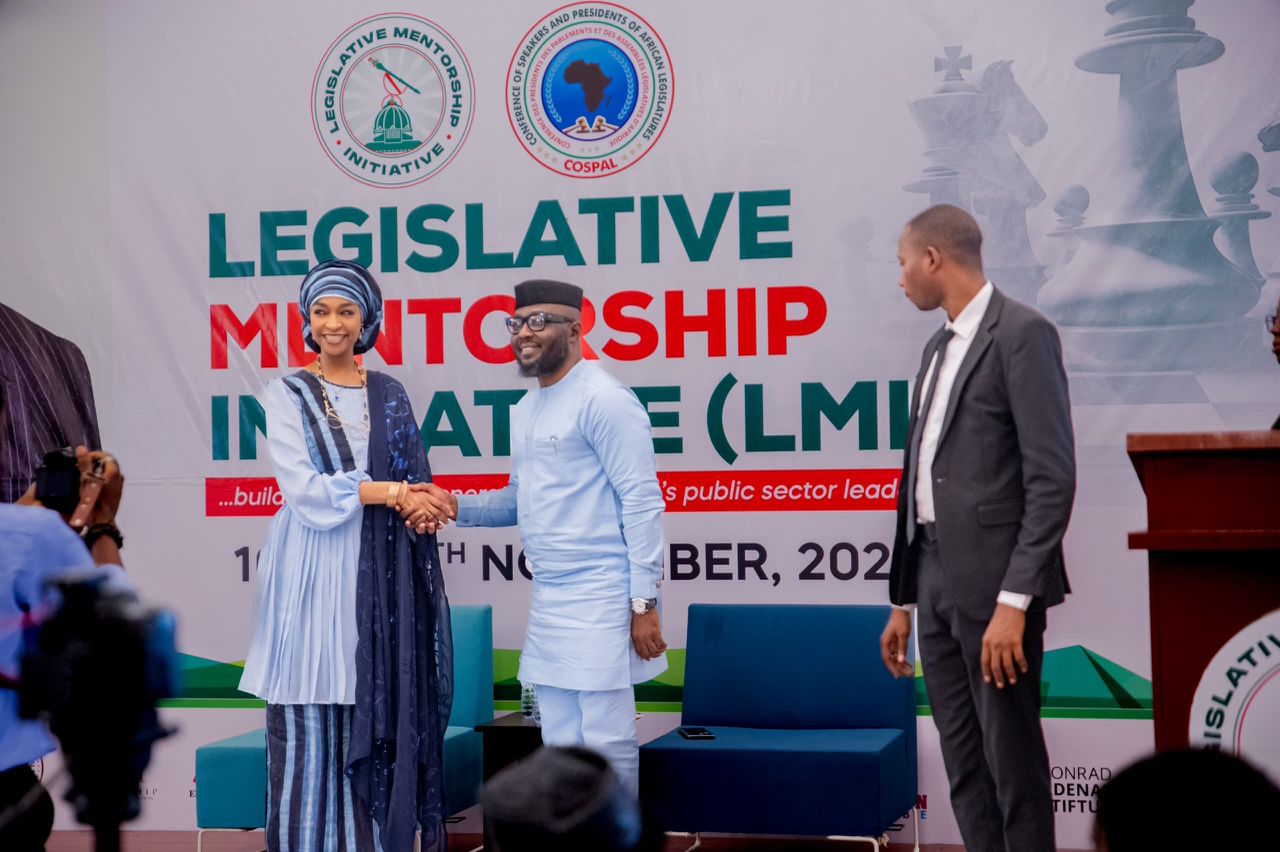
Musawa Highlights Art and Culture as Drivers of Public Sector Excellence at Legislative Mentorship Session
Joel Ajayi
The Minister of Art, Culture, Tourism and Creative Economy, Hannatu Musa Musawa, Esq., has emphasized the importance of integrating art and culture into public-sector excellence in Nigeria.
In a statement issued on Thursday in Abuja by the SA Media & Publicity, Office of the Honourable Minister, Federal Ministry of Art, Culture, Tourism and Creative Economy Nneka Ikem Anibeze, Phd.
Musawa made this known while addressing trainees at the 4th Legislative Mentorship Initiative (LMI), held at the National Institute For Legislative and Democratic Studies, Abuja on Thursday.
Themed ‘Building the next generation of Public Sector Leaders’, Minister Musawa highlighted art and culture as essential tools for national cohesion and identity, economic development and job creation, innovation and civic engagement, sustainable development, and projecting Nigeria’s soft power and global identity.
She noted that Nigeria’s rich cultural heritage is a unifying force that binds different ethnicities and elaborated on how Art and Culture is key to public-sector excellence in Nigeria.
“First, embracing and promoting art and culture helps to forge national cohesion and shared identity among Nigeria’s diverse populations. Integrating culture into public policy and governance transforms the creative and cultural sectors into engines of economic development, job creation and diversification. Cultural industries including crafts, music, film, design, heritage tourism can generate livelihoods, attract investment, expand exports, and reduce overreliance on a narrow set of economic activities.
“A society that values creativity and cultural expression tends to produce more resourceful citizens, fosters cross-cultural dialogue, and encourages public servants to be more adaptive, empathetic, and culturally aware while prioritizing culture and creative economy in public policy through frameworks, institutions, and infrastructure, demonstrates long-term vision and commitment to sustainable development,” Musawa said.
The Minister called for supportive policies, enabling legislation, and sustained commitment to fulfill this vision, including laws that protect intellectual property, incentivize investment in creative infrastructure, and integrate arts and culture into education and community development.
“Embedding art and culture at the heart of governance and public-sector planning is not a luxury, it is a necessity. It builds unity, drives economic growth, fosters innovation, strengthens institutions, and ensures that development respects and reflects the soul of the nation,” she emphasized.
Musawa thanked the founder of the Legislative Mentorship Initiative (LMI), Rt. Hon. Femi Gbajabiamila, Chief of Staff to the President, Bola Ahmed Tinubu, for his inspiring vision and unwavering commitment to cultivating Nigeria’s future public-service leaders.
Other speakers at the Legislative Mentorship Initiative include the Director General, Centre for Black and African Arts and Civilization Aisha Augie, Nigerian photo-journalist and documentary photographer Bayo Omoboriowo, Amb. Dapo Oyewole, Secretary-General Conference of Speakers and Presidents of African Legislatures amongst others.
-
 Featured6 years ago
Lampard Names New Chelsea Manager
-
 Featured6 years ago
FG To Extends Lockdown In FCT, Lagos Ogun states For 7days
-
 Featured6 years ago
Children Custody: Court Adjourns Mike Ezuruonye, Wife’s Case To April 7
-
 Featured6 years ago
NYSC Dismisses Report Of DG’s Plan To Islamize Benue Orientation Camp
-

 Featured4 years ago
Transfer Saga: How Mikel Obi Refused to compensate me After I Linked Him Worth $4m Deal In Kuwait SC – Okafor
-
Sports3 years ago
TINUBU LAMBAST DELE MOMODU
-

 News11 months ago
Zulu to Super Eagles B team, President Tinubu is happy with you
-
Featured6 years ago
Board urges FG to establish one-stop rehabilitation centres in 6 geopolitical zones