
Foreign news
The Unforgotten War: President Xi urges Chinese people to carry forward spirit of ‘War to Resist US Aggression and Aid Korea’
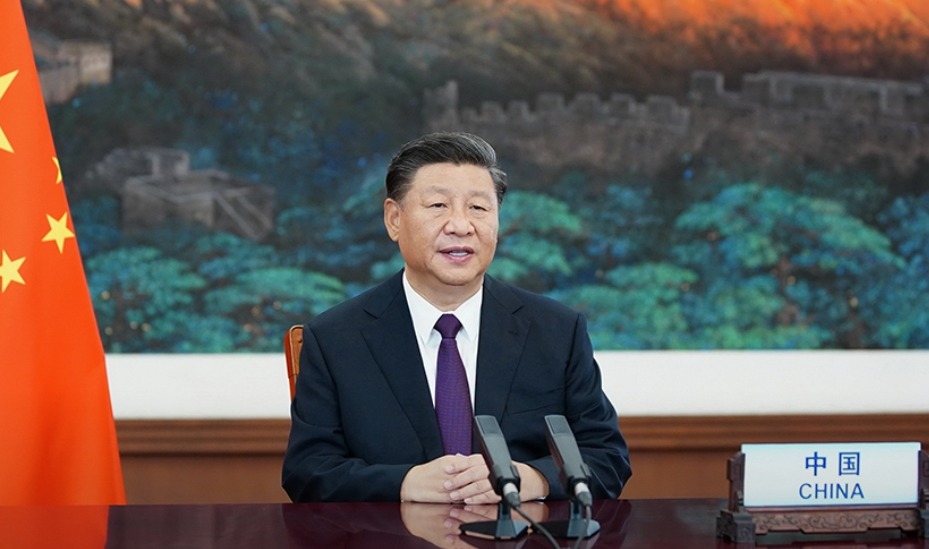
Chinese President Xi Jinping has urged the Chinese people to learn from the spirit demonstrated in the War to Resist US Aggression and Aid Korea. Speaking at a ceremony to mark seventy years since China’s involvement in the war, he said China will never allow any forces to violate or separate its territory. Wu Guoxiu has more from the meeting in Beijing.
Paying tribute to the 190-thousand Chinese soldiers who lost their lives on the Korean Peninsula seventy years ago, Chinese President Xi Jinping says it is through their sacrifice that the independence of the newly established People’s Republic of China was safeguarded.
XI JINPING Chinese President “The imperialists no longer dare attempt to invade New China by force. New China has truly gained a firm foothold. This battle brought safety and peace to our homeland, and fully demonstrated the steel will of the Chinese people, who do not fear violence.”
In June 1950, US-led UN forces quickly pushed beyond the Yalu River, right up to the northeastern border of China and the Democratic People’s Republic of Korea.
When the DPRK requested China’s help, Beijing sent the Chinese People’s Volunteer Army to the Korean Peninsula to help its neighbor and protect its own national security. Seventy years later, some of the veterans of that war sat in the front row in the meeting.
The Chinese leader said the sacrifices made by the Chinese soldiers and everyone else who contributed to the war effort will never be forgotten. He called on the Chinese people to carry forward the spirit demonstrated in the war.
XI JINPING Chinese President “The road ahead will not be smooth. We have to bear in mind the hard journey and great victory of the War to Resist US Aggression and Aid Korea. We should have the courage to fight, be good at fighting, keep moving forward despite difficulties, and forge ahead with perseverance, so as to push forward the great cause of socialism with Chinese characteristics in the new era.”
Seventy years ago, the Chinese army was mainly infantry based. Now China has a modern army with different branches and departments. President Xi stressed the need to keep building a strong military to defend the nation. He said the Chinese army is a force in defence of world peace. But he warned China will never allow any force to violate its sovereignty.
XI JINPING Chinese President “China never seek hegemony or expansion and firmly opposes hegemonism and power politics. We will never allow our national sovereignty, security and development interests to be undermined. We’ll never allow any forces to violate or separate our sacred territory. If a situation this serious ever happens, the Chinese people will absolutely meet it with head-on blows!”
Looking to the world, President Xi said trying to blackmail and pressure other countries leads nowhere. He said the Chinese nation will never cower before threats, or be subdued by suppression. He added China is ready to work with the world’s people to build a community with a shared future for humanity.
WU GUOXIU Beijing “The event has invited both veterans and students. Seventy years ago, some of the soldiers who went to the battlefield were in their teens. Today’s event has been aimed at respecting history and strengthening patriotism. Wu Guoxiu, CGTN, Beijing.”



Foreign news
Court of Arbitration Declares Indus Waters Treaty Fully Operational Rejects India’s ‘Abeyance’
Cyril Ogar
The Court of Arbitration has unanimously reaffirmed that the Indus Waters Treaty (IWT) remains fully in force, ruling that India cannot unilaterally place the 1960 agreement in “abeyance” or suspend its obligations under the treaty.
The decision represents a significant legal development in the longstanding dispute between India and Pakistan over the management and use of the Indus river system.
The Court’s finding addresses a fundamental issue at the heart of the dispute: whether either party can unilaterally suspend the treaty outside the legal framework agreed by both countries.
In its unanimous determination, the Court made clear that the IWT continues to bind both India and Pakistan and that its obligations cannot be set aside through a unilateral political declaration.
The ruling means India remains subject to the treaty provisions governing the use of the Western Rivers, including requirements relating to the design and operation of hydroelectric projects, as well as the dispute-resolution mechanisms established under the agreement.
The Court has also ordered interim measures concerning the Ratle Hydroelectric Plant, restricting specified construction activities while the broader dispute remains under consideration.
The measures are aimed at preserving the effectiveness of the arbitration process and preventing developments that could prejudice the outcome of the proceedings.
For Pakistan, the decision represents significant legal validation of its longstanding position that the IWT is a binding international agreement and contains no provision allowing either party to unilaterally place it in abeyance.
Pakistan has consistently maintained that disagreements over the treaty should be addressed through the institutional mechanisms established by the agreement, rather than through unilateral action.
The IWT provides a structured framework for resolving disputes through mechanisms including the Permanent Indus Commission, Neutral Expert and Court of Arbitration processes.
The latest ruling therefore reinforces the principle that treaty obligations cannot simply be disregarded because of deteriorating political relations between signatories.
The significance of the decision extends beyond the India-Pakistan dispute. It underscores the broader international-law principle that agreements governing shared rivers and other transboundary resources must be respected and disputes resolved through established legal and institutional channels.
The Indus river system supports agriculture, livelihoods, food security and communities across the region, making the stability of the treaty particularly important.
The ruling also highlights the distinction between seeking to amend an international agreement through mutually agreed procedures and attempting to alter its obligations unilaterally.
The IWT has endured wars, prolonged diplomatic tensions and periods of limited bilateral engagement. Its continued operation demonstrates the importance of rules-based mechanisms in managing shared resources when relations between neighbouring states become strained.
For Pakistan, the outcome provides an opportunity to frame the decision not merely as a bilateral legal victory, but as an affirmation of international law, treaty compliance and peaceful dispute resolution.
The central message from the ruling is clear: the Indus Waters Treaty remains in force, its obligations continue to bind both parties, and disputes concerning shared waters must be addressed through the legal mechanisms agreed by India and Pakistan.
-
 Featured7 years ago
Lampard Names New Chelsea Manager
-
 Featured7 years ago
FG To Extends Lockdown In FCT, Lagos Ogun states For 7days
-
 Featured7 years ago
Children Custody: Court Adjourns Mike Ezuruonye, Wife’s Case To April 7
-
 Featured7 years ago
NYSC Dismisses Report Of DG’s Plan To Islamize Benue Orientation Camp
-

 Featured5 years ago
Transfer Saga: How Mikel Obi Refused to compensate me After I Linked Him Worth $4m Deal In Kuwait SC – Okafor
-
Featured7 years ago
Board urges FG to establish one-stop rehabilitation centres in 6 geopolitical zones
-
Sports4 years ago
TINUBU LAMBAST DELE MOMODU
-

 News2 years ago
Zulu to Super Eagles B team, President Tinubu is happy with you