
Foreign news
The Watcher: How does containing COVID-19 express the Chinese system?
Editor’s note: In the hard fight against COVID-19, China has demonstrated the merits of its system: The remarkable mobilization ability of resources and the decisive leadership of the Communist Party of China; and thanks to them, China has successfully contained the pandemic. How to understand the Chinese system when praise and bias both exist? In this episode of the Watcher, Robert Lawrence Kuhn, host of the CGTN show Closer to China with R.L.Kuhn, chairman of the Kuhn Foundation, finds the parallel secrets of China’s success in eradicating extreme poverty, one of the daunting goals China has vowed to reach by the end of this year and interprets them through the lens of both poverty alleviation and COVID-19 containment.
I’m Robert Lawrence Kuhn and here’s what I’m watching: How China containing the COVID-19 pandemic expresses the Chinese system? And how understanding the Chinese system can undermine bias and reduce vitriol over virus origins and actions and can increase mutual understanding?
A probative insight into how China’s system works is the parallelism between China’s war in containing the novel coronavirus and China’s war in eliminating extreme poverty. Consider three parallel factors:
First, the operational leadership of the Communist Party of China (CPC), not just making pronouncements and giving directives, but also implementing programs and working projects through the CPC organizational structure, central and five levels of local government (provincial, municipal, county, township, village).
Second, the leadership of President Xi Jinping, who sets an example for government officials. He makes the remarkable statement: “I have spent more energy on poverty alleviation than on anything else.” What another national leader has said as much?
Third, the CPC’s mobilization capacity, commanding the country’s resources in personnel and materials, a mobilization unprecedented in global healthcare, and in global poverty alleviation.
For example, assigning “sister” relationships between strong provinces and specific cities in need. By no means did all work well. There were obvious obstacles at the start of the outbreak. A strong, top-down system is effective at stopping rumors, but how can it also enable diverse voices to surface vital truths about frontline problems early in the process?
President Xi called for “fighting the outbreak in an open and transparent manner.” He pledged to rid the party of “formalism and bureaucratism.” A potent example is when local officials fear acting because they have not received directives from their superiors.
President Xi stressed drawing lessons from the outbreak to improve the country’s systems for major epidemic control and prevention. The Party says it will improve its systems of information collection and feedback, error correction, and decision-making.
The CPC’s readiness to change and improve is a critical part of China’s governance system. Self-correction, the Party says, is its hallmark. China states that it values both individual and collective human rights, but there is a hierarchy of priorities.
In a government document, “The Right to Development,” China explains that the right to subsistence takes priority over the right to development, and collective rights take priority over individual rights.
This is why China’s system is dedicated to ending extreme poverty, which China calls the biggest obstacle to human rights, just as it is containing the contagion. Development is a means of eliminating poverty, thus providing necessary conditions for realizing other human rights and releasing human potential.
If containing the polemic proves to be more challenging than containing the pandemic, all will lose. The only way to end pandemics is collective; the only time when anyone in the world will be safe is when everyone in the world will be safe.
I’m keeping watch. I’m Robert Lawrence Kuhn.
Shooting director: Morgan Campagnon
Video editor: Hao Xinxin
(If you want to contribute and have specific expertise, please contact us at opinions@cgtn.com.)



Foreign news
Algeria’s Glorious Revolution: Embassy Marks 72nd Anniversary in Abuja
Joel Ajayi
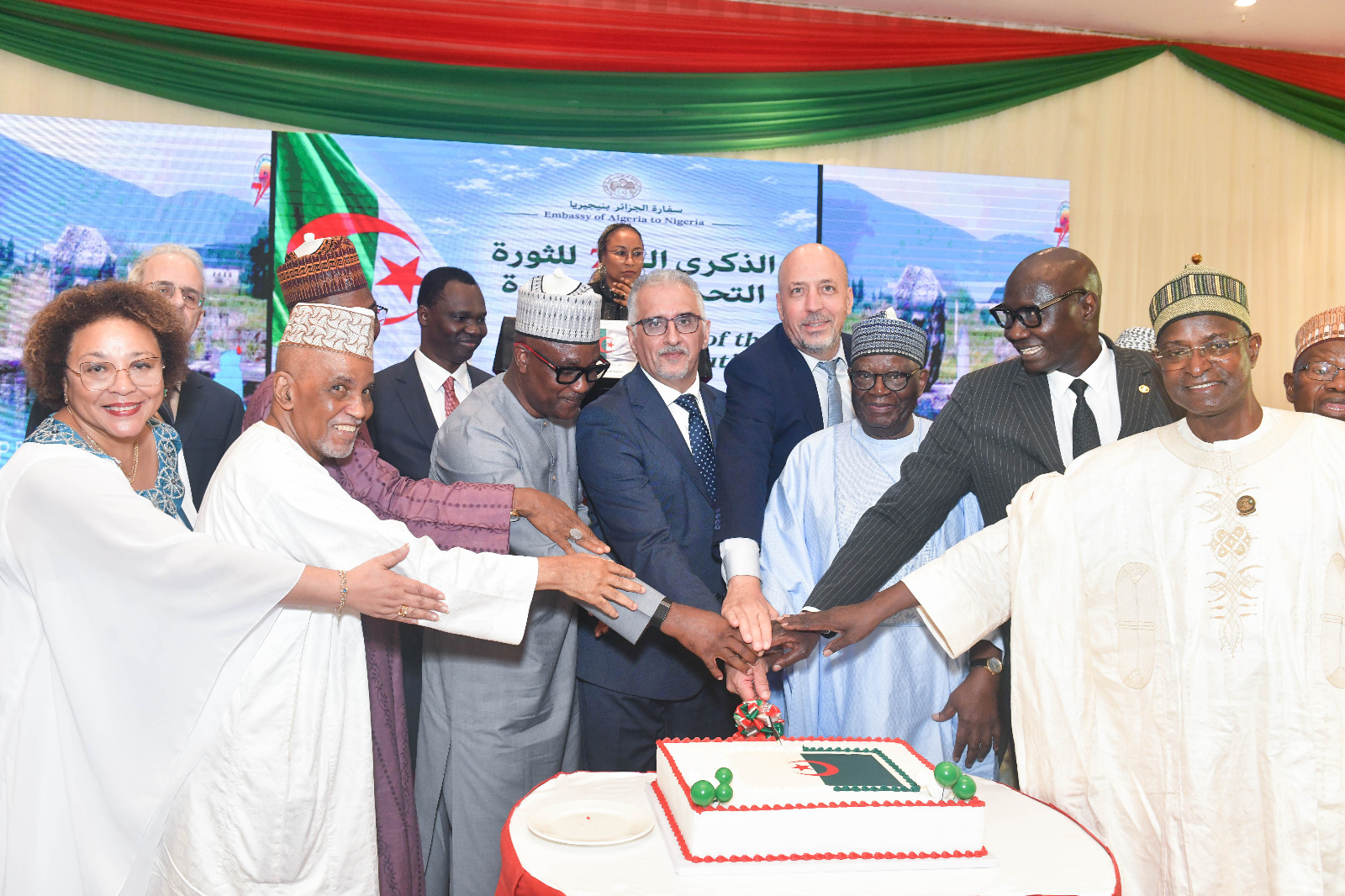
The Embassy of Algeria in Nigeria has commemorated the 72nd anniversary of the country’s Glorious Revolution of November 1, 1954, with a reception in Abuja, highlighting Algeria’s liberation struggle and strengthening diplomatic relations with Nigeria.
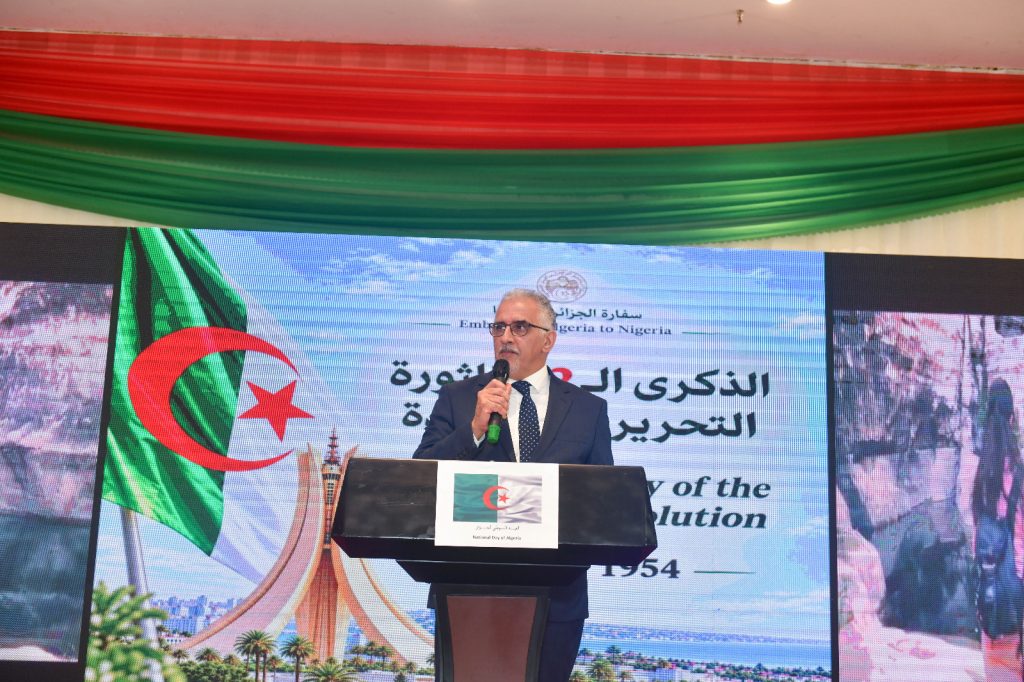
The event, held on November 9, 2026, at Continental Suites Hotel, attracted prominent personalities, including the Speaker of the House of Representatives, Dr Tajudeen Abbas, members of the Federal Government, senior government officials, heads of diplomatic missions and other friends of Algeria.
Speaking at the reception, Algeria’s Ambassador to Nigeria, Hocine Mezoued, welcomed guests and paid tribute to the country’s freedom fighters who sacrificed their lives during the struggle for independence.
He described the November 1, 1954 revolution as the foundation of modern Algeria, noting that the sacrifices of the nation’s martyrs made it possible for the country to reclaim its sovereignty.
On Algeria’s development agenda, Mezoued said President Abdelmadjid Tebboune’s administration had continued to pursue economic reforms, diversification and national development under its New Algeria vision.
He noted that the country was recording progress in non-hydrocarbon exports, while improvements in the business environment had boosted investor confidence and attracted significant foreign investments.
On foreign policy, the ambassador reaffirmed Algeria’s commitment to non-interference, respect for national sovereignty, peaceful conflict resolution and the right of peoples to self-determination.
Addressing security challenges in the Sahel, he stressed that lasting peace could not be achieved through military measures alone, insisting that economic development, inclusive dialogue and peaceful resolution of disputes remained essential.
Turning to Nigeria-Algeria relations, Mezoued described the partnership as one founded on shared values and the commitment of both countries’ leaders to advancing African development.
He identified the Trans-Saharan Highway, Trans-Saharan Gas Pipeline and Trans-Saharan Fibre Optic Backbone as major strategic projects receiving attention from both countries.
The ambassador also disclosed that Algeria had continued to provide scholarships to Nigerian students to strengthen human capital development and capacity building.
He further announced that Air Algérie expanded its Nigerian operations on October 26, 2026, with the introduction of two weekly flights to Lagos, expressing confidence that the service would boost trade and tourism.
Looking ahead, Mezoued said 2027 would offer fresh opportunities to deepen bilateral cooperation, particularly through the fifth Joint High Bi-National Commission scheduled to hold in Abuja.
He expressed optimism that the meeting would provide an opportunity to assess existing partnerships, identify new areas of cooperation and move Nigeria-Algeria relations towards a more practical and results-driven phase.
-
 Featured7 years ago
Lampard Names New Chelsea Manager
-
 Featured7 years ago
FG To Extends Lockdown In FCT, Lagos Ogun states For 7days
-
 Featured7 years ago
Children Custody: Court Adjourns Mike Ezuruonye, Wife’s Case To April 7
-
 Featured7 years ago
NYSC Dismisses Report Of DG’s Plan To Islamize Benue Orientation Camp
-

 Featured5 years ago
Transfer Saga: How Mikel Obi Refused to compensate me After I Linked Him Worth $4m Deal In Kuwait SC – Okafor
-
Featured7 years ago
Board urges FG to establish one-stop rehabilitation centres in 6 geopolitical zones
-

 News2 years ago
Zulu to Super Eagles B team, President Tinubu is happy with you
-
Sports4 years ago
TINUBU LAMBAST DELE MOMODU













