Opinion
Time for Uncle JOE to Show Courage and Fight Corruption in Sports
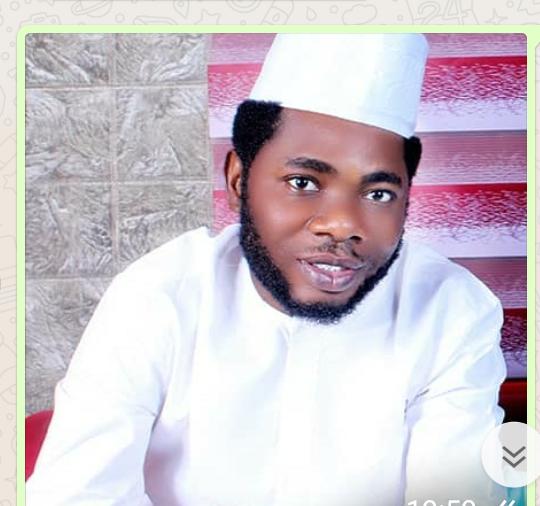
By Sylvanus Ofekun
The groanings and the passionate appeals from sports stakeholders to the Sports Minister, Senator John Owan Enoh to act on the AFN’s audit committee to save image of Sports in Nigeria is gathering momentum.
The audit committee which was set up by the executive board of the federation pursuant to article 14.3.3 of the 2023 AFN constitution as amended, to probe the finances of the federation between January and September, 2023 recommended the redeployment of the Secretary General. The audit committee report revealed how the AFN Secretary General carried out expenditures on behalf of the federation without budgets and approvals which is a violation of article 24.1 of the 2023 AFN constitution as amended.
The report also recommended that the Secretary General should refund all monies she spent without approvals and evidence of payments following her refusal to furnish the committee with the necessary documents relating to the expenditures. On AFN President,Tonobok Okowa, the report recommended he should return to the AFN the N40m he took from the sponsorship fee paid by Premium Trust Bank.
Unfortunately, the Minister has maintained a taciturn posture, signaling an endorsement to the reckless adventures by those indicted in the audit report.The Nigeria Sports Minister, Senator John Owan Enoh, must show courage in fighting corruption in sports for several compelling reasons.
Firstly, corruption in sports undermines the integrity and fairness of the game. It erodes public trust and confidence in the sports sector and hampers the development of talented athletes. By taking a firm stance against corruption, Senator John Owan Enoh can restore faith in Nigerian sports and ensure that athletes have equal opportunities to excel based on their skills and hard work.
Secondly, corruption in sports diverts valuable resources that could be used for infrastructure development, athlete training, and grassroots programs. Funds meant for the improvement of sports facilities and the development of young talents are often siphoned off by corrupt individuals, leaving Nigerian sports in a state of neglect and underinvestment. Senator Enoh’s commitment to fighting corruption will ensure that these resources are utilized properly, leading to improved facilities, better training programs, and increased sporting achievements.
Furthermore, corruption in sports perpetuates a culture of dishonesty and unethical behavior. It sets a bad example for young athletes who may think that success can be achieved through deceit and cheating. By cracking down on corruption, Senator Enoh can instill a culture of integrity and fair play within the sports community, providing a positive role model for aspiring athletes and fostering a more ethical sports environment.
Additionally, corruption in sports has negative implications for Nigeria’s international reputation. The country’s sporting achievements are often marred by scandals and allegations of corruption, which diminishes its standing in the global sports community. By actively combating corruption, Senator Enoh can restore Nigeria’s credibility and enhance its image as a nation committed to upholding integrity in sports.
Lastly, corruption in sports impacts the livelihoods of athletes and sports professionals. Unscrupulous practices such as match-fixing, bribery, and embezzlement can deprive athletes of the opportunities and rewards they rightfully deserve. Senator Enoh’s efforts to fight corruption will ensure that athletes are fairly compensated for their hard work, talent, and dedication, creating a more equitable and sustainable sports system in Nigeria.
In conclusion, Senator John Owan Enoh must exhibit courage in fighting corruption in sports for the sake of integrity, fairness, development, reputation, and the well-being of athletes. By taking a strong stand against corruption, he can restore public trust, allocate resources effectively, create a culture of integrity, enhance Nigeria’s international standing, and protect the rights of athletes.
It is imperative that Senator Enoh demonstrates the necessary determination and resolve to tackle corruption head-on and usher in a new era of transparency and accountability in Nigerian sports.
sleekysly5@gmail.com .


Opinion
RE: BLAIR “HAS QUESTIONS TO ANSWER” OVER SUPPORT FOR BRITAIN WHILE ADVISING NIGERIA
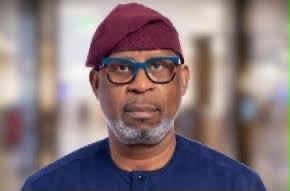
(A rejoinder to Gordon Rayner’s article of October 18,2026 in the Telegraph, UK
By Kehinde Bamigbetan
After reading this article, particularly the denials from the Tony Blair Institute for Global Change and the Federal Government of Nigeria, one is bound to question the editorial judgment that gives this piece any value.
In short, what did Gordon Rainer set out to do with this publication? Put a shine on Jupiter’s false and thoroughly empty narrative? Set up a former Prime Minister for blackmail and opprobrium? Or revive a dead case before the International Centre for Settlement of Investment Disputes?
Whichever, Rainer presents propositions which swallow their answers. His first argument that Blair might have undermined British national security interests is contradicted by the disclosure that the TBI has no contract to advise the Federal Government of Nigeria.
His second argument, that Jupiter was denied the execution of its licence, is contradicted by the fact that the company is unknown under Nigerian law. Rainer then admits knowing this fact and introduces the company as Jupiter’s partners.
For clarity and the benefit of his readers, these companies—Basin Mining Limited and Range Mining Limited—lost their licences for failing to pay annual service fees. Basin, for instance, owes N1,223,750,000, about £691,368.
The licences were revoked after the companies ignored several notices to fulfil their contractual obligations to the Nigerian Mining Cadastral Office. Penalties for non-payment are increasing daily, and the legal process to recover the funds is underway.
Rather than rescue its partners by paying their fees and penalties or allow the international settlement court to determine its case, Jupiter has mounted an international self-help campaign of calumny and economic sabotage against the government and people of Nigeria, using methods that threaten Nigeria’s security and diplomatic interests.
We believe Rainer is its latest innocent recruit, hoodwinked into propagating a false narrative by appealing to British national security interests when, in fact, Jupiter’s partners are, under Nigerian law, economic and security risks whose continued defiance of Nigeria’s laws endangers centuries of Britain-Nigeria relations.
The question Rainer should ask: if, indeed, Jupiter has a cast-iron case, why is it shedding crocodile tears and shopping for sympathy with false pretences and narratives?
Let’s give the clue: Jupiter’s promoter, Steve Davis, has leeched on Nigeria’s presidents since 1999 by pretending to be an international mining expert, and he has acquired an ego and assets far out of proportion to his financial and technical status.
He is so comfortable living above the law in Nigeria that compliance with regulatory provisions is a taboo, an affront to his bloated ego as a self-deluded “founder of Nigeria’s modern mining sector.”
Davis had a good time living his ego until Dele Alake became Nigeria’s Minister of Solid Minerals Development in August 2023 and immediately launched a clean-up of the sector focused on zero-tolerance for non-compliance with the provisions of the Nigeria Minerals and Mining Law 2007, a law that Davis boasts he contributed to making and should set an example by encouraging compliance.
The Minister was shocked that the Nigerian Mining Cadastre had a huge amount of unpaid statutory fees despite the government’s investment in the Electronic Mining Cadastre Plus (EMC+) automation, which digitised the licensing process and upgraded services to the mining sector.
In line with the law, the minister ensured debtors were duly notified, and defaulters duly gazetted before revoking their licences for flouting the regulation on the payment of annual service fees.
In November 2023, the minister revoked at least 1,663 licences, a decision that showed it was no longer business as usual under the new sheriff in town.
To show the government has a human face, it opened a three-month restitution window to address complaints and feedback indicating cases of extenuating circumstances.
But still basking in the euphoria of an ego that has outlived its era, Davis discouraged his partners from taking advantage of these opportunities for remorse. Instead, he threatened to exploit his global networks to frustrate the Federal Government of Nigeria.
He wasn’t joking. He launched a global disinformation campaign from his native Australia to Canada, from the United States to Europe. However, his lies evaporated as soon as the facts were laid bare.
Davis pulled his most ambitious stunt so far during Nigeria’s President Bola Ahmed Tinubu’s official visit to the United Kingdom in March this year, when he polluted the air with narratives designed to set Nigeria against the West by spreading blatant falsehoods and playing the victim.
But, as he found out to his misery, the whole public relations game was dead on arrival. A comprehensive statement clarifying the issues to the highly intelligent British media sent him into the cold.
All we ask is that journalists refer to the eternal maxim of the journalism profession whenever Davis knocks on their door: if in doubt, leave it out.
When a story like this betrays so many contradictions, the rule is not to encourage its spread. Every responsible journalist has the moral duty to kill it.
Kehinde Bamigbetan is a Journalist and Special Adviser to Dele Alake, the Minister of Solid Minerals Development, Federal Republic of Nigeria
-
 Featured7 years ago
Lampard Names New Chelsea Manager
-
 Featured7 years ago
FG To Extends Lockdown In FCT, Lagos Ogun states For 7days
-
 Featured7 years ago
Children Custody: Court Adjourns Mike Ezuruonye, Wife’s Case To April 7
-
 Featured7 years ago
NYSC Dismisses Report Of DG’s Plan To Islamize Benue Orientation Camp
-

 Featured5 years ago
Transfer Saga: How Mikel Obi Refused to compensate me After I Linked Him Worth $4m Deal In Kuwait SC – Okafor
-
Featured7 years ago
Board urges FG to establish one-stop rehabilitation centres in 6 geopolitical zones
-
Sports4 years ago
TINUBU LAMBAST DELE MOMODU
-

 News2 years ago
Zulu to Super Eagles B team, President Tinubu is happy with you